
Table of Contents
- Why Dog Booties Matter for Hot Pavement Hiking
- How to Measure Dog Paws for Boots
- Key Features to Look for in Hot Pavement Boots
- How to Get a Dog Used to Wearing Boots
- Signs of Burned Dog Paw Pads and Prevention
- Cleaning, Maintenance, and Post-Hike Paw Care
- Frequently Asked Questions
Last Updated: September 20, 2026
Why Dog Booties Matter for Hot Pavement Hiking
Hot pavement can burn your dog's paws within seconds. The 5 best dog booties for hot pavement hiking protect against this serious risk while keeping your dog comfortable on trails.
Test pavement temperature with the 5-second rule: place your bare hand on it. If you can't keep it there comfortably, your dog shouldn't walk on it unprotected.
Booties shield paws from sharp rocks, thorns, and trail debris while providing traction on slippery surfaces and reducing fatigue by distributing weight more evenly.
Dogs that wear booties consistently adjust their gait naturally within the first few outings and stop resisting once they realize the gear helps them move better.
How to Measure Dog Paws for Boots
Accurate measurement is essential, especially for breeds with non-standard paw shapes like wide, splayed paws or narrow, elongated paws.
Standard Measurement Technique
Measure your dog's paws on a flat surface while standing normally. Place a soft measuring tape across the widest part of the paw pad. Record length and width in millimeters and compare against the boot manufacturer's sizing chart. Measure all four paws, as front paws are typically 5-15 percent larger than back paws.
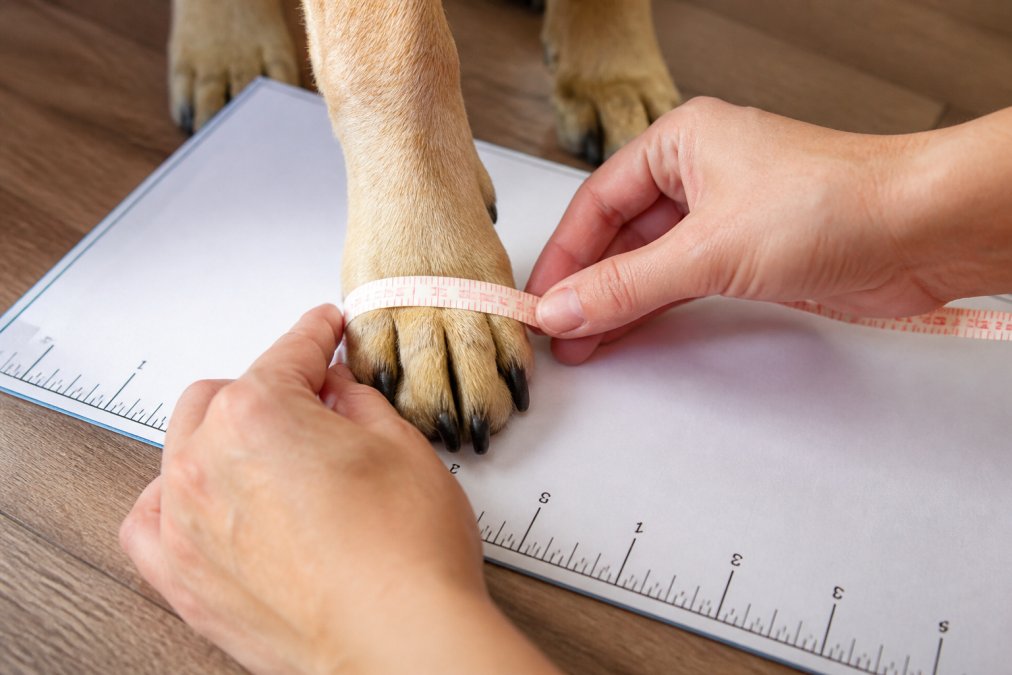
Measure in the evening when paws are slightly swollen from daily activity, accounting for the swelling that occurs during hiking.
Account for the dewclaw when measuring. If your dog has prominent dewclaws, verify the boot accommodates them without pinching, which causes irritation and resistance.
Breed-Specific Sizing Challenges
Different breeds have dramatically different paw shapes. Understanding your dog's paw type is essential to finding boots that fit.
Wide, Splayed Paws (Bulldogs, Basset Hounds, Dachshunds). These breeds have paws that spread outward when weight is applied. Take three measurements: width at the widest point, width across splayed toes, and length from heel to longest toe. Look for boots with wider toe boxes or adjustable side panels.
Narrow, Elongated Paws (Sighthounds, Greyhounds, Whippets). These breeds have long, narrow paws that slip off standard boots. Look for boots with narrower toe boxes and adjustable ankle straps. Cinch closures work better than velcro-only designs for these breeds.
Oversized Paws (Giant Breeds, Mastiffs, Saint Bernards). Large breeds often exceed standard boot sizes. Check whether manufacturers offer extended sizes, or consider specialty retailers and custom boot makers for paws larger than 4 inches wide.
Accounting for Paw Pad Thickness Variation
Feel the paw pad carefully. Soft, squishy pads are less conditioned to hard surfaces and benefit from maximum cushioning. Firm, leathery pads are more resilient but still need protection from extreme heat.
Sizing for Seasonal Swelling
If purchasing boots for summer hiking, measure during warm weather when paws are naturally swollen. Boots sized for warm-weather paws may be too loose in winter.
Testing the Fit Before Committing
Order boots with a return policy and test them on your dog. The boot should not shift side-to-side or slip off. Your dog should flex their toes slightly inside. Walk indoors for 5-10 minutes and watch for rubbing or irritation. Return boots that don't fit well rather than forcing uncomfortable gear.
Key Features to Look for in Hot Pavement Boots
The best dog booties for hot pavement hiking combine heat resistance, breathability, and durability. A boot with excellent insulation but poor ventilation can trap heat and moisture, while a lightweight boot may not provide adequate thermal protection.
Heat-Resistant Soles and Thermal Insulation
Heat-resistant soles slow heat transfer to the paw pad and dissipate it before it causes damage.
EVA foam provides insulation with minimal weight. Neoprene-lined soles add thermal barrier without excessive bulk. Thermoplastic rubber (TPR) offers durability but is heavier than EVA.
A 3-4 millimeter sole provides meaningful thermal protection. Thicker soles trap more heat rather than dissipate it. Test sole flexibility: a boot that's too rigid restricts natural paw movement. Look for soles with visible texture or tread patterns that improve traction and create micro-channels for heat dissipation.
Breathability and Ventilation
Moisture-wicking materials prevent sweat and moisture buildup inside the boot, which is critical because wet paws inside an insulated boot can actually conduct heat faster than dry paws. Mesh panels on the sides and top of the boot allow air circulation while maintaining protection of the paw pad itself.
Breathable mesh should cover at least 40-50 percent of the boot's upper surface for effective heat dissipation. Fully enclosed boots trap heat and moisture, leading to uncomfortable conditions and potential skin irritation or fungal growth. The best designs balance coverage with protection, shielding the sensitive underside of the paw while allowing air to flow around the sides and top.
Some boots include moisture-wicking linings made from synthetic materials like polyester or nylon blends that pull sweat away from the paw pad. These linings dry quickly and prevent the soggy feeling that makes dogs resist wearing boots. Neoprene linings provide both insulation and moisture management, though they're heavier than mesh alternatives. For hot pavement hiking, a thin mesh or synthetic lining is often preferable to neoprene because it reduces overall heat retention.
Ventilation design matters as much as material choice. Boots with side vents and top openings allow convective cooling, warm air rises and escapes while cooler air enters from below. Boots with only top openings or sealed sides restrict this airflow and trap heat. When comparing boots, look for designs with vents on multiple sides of the boot, not just the top.
Secure Closure Systems and Adjustable Straps
A secure fit prevents the boot from slipping during hiking and ensures the insulating sole stays in full contact with the paw pad. Adjustable straps let you customize the fit to your dog's specific paw shape and size. Velcro closures are quick and easy but can lose effectiveness after 20-30 wash cycles as the hook side degrades. Cinch systems with cord or elastic provide more consistent closure over time and typically last through 50+ wash cycles.
The best closure systems allow single-handed adjustment. You shouldn't need both hands to tighten or loosen a boot, especially when you're holding a leash or managing multiple dogs. Quick-adjust straps with pull-tabs let you modify fit without removing the boot completely.
Look for non-slip grip on the boot's exterior surface. This prevents the boot from sliding on smooth pavement or wet surfaces. Textured rubber or rubberized coatings provide traction that helps your dog maintain stability on slippery terrain. Boots with grip patterns on the sole and sides perform noticeably better on wet pavement than smooth-sided alternatives.
Consider how the closure system interacts with your dog's paw shape. Dogs with wide, splayed paws (like bulldogs or basset hounds) need straps that tighten across the widest part of the paw, not just around the ankle. Sighthounds and other breeds with narrow, elongated paws require different strap placement to prevent slipping. A closure system that works perfectly for a Labrador may fail completely for a Greyhound.
How to Get a Dog Used to Wearing Boots
Most dogs resist boots initially, this is normal and expected. The adjustment period typically lasts 3-7 days of gradual exposure. Start by letting your dog wear the boots indoors for 10-15 minutes while stationary. Reward them with treats and praise to create positive associations.
Gradually increase the duration and activity level. Move from standing to walking around the house. Once your dog walks comfortably indoors, take short walks outdoors, just 5-10 minutes. Extend the duration by a few minutes each day until they're comfortable wearing boots for 30+ minutes.
Some dogs adapt faster when they see the boots as part of a routine. Put the boots on right before heading to the park or trail, where excitement about the adventure outweighs discomfort about the gear. Dogs quickly learn that boots mean fun is coming.
Avoid forcing boots onto resistant dogs.
Signs of Burned Dog Paw Pads and Prevention
Burned paw pads show visible redness, blistering, or peeling skin on the underside of the paw. Your dog may lick or chew at their paws excessively, limp, or show reluctance to walk on certain surfaces. Some dogs yelp when their paws touch hot pavement, providing an immediate warning sign.
Cleaning, Maintenance, and Post-Hike Paw Care
Clean boots after each hike to remove dirt, salt, and debris. Rinse with cool water and mild soap, then air dry completely before storing. Wet boots left in a closed space develop mold and odor. Proper drying extends boot lifespan significantly.
Frequently Asked Questions
How can I tell if the pavement is too hot for my dog?
Use the 5-second rule: place your bare hand on the pavement for 5 seconds. If you can't comfortably hold it there, it's too hot for your dog's paws. Most dogs experience discomfort on pavement above 125°F. During peak summer heat, test early morning or late evening when temperatures are cooler, and avoid midday walks entirely. Dog booties with heat-resistant soles provide protection when hot pavement hiking is unavoidable.
What are the signs of burned dog paw pads?
Burned paw pads show redness, blistering, limping, reluctance to walk, or visible damage to the pad surface. Some dogs lick or chew their paws excessively after heat exposure. Severe burns may cause swelling, discharge, or scabbing. If you notice any of these signs after a hike, soak the paws in cool water and contact your veterinarian. Prevention with quality dog booties designed for hot pavement is far more effective than treating burns after they occur.
How do I measure my dog's paws for boots?
Measure your dog's paw width at the widest point across the pad, and length from the tip of the longest toe to the back of the pad. Measure all four paws, as front and back paws often differ in size. Take measurements while your dog is standing to get accurate dimensions. Most boot manufacturers provide sizing charts based on paw width and length. If your dog falls between sizes, choose the larger option to avoid restricting circulation or causing gait adjustment issues during hot pavement hiking.
How long does it take to train a dog to wear boots?
Most dogs adjust to wearing boots within 3-7 days of gradual training. Start by letting your dog wear the boots indoors for 5-10 minutes while offering treats and praise. Gradually increase wear time and introduce short outdoor walks on familiar surfaces. Some dogs adapt faster than others, depending on temperament and previous gear experience. Patience and positive reinforcement are key. Once your dog is comfortable in boots during casual walks, they'll be ready for hot pavement hiking with confidence.