
Table of Contents
- What Makes a Quality Dog Grooming Kit
- Best Dog Clippers for Home Grooming
- Dog Grooming Kit for Beginners
- Dog Grooming Tools for Different Coat Types
- How to Groom a Dog at Home
- Safety, Noise, and Pet Comfort
- Managing Shedding and Hair Collection
- Total Cost of Ownership and Maintenance
- Frequently Asked Questions
Last Updated: October 6, 2026
What Makes a Quality Dog Grooming Kit
A quality dog grooming kit balances performance, safety, and ease of use for owners grooming at home.
Motor power matters more than most people realize. A weak motor struggles with thick coats and bogs down mid-stroke. Consistent cutting performance keeps sessions short and your dog calm.
Noise and vibration affect your pet's comfort directly. A loud clipper triggers anxiety, turning a routine task into a battle.
Blade quality determines whether you're cutting hair or pulling it. Dull blades tug and irritate skin; sharp, maintained blades glide smoothly. The best kits include replaceable blades and clear maintenance guidance.
Battery life matters with multiple pets or a large dog. Cordless convenience only works if the battery lasts long enough to finish the job.
Best Dog Clippers for Home Grooming
When you're choosing clippers, focus on the motor and cutting system first. Everything else flows from those two factors.
Motor Power and Cutting Performance
A clipper's motor determines how well it handles different coat types. Stronger motors maintain speed through dense or matted fur; underpowered clippers slow under pressure, causing uneven cuts and longer sessions.
Look for motors rated in watts, though efficiency matters too: a well-designed 15-watt motor outperforms a poorly engineered 20-watt one. The key is consistent power without stalling under resistance.
Cutting performance also depends on blade design. Ceramic blades stay cooler and resist dulling longer than steel, which is sharper initially but needs more maintenance. Detachable blades let you swap mid-session when grooming multiple dogs.
Cordless vs. Corded Operation
Cordless clippers offer freedom of movement without a cord to manage while keeping your dog still. They feel lighter and let you work from any angle.
The tradeoff is battery life: most cordless clippers run 60 to 90 minutes per charge, enough for one large or two small dogs. With three or more pets, you may need a second battery or corded backup.
Corded clippers never die mid-session and deliver consistent power. The cord only inconveniences cramped spaces or unpredictable dogs. Cordless wins for apartments and tight spaces; corded suits large properties or multi-pet households.
Blade Types and Maintenance
Clipper blades come in numbered sizes that determine cut length. A number 10 blade cuts very short (1.5mm), while a number 30 cuts longer (0.5mm). Most home grooming kits include two or three blade sizes to handle different areas of the body.
Maintenance is the part most people skip. Dull blades pull hair instead of cutting cleanly, irritating skin. Clean blades after every session, remove hair buildup, then apply light blade oil to prevent rust and friction.
Replace blades when they tug noticeably: a sharp blade glides, a dull one drags. Grooming monthly means replacing blades every 6 to 12 months, so factor that cost into your investment.
Dog Grooming Kit for Beginners
If you've never groomed a dog at home, start simple with tools that are forgiving and easy to control, not professional-grade equipment.
Beginner kits typically include a clipper, nail grinder, and a few basic blades, enough for a full session. Skip fancy attachments and master the basics first.
The Proud Pet Shop Quiet Nail Grinder is an excellent addition to any beginner kit. Unlike clippers that can startle anxious dogs, a grinder works gradually and creates minimal vibration.

Start with a clipper that has adjustable speed settings. Slower speeds give more control while learning; increase speed as confidence builds.
Practice on calm areas first: clip the body before sensitive spots like the face and paws.
Dog Grooming Tools for Different Coat Types
Not all coats need the same approach. What works for a short-haired Beagle creates problems for a long-haired Golden Retriever.
Short Coats
Short-coated dogs like Boxers, Beagles, and Pit Bulls need less frequent grooming. A simple clipper and comb handle most maintenance. These coats shed heavily but don't mat, so your main task is managing loose hair.
The Proud Pet Shop Deshedding Vacuum Kit is purpose-built for this challenge. It integrates a grooming brush with suction power that captures shed fur directly into a canister instead of releasing it into your home. The low-noise motor keeps anxious dogs calm, and the gentle bristles won't irritate sensitive skin.

For short coats, use a number 15 or 10 blade if you want a clean trim. These blades cut close without exposing skin. If you prefer a slightly longer look, a number 5 or 7 works well.
Long Coats and Matted Fur
Long-coated breeds like Collies, Afghans, and Doodles need regular maintenance. Mats form quickly around ears, armpits, and rear ends, and once matting starts, brushing alone won't fix it, clippers become necessary.
Before clipping matted fur, detangle with a slicker brush and conditioner, working slowly from the outside in. If a mat is tight against skin, use a mat splitter gently, clipping over severe mats can cut the skin underneath.
For long coats, use longer blades like a number 5 or 7. These cut through the coat without exposing undercoat or skin. If you're dealing with mats, a number 10 blade removes the problem area completely, though it leaves shorter hair that takes time to grow back.
Thick and Double Coats
Double-coated breeds like German Shepherds, Huskies, and Corgis shed heavily and mat easily, with a dense undercoat beneath longer guard hairs. Grooming takes patience and the right tools.
Never shave a double coat short, removing the undercoat damages natural insulation and can permanently change texture. Use a deshedding tool or undercoat rake to remove loose undercoat, then trim guard hairs to a manageable length.
A number 7 or 10 blade works for double coats when you need to trim, but use it on the outer coat only. Let the undercoat remain to protect skin. If shedding is extreme, the Proud Pet Shop Deshedding Vacuum Kit handles heavy shedding periods efficiently by capturing loose fur before it hits your furniture.
How to Groom a Dog at Home
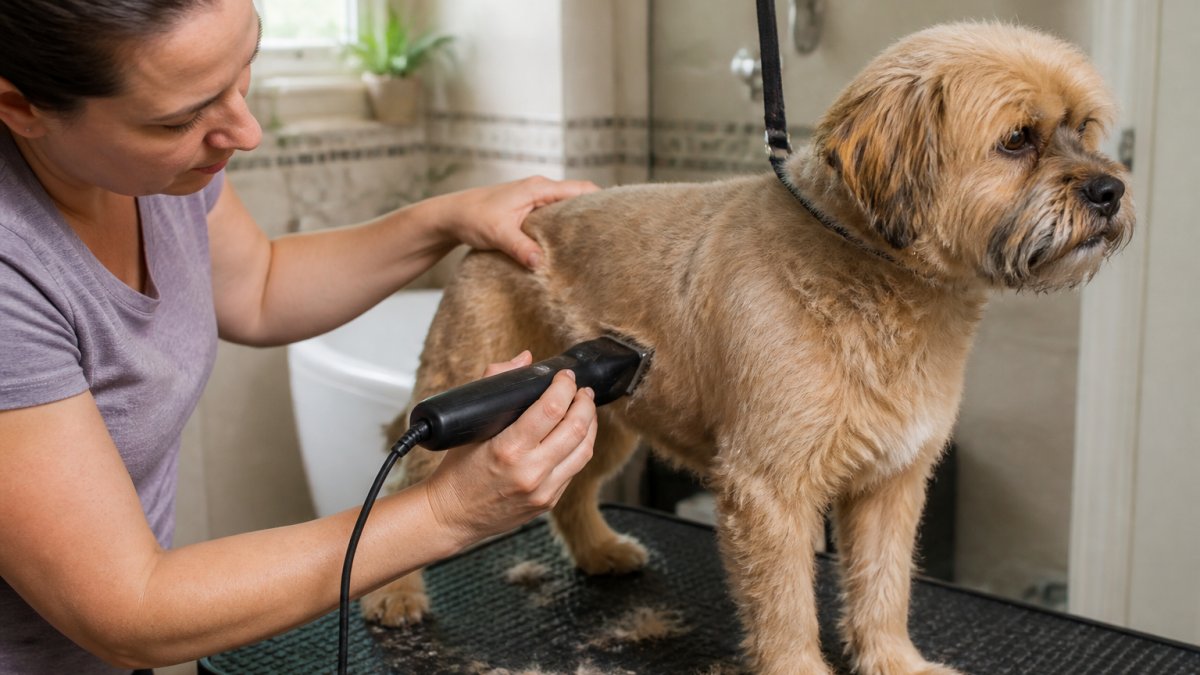
Grooming at home takes practice, but the process becomes routine once you understand the steps.
Pre-Grooming Preparation
Start by bathing and drying your dog completely. Damp hair clogs clippers and cuts unevenly; dry hair cuts cleanly and prevents overheating.
Proud Pet Shop Deshedding Vacuum Kit →
Brush out mats and tangles before clipping. Mats prevent smooth cutting and irritate skin, and thorough brushing removes loose hair for less clipper work and a cleaner result.
Set up with good lighting and a non-slip surface. A grooming table or elevated surface saves your back. Keep treats nearby for calm behavior and a damp towel ready to wipe blades.
Trim nails before clipping fur. The Proud Pet Shop Quiet Nail Grinder makes this step stress-free. Work slowly and reward your dog frequently. Anxious dogs groom better when they know grooming means treats and praise, not just discomfort.
Step-by-Step Grooming Process
Start with the body and work toward the face, clipping in the direction of hair growth with smooth, even strokes. Let the blade do the work, forcing creates uneven cuts and irritates skin.
Work one section at a time: back, then sides, then belly. This prevents missed spots. Take breaks if your dog shows stress, since a stressed dog moves unpredictably and risks nicks or cuts.
Use longer blades on sensitive areas like the belly and inner legs. Skin is thinner there, and clippers heat up faster on sensitive spots.
Save the face and paws for last. These areas need more precision, and by then your dog has experienced positive grooming, making them calmer for the trickier parts.
Common Mistakes to Avoid
Don't rush, hurrying leads to uneven cuts and nicks.
Never groom a dry dog without conditioning spray. Dry hair creates friction and heat buildup; spray reduces friction, keeps blades cooler, and helps the clipper glide.
Don't ignore blade temperature. Feel the blade occasionally; if it's too hot to touch, let it cool. A hot blade can burn sensitive skin.
Avoid clipping against the grain. Always clip in the direction hair grows, or you'll get an uneven look and skin irritation.
Don't skip blade maintenance. Clean and oil blades regularly, a dull blade ruins grooming for both you and your dog.
Safety, Noise, and Pet Comfort
Clipper safety starts with blade heat. Prolonged skin contact can cause burns, so feel the blade frequently, allow cooling breaks, and never leave a running clipper stationary on your dog's skin.
Noise sensitivity varies between dogs: some tolerate clipper noise, others panic. A quiet motor makes a huge difference.
Vibration matters too. Excessive vibration causes anxiety and makes it harder for your dog to stay still; a well-balanced clipper with a quality motor minimizes it.
Watch for stress signs: pulling away, shaking, heavy panting, or trying to escape.
Skin sensitivity varies by breed. If you notice redness after grooming, use a longer blade next time, space sessions further apart, or use conditioning spray to reduce irritation.
Managing Shedding and Hair Collection
Home grooming creates significant hair cleanup, with clippings scattered across your space. Vacuum grooming systems capture hair during the process instead.
The Proud Pet Shop Deshedding Vacuum Kit combines a grooming brush with suction power. Instead of releasing loose hair into the air, the system pulls debris directly into a contained canister.
For traditional clippers, spread a grooming cape or sheet over your surface and groom over it.
Empty the vacuum canister frequently, a full canister reduces suction. Most systems have large-capacity canisters for extended grooming, but check your model.
Brush your dog after grooming to remove remaining loose hair before it ends up on furniture.
Total Cost of Ownership and Maintenance
Factor in ongoing costs: replacement blades ($10 to $30 per set), blade oil, and conditioning spray. These supplies last months, so monthly maintenance stays low.
Professional grooming every 6 to 8 weeks costs $300 to $900 annually for one dog.
For cordless clippers, most rechargeable batteries last 2 to 3 years; replacements cost $30 to $60, a one-time expense every few years, not monthly.
Time investment is real but manageable. Your first sessions run long, but with practice most owners groom a medium-sized dog in 45 minutes.
The Proud Pet Shop Deshedding Vacuum Kit ($59.99) and Quiet Nail Grinder ($28.99) combine for under $90 as a foundational grooming setup.
Grooming your dog at home builds a stronger bond while saving thousands annually versus professional grooming.
Frequently Asked Questions
What tools do I need in a basic dog grooming kit?
A basic dog grooming kit includes clippers with detachable blades, nail grinders or nail clippers, grooming shears, a slicker brush for detangling, and a comb. For shedding management, consider a deshedding tool or vacuum grooming kit like the Proud Pet Shop Deshedding Vacuum Kit ($59.99), which captures loose hair directly into a canister and works on both dogs and cats. Start with quality clippers designed for your dog's coat type, as this is the foundation of effective home grooming.
How do I choose dog clippers for my dog's coat?
Select clippers based on your dog's coat density and length. Short-coated dogs need lower blade sizes (10-15) with moderate motor power, while long-coated and thick-coated breeds require higher-powered motors and larger blade sizes (4-7) to cut through matted fur without bogging down. Check the clipper's motor power, higher power handles thick coats better. Consider cordless clippers for ease of use, but verify battery life meets your grooming session length. Test the vibration level and noise output, especially if your dog is anxious about grooming.
What's the best way to groom my dog at home?
Start by brushing your dog thoroughly to remove loose hair and detangle mats before clipping. Begin with nail care using a quiet nail grinder like the Proud Pet Shop Quiet Nail Grinder ($28.99) to reduce anxiety. Then clip in the direction of hair growth, starting with less sensitive areas like the back and sides. Work slowly around the face and paws. Finish by bathing if needed and brushing again. Keep grooming sessions short (15-30 minutes) for anxious dogs, and reward calm behavior. Never rush or force grooming if your dog is stressed.
Can I use human clippers on my dog?
No, human clippers are not designed for pet hair and will damage the coat, pull hair painfully, and dull quickly on animal fur. Pet clippers have different blade geometry, motor torque, and safety features for animal skin. Using human clippers risks injury and creates a negative grooming experience for your dog. Always invest in proper pet grooming clippers matched to your dog's coat type.