
Table of Contents
- What to Look for in Durable Dog Toys for Chewers
- Safe Materials for Heavy Chewers
- How to Stop a Dog from Destroying Toys
- Top Durable Dog Toys for Chewers: Feature Comparison
- Durability and Longevity: What Separates Quality from Cheap
- Maintenance and Replacement Guidelines
- Conclusion
Last Updated: August 25, 2026
What to Look for in Durable Dog Toys for Chewers
When your dog destroys a toy within minutes, the problem usually isn't your dog, it's the toy. Most standard pet toys fail because they're engineered for light play, not the sustained pressure a heavy chewer applies.
The best durable dog toys for chewers share three non-negotiable qualities: material density that resists puncture, hardware that won't separate under stress, and a design that doesn't create small, swallowable fragments. A toy can look tough but fail catastrophically if the stitching unravels or the core material compresses into a choking hazard.
Texture matters more than you'd expect. Dogs chew differently depending on jaw strength and chewing style, some grind, others tear, some do both. A material that withstands grinding might fail against lateral tearing, and vice versa. The best toys for heavy chewers account for multiple chewing patterns simultaneously.
Size and weight also factor into durability. An undersized toy gets lodged in the back of the mouth where pressure concentrates on a small surface area, causing faster failure. Oversized toys distribute force across more material, extending the toy's life significantly. For dogs over 50 pounds, anything smaller than your fist is risky (aafco.org).
Finally, inspect the hardware. D-rings, buckles, and attachment points are common failure sites. Rust-proof or coated hardware lasts longer than bare metal, and welded connections outperform stitched ones under sustained chewing pressure.
Safe Materials for Heavy Chewers
Natural Rubber vs. Nylon vs. Rope
The material you choose determines how long a toy survives and whether it poses a safety risk. Each option has distinct tradeoffs between durability, safety, and maintenance.
Natural rubber is the gold standard for heavy chewers. It resists puncture better than most alternatives because the material compresses rather than tears under pressure. Rubber toys don't splinter into sharp fragments, they wear smooth. The downside is cost; quality rubber toys run higher than nylon equivalents. Rubber also absorbs odors and requires regular cleaning to prevent bacterial buildup. For dogs that grind and gnaw rather than tear, rubber delivers the longest lifespan.
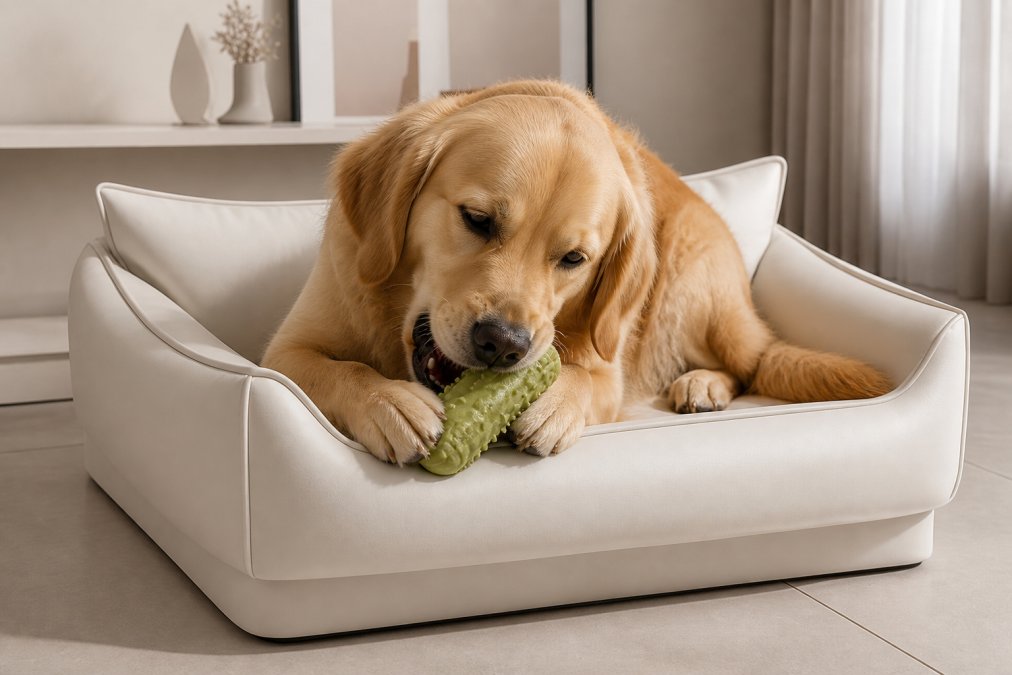
Nylon toys offer a middle ground. They're cheaper than rubber, resist tearing better than rope, and come in diverse shapes. The catch: nylon can splinter into shards if the toy fractures, creating a choking and intestinal blockage risk. Many veterinarians recommend avoiding nylon for dogs that swallow toy pieces. Nylon also degrades faster under UV exposure, so outdoor toys need rotation or storage.
Rope toys are the riskiest for heavy chewers. While rope resists initial tearing, dogs can unravel the fibers and ingest long strands, which cause intestinal obstruction, a surgical emergency. Rope works fine for supervised play sessions, but shouldn't be left unsupervised with aggressive chewers. Rope also collects bacteria in the fibers and is difficult to sanitize thoroughly.
For most heavy chewers, natural rubber or reinforced rubber blends provide the safest, longest-lasting option. Nylon works if your dog doesn't swallow fragments, but requires close monitoring. Avoid rope entirely for dogs left unsupervised.
How to Stop a Dog from Destroying Toys
A dog that destroys toys isn't misbehaving, they're seeking stimulation or relief from anxiety. Addressing the root cause reduces destruction more effectively than cycling through new toys.
Increase exercise before play sessions. A tired dog chews less aggressively. A 30-minute walk or fetch session before toy time reduces destructive chewing by shifting the dog's energy state (peer-reviewed research). Dogs with pent-up energy attack toys with more force, accelerating wear.
Rotate toys rather than leaving all available at once. Novelty maintains interest. If a dog has access to the same five toys every day, they get bored and chew harder out of frustration. Rotating three toys on a weekly schedule keeps engagement high and reduces destructive intensity.
Supervise initial play sessions. Watch how your dog interacts with a new toy. Some dogs mouth gently; others attack immediately. If a dog goes for the seams or weak points within the first minute, that toy won't survive. Removing it early prevents the dog from learning that toys are destructible.
Offer appropriate alternatives. Some dogs prefer chewing texture over toys, bully sticks, yak chews, or raw marrow bones satisfy the chewing drive without destroying fabric toys. Combining a durable toy with an appropriate chew item reduces pressure on the toy itself.
Address underlying anxiety. Destructive chewing often signals stress, boredom, or separation anxiety. If your dog destroys toys only when alone, the issue isn't the toy, it's anxiety. Crate training, puzzle feeders, or gradual desensitization to alone time addresses the cause rather than the symptom.
Top Durable Dog Toys for Chewers: Feature Comparison
| Toy Type | Best Material | Durability Rating | Price Range | Best For | Maintenance |
|---|---|---|---|---|---|
| Natural Rubber Kong | Solid rubber | Excellent (6-12 months) | $15-30 | All chewers, especially grinders | Wash weekly, air dry |
| Nylon Nylabone | Reinforced nylon | Good (3-6 months) | $8-20 | Light to moderate chewers | Inspect for splinters |
| Rope Toy | Braided rope | Fair (2-4 weeks) | $5-15 | Supervised play only | Difficult to sanitize |
| Rubber Ball | Solid rubber | Good (4-8 months) | $10-25 | Fetch and chase | Rinse after muddy play |
| Antler Chew | Natural antler | Excellent (6-12 months) | $12-35 | Moderate to heavy chewers | Soak to soften, dry thoroughly |
The comparison table above shows that natural rubber and antler options dominate for heavy chewers because they resist fragmentation. Rope toys appear in the table for completeness, but they're not recommended for unsupervised chewing.
Proudpetshop's Bite-Proof Sofa Bed ($161.99) extends durability beyond toys themselves. While not a chew toy, this bed prevents dogs from destroying furniture by providing a designated, bite-resistant resting surface. The removable, washable cover and reinforced frame withstand the same chewing pressure that destroys standard dog beds, making it a practical investment for heavy chewers that redirects destructive behavior toward an appropriate target.

For dogs that chew while resting, the Proudpetshop CloudLift Bed ($99.00) offers an elevated, chew-resistant alternative. The breathable mesh and reinforced frame resist puncture better than traditional fabric beds. Elevation also reduces contact with cold floors, which can increase chewing behavior in anxious dogs seeking comfort.
For dogs that overheat during play, the Proudpetshop Cooling Recovery Mat ($28.99) provides a water-activated cooling surface with a chew-resistant cover. The gel core and durable exterior prevent shredding, giving active chewers a functional alternative to toys during recovery periods.
Durability and Longevity: What Separates Quality from Cheap
The difference between a toy that lasts three weeks and one that lasts three months comes down to material engineering, not just price. A $12 toy made with reinforced rubber often outlasts a $25 toy made with thin nylon because the material itself resists the forces a heavy chewer applies.
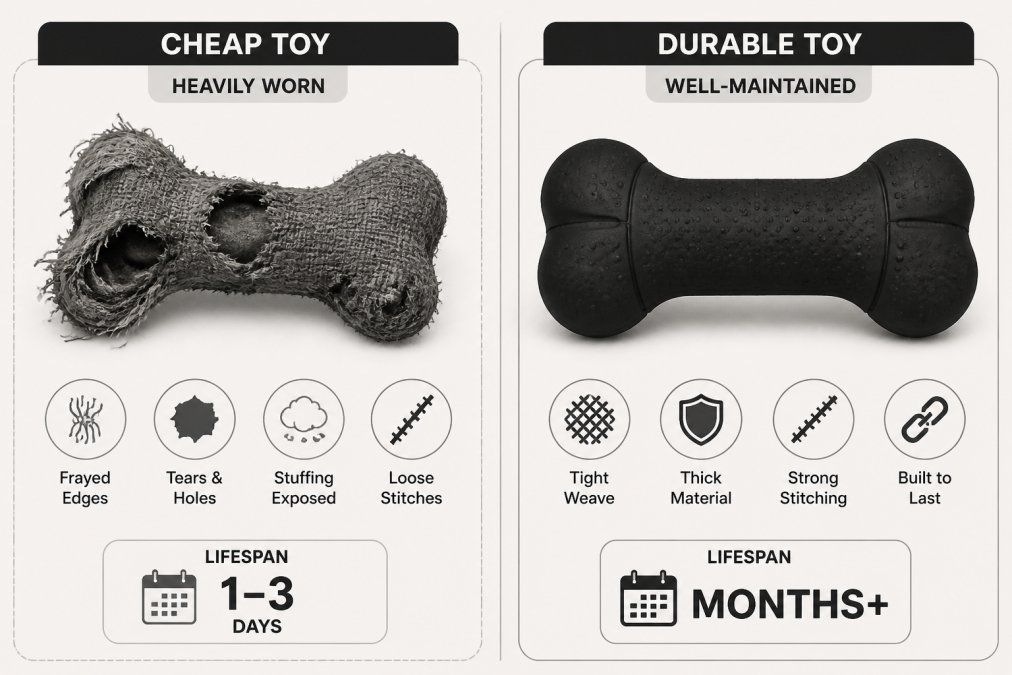
Material density is the primary durability factor. Cheap toys use thin, porous materials that compress and tear under sustained pressure. Quality toys use dense rubber or reinforced synthetics that resist deformation. You can test this by squeezing the toy, if it compresses easily and doesn't spring back, it won't survive heavy chewing.
Stitching and seams fail before material does in poorly made toys. Cheap toys use single-line stitching with standard thread; quality toys use double or triple stitching with reinforced thread rated for higher tensile strength. Seams are common failure points because they concentrate stress on a narrow line. The best toys either eliminate seams or reinforce them with welded or glued connections.
Hardware integrity matters for toys with buckles, D-rings, or attachment points. Cheap hardware rusts, bends, or separates under chewing pressure. Quality hardware uses stainless steel or epoxy-coated materials and is welded rather than riveted. A single loose rivet can create a choking hazard within days.
Core material composition determines whether a toy fragments. Cheap toys often use hollow cores filled with foam or plastic pellets. When the outer layer tears, the core material spills out in small pieces dogs can swallow. Quality toys use solid cores or sealed chambers that prevent fragmentation.
A toy rated for 100+ pounds of tensile strength will outlast one rated for 50 pounds when both are used by the same dog. Check the manufacturer's specifications, legitimate brands publish tensile strength or durability ratings. If a toy doesn't list these metrics, it's likely not tested for heavy chewing.
Maintenance and Replacement Guidelines
Even the most durable toy requires maintenance to maximize lifespan and prevent bacterial growth.
Clean weekly. Saliva, dirt, and food particles accumulate in toy crevices, creating an environment for bacteria and mold. Wash rubber toys in warm soapy water, scrub crevices with a brush, and air dry completely before returning to your dog. Dishwasher-safe toys can go through a sanitize cycle monthly.
Inspect before each use. Run your fingers over the entire toy surface. Feel for tears, loose threads, separated seams, or missing pieces. If you find damage, remove the toy immediately. A small tear can expand into a large hole within hours of aggressive chewing.
Replace when material degrades. A toy's lifespan depends on your dog's chewing intensity. Light chewers might get 6-12 months from a rubber toy; heavy chewers might get 3-4 months. When the material becomes thin, smooth, or shows visible wear, replace it. A worn toy loses its resistance to puncture and poses a greater choking risk.
Rotate toys seasonally. UV exposure degrades rubber and nylon. Store toys indoors when not in use. If your dog plays outdoors, rotate toys every 2-3 weeks to prevent sun damage.
Monitor for behavioral changes. If your dog suddenly becomes obsessed with destroying a particular toy, remove it. This often signals material failure beginning, the toy is starting to come apart and the dog senses it.
A durable toy typically needs replacement every 3-6 months for heavy chewers, compared to 2-4 weeks for cheap toys. The longer lifespan justifies the higher upfront cost, especially in multi-dog households where toy consumption adds up quickly.
Choosing the right durable dog toy for chewers requires understanding material properties, recognizing failure points, and matching toy type to your dog's chewing style. Heavy chewers thrive with natural rubber or reinforced synthetic toys that resist puncture and fragmentation. Proudpetshop offers complementary products, bite-resistant beds and cooling mats, that redirect destructive behavior and provide safe alternatives to toys during rest periods. With proper selection and maintenance, a quality toy provides months of safe play instead of days of frustration. Get started with Proudpetshop's curated selection of durable pet gear, backed by a 30-day satisfaction guarantee and free shipping on orders over $50.
Frequently Asked Questions
What is the most durable material for dog toys?
Natural rubber, reinforced nylon, and heavy-duty rope are among the top materials for durable dog toys. Natural rubber offers flexibility and resistance to punctures, while reinforced nylon can provide tensile strength for aggressive chewers. Look for toys marked as 'heavy-duty' or 'extreme chewer' rated. The best durable dog toys for chewers often combine multiple material layers to withstand sustained pressure without tearing or splintering.
Q:
Select toys specifically labeled for aggressive chewers, check for non-toxic materials, and ensure there are no small parts that can break off and become choking hazards. Inspect toys regularly for damage. Avoid toys with plastic eyes, bells, or thin seams that can separate. Choose toys sized appropriately for your dog's mouth, too small and it becomes a choking risk, too large and it's ineffective. Always supervise initial play sessions.
How often should I replace my dog's chew toys?
Replace chew toys when they show signs of significant wear, splintering, cracking, or if pieces are breaking off. For heavy chewers, inspect toys weekly. Quality durable dog toys for chewers typically last 2-6 months depending on chewing intensity, while cheaper alternatives may fail within weeks. Don't wait until a toy is destroyed, replace it at the first sign of structural failure to prevent ingestion of fragments.
Are rubber dog toys safe for heavy chewers?
Yes, when made from natural or high-grade synthetic rubber specifically designed for heavy chewers. Look for toys that are BPA-free, non-toxic, and tested for durability. Avoid thin rubber toys or those with loose parts. Quality rubber toys resist punctures and don't splinter like cheaper materials. Always choose toys from reputable brands that specify they're rated for aggressive chewing, and monitor your dog to ensure they're not ingesting rubber fragments.
This article was written using GrandRanker