
Table of Contents
- Why Multi Dog Households Need Different Gear
- Feeding Stations That Prevent Bowl Scramble
- Best Leashes for Walking Two Dogs
- How to Organize Dog Supplies in a Busy Home
- Best Pet Carriers for Small Dogs in Multi-Pet Homes
- Safety and Identification Gear for Multiple Dogs
- Frequently Asked Questions
Last Updated: September 13, 2026
Why Multi Dog Households Need Different Gear
Multi-dog households fail at the equipment level long before they fail at training. The reason is simple: gear built for one dog assumes one dog. Add a second, and every shared resource becomes a negotiation. Feeding stations turn into scramble zones, walks turn into leash tangles, and a single toy becomes a custody battle. This guide from Proudpetshop covers the best gear for multi dog households, the equipment that actually holds up when there's more than one mouth at the bowl.
The behavioral stakes are real. Resource guarding, feeding competition, and leash reactivity are the three most common friction points in multi-dog homes, and each one is easier to prevent with the right equipment than to fix afterward (akc.org). The American Kennel Club's guidance on multi-dog household management makes the same point: separate resources reduce conflict before it starts.
Below, we break down the gear that matters most, section by section, from feeding stations to travel safety.
Feeding Stations That Prevent Bowl Scramble
The fix for bowl scramble is physical separation, not supervision. Dogs eat faster and guard more when bowls sit close together, so the goal is distinct feeding zones with visual barriers between them (avma.org).
A practical setup looks like this:
- One bowl per dog, spaced at least 2 meters apart or in separate rooms
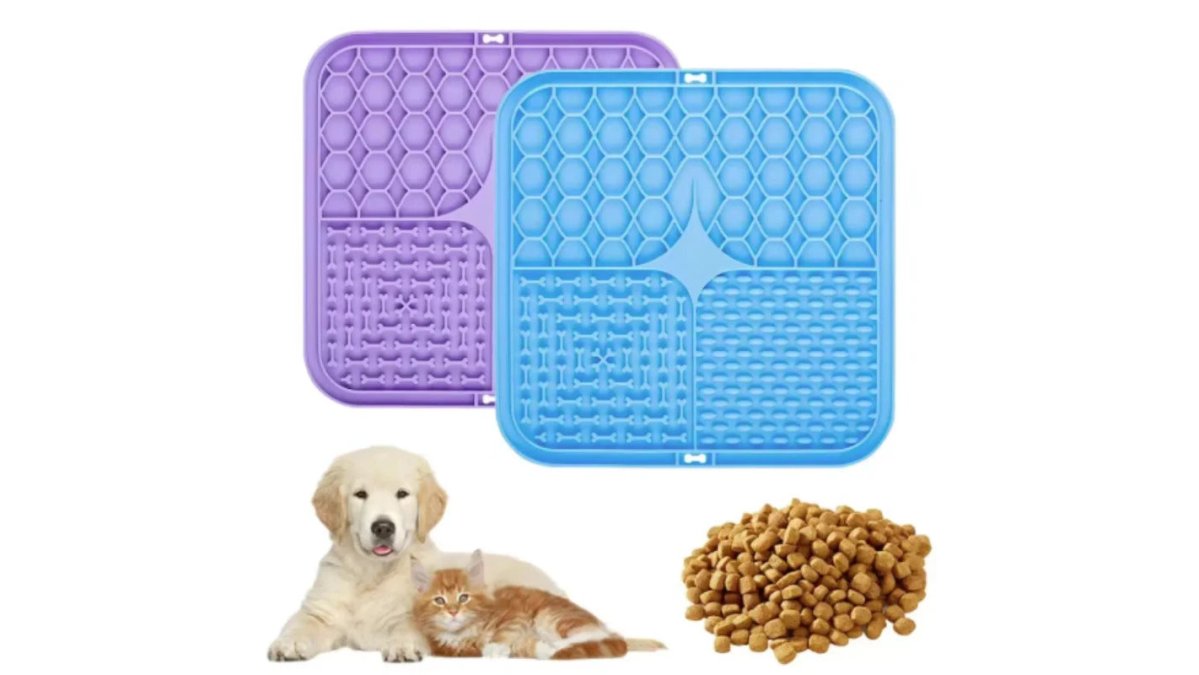
- Slow-feed bowls or lick mats to stretch mealtime and reduce gulping
- Barrier gates or exercise pens to create temporary separation during meals
- A consistent feeding order so no dog feels the need to compete
The Proud Pet Shop Slow-Feeding System ($15.99) is a three-piece set built for exactly this problem. The textured ridges force deliberate licking instead of inhaling, and the suction base keeps the mat anchored even when a determined eater tries to drag it. The dishwasher-safe food-grade silicone matters more than it sounds: with multiple dogs, you're washing these daily.

Slow Feeders and Foraging Mats
Foraging mats extend mealtime further than a standard slow-feed bowl. The Proud Pet Shop Sniffing Petal Mat ($29.99) hides kibble between folded felt petals, turning a two-minute meal into a ten-minute scent workout. That extra time matters in multi-dog homes because it keeps fast eaters occupied while slower dogs finish.
For dogs that need more challenge, the Proud Pet Shop IQ Treat Puzzle ($34.99) adds adjustable difficulty. The non-slip base keeps it in place during solo play, and it's dishwasher-safe.
Best Leashes for Walking Two Dogs
The best leash setup for walking two dogs is a hands-free belt with two separate leads, not a coupler. Couplers look convenient, but they transmit one dog's lunge directly to the other, which amplifies leash reactivity instead of managing it.
Hands-free belts distribute pull across your hips rather than your shoulders, which gives you better balance when one dog bolts. Separate leads let you correct each dog independently. For dogs that pull, a no-pull harness with a front-clip attachment reduces forward momentum without putting pressure on the throat.
What most guides miss: leash reactivity between two dogs you're walking together is often a spacing problem, not a training problem. Keep the dogs on opposite sides of your body, not side by side, and give them enough distance that they aren't feeding off each other's tension.
How to Organize Dog Supplies in a Busy Home
Organizing dog supplies in a multi-dog home comes down to one rule: every dog gets their own labeled bin, and shared items live in a central station. This prevents the daily hunt for the right leash and stops cross-contamination of food and medication.
A workable system:
- One bin per dog for collars, leashes, and ID tags
- A shared bin for poop bags, towels, and first-aid supplies
- A wall-mounted leash rack near the door, one hook per dog
- A sealed food container per dog, labeled with name and portion size
Budget-friendly DIY option: clear plastic storage totes with adhesive labels cost a fraction of branded pet organizers and work just as well. Stack them vertically if floor space is tight.
The Proud Pet Shop Deshedding Vacuum Kit ($59.99) earns its place in the organization conversation because it eliminates the daily cleanup cycle. It captures loose fur directly into a canister instead of releasing it back into the air, which means less vacuuming and fewer allergens circulating in a home with multiple shedding dogs.

Best Pet Carriers for Small Dogs in Multi-Pet Homes
In a multi-dog home, the carrier question isn't "which one is best", it's "how do I move three or four dogs safely without turning the back seat into a wrestling pit." That's the angle most guides skip, and it's the one that matters once you're loading more than two animals into a vehicle.
Start with the restraint layer, not the carrier. A carrier that isn't secured becomes a projectile in a sudden stop, and a loose dog in a crash is a serious injury risk to every occupant. The safest setups use one of three approaches:
- Crash-tested crates anchored with the vehicle's seatbelt or LATCH-style straps, one crate per dog
- Center-console or cargo-area dividers that create separate zones for dogs who can't ride together
- Seat-belt tethers paired with a harness rated for vehicle use, never a collar, which concentrates force on the neck
For small dogs specifically, a collapsible soft-sided carrier works for vet visits and short trips, but it should ride inside a secured crate or be strapped in, not loose on the seat. Look for collapsible frames, machine-washable liners, and an interior tether clip. A top-loading opening is far easier with a nervous dog than a front-loading design, especially when you're reaching in one-handed while holding a second leash.
For households juggling multiple containment zones, the Proud Pet Shop RoadTrip Ride Guard ($34.99) converts a standard car seat into a contained area with a non-slip backing and built-in storage pockets for leashes and treats. It's machine washable, which matters after a muddy trail day with two dogs.
Age-Gap Travel: Puppies and Seniors in the Same Vehicle
This is the gap almost no guide covers. A puppy and a senior dog have opposite travel needs, and putting them in the same open cargo area is a recipe for stress on both ends.
- Puppies need containment they can't chew through, plus a washable liner for motion sickness and accidents. A hard-sided crate with a chew-resistant latch holds up better than fabric.
- Seniors need a low-entry crate or a ramp into the vehicle, plus orthopedic padding. Jumping into a tall SUV is hard on aging joints, and a dog that associates the car with pain will resist loading.
- Separation matters more than size. A puppy's erratic movement stresses a senior dog, and a senior's crankiness can frighten a puppy. Two crates, side by side but not touching, solves most of it.
A common pattern is to load the senior first into a quiet, shaded spot, then load the puppy into a crate that blocks visual contact. That single sequencing change reduces whining and motion sickness in a lot of multi-dog households.
Air Travel and Vet Visits
For air travel, check the airline's current carrier size limits before buying, they vary and change. Prioritize breathable mesh panels on at least two sides, a top-loading opening, and a carrier that fits under the seat in front of you if the dog is flying in-cabin. For vet visits with multiple dogs, bring one carrier per dog and stack them in the cart rather than trying to hold two leashes and a carrier at once. A folding travel crate that sets up in seconds is worth the storage space if you're doing this monthly.
Safety and Identification Gear for Multiple Dogs
Identification is the single most important piece of the best gear for multi dog households, because a loose dog from a group is harder to track than a solo escapee, and because the failure mode is different. With one dog, a gate left open means one dog gone. With four, it means you're counting heads in a panic and may not notice the missing one for minutes.
Every dog needs a collar with a current ID tag, and a GPS tracker adds a recovery layer a tag alone can't provide. But the multi-dog specifics are where most guides stop short:
- Fit check each collar individually. Two fingers under the strap, no more. A collar that fits one dog will not fit the next, and a too-loose collar slips off during a scuffle.
- Use breakaway or quick-release collars for play. Two dogs wrestling can catch a tooth in a standard buckle collar; a quick-release buckle reduces strangulation risk.
- Color-code by dog. Assign each dog a collar color and match it to their leash, bin, and bowl. In an emergency, "the red-collar dog" is faster to communicate than a name.
- Update tags the moment anything changes. Move, new phone number, new vet, a tag with stale info is nearly useless.
- Back up the tag with a microchip, and keep the registry contact current. A microchip is only as good as its registration.
The Proud Pet Shop Smart Finder Tag ($34.99) clips onto any standard collar and pairs with a companion app for real-time location tracking. The waterproof construction holds up in rain, and the long battery life means you aren't charging it weekly. For households with a fence-jumper, this is the difference between a five-minute recovery and a lost-pet search.

Door, Gate, and Recall Protocols
Gear only works if the household runs the same play every time. A consistent routine across all dogs is what prevents the group escape:
- One dog through the door at a time. Use a baby gate or exercise pen as an airlock so the doorway is never a free-for-all.
- Same recall cue for every dog. If one dog is trained to "come" and another to "here," you've split your own command set. Pick one word and use it for all of them.
- Practice individually, then together. A recall that works in the yard with one dog often collapses with three. Proof it with two dogs on leash, then three.
- Keep a leash by every exterior door. The thirty seconds it takes to find a leash is thirty seconds a loose dog is running.
Calming Gear as a Safety Tool
Stress and chaos are safety issues, not just comfort issues. A dog that can't settle is more likely to bolt, guard, or redirect onto a housemate. The Proud Pet Shop Calming Donut Bed ($39.99) supports that behavioral side of safety: its raised rim creates a physical boundary that helps anxious dogs settle during high-stress triggers like thunderstorms or separation, and the non-slip base keeps it anchored on hardwood. In a multi-dog home, having one bed per dog prevents the resource guarding that flares when dogs compete for a single resting spot.
Pair it with a white-noise machine or a covered crate in a low-traffic room. Sensory management, reducing the noise and visual chaos of a busy multi-dog house, is one of the most underused safety levers, and it costs far less than fixing a fight after the fact.
Frequently Asked Questions
What is the 3-3-3 rule for dogs and how does it apply to multi-dog homes?
The 3-3-3 rule describes a rescue dog's adjustment timeline: three days to decompress, three weeks to settle into routine, and three months to feel fully at home. In a multi-dog household, give each new dog its own crate, feeding station, and quiet zone during the first three weeks. Use barrier gates for controlled introductions and keep existing dogs' routines unchanged to reduce tension.
What are the best tools for walking multiple dogs at once?
A hands-free leash that clips around your waist keeps both hands available for treats or gate latches. Pair it with a no-pull harness on each dog to reduce leash reactivity and strain. Walk dogs on separate leashes rather than a coupler so you can control each one individually. Practice loose-leash walking with one dog at a time before combining them on a single walk.
How do you keep a multi dog household organized without spending a fortune?
Assign each dog a labeled bin for toys, grooming tools, and identification tags. Use a wall-mounted rack for leashes and poop bag dispensers near the door. Rotate interactive toys weekly so they stay novel. A robot vacuum and air purifier cut down on fur and dander between deep cleans. Budget-friendly DIY options like shoe organizers for small supplies work just as well as specialty storage.
What gear is essential for multi-dog travel?
A non-slip car seat cover with built-in storage pockets keeps each dog secure and separates them during transit. Bring collapsible bowls, a pet stain remover, and a smart finder tag on each collar in case of separation. For small dogs, a compact carrier that fits under the seat works for one pet at a time. Pack identification tags with current phone numbers on every dog before you leave.