
Table of Contents
- Why Restraining Your Dog During Car Travel Matters
- Choosing a Dog Car Safety Harness for Your Vehicle
- Using a Dog Crate for Car Travel: Sizing and Placement
- How to Secure a Dog Carrier in a Car Safely
- Tips for Traveling with a Dog by Car: Comfort and Safety
- Protecting Your Vehicle Interior and Your Pet
- Common Mistakes to Avoid When Transporting Dogs
- Frequently Asked Questions
Last Updated: October 6, 2026
Why Restraining Your Dog During Car Travel Matters
Securing your dog during car rides is about safety, not comfort.
When you transport dog in car safely, you protect your pet, yourself, and your passengers.
The best way to transport dog in car depends on your dog's size, temperament, and vehicle, match the restraint to your situation.
At Proudpetshop, we help pet owners find travel gear that works for real life.
Choosing a Dog Car Safety Harness for Your Vehicle
A dog car safety harness secures your pet to the vehicle without confining them to a crate. It wraps your dog's body and connects to the seat belt or an anchor point, ideal for dogs that dislike enclosed spaces, need to see out to stay calm, or are too large for a practical crate.
Most harnesses are sized for dogs between roughly 10 and 90 pounds, though ranges vary by brand. The bigger problem is that not every harness sold as a "car harness" is built to hold up in a crash.
What "Crash-Tested" Actually Means
A harness that simply clips to a seat belt is not automatically crash-tested. A meaningful claim means the manufacturer ran a dynamic sled test simulating a frontal impact with a weighted dummy sized to the harness's rated range, judging whether the dummy stays in the seat and whether webbing, stitching, and hardware survive the load.
No government certification stamps a pet harness as crash-safe the way a child car seat carries a federal safety standard label, so check the claim yourself:
- Look for a specific test description, impact speed, dummy weight, and pass/fail criteria. Vague language like "tested for safety" tells you almost nothing.
- Prefer harnesses tested at a recognized independent facility rather than in-house only.
- Check the weight rating: a harness tested at 30 pounds is not evidence it performs at 80 pounds.
- Be skeptical of a harness that doubles as a walking harness with no separate crash-rated model.
Center for Pet Safety crash test program and harness ratings
How to Fit a Harness Correctly
Fit is where crash-tested harnesses fail in real life.
Measure your dog's chest girth, the circumference just behind the front legs, and neck, then compare both against the manufacturer's chart, not a generic label like "large."
Adjust the harness to sit snug: no more than two fingers should slide under the straps, and it shouldn't twist or slide sideways when your dog moves.
Matching the Harness to Your Dog and Vehicle
A short decision guide:
- Small dogs (under 25 pounds): A crash-rated harness paired with a booster or a secured carrier often works better than a harness alone, because a small dog can submarine under the seat belt in a crash.
- Medium and large dogs (25-90 pounds): A crash-rated harness with a seat-belt tether is usually the most practical option, especially in sedans where a large crate won't fit.
- Anxious or crate-averse dogs: A harness lets them stay upright and see out, which can reduce panic. Pair it with a familiar blanket or toy.
- Dogs that chew: Inspect webbing and stitching frequently. A chewed strap is a failed strap.
Test the setup before your first real drive: buckle your dog in and have a helper watch while you brake firmly in an empty lot. If the dog slides forward more than a few inches or the harness shifts, tighten the fit or change the attachment style.
Using a Dog Crate for Car Travel: Sizing and Placement
A crate provides the most secure restraint when it's the right size and secured to the vehicle. Dogs in a properly installed crate are protected from impact and can't distract the driver, and anxious dogs get a familiar, den-like space.
Hard-Sided vs. Soft-Sided Carriers
Hard-sided crates (plastic or metal) are heavier, more durable, and offer better crash protection, but they're harder to fit into smaller vehicles. Soft-sided carriers use fabric over a wire frame, lighter and easier to store, but with less crash protection, and they can collapse if your dog panics or a heavy object presses against them. For regular car travel, a hard-sided crate is safer; for occasional trips or small dogs, a soft-sided carrier works fine if secured properly.
Measuring Your Dog for the Right Fit
Your dog needs room to stand, turn around, and lie down. Too small causes stress; too large lets your dog slide around during stops and turns.
Here's how to measure:
- Measure your dog's length from nose to base of tail
- Measure the height from the floor to the top of their head when standing
- Add 4 inches to each measurement
- Choose a crate with interior dimensions that match or slightly exceed these numbers
Write these measurements down before shopping, most retailers list crate dimensions clearly.
Check the manufacturer's weight rating: if your dog weighs 45 pounds, buy a crate rated for at least 50 pounds for a safety margin.
Placement by Vehicle Type
Where the crate goes depends on your vehicle.
Sedans and coupes. The back seat is best.
SUVs and crossovers. Use the back seat or the cargo area behind the rear seats.
Hatchbacks and wagons. The cargo area is shallower than an SUV's, so measure carefully, a crate that fits lengthwise may block rear visibility.
Pickup trucks. An open-bed crate is exposed to weather, debris, and extreme temperatures, and can shift or be thrown if untied.
Proud Pet Shop RoadTrip Ride Guard →
Crate vs. Harness: A Quick Decision Guide
- Small dog, small car: A secured carrier or a crash-rated harness with a booster is usually more practical than a full crate.
- Large dog, SUV or hatchback: A hard-sided crate in the cargo area with a barrier is the strongest setup.
- Large dog, sedan: A crash-rated harness on the back seat often fits better than a crate that can't be tied down.
- Anxious dog: A crate they already use at home can reduce stress, but only if it's the right size and secured.
How to Secure a Dog Carrier in a Car Safely
Placing a crate in the car is only half the job. You must also secure it so it doesn't shift during braking, acceleration, or turns.
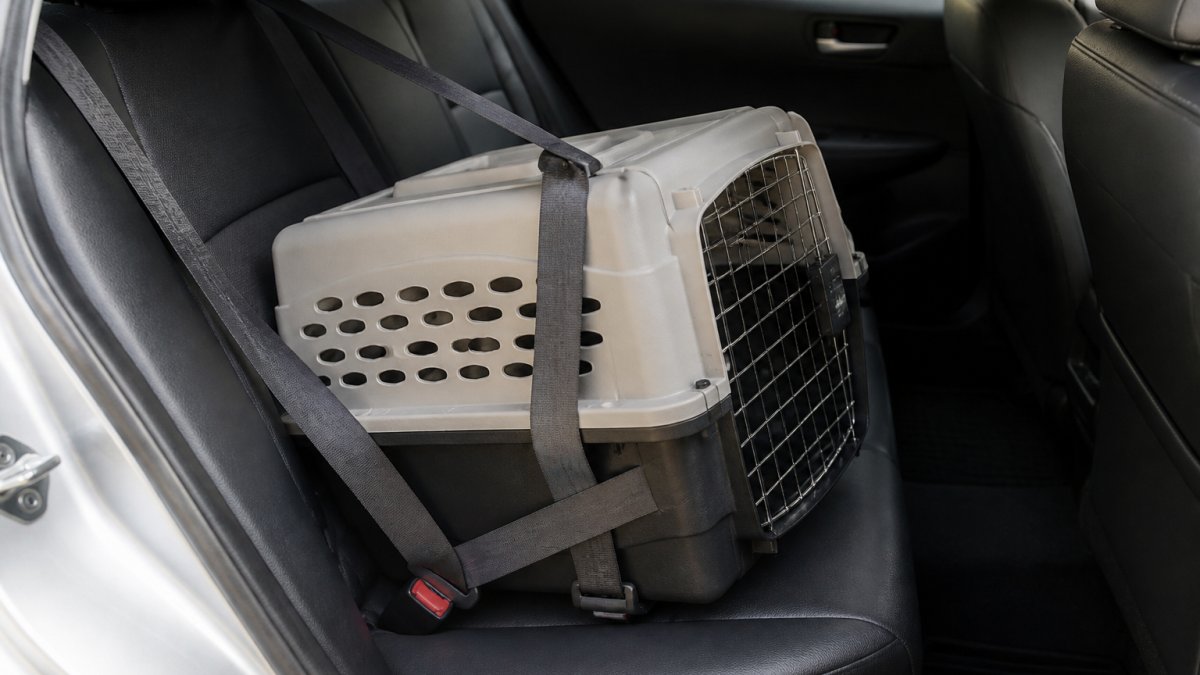
Back seat placement is safest. Front seats expose your dog to airbag deployment, which can cause serious injury or death.
To secure a hard-sided crate:
- Place the crate on the back seat with one long side against the seat back
- Thread the seat belt through the crate's frame (most crates have slots for this)
- Tighten the seat belt until the crate doesn't shift when you push on it
- Test by pushing firmly on all sides, the crate should stay in place
Soft-sided carriers need more care: they can compress, so the seat belt must be tight enough to keep the carrier rigid.
Tips for Traveling with a Dog by Car: Comfort and Safety
Even a properly restrained dog can get anxious on long drives. Your job is making the experience as calm as possible.
Preparing Your Dog for Short Practice Trips
Most dogs need time to adjust. Start with 5- to 10-minute trips around the neighborhood so your dog gets used to the sounds and motion.
Gradually increase trip length, 20 minutes, then 45, so your dog builds confidence instead of car anxiety.
Never force your dog into the car or make a fuss about leaving. Keep departures calm and routine, and let your dog settle for a few minutes before opening the crate at home.
Managing Motion Sickness, Anxiety, and Longer Journeys
Some dogs get carsick, signs include drooling, whining, panting, or vomiting. It's more common in young dogs and usually improves with age and experience.
If your dog gets carsick:
- Feed them a light meal 2-3 hours before traveling, not right before
- Keep the car cool and well-ventilated
- Avoid sudden acceleration and hard braking
- Take frequent breaks on longer trips
Anxiety shows up as excessive barking, panting, or escape attempts. It often improves with practice trips and a familiar crate setup.
For trips over 4 hours, stop every 2-3 hours so your dog can stretch, drink, and relieve themselves.
Planning Stops, Hydration, and Temperature Control
Bring a collapsible water bowl and fresh water, and offer water every 2 hours, especially on hot days. Never leave your dog in a parked car, even with windows cracked, interior temperatures rise dangerously fast (the CDC). Keep the car comfortable: air conditioning in summer, adequate warmth in winter. Pack a small first-aid kit with gauze, antiseptic, and tweezers, plus paper towels and cleaning supplies for accidents.
Protecting Your Vehicle Interior and Your Pet
Car travel means mud, fur, and occasional accidents. The Proud Pet Shop RoadTrip Ride Guard is a car seat cover that protects your upholstery while giving your dog a designated safe zone.

It has a non-slip backing that stays put during acceleration and braking, built-in pockets for leashes and treats, and it's machine washable, cleanup after muddy hikes takes minutes.
A cover also makes your dog feel more secure with their own space, separate from the driver's area, which reduces distraction and anxiety.
Common Mistakes to Avoid When Transporting Dogs
Mistake 3: Securing the crate loosely. A crate that shifts during braking defeats the purpose.
Mistake 5: Not acclimating your dog. Dogs that never practice short trips often panic on longer journeys.
Mistake 6: Forgetting water on long trips. Dehydration happens fast, especially on warm days.
The safest way to transport dog in car matches your dog's size, temperament, and vehicle.
At Proudpetshop, we stock travel gear built for real pet owners. Our TrailFold Carrier offers hands-free transport for smaller dogs with breathable mesh and safety leash attachment.

Frequently Asked Questions
What is the safest way to transport a dog in a car?
The safest way to transport your dog involves securing them in the back seat or cargo area using a crash-tested harness, crate, or carrier. Keep your dog away from front-seat airbags, which can cause serious injury during deployment. Use a vehicle-compatible restraint that fits your dog's size and temperament, and ensure it's properly installed according to manufacturer instructions. Short practice trips help your dog adjust before longer journeys.
Should a dog ride in a crate or wear a car harness?
Both options work, depending on your dog's size, temperament, and vehicle layout. Hard-sided crates offer maximum crash protection and are ideal for anxious dogs or those prone to motion sickness. Harnesses give your dog more freedom and work well for calm, smaller dogs in compact vehicles. A seat-belt restraint or carrier provides a middle ground. Consider your dog's behavior, your vehicle configuration, and whether you need to transport multiple pets when choosing between them.
How do you get a dog comfortable with car rides?
Start with short practice trips of just 5-10 minutes to help your dog acclimate without stress. Gradually increase trip length as your dog shows calm behavior. Use positive reinforcement like treats and praise when your dog enters the vehicle. Keep the car at a comfortable temperature, play soft music, and maintain a calm demeanor yourself. For dogs with anxiety or motion sickness, consult your veterinarian about calming aids before longer journeys. Consistency and patience make the biggest difference.
How often should you stop when traveling with a dog by car?
Plan a stop every 2-3 hours during a road trip to allow your dog to stretch, use the bathroom, and drink water. Puppies and senior dogs may need more frequent breaks. During each stop, keep your dog on a leash and offer a small amount of water, avoid feeding large meals before or during travel. Check that your dog is not overheated or stressed. For very long trips, consider breaking the journey into two days to reduce fatigue and anxiety.