
Table of Contents
- Why Your Cat Hates the Carrier (and How to Change That)
- Choose the Right Carrier Type for Your Cat
- Cat Carrier Training Tips for a Calm Introduction
- How Long to Leave Cat Carrier Out During Training
- How to Get a Cat Into a Carrier for Vet Visits
- Handling Nervous Cats and Multi-Cat Households
- Post-Training Maintenance and Emergency Access
- Frequently Asked Questions
Last Updated: September 30, 2026
Why Your Cat Hates the Carrier (and How to Change That)
Most cats don't hate the carrier itself. They hate what it predicts: a car ride, a vet visit, and the loss of control that comes with both.
That's fixable. Learning how to introduce cat to carrier the right way comes down to one principle: the carrier has to stop being a warning sign and start being a normal object in your home. At Proudpetshop, we hear from cat owners who dread vet day more than their cats do.
The fix isn't a trick. It's a training plan built on positive reinforcement, desensitization, and patience. Below are seven steps that turn the carrier from a threat into a familiar, treat-filled space.
Choose the Right Carrier Type for Your Cat
The best carrier for most cats opens from the top, holds its shape, and stays out in the open between trips. Your cat's size, temperament, and your handling confidence decide the rest.
Two features matter more than brand: how the carrier opens and how sturdy it feels. A carrier that collapses or wobbles when lifted makes a nervous cat panic.
Hard-Sided vs. Soft-Sided Carriers
Hard-sided carriers hold their shape and clean easily. Soft-sided carriers are lighter and often have more mesh for airflow.
For cats who scratch or bolt, hard-sided is safer. For calm cats and tight storage, soft-sided works well. Whichever you choose, check that the zippers lock and the base doesn't sag.
Top-Loading vs. Front-Loading Options
Top-loading carriers let you lower a cat in from above, far easier than pushing a reluctant cat through a front door.
Front-loading carriers work fine for cats who walk in on their own.
| Carrier Type | Best For | Main Drawback |
|---|---|---|
| Hard-sided, top-loading | Nervous cats, bolters | Bulky to store |
| Hard-sided, front-loading | Calm cats, easy access | Harder to lower a cat in |
| Soft-sided, top-loading | Small cats, tight storage | Less rigid when lifted |
| Soft-sided, front-loading | Travel and errands | Zippers can wear over time |
Cat Carrier Training Tips for a Calm Introduction
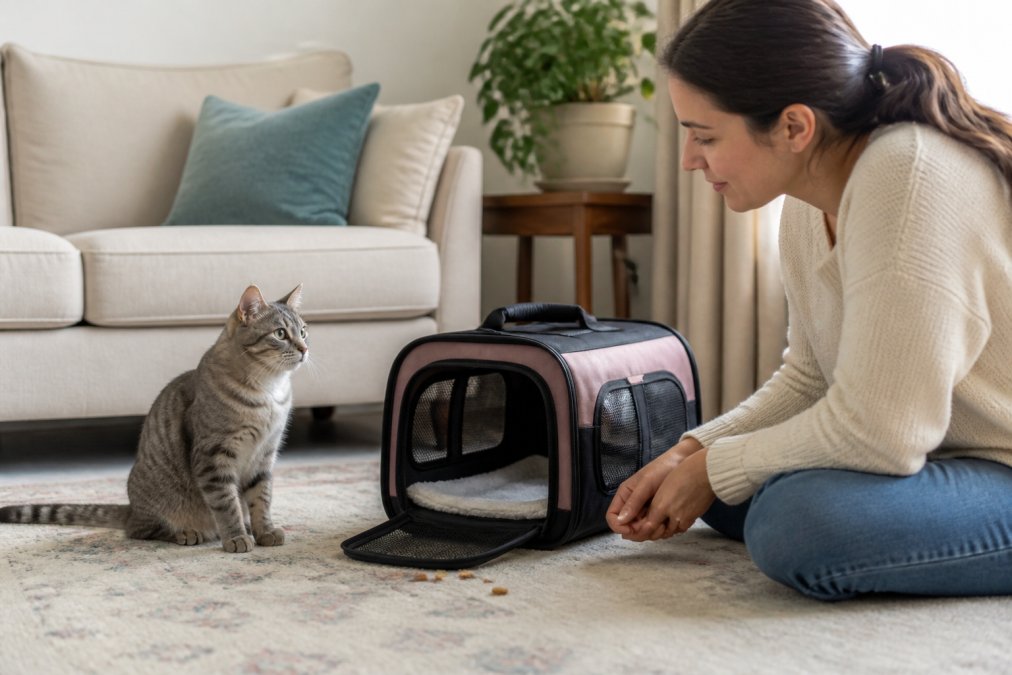
The goal of cat carrier training tips is simple: reward every calm interaction with the carrier, and never force the next step. Train in short sessions, a few minutes at a time, over one to two weeks.
A Staged Plan You Can Actually Follow
Most guides say "go slow", that's not a plan. Here's a concrete progression. Move to the next stage only when your cat shows the green-light behavior three sessions in a row.
Desensitization and Positive Reinforcement Basics
Desensitization means exposing your cat to the carrier in tiny, non-scary doses until it stops triggering alarm. Positive reinforcement means following every calm moment with something your cat wants, usually food.
Using Treats, Clickers, and Pheromone Sprays
A clicker marks the exact moment your cat does something right, like sniffing the carrier or stepping inside. Click, then treat. The click must land within about one second of the behavior or the association breaks.
Carrier-Specific Anxiety Triggers Most Guides Skip
Generic desensitization fails when the real trigger isn't the box. Identify which of these applies before training, because each needs a different fix.
Proud Pet Shop TrailFold Carrier →
- Motion sickness. Some cats drool, vomit, or yowl only once the car moves. Carrier training alone won't fix this. Ask your veterinarian about anti-nausea options before travel, and keep the first car trips to under five minutes.
- Scent stress. A carrier that smells like the vet clinic, a previous cat, or cleaning chemicals can trigger avoidance even if the box itself is familiar. Wipe it down with a pet-safe enzymatic cleaner, then re-scent with your cat's own bedding.
- Sound sensitivity. Hard plastic carriers amplify road noise and echo. Lining the base with a folded towel dampens vibration and sound.
- Visual overload. Cats in carriers see a blur of passing scenery. A light towel draped over the top and sides, leaving the front mesh open, reduces visual stress without blocking airflow.
- Handling aversion. If your cat panics at being picked up, the problem is the hands, not the carrier. Practice brief, treat-rewarded lifts at home, separate from carrier sessions, before combining the two.
How Long to Leave Cat Carrier Out During Training
Leave the carrier out permanently. That's the short answer to how long to leave cat carrier out, and it's the step most owners skip.
Keep these habits going:
- Leave the door open or removed during training weeks
- Place a worn t-shirt or familiar blanket inside
- Refresh treats inside the carrier daily
- Feed occasional meals right next to or inside it
How to Get a Cat Into a Carrier for Vet Visits
For a trained cat, getting into the carrier should take seconds, not a wrestling match. Here's the calm, step-by-step approach for how to get a cat into a carrier for vet visits.
- Set the carrier on a stable surface at waist height.
- Open the top or front door and place a treat just inside.
- Let your cat walk in on their own if possible. Wait.
- If needed, pick your cat up gently, supporting the chest and hind legs.
- Lower your cat in from above through a top-loading door.
- Close the door calmly and speak in a low, steady voice.
- Cover the carrier with a light towel to reduce visual stress in the car.
Handling Nervous Cats and Multi-Cat Households
Nervous cats need slower steps and more sessions. Multi-cat homes need separate carriers, since a shared carrier carries every cat's scent and can trigger territorial behavior.
Multi-Cat Logistics: Training Without Triggering a Fight
This is the part most guides skip. In a multi-cat home, the carrier itself isn't the only stressor, the training session can become a resource competition.
- One carrier per cat, always. Label them. Store them in separate spots. A carrier that smells like another cat reads as that cat's territory.
- Train in separate rooms, at separate times. If two cats can see each other during a session, the calmer one may guard the treats and the nervous one may shut down. Rotate: cat A in the bedroom, cat B in the living room, then swap.
- Bring all carriers out at the same time. If only one cat's carrier appears, that cat learns the box predicts being singled out. When every carrier is out, none of them is a signal.
- Watch for redirected aggression. After a vet trip, a cat that smells like the clinic can be attacked by housemates. Wipe the returning cat down with a cloth that smells like the home before reintroducing them.
- Don't train a reactive cat next to a confident cat. The confident cat's relaxed body language can help over time, but only after the reactive cat is already eating calmly near the carrier alone.
Emergency-Only vs. Routine Training
Not every cat needs the same carrier skills, the training goal changes with what you're preparing for.
Towel Wrap Technique and Calm Approach
The towel wrap technique helps with cats who panic when picked up. Drape a large towel over your cat's back and shoulders, tucking the sides gently, control without scruffing. Use a towel that smells like your home, not fresh laundry.
Post-Training Maintenance and Emergency Access
Training isn't done once your cat walks in willingly. Maintenance keeps the carrier neutral.
Frequently Asked Questions
How do I get my cat into a carrier without a fight?
Start by leaving the carrier open in a room your cat already relaxes in. Place treats and a worn t-shirt inside so it smells familiar. Over several days, reward your cat for sniffing, stepping inside, and eventually staying. When you need to close the door, do it calmly and immediately offer a treat. Avoid chasing or forcing your cat in, since that builds negative associations that make the next attempt harder.
Should I leave the cat carrier out all the time?
Yes. Leaving the carrier out permanently turns it from a scary object into normal furniture. Cats are neophobic, meaning they avoid unfamiliar things, so constant exposure reduces that fear. Place it near a window or in a favorite room with a soft blanket inside. This is one of the most effective cat carrier training tips because it removes the element of surprise that triggers panic when the carrier suddenly appears before a vet visit.
How long does it take to train a cat to like a carrier?
Most cats need one to three weeks of daily short sessions to accept a carrier calmly. Some confident cats adjust in a few days, while anxious cats or those with past negative experiences may need a month or more. The key is going at your cat's pace. If your cat stops eating treats near the carrier, you are moving too fast. Shorten the session and back up to the last step your cat handled well.
What can I put in the carrier to make my cat feel safe?
Line the bottom with a soft towel or blanket that carries your scent. Spray the interior with a pheromone product like Feliway about 15 minutes before your cat approaches. Add a favorite toy or a piece of your clothing. Once your cat is comfortable entering, you can also drape a light towel over the top to create a den-like feel, which appeals to a cat's natural denning behavior and reduces visual stress.
Vet day doesn't have to be a battle. With a few weeks of patient, treat-based training, most cats learn to walk into a carrier on their own. Proudpetshop helps you get there with durable carriers built for real life, backed by free shipping on orders over $50 and a 30-day satisfaction guarantee. Get started with Proudpetshop and make every trip calmer for you and your cat.