
Table of Contents
- Why Durable Grooming Tools Matter for Thick Coats
- Understanding Double Coats vs. Single Coats
- Best Undercoat Rake for Dogs: What Works and Why
- How to Deshed a Double Coated Dog: Step-by-Step Technique
- Grooming Tips for Thick Coats During Shedding Season
- Top Durable Grooming Tools for Thick Coats
- Maintenance and Longevity: Keeping Your Tools in Top Shape
- Professional vs. At-Home Grooming Tools
Why Durable Grooming Tools Matter for Thick Coats

Thick-coated dogs shed differently than short-haired breeds. The undercoat, that dense inner layer beneath the topcoat, traps loose hair, dead skin cells, and dander that accumulates over time. Without proper grooming tools designed to handle this volume, mats form, skin irritation develops, and your home fills with hair that regular vacuums can't contain.
At Proudpetshop, we've helped thousands of pet owners understand why investing in durable grooming tools for thick coats is preventative care. A quality undercoat rake removes loose fur before it becomes a problem. Cheap brushes bend, bristles fall out after a few uses, and they don't penetrate the undercoat effectively. Durable tools are engineered to handle the density and volume these breeds naturally shed, particularly during seasonal transitions.
The difference between struggling through grooming and maintaining a healthy coat comes down to tool quality. When your brush works properly, grooming takes 15-20 minutes instead of an hour. Your dog stays comfortable because the tool glides through the coat rather than pulling. And critically, you actually remove the dead hair instead of just pushing it around.
Understanding Double Coats vs. Single Coats
A double coat consists of two distinct layers: the topcoat (longer, coarser guard hairs) and the undercoat (shorter, denser insulating layer). Breeds like Golden Retrievers, German Shepherds, Huskies, and Malamutes have double coats that shed year-round, with dramatic increases during spring and fall (akc.org). Single-coated dogs like Poodles, Dachshunds, and Boxers have one layer of hair and shed less visibly.
The undercoat's purpose is temperature regulation (peer-reviewed research). When it gets matted or compressed, it loses effectiveness and creates conditions for skin problems. This is why durable grooming tools designed for double coats focus on reaching that undercoat layer without damaging the topcoat. A slicker brush alone won't do it. You need an undercoat rake or deshedding tool that penetrates deep.
Understanding your dog's coat type determines which tools you actually need. Invest in the wrong tool for a double-coated breed and you'll waste money on something that barely works. Invest in the right tool and grooming becomes manageable, your dog's coat stays healthy, and shedding becomes predictable.
Best Undercoat Rake for Dogs: What Works and Why
An undercoat rake is the foundation of any thick-coat grooming routine. Unlike a slicker brush that works the surface, a rake's teeth penetrate deep into the undercoat to remove dead hair at the source. The spacing between teeth, typically 0.5 to 1 inch, is critical (aafco.org). Too close and the rake clogs with hair. Too wide and it misses fine undercoat.
Quality undercoat rakes have stainless steel teeth that won't rust or corrode after months of use. The handle matters equally. You'll be gripping this tool for 20-30 minutes during grooming sessions. An ergonomic handle reduces hand fatigue and prevents the repetitive strain that leads to arthritis or carpal tunnel issues.
A durable undercoat rake costs $25 to $45 for a professional-grade tool but lasts 5-7 years with proper care, while budget rakes bend or lose teeth after 6-12 months. When you calculate cost per use over years, durability wins decisively.
Stainless Steel vs. Coated Options
Stainless steel teeth resist rust and maintain their shape through thousands of grooming sessions. Coated options, often chrome-plated or painted, look sleek initially but the coating chips or wears away, exposing cheaper metal underneath that rusts quickly. For a tool you use weekly, stainless steel is the only practical choice. The extra cost upfront saves you from replacing the rake every year.
Ergonomic Handles for Extended Grooming Sessions
Grooming a thick-coated dog takes time. Your hand will fatigue if the handle doesn't distribute pressure properly. Ergonomic handles are contoured to fit your palm, with non-slip grips that prevent the tool from rotating in your hand. Owners with arthritis or early-stage joint issues report that ergonomic-handled tools make grooming possible again.
How to Deshed a Double Coated Dog: Step-by-Step Technique
Deshedding isn't random brushing. A structured approach removes the maximum amount of loose hair while keeping your dog comfortable and preventing skin irritation.
Step 1: Start with a slicker brush (2-3 minutes). Work through the entire coat gently to remove surface mats and tangles. Move in the direction of hair growth.
Step 2: Use an undercoat rake on the legs and belly (5-7 minutes). These areas mat most easily and have the densest undercoat. Work small sections at a time, roughly 4-6 inches. Make multiple passes until the rake glides through without catching.
Step 3: Work the back and sides (8-10 minutes). Use overlapping strokes, working from the spine outward. Pay special attention to areas behind the ears and along the hindquarters where mats form most easily.
Step 4: Address problem areas with a dematting tool (3-5 minutes). If you find stubborn mats the rake won't penetrate, use a dematting tool specifically designed to break up matted hair without cutting it. Never pull or force; work slowly to avoid skin irritation.
Step 5: Final pass with a pin brush (2-3 minutes). After undercoat removal, use a pin brush to smooth the topcoat and catch any remaining loose hair.
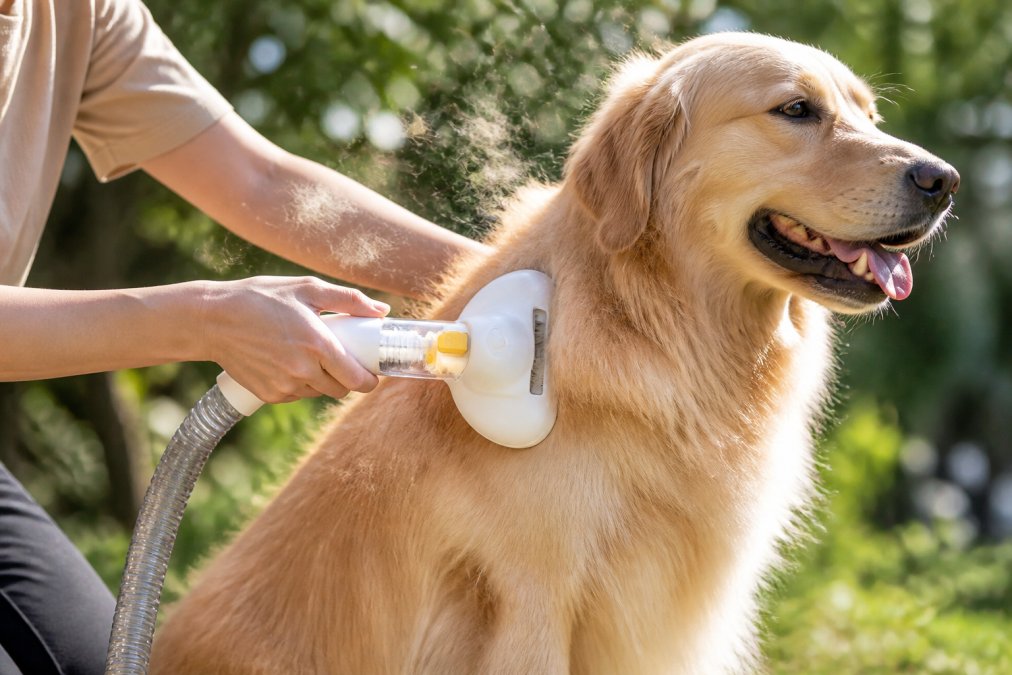
Total time: 20-30 minutes. Frequency matters more than duration. Weekly grooming sessions prevent mats from forming and keep shedding manageable.
Grooming Tips for Thick Coats During Shedding Season
Spring and fall bring peak shedding. During these transitions, the undercoat loosens dramatically. Grooming frequency should double during shedding season, moving from weekly to twice-weekly sessions if possible.
Invest in a deshedding vacuum system during peak season. The Proud Pet Shop Deshedding Vacuum Kit ($59.99) integrates a grooming tool with a low-noise motor, removing the bulk of loose fur in a single pass compared to traditional brushes.

Bathing before grooming helps during shedding season. Warm water loosens the undercoat, making it easier for tools to remove dead hair. Always dry your dog thoroughly before using an undercoat rake; wet hair tangles and can pull uncomfortably.
Nutrition affects coat quality and shedding volume. Dogs with poor diets shed excessively and develop dull, brittle coats. Omega-3 and omega-6 fatty acids support skin health and reduce unnecessary shedding.
Top Durable Grooming Tools for Thick Coats
The right tool makes grooming efficient. The wrong tool makes it frustrating and ineffective.
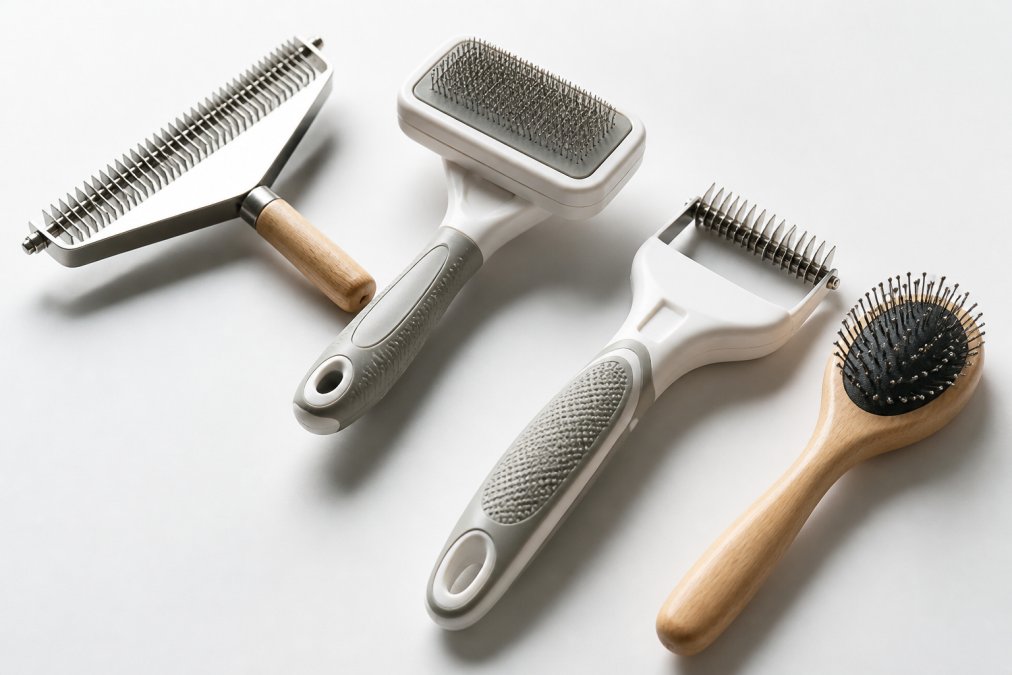
Slicker Brushes for Detangling Matted Hair
A slicker brush has short, fine wires close together on a flat surface. It removes surface mats and tangles before they become serious problems. Quality slicker brushes have stainless steel wires and ergonomic handles that prevent hand fatigue. They cost $15-30 and last 3-5 years with proper care.
Slicker brushes work best as a first pass before using an undercoat rake. The wire spacing matters, fine-toothed slickers work for removing mats but clog quickly with loose hair. Medium-toothed slickers balance effectiveness with practicality.
Dematting Tools for Problem Areas
Dematting tools have short, sharp teeth designed specifically to break up matted hair without cutting it. They work where slicker brushes fail, in stubborn, compressed mats that won't brush out. The key is patience, never force a dematting tool through a mat.
Quality dematting tools have stainless steel blades and comfortable handles, costing $12-25 and lasting indefinitely if maintained properly. They're emergency equipment, not primary grooming tools. If you're using them regularly, your primary grooming routine isn't working.
Deshedding Vacuum Systems for Seasonal Control
Deshedding vacuum systems combine grooming with suction, capturing loose hair directly into a canister. The Proud Pet Shop Deshedding Vacuum Kit ($59.99) integrates a grooming tool with a low-noise motor, making it practical for dogs sensitive to sound. These systems reduce household shedding dramatically and are worth the investment if you own multiple thick-coated dogs or have severe allergies.

Pin Brushes for Coat Maintenance Between Sessions
Pin brushes have longer wires spaced further apart than slicker brushes. They work through the topcoat and light undercoat without catching on mats. Quality pin brushes have stainless steel pins and wooden or ergonomic plastic handles, costing $10-20 and lasting 4-6 years.
Use a pin brush 2-3 times weekly on days when you're not doing full undercoat removal. This prevents mats from forming and keeps your dog's coat looking healthy between major grooming sessions.
Maintenance and Longevity: Keeping Your Tools in Top Shape
Durable grooming tools are investments. Proper maintenance extends their lifespan and keeps them working effectively.
Clean tools after every use. Hair wraps around bristles and teeth, trapping moisture. Rinse under warm water, remove trapped hair with an old toothbrush, and dry thoroughly before storing. For metal tools, occasional light oil prevents rust.
Store in a dry place. Humidity causes rust, even on stainless steel. A closed drawer or cabinet works better than leaving tools in a damp bathroom.
Replace worn bristles. Some quality brushes have replaceable heads. Replacing the head costs $8-15 instead of buying a new brush.
Sharpen dematting tools periodically. Dull blades are useless. Professional sharpening costs $5-10 and restores effectiveness.
Inspect handles regularly. Cracked or splintered handles should be replaced. A damaged handle is uncomfortable to use and can harbor bacteria.
With proper maintenance, a quality undercoat rake lasts 7-10 years. A slicker brush lasts 5-7 years. Budget tools replaced annually cost more over time than buying quality tools once.
Professional vs. At-Home Grooming Tools
Professional grooming facilities use industrial-grade equipment designed for high-volume use. If you're grooming one or two dogs at home, professional-grade consumer tools work perfectly. Consumer tools are engineered for weekly home use, not 8-10 dogs daily.
Professional groomers charge $50-150 per session depending on breed size and coat condition. Most owners benefit from a hybrid approach: do light maintenance grooming at home (15-20 minutes weekly) with quality at-home tools, and visit a professional groomer 2-4 times yearly for deep deshedding. This keeps your dog's coat healthy, prevents emergency mat situations, and costs less than professional grooming alone.
At-home grooming also strengthens your bond with your dog. Regular, gentle grooming sessions build trust and let you spot skin issues early.
| Tool Type | Best For | Durability | Cost Range | Maintenance |
|---|---|---|---|---|
| Undercoat Rake | Deep undercoat removal | 7-10 years | $25-45 | Clean after use, occasional oiling |
| Slicker Brush | Surface mats and tangles | 5-7 years | $15-30 | Clean after use, replace if wires bend |
| Dematting Tool | Stubborn mat removal | 10+ years | $12-25 | Clean after use, sharpen periodically |
| Pin Brush | Maintenance between sessions | 4-6 years | $10-20 | Clean after use, dry thoroughly |
| Deshedding Vacuum | Heavy seasonal shedding | 5-8 years | $50-150 | Empty canister, clean brush head, dry completely |
Durable grooming tools for thick coats aren't luxury items, they're practical necessities for maintaining your dog's health. The right tools make grooming manageable, prevent mats and skin issues, and reduce household shedding dramatically. Quality matters because you're using these tools weekly, sometimes for years.
Start with an undercoat rake and slicker brush, these two tools handle 80% of grooming needs. Add a deshedding vacuum during shedding season if household hair becomes overwhelming. The Proud Pet Shop Deshedding Vacuum Kit ($59.99) combines both functions in one low-noise system, making it practical for dogs sensitive to sound while capturing loose fur directly into a canister. With these tools and a consistent weekly routine, your thick-coated dog's coat stays healthy, mats stay manageable, and grooming becomes something you can actually enjoy rather than dread.
Frequently Asked Questions
Q: What makes a grooming tool durable for thick coats?
A: Durable grooming tools for thick coats feature stainless steel pins or bristles that resist bending under pressure, ergonomic handles that reduce hand strain during extended sessions, and secure construction that prevents bristles from loosening. Look for tools with reinforced bases and high-quality materials. The best options maintain their shape after hundreds of grooming sessions and won't snap or wear down when working through dense, matted hair.
Q: How often should you groom a dog with a double coat?
A: Dogs with double coats benefit from grooming 2-4 times per week during shedding season and at least once weekly during off-season. During peak shedding periods, daily grooming helps remove dead hair before it mats and reduces dander throughout your home. Regular grooming prevents mats, improves coat health, and allows you to spot skin irritation early. The Proud Pet Shop Deshedding Vacuum Kit makes frequent grooming easier by capturing loose fur directly into a contained canister.
Q: What's the difference between an undercoat rake and a slicker brush?
A: An undercoat rake features long, widely-spaced teeth designed to penetrate deep into the undercoat and remove dead hair without damaging the topcoat. A slicker brush has short, densely-packed wires ideal for detangling mats and smoothing the outer coat. Use the undercoat rake first to remove loose fur and dead hair, then follow with a slicker brush to address any remaining tangles. For thick coats, both tools are essential parts of a complete grooming routine.
Q: Can grooming tools cause skin irritation on thick-coated dogs?
A: Poor-quality tools with sharp, poorly-finished pins or bristles can scratch sensitive skin and cause irritation. Durable, well-designed tools feature smooth, rounded pin tips and soft bristle materials that glide through the coat without catching or pulling skin. Always brush in the direction of hair growth and avoid applying excessive pressure. If your dog has sensitive skin, use tools with gentler bristle types and groom more frequently with lighter pressure to prevent irritation.
This article was written using GrandRanker