
Table of Contents
- Why Durable Outdoor Dog Beds Matter for Joint Health and Comfort
- Waterproof Dog Bed Benefits: Protection from Moisture, Odor, and Pests
- How to Choose a Durable Dog Bed: Materials, Denier Rating, and Chew Resistance
- Maintaining Outdoor Dog Beds: Seasonal Care and Cleaning Protocols
- Pros and Cons of Durable Outdoor Dog Beds
- Breed-Based Durability Needs and Safety Certifications to Look For
- Conclusion: Matching Your Dog's Needs to the Right Durable Outdoor Dog Bed
- Frequently Asked Questions
Last Updated: October 2, 2026
Why Durable Outdoor Dog Beds Matter for Joint Health and Comfort
A durable outdoor dog bed benefits any dog that spends time on patios, decks, or lawns, but the payoff goes well beyond simple convenience.
The practical case is straightforward. Ground-level surfaces pull heat from a resting dog in winter and hold it in summer, so the dog never fully relaxes.
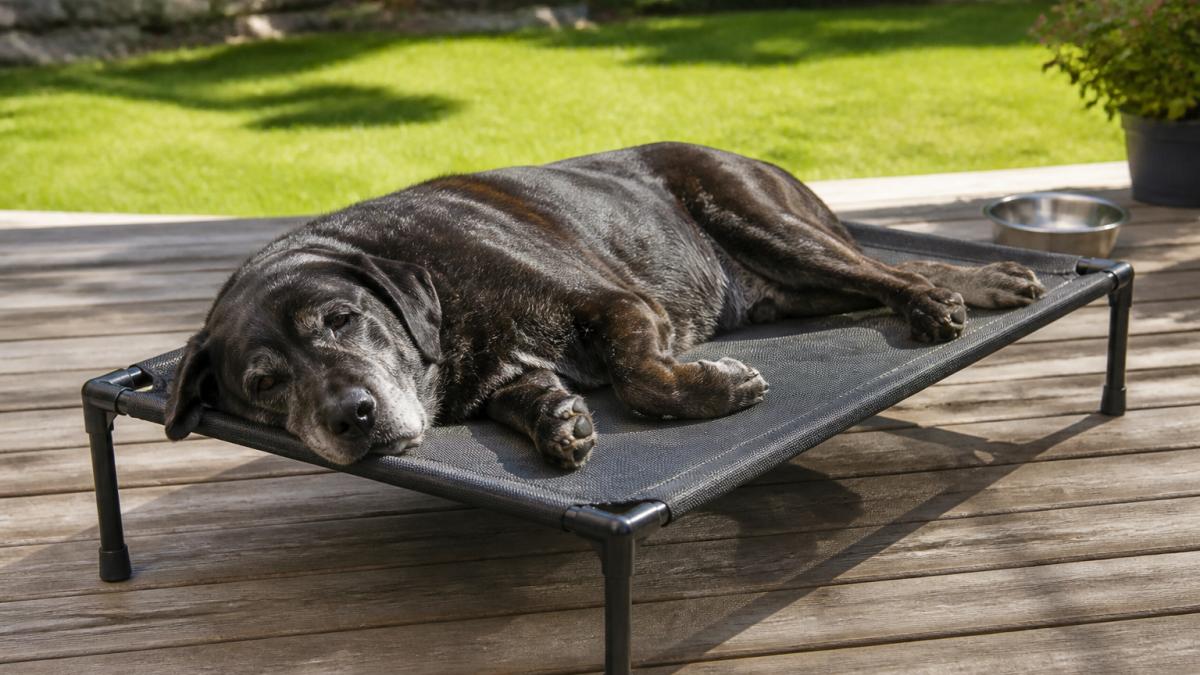
Waterproof Dog Bed Benefits: Protection from Moisture, Odor, and Pests
Waterproof dog bed benefits start with moisture control. A water-resistant sleeping surface stops rain, dew, spilled water, and accidents from soaking into the core material, which is where odor and mildew begin.
Pest resistance follows the same logic. A raised platform with smooth, tight-woven fabric gives insects and dirt fewer places to settle than a ground-level cushion pressed into grass or soil.
There is a comfort angle too. Breathable mesh under the dog prevents the trapped humidity that makes fabric beds feel clammy.
How to Choose a Durable Dog Bed: Materials, Denier Rating, and Chew Resistance
Choosing well comes down to four specifications: fabric strength, frame construction, cover removability, and size. Fabric strength is measured in denier, the weight of the yarn. Higher denier ratings mean a thicker, more tear-resistant weave, which matters most for dogs that dig or chew.
Chew-proof and scratch-proof claims are only credible when the material is described specifically. Look for woven textiles rated for bite and scratch resistance rather than vague "heavy-duty" language.
Use this checklist before buying:
- Fabric denier rating stated, with a tight, tear-resistant weave
- Frame rated for the dog's weight, not just its size category
- Cover removable and machine washable
- Waterproof or water-resistant surface treatment
- Non-toxic materials and no strong chemical odor out of the box
- Correct size for full-body stretch, not just curled sleep
Maintaining Outdoor Dog Beds: Seasonal Care and Cleaning Protocols
Maintenance is where most outdoor beds fail early, and the failure is almost never the fabric itself, it is the coating, the frame joint, or the hidden underside of the mesh. Each of those degrades on a different schedule, so a single "wash it when it looks dirty" routine will not get you past the second season.
What actually breaks down, and when
- Water-resistant coatings (polyurethane, PVC, or TPU laminates) lose their repellency as oils, sunscreen, and lawn chemicals bond to the surface. Once water stops beading, the fabric is no longer waterproof even if it looks intact.
- Woven mesh stretches at the anchor points where it meets the frame, not in the middle. That is why a bed can look fine and still sag under a large dog.
- Metal frames corrode at welds and powder-coat chips; wood frames crack at end grain after repeated freeze-thaw cycles.
- Fill and foam hold odor long after the cover is clean, because the cover is only the outer layer.
Seasonal protocol
| Season | Task | Frequency |
|---|---|---|
| Spring | Rinse frame and mesh to clear pollen and lawn debris; re-test water beading on the coated surface | Weekly |
| Summer | Wash removable cover; inspect for UV fading and coating breakdown | Biweekly |
| Fall | Clear leaves and damp debris from under the platform; check mesh anchor points for stretch | Weekly |
| Winter | Inspect frame for cracking after hard freezes; bring covers and foam indoors if freezing rain is forecast | Monthly |
Off-season storage (the step most guides skip)
If your dog spends winter indoors, do not leave the bed assembled on the deck. Disassemble the frame, wash and fully dry the cover and mesh, and store them flat rather than folded, creases in a coated fabric become the first spots where the waterproof layer cracks. Store foam and fill in a breathable cotton bag, not a sealed plastic bin, so residual moisture can escape.
Deep cleaning without destroying the coating
Spot-clean the waterproof surface with mild soap and cool water, then air dry fully before the dog returns to it. Never machine-dry a coated cover: heat breaks down the water-resistant layer that does the actual work. For odor that survives a cover wash, the source is usually the fill or foam, a baking soda sprinkle left for several hours before vacuuming pulls surface odor without soaking the core.
Pros and Cons of Durable Outdoor Dog Beds
Durable outdoor beds are not the right answer for every household, and the trade-offs are worth naming plainly.
Proud Pet Shop CloudLift Bed →
Pros:
- Orthopedic support and pressure relief for senior dogs and large breeds
- Water-resistant, easy-clean surfaces that resist odor and mildew
- Chew-proof and scratch-resistant fabrics that survive destructive habits
- Breathable mesh that supports thermal regulation year-round
- Elevated frames that keep dogs off damp, hot, or cold ground
Cons:
- Higher upfront cost than a basic floor cushion
- Frames take up more floor space than flat beds
- Some dogs prefer the enclosed feel of a den-style bed over an open platform
- Mesh surfaces offer less plush cushioning than thick padded beds
The honest read: if your dog sleeps indoors on carpet and never chews, a simple padded bed is fine. If your dog lives on a deck, runs hot in summer, or is starting to stiffen up, the elevated design earns its price.
Breed-Based Durability Needs and Safety Certifications to Look For
Durability needs track behavior and body mechanics more than breed size alone. A 15-pound terrier can destroy a bed that a 120-pound Mastiff sleeps on gently for years, because the failure modes are different: terriers and working breeds dig, bite, and worry at seams, while giant breeds stress the frame and compress the fill.
Matching the build to the behavior
- Heavy chewers and diggers (terriers, shepherds, huskies, many rescues): prioritize the highest tear and bite resistance you can find, reinforced stitching at stress points, and a frame with no exposed fabric edges to grab. A removable cover is a liability here unless the zipper is recessed or covered.
- Heavy-set and giant breeds (Mastiffs, Great Danes, Newfoundlands): the frame weight rating matters more than the fabric. Look for a stated load capacity, not a size label, and a mesh that resists stretch under concentrated weight.
- Double-coated and heat-sensitive breeds (huskies, malamutes, chow chows): breathable mesh and airflow underneath do more for comfort than any cushioning.
- Senior dogs of any breed: pressure relief and a low step-up height matter more than chew resistance, since the goal is easy entry and exit.
Safety certifications and material claims
This is where most buying guides stay silent, and it is the fastest way to separate a real product from marketing language. "Non-toxic" and "pet-safe" are not regulated terms in the U.S., they are marketing claims. What you can actually verify:
- OEKO-TEX Standard 100 certifies that a textile has been tested for harmful substances at levels considered safe for humans and pets. If a brand claims it, the certificate number should be verifiable.
- BPA-free and phthalate-free claims apply to plastic frames, clips, and coated fabrics. Ask specifically which components, because a BPA-free frame says nothing about the coating on the cover.
- CPSIA compliance is a U.S. requirement for children's products, not pet products, but some manufacturers voluntarily test to it as a proxy for lead and phthalate limits. Treat it as a signal, not a guarantee.
- Hypoallergenic and anti-microbial finishes help dogs prone to skin irritation, but confirm the finish is bonded to the fabric rather than sprayed on, since sprayed finishes wash out.
The sustainability angle
Beds made with recycled fill or long-lasting materials that do not need replacing every season reduce waste, and a bed that survives several years is inherently the lower-impact choice, the most sustainable bed is the one you do not have to buy again. When comparing, weigh the upfront cost against how many cheap beds a destructive chewer would go through in the same period.
Conclusion: Matching Your Dog's Needs to the Right Durable Outdoor Dog Bed
The right bed is the one that matches your dog's habits, not the trendiest listing. Match the material to the behavior, the frame to the weight, and the surface to the climate your dog actually sleeps in.
At Proudpetshop, the lineup is built around exactly those variables. The CloudLift Bed pairs a waterproof breathable mesh surface with a chew-resistant frame, and the Bite-Proof Sofa Bed adds a removable, machine-washable cover for dogs that destroy standard fabric. For hot-weather relief, the Cooling Recovery Mat activates with water and needs no power. Every order ships fast, ships free over $50, and carries a 30-day satisfaction guarantee. Get started with Proudpetshop and give your dog a bed that holds up season after season.


Frequently Asked Questions
What is the best material for an outdoor dog bed?
The best outdoor dog beds use heavy-duty, water-resistant fabrics with a high denier rating (typically 600D or above) for tear strength. Breathable mesh sleeping surfaces improve airflow and prevent moisture buildup. Look for chew-proof or bite-proof woven textiles if your dog is destructive. Elevated frames keep the bed off damp ground, and removable, machine-washable covers make maintenance easier. Non-toxic materials and UV protection extend longevity in direct sun.
Are waterproof dog beds worth the investment?
Yes, waterproof dog beds offer significant value for outdoor use. A waterproof sleeping surface prevents liquids from soaking into the core, which stops odor control problems and bacterial growth. It also makes cleaning faster since you can wipe down surfaces instead of deep-washing the entire bed. For dogs that spend time outside, swim, or have accidents, waterproof construction dramatically extends the bed's lifespan and reduces replacement costs over time.
How do you clean an outdoor dog bed?
Start by removing the cover if it is machine washable, and follow the manufacturer's instructions. For waterproof surfaces, wipe down with a pet-safe disinfectant and let air dry completely. For elevated mesh beds, hose off the frame and mesh, then dry in the sun. Seasonal deep cleans should include checking for insect nests, tightening frame joints, and inspecting for tears. Regular maintenance prevents odor buildup and keeps the bed hygienic.
Do dogs prefer firm or soft beds?
It depends on the dog. Senior dogs and those with joint pain often benefit from firmer orthopedic support that provides pressure relief and body alignment. Younger, active dogs may prefer softer cushioning. Elevated beds with breathable mesh offer a middle ground: firm structural support with airflow for thermal regulation. Observe how your dog settles and adjust based on their comfort and mobility needs.