
Table of Contents
- Why Preparation Matters for Traveling with a Cat for the First Time
- Choosing the Right Cat Carrier for Travel
- Essential Cat Travel Supplies and Packing List
- Travel Litter Box for Cats: Setup and Management
- How to Calm a Cat While Traveling
- Travel Mode-Specific Guidance: Car, Air, and Hotel
- Health Records, Medications, and Emergency Planning
- Common Mistakes First-Time Cat Travelers Make
- Frequently Asked Questions
Last Updated: October 15, 2026
Why Preparation Matters for Traveling with a Cat for the First Time
Traveling with a cat for the first time feels overwhelming, but most first-time cat owners make the same avoidable mistakes with the right preparation.
A cat travel checklist isn't just a packing list. It's a framework that keeps your pet safe and reduces stress.
The difference between a smooth trip and a stressful one comes down to preparation. Cats are creatures of routine who don't handle surprises well.
Choosing the Right Cat Carrier for Travel
Your carrier is the foundation of safe cat travel. A poorly chosen one creates stress and limits ventilation; the right one provides security and comfort.
Carrier Dimensions and Comfort
Your cat needs space to stand, turn around, and lie down. Too small restricts movement and increases anxiety; too large creates instability during car rides or turbulence.
Measure your cat nose to tail and add 4-6 inches for length.
Weight and portability matter, especially when flying or transferring vehicles. The Proud Pet Shop TrailFold Carrier, in three sizes (S, M, L), weighs less than hard-sided crates while maintaining structural integrity, with breathable mesh panels and a removable washable pad.

For cats under 15 pounds, a soft-sided or backpack-style carrier offers the best balance of space, portability, and comfort, distributing weight evenly across your shoulders.
Carrier Acclimation Before Your Trip
Carrier acclimation is the single most important step to prepare your cat for travel.
Start 3-4 weeks before your trip. Leave the carrier out with the door open and place treats, toys, or a familiar blanket inside.
Once they enter comfortably, close the door for 10-15 seconds, then open it.
A properly acclimated cat enters the carrier calmly on travel day and is less likely to vocalize excessively, get motion sickness, or attempt escape.
Essential Cat Travel Supplies and Packing List
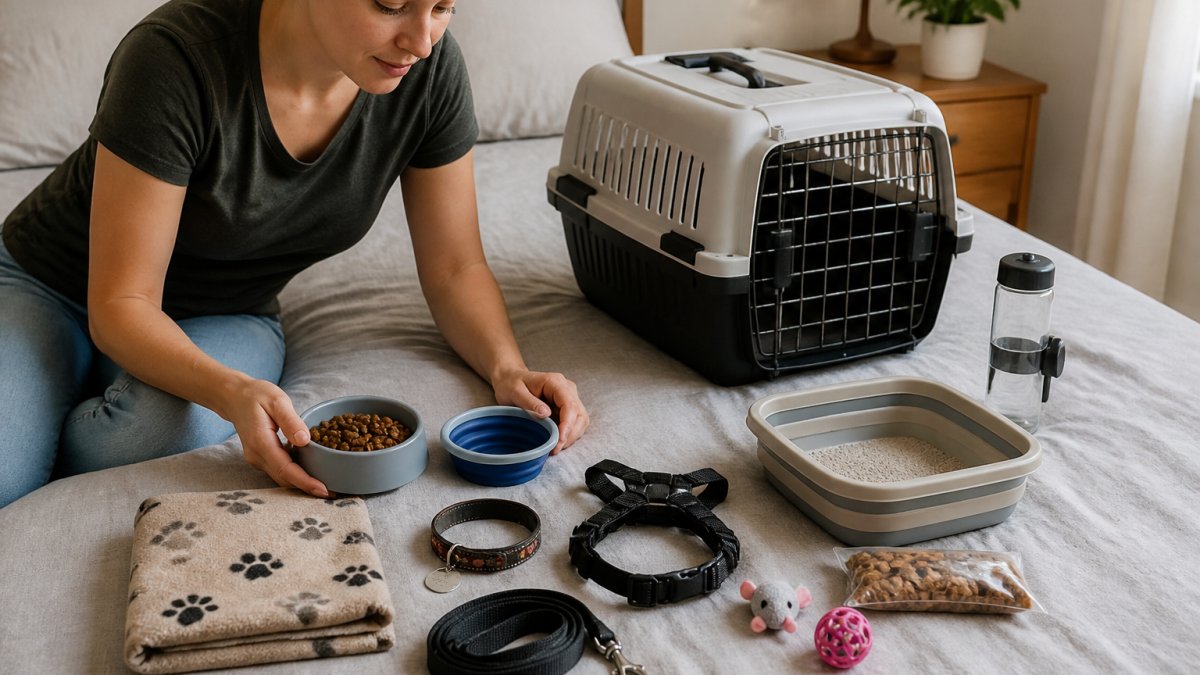
Food, Treats, and Water Access
Pack more food than you think you'll need. Bring your cat's regular food in its original packaging, plus familiar treats, which reduce anxiety during transitions.
Bring a collapsible bowl and bottled water from home, since unfamiliar water can upset stomachs.
For special diets or food sensitivities, bring enough for the trip plus 3-5 extra days.
Pack treats separately for stressful moments like carrier entry, vet visits, and hotel arrivals to create positive associations.
Litter and Cleanup Supplies
A travel litter box for cats is non-negotiable.
Collapsible litter boxes fold flat and expand when needed. Bring enough unscented litter for the trip plus extra, since scented varieties can trigger nausea.
Pack potty bags for litter disposal, since hotels have strict policies, plus enzymatic deodorizer for confined spaces like vehicles or hotel rooms.
Bring paper towels, wet wipes, and a small trash bag for accidents, which are common during stressful travel.
| Item | Purpose | Frequency |
|---|---|---|
| Collapsible litter box | Portable bathroom access | Every trip |
| Cat litter (unscented) | Familiar litter medium | Every trip |
| Potty bags | Waste disposal | Every trip |
| Paper towels & wipes | Accident cleanup | As needed |
| Enzymatic deodorizer | Odor management | Every trip |
Identification and Safety Gear
Identification is your safety net if your cat escapes during travel.
Update your phone number and address in the microchip registry before traveling. Many lost pets are never reunited because microchip information is outdated.
A secure collar with an ID tag is a backup.
The Proud Pet Shop Smart Finder Tag clips onto any standard collar and connects to your phone via app, providing real-time location tracking and instant alerts if your cat wanders out of range.

A harness and leash are essential for any cat outside the carrier during travel, including indoor cats at hotel stays and rest stops.
Travel Litter Box for Cats: Setup and Management
A travel litter box for cats requires strategic setup in confined spaces like vehicles or hotel rooms.
During car travel, set up the litter box only at rest stops or overnight stays.
Scoop immediately after use during travel. Cats are fastidious, and a dirty box increases accidents outside it.
If your cat refuses the unfamiliar box, mix in a small amount of used litter from home.
How to Calm a Cat While Traveling
Travel stress manifests differently: some cats vocalize excessively, others withdraw or refuse food, and some get motion sickness. Having strategies makes the difference between a difficult trip and a manageable one.
Stress Reduction Strategies
Cover three sides of the carrier with a light blanket, leaving the front partially open.
Pheromone sprays mimic cats' natural calming pheromones.
Talk to your veterinarian about calming supplements or short-term anti-anxiety medications, which work best combined with carrier acclimation and environmental management.
Maintain routine: feed at normal times, offer water at regular intervals, and stick to familiar handling. Predictability reduces anxiety.
Managing Motion Sickness and Anxiety
Motion sickness is common in cats during the first few trips.
Feed a light meal 2-3 hours before travel, not right before, since a full stomach increases nausea.
Proud Pet Shop TrailFold Carrier →
Keep the car cool with good ventilation.
Ask your veterinarian about ginger supplements or prescription anti-nausea medications if your cat has a history of severe motion sickness.
Secure the carrier so it doesn't shift during acceleration, braking, or turns, which amplifies motion sickness.
Travel Mode-Specific Guidance: Car, Air, and Hotel
Car Travel Safety
Car travel is the most common and generally least stressful method when done properly. The Proud Pet Shop RoadTrip Ride Guard transforms your vehicle into a safe pet travel space, with non-slip backing and built-in storage pockets for treats, waste bags, and water bowls.
Never place your cat in the trunk or cargo area, which lack ventilation and temperature control.
Secure the carrier with a seat belt or cargo strap. An unsecured carrier becomes a projectile during sudden stops or accidents.
Take rest stops every 2-3 hours for litter box, water, and stretching. Use a harness and leash outdoors; never let your cat roam freely.
Air Travel Requirements and Airline Rules
Air travel requires advance planning because airline rules vary. Contact your airline at least 6-8 weeks before travel.
Most airlines allow one cat per passenger in the cabin for a fee (typically $100-$200).
Get a health certificate from your veterinarian dated within 10 days of travel.
Update your cat's microchip and ID tag information.
Arrive 2-3 hours early.
Keep your cat in their carrier during the flight.
Hotel and Destination Preparation
Confirm your hotel's pet policy before arriving.
Set up the litter box immediately on arrival, in a bathroom or corner away from sleeping areas, with the door closed for privacy and odor containment.
Set up a quiet space with familiar items and let your cat explore at their own pace. Don't force interaction.
Use "Do Not Disturb" signs so housekeeping doesn't enter while your cat is loose. Many lost pets escape when hotel staff open doors unexpectedly.
Health Records, Medications, and Emergency Planning
Bring copies of health and vaccination records plus any medications, packed for the entire trip plus extra.
Identify emergency veterinary clinics in your destination area before traveling.
Know your cat's normal behavior and health baseline. Changes in appetite, water consumption, litter box habits, or energy can signal stress or illness; significant changes warrant a vet visit.
If your cat has a chronic condition, discuss travel plans with your veterinarian, who may recommend adjustments to medication, diet, or activity level.
Common Mistakes First-Time Cat Travelers Make
The most common mistake is skipping carrier acclimation, assuming your cat will adapt on the fly.
Another mistake is underestimating familiar food.
Many first-timers forget to update microchip information. If your cat escapes, outdated data means shelters can't contact you.
Traveling with an unacclimated harness and leash is another pitfall.
Finally, first-timers often fail to plan for motion sickness or anxiety.
Traveling with your cat for the first time doesn't have to be stressful. The TrailFold Carrier gives you hands-free carrying with breathable mesh ventilation, the Sidekick Sling keeps your cat secure during errands and vet visits, and the RoadTrip Ride Guard transforms your vehicle into a safe, organized travel space.

Frequently Asked Questions
What should I pack when traveling with a cat for the first time?
Start with a secure carrier sized for your cat to stand and turn comfortably. Pack familiar food (bring extra in case of delays), collapsible water and food bowls, a portable litter box with litter and scoop, medications if needed, vaccination records, an ID tag with your phone number, a harness and leash, comfort items like a favorite toy or blanket, and a first-aid kit. The Proud Pet Shop TrailFold Carrier ($34.99) includes ventilation mesh and safety leash attachment, making it ideal for first-time travelers.
How do I prepare my cat for a trip using a cat carrier for travel?
Introduce the carrier weeks before your trip by leaving it open at home with treats inside. Practice short trips around the neighborhood, gradually increasing duration. Place a familiar blanket inside to reduce stress. Feed treats near the carrier to build positive associations. During travel, keep the carrier in a quiet, secure spot. The Proud Pet Shop TrailFold Carrier's removable, washable pad and mesh ventilation help your cat feel safer and more comfortable during the journey.
Why is a travel litter box for cats important, and how do I use one?
Cats need consistent access to a litter box to avoid accidents and reduce stress during travel. Portable litter boxes fold flat for storage and set up quickly in hotel rooms or rest stops. Use familiar, unscented litter to maintain routine. Place the box in a quiet, private area away from food and water bowls. Clean it regularly during multi-day trips to prevent odor and keep your cat calm. A portable box prevents your cat from holding waste too long, which can cause health issues and behavioral problems.
What are the best ways to calm a cat while traveling?
Create a quiet, comfortable environment in the carrier with familiar items like a blanket or toy. Keep the car temperature cool and minimize loud noises. Use calming pheromone sprays designed for cats if recommended by your vet. Maintain feeding and play routines as much as possible. Take breaks on long drives to let your cat stretch. Avoid sudden movements or loud voices. Some cats benefit from a covered carrier that reduces visual stimulation. If your cat shows severe anxiety, consult your vet about safe calming options before traveling.
What documents does my cat need to travel?
Keep current vaccination records, especially proof of rabies vaccination, which many airlines and hotels require. For air travel, check your airline's specific pet policy and documentation needs. If traveling across state lines or internationally, your vet can provide a health certificate confirming your cat is fit to travel. Carry your cat's microchip number and veterinary contact information. For hotels, have proof of current flea and tick prevention. Store digital copies of all documents on your phone as backup.
How long can a cat safely stay in a carrier during travel?
Most cats can comfortably stay in a carrier for 4-6 hours with breaks. For longer trips, plan rest stops every 2-3 hours to allow bathroom and water breaks. Never leave a cat in a carrier for more than 8 hours without a break. Kittens and senior cats may need more frequent breaks. Always provide fresh water and monitor your cat for signs of stress, overheating, or illness. If traveling by air, follow airline guidelines, which typically allow 12-16 hours in a carrier with proper ventilation and water access.
Should I bring my own litter box when traveling with a cat, or can I use hotel facilities?
Bring your own portable litter box whenever possible. Familiar litter and setup reduce stress and prevent accidents. Hotel litter boxes may be inadequate in size, cleanliness, or location. A compact travel litter box takes minimal luggage space and gives your cat a consistent bathroom routine. If you must use a hotel box, place it away from high-traffic areas and clean it frequently. Always carry extra litter and supplies in case your destination doesn't provide them or runs out.
What should I do if my cat gets carsick while traveling?
Carsickness is common in cats due to motion sensitivity. Minimize feeding 2-3 hours before travel to reduce nausea. Keep the car well-ventilated and maintain a cool temperature. Avoid sudden acceleration or sharp turns. Use a secure, well-ventilated carrier to reduce visual overstimulation. Consult your vet before travel about safe anti-nausea medications or calming supplements. Take frequent breaks to let your cat rest. If vomiting occurs, stop immediately, check for dehydration, and contact a vet if symptoms persist. Some cats improve with acclimation over multiple short trips.