
Table of Contents
- Why a Front Dog Carrier Works for Short Errands
- Front Dog Carrier Backpack vs. Sling: Which Style Fits Your Routine
- Sizing Your Small Dog Front Carrier Correctly
- Ventilated Dog Carrier Features That Keep Your Pet Comfortable
- Dog Carrier for Short Trips: What to Look For
- Where to Buy and What to Expect
- Common Mistakes to Avoid When Choosing a Front Carrier
- Frequently Asked Questions
Last Updated: October 10, 2026
Why a Front Dog Carrier Works for Short Errands
A front dog carrier keeps your hands free while distributing your pet's weight evenly across your shoulders and chest, making quick trips to the vet, grocery store, or park far less exhausting than traditional handheld carriers.
When your dog rides in front, they stay calm because they can see your face and feel your presence. Dogs in front carriers show fewer signs of stress during short errands compared to those in carriers held at arm's length.
A front dog carrier shines for short errands, letting you move naturally with both hands free for opening doors or carrying bags.
Front Dog Carrier Backpack vs. Sling: Which Style Fits Your Routine
Backpack Carriers: Hands-Free and Adjustable
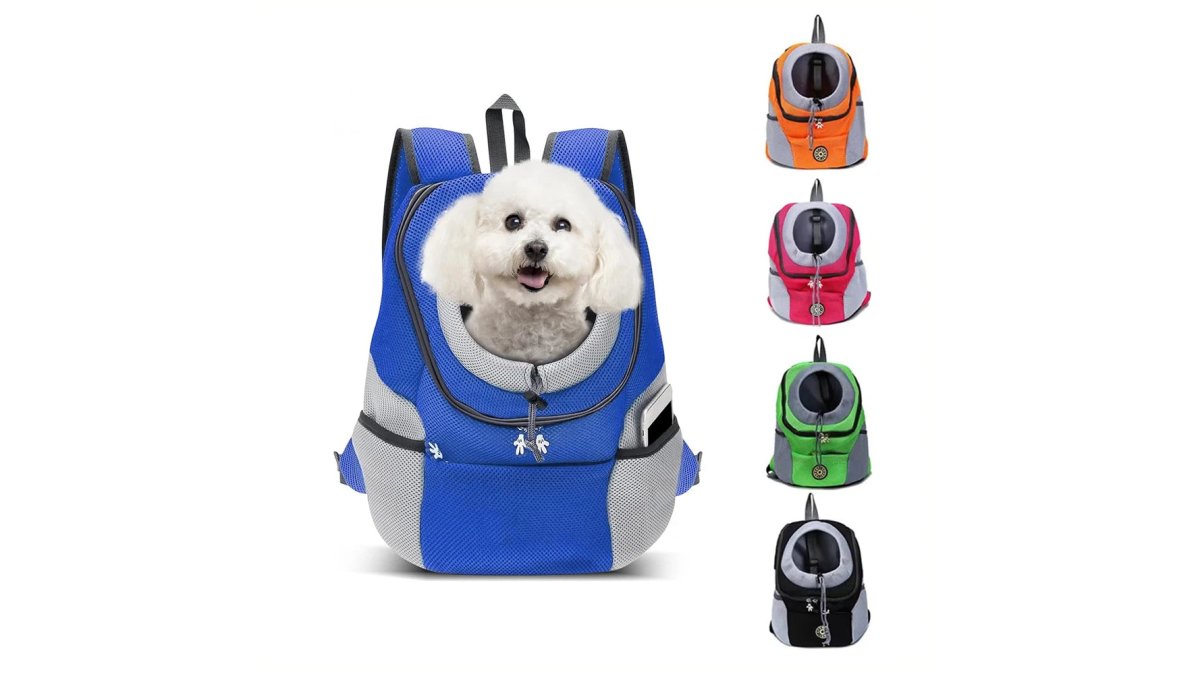
A front dog carrier backpack distributes weight evenly across both shoulders for hands-free mobility, with adjustable straps that accommodate different clothing layers.
The Proud Pet Shop TrailFold Carrier ($34.99) features adjustable straps, ventilation mesh on sides and front, a removable washable bottom pad, an interior safety leash attachment, and external pockets for treats and waste bags.

Backpacks work best for errands like coffee shop visits or multiple stops, keeping your hands free for doors, phones, and shopping bags.
Sling Carriers: Compact and Lightweight
A sling carrier wraps across your body like a messenger bag, positioning your dog against your hip or chest. Slings take up minimal space, ideal for small apartments or limited storage.
The Proud Pet Shop Sidekick Sling ($28.99) holds pets up to 15 lbs with a breathable panel, adjustable strap, and soft buckle closure. It gives you one free hand for quick neighborhood walks or vet visits.
Slings work best for shorter trips and lighter dogs; beyond 15 lbs or extended periods, weight concentrates on one shoulder. For 30-minute outings, a sling is ideal.
Sizing Your Small Dog Front Carrier Correctly
Measuring your dog prevents getting a size that's too tight or dangerously loose. Proper fit means your dog can stand and turn comfortably, directly affecting how secure and calm they feel.
Step-by-Step Measuring Guide
Take measurements when your dog is standing naturally on a flat surface. You'll need three key measurements:
Chest Girth: Wrap a soft measuring tape around the widest part of your dog's ribcage, just behind the front legs, snug but not tight, one finger should fit between tape and body.
Back Length: Measure from the base of your dog's neck to the base of the tail for vertical space needed.
Weight: Use a bathroom scale. Weigh yourself, then weigh yourself holding your dog and subtract. This confirms your dog falls within the carrier's weight limit.
The TrailFold Carrier comes in S, M, and L. If measurements fall between sizes, choose the larger one.
Fit Checklist Before You Buy
Test the fit before relying on it for errands:
- Standing room: Your dog should stand with head upright without ears touching the top.
- Turning space: Your dog should turn around in a complete circle.
- No excess gap: No more than two fingers should fit between dog and walls.
- Leg position: Hind legs should rest naturally against your body without cramping.
- Strap fit on you: Straps should sit comfortably on shoulders and carrier centered on chest.
Common Sizing Mistakes and How to Avoid Them
Buying too small to "grow into" the carrier: A snug carrier restricts breathing, causes stress, and leads to overheating. Measure now and buy for current size.
Choosing based on breed alone: Two dogs of the same breed can have very different chest girths and body lengths. A stocky Pug and a lean Pug need different carriers. Always measure your individual dog, not just their breed.
Ignoring weight limits: Exceeding a carrier's weight limit stresses the seams and straps, creating a safety risk.
Not accounting for winter gear: If you'll be wearing a thick winter coat while carrying your dog, the extra bulk changes how the carrier sits on your body. Try on the carrier while wearing the jacket you'll actually use during errands.
Ventilated Dog Carrier Features That Keep Your Pet Comfortable
Ventilation separates a comfortable carrier from one that leaves your dog overheated and anxious. Extended mesh panels on the sides and front allow continuous airflow, which is non-negotiable for short errands, especially during warmer months.
The TrailFold Carrier's design includes mesh ventilation positioned strategically to prevent your body heat from creating a sauna effect. Breathable materials matter because your dog's temperature regulation works differently than yours, they can't sweat to cool down, so air circulation becomes critical.
Look for carriers with mesh on multiple sides, not just the front. A carrier with ventilation only on one panel leaves dead zones where air doesn't flow.
Dog Carrier for Short Trips: What to Look For
Weight Limits and Safety Considerations
Every carrier has a maximum weight limit, and exceeding it compromises both safety and durability. The Sidekick Sling maxes out at 15 lbs. Staying within the limit ensures the straps and seams don't fail under stress.

Safety also means secure closures. Look for soft buckles or zippers that won't pinch your dog's skin or fur. An interior safety leash attachment, like the one in the TrailFold, adds a second layer of protection if your dog somehow escapes the main compartment.
Proud Pet Shop TrailFold Carrier →
Durability and Easy Cleaning
A carrier that falls apart after three months defeats the purpose of buying one. Quality materials and reinforced stitching matter, especially if you use the carrier multiple times per week. The removable, washable bottom pad on the TrailFold makes maintenance simple, dirt and moisture don't accumulate over time.
Check the fabric weight and seam construction. Carriers made from thin, flimsy material start fraying within weeks. Durable carriers use reinforced stitching at stress points where the straps attach to the main compartment.
Where to Buy and What to Expect
Proudpetshop offers two solid options for front dog carriers, each suited to different needs. The TrailFold Carrier ($34.99) is the choice if you want hands-free mobility and adjustability for varied use.
Both products come with a 30-day satisfaction guarantee, so you can test the carrier with your dog and return it if it doesn't work. Free shipping applies to orders over $50, which offsets the cost of either carrier when paired with other pet essentials.
When ordering, have your dog's measurements ready. Knowing your pet's weight and chest girth takes 60 seconds and ensures you get the right size on the first try. Avoid the common mistake of guessing, an incorrectly sized carrier creates stress for both you and your dog.
Common Mistakes to Avoid When Choosing a Front Carrier
The biggest mistake is buying a carrier based on looks rather than fit and function. A carrier that looks cute in photos but doesn't distribute weight evenly will leave your shoulders aching after 20 minutes, and your dog may sense your discomfort and become anxious.
Another frequent error is choosing a carrier designed for longer trips when you only need one for short errands. A heavy-duty hiking backpack works fine for weekend adventures, but for quick neighborhood walks, you're carrying unnecessary weight and bulk.
Pet owners also overlook ventilation until their dog shows signs of stress, panting, whining, or trying to escape. By then, you've already bought the wrong carrier. Check the ventilation design before purchasing, not after.
Dog Acclimation: A Critical Step Most Owners Skip
Don't assume your dog will immediately accept any carrier. Some dogs need a few days to adjust, especially if they've never been carried before.
Week 1: Introduction at home. Place the carrier on the floor with the opening facing your dog. Leave it open and let your dog explore it on their own terms.
Week 2: Wearing the carrier indoors. Put your dog in the carrier while you're sitting on the couch or standing in one room.
Week 3: Short walks around your home. Walk slowly through your house while wearing the carrier with your dog inside. Keep these walks to 5 minutes.
Week 4: First errand. Take your dog on a short, low-stress errand, a walk around the block or a quick visit to a pet-friendly store.
Signs Your Dog Is Uncomfortable (and What to Do)
Watch for these stress signals during the acclimation process and on actual errands:
Excessive panting: If your dog is panting heavily even though the temperature is cool and they haven't been exercising, they're likely anxious or overheated. Stop the errand and get them to a cooler environment. Check ventilation in your carrier, you may need a model with more mesh panels.
Whining or crying: Continuous whining means your dog is distressed. This is different from a brief whimper when first placed in the carrier.
Trying to climb out or thrashing: If your dog is actively attempting to escape, they're panicked. Remove them immediately and don't use the carrier until you've completed more acclimation steps. A panicked dog can injure themselves or you.
Trembling or freezing: Some dogs go rigid or shake when anxious. This is a sign of fear, not acceptance. Slow down the acclimation process and spend more time on earlier steps.
Loss of appetite after carrier use: If your dog refuses treats or meals after being in the carrier, they experienced stress. This is a delayed signal that the experience was negative.
Visibility and Reassurance Matter
A carrier with good visibility helps because your dog can see what's happening around them and maintain eye contact with you, reducing anxiety during the adjustment period. Carriers with mesh panels on the front and sides allow your dog to see the environment and feel less trapped. If your dog can see your face and the world around them, they're far more likely to stay calm during short errands.
Talk to your dog while wearing the carrier. Your voice is familiar and soothing. A simple "You're okay, we're almost there" during a 10-minute walk reinforces that the carrier is safe and that you're in control.
Frequently Asked Questions
How do I measure my dog to choose the right front dog carrier size?
Measure your dog's length from the base of the neck to the tail, and height from the floor to the top of the shoulders while standing. Compare these measurements to the carrier's size chart (typically S, M, or L). Your dog should have enough room to stand, turn, and lie down comfortably inside without feeling cramped. A carrier that's too small restricts movement and causes stress; one that's too large allows excessive shifting during walks. Most front carriers for short errands fit dogs under 20 lbs, with small carriers handling up to 10-12 lbs and medium carriers supporting 15-20 lbs.
Are front dog carriers really hands-free, and do they work for quick errands?
Yes, front dog carriers, especially backpack styles, keep your hands completely free for opening doors, carrying bags, or managing multiple tasks during short errands. This makes them ideal for quick trips to the vet, pet store, or neighborhood walks where you need mobility. Sling carriers offer hands-free carrying too, though they sit lower on your body and work best for lighter dogs. Both styles allow you to move naturally while keeping your dog secure and close to you, which is perfect for errands under 30 minutes.
What's the difference between a ventilated dog carrier and a regular one?
A ventilated dog carrier features breathable mesh panels on the sides, front, and sometimes back to allow continuous airflow, keeping your pet cool and preventing overheating during walks. Regular carriers may have limited ventilation or solid panels that trap heat and humidity. For short errands, ventilation is critical because even a 10-minute walk in warm weather can stress a dog without proper air circulation. Mesh ventilation also reduces anxiety by letting your dog see and sense their surroundings, making the carrier feel less confining.
What should I look for in a dog carrier for short trips to avoid buyer's remorse?
Prioritize adjustable straps that fit your body comfortably, a weight limit that matches your dog's size with some margin, and breathable mesh for ventilation. Check for a removable, washable pad for easy cleaning after muddy walks. Look for a safety leash attachment inside to prevent escape if your dog panics. Read customer reviews specifically mentioning durability and strap comfort. A 30-day satisfaction guarantee gives you confidence to test the carrier before committing, so you can return it if it doesn't work for your routine.