
Table of Contents
- Start With Your Pet's Size, Shape, and Energy Level
- The Essential Outdoor Gear Checklist for Pet Adventures
- Best Dog Carrier Backpack 2026: What to Look For
- Lightweight vs Heavy-Duty Outdoor Equipment
- Materials and Construction: What Actually Lasts
- Rental vs Buying: Which Makes Sense for You?
- Gear Repair and Longevity: Making Your Investment Last
- Conclusion
- Frequently Asked Questions
Last Updated: September 11, 2026
Start With Your Pet's Size, Shape, and Energy Level
Learning how to choose adventure gear starts with your animal, not the catalog. A 12-pound terrier and a 70-pound shepherd need completely different equipment, and buying for the wrong body type is the fastest way to waste money.
Measure three things before you shop: weight, chest girth, and back length. Chest girth decides harness fit. Back length decides carrier sizing. Weight decides load limits on every sling and backpack you'll consider.
Energy level matters just as much. A high-drive trail dog needs abrasion resistance and secure attachment points; a senior dog on short walks needs orthopedic support and easy on-off design.
The Essential Outdoor Gear Checklist for Pet Adventures
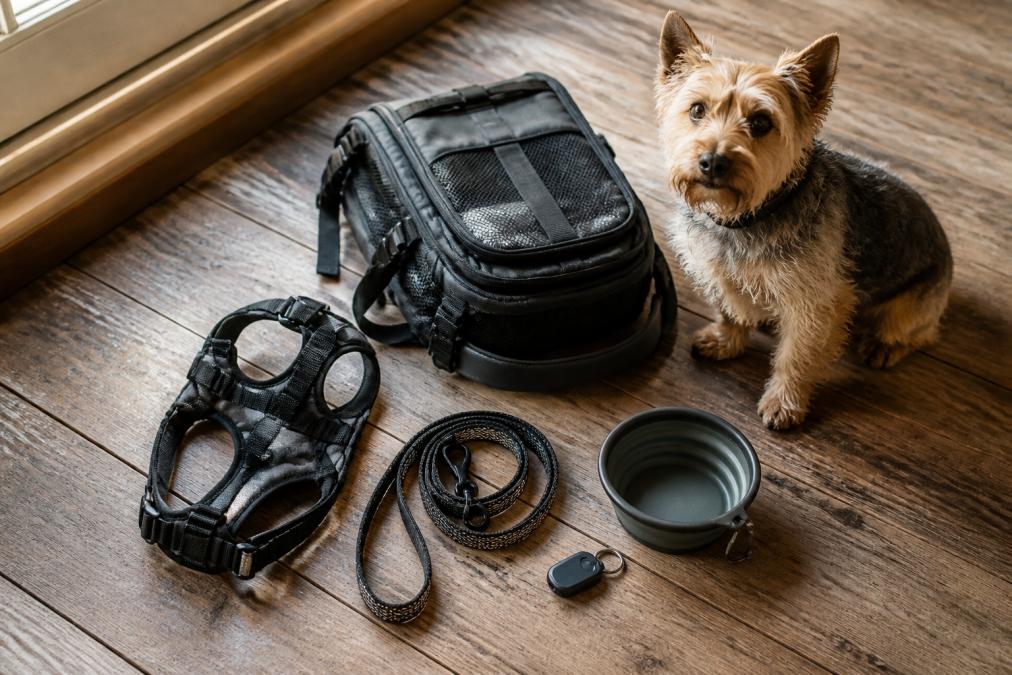
An essential outdoor gear checklist for pet adventures covers five categories: restraint, carrying, hydration, identification, and recovery. Skip any one and you'll improvise on the trail, which is when accidents happen.
Here's what a complete kit looks like for a day hike:
- No-pull harness with a front clip for control on descents
- Carrier or sling for tired or injured pets
- Collapsible bowl and water supply
- GPS or Bluetooth identification tag
- Foldable rest mat for shade breaks
Carriers and Harnesses
Carriers solve distance; harnesses solve control. A front-clip harness redirects pulling tension to the chest rather than the throat, which matters on steep terrain where a dog's natural instinct is to lunge downhill.

For carrying, decide between front-carry and back-carry. Front carry keeps small pets close and lets you monitor breathing; back carry handles heavier loads on longer treks. Adjustable straps and a padded hip belt shift weight off your shoulders, which is the difference between a comfortable two-hour walk and a sore one.
Safety and Identification
Identification is the piece most owners skip until they lose an animal. A collar tag helps only if a stranger finds your pet and calls. A Bluetooth or GPS finder tag alerts you the moment your pet moves out of range, which is a different and faster kind of protection.
Pair identification with a safety leash inside any carrier. Zippers fail. Buckles loosen. A secondary tether costs almost nothing and prevents the worst outcome.
Best Dog Carrier Backpack 2026: What to Look For
The best dog carrier backpack in 2026 prioritizes ventilation, load distribution, and a secure internal tether over cosmetic features. Everything else is secondary.
Ventilation comes first. Mesh panels on at least two sides keep air moving; a single mesh window traps heat. Look for breathable mesh across the back panel and the top, plus a structured frame that keeps fabric off your pet's body.
Ventilation and Load Distribution
Load distribution decides whether you can actually finish the hike. Padded shoulder straps and a waist belt transfer weight to your hips, where your body can carry it. Straps alone will dig in after an hour.
The Proud Pet Shop TrailFold Carrier at $34.99 addresses both: breathable mesh, adjustable straps, a removable pad, a safety leash, and a fold-flat design that stores in a closet rather than consuming it. Wear it front-facing for bonding or back-facing for heavier loads.

| Feature | What to Look For | Why It Matters |
|---|---|---|
| Ventilation | Mesh on 2+ sides | Prevents overheating |
| Straps | Padded, adjustable | Reduces shoulder strain |
| Waist belt | Padded hip belt | Transfers load to hips |
| Tether | Internal safety leash | Prevents escapes |
| Packability | Folds flat | Saves storage space |
Lightweight vs Heavy-Duty Outdoor Equipment
Lightweight gear wins on short trips and mild weather. Heavy-duty gear wins on durability, abrasion resistance, and multi-season use. The right answer depends on trip duration, terrain, and your pet's behavior, not on which sounds more impressive.
A useful way to decide is to calculate a carry ratio: divide the total loaded weight (pet + gear + water) by your body weight. Most hikers stay comfortable under about 20% of body weight for a day trip and under 15% for multi-day trips (nps.gov). If your pet plus carrier pushes you past that line, you need lighter gear, or a different carrying method.
When Lightweight Wins
Choose lightweight when:
- Trips run under three hours and stay on groomed trail
- Your pet is under 15 pounds
- Weather is mild and dry
- You're carrying the load yourself with no support vehicle
Lightweight carriers typically use 210D or 420D ripstop nylon with mesh panels. They pack down small, breathe well, and cost less. The trade-off is abrasion resistance: thin fabric and fine mesh fail faster against claws, brush, and rock.
When Heavy-Duty Wins
Choose heavy-duty when:
- You're covering distance, elevation, or technical terrain
- Your pet is over 25 pounds or is a strong puller
- You're crossing rock, scree, or dense brush
- You travel in cold, wet, or multi-season conditions
Heavy-duty carriers often use 600D to 1000D polyester or nylon with reinforced stitching, metal hardware, and structured frames. They weigh more empty but hold their shape under load and survive years of use.
The Trade-Off Nobody Explains
Weight and durability are not a simple slider, they trade against each other in specific ways:
| Priority | What You Gain | What You Give Up |
|---|---|---|
| Lower pack weight | Easier climbs, less fatigue | Abrasion resistance, structural support |
| Higher durability | Multi-season life, load capacity | Packability, breathability, price |
| More structure | Better load transfer | Foldability, storage convenience |
| More mesh | Ventilation | Tear resistance at seams |
A common mistake is buying ultralight everything for a pet that destroys gear. Lightweight fabrics trade abrasion resistance for packability. If your dog scratches at a carrier's interior, that mesh will fail within a season.
A Simple Decision Framework
Ask three questions in order:
- How long is the trip? Under three hours favors lightweight; over three hours favors structure and load transfer.
- What is the terrain? Groomed trail favors lightweight; rock, brush, or elevation favors heavy-duty.
- What is your pet's behavior? Calm riders can use lighter gear; scratchers, chewers, and pullers need abrasion-resistant fabric and reinforced seams.
If you answer "long trip, rough terrain, strong pet" to all three, buy heavy-duty and accept the weight. If you answer "short, smooth, calm," lightweight is the smarter purchase. Mixed answers usually point to a mid-weight carrier in the 420D-600D range with reinforced stress points, the category most owners actually need.
Materials and Construction: What Actually Lasts
Durability comes down to four things: fabric denier, weave, seam construction, and hardware quality. Ignore marketing language and check these instead.
Reading a Fabric Spec
Denier (D) measures fiber thickness. Higher denier means heavier, more abrasion-resistant fabric:
- 210D-420D: Lightweight, packable, best for calm pets and short trips
- 600D: The mid-weight workhorse, good balance of durability and weight
- 1000D and up: Heavy-duty, abrasion-resistant, best for rough terrain and strong pets
Weave matters as much as denier. Ripstop nylon uses a grid of thicker threads to stop tears from spreading. Plain-weave polyester resists UV and moisture better but tears more readily. Ballistic nylon offers the highest abrasion resistance at the cost of weight and packability.
Waterproof vs. Breathable
These are not the same thing, and most gear is one or the other:
- Waterproof fabrics (coated nylon, PU-coated polyester) block rain completely but trap moisture inside. Good for short, wet trips.
- Breathable fabrics (mesh, uncoated synthetics) let moisture escape but soak through in sustained rain. Good for warm, dry trips.
- Water-resistant fabrics (DWR-treated) shed light rain and breathe well but wet out over time.
For pets, breathability usually matters more than waterproofing because overheating is a bigger risk than getting wet. A soaked dog dries; an overheated dog is in danger. Choose waterproof only for cold, wet conditions where you can also manage ventilation.
Seams and Hardware
Seam-sealed or double-stitched seams resist tearing at stress points. Look for bar-tack reinforcement at strap attachment points, that's where carriers fail first. Metal hardware (aluminum or steel D-rings, buckles) outlasts plastic, though quality acetal buckles perform fine for lighter loads. Cheap plastic buckles are the most common failure point on budget carriers.
Layering Systems for Pets
Cold-weather gear works the same way human layering does:
- Base layer: Moisture-wicking, snug fit against the coat
- Mid-layer: Synthetic or down insulation for warmth
- Outer shell: Windproof and water-resistant protection
Synthetic insulation keeps working when damp; down offers better warmth-to-weight but fails when wet (rei.com). For most pet adventures, synthetic is the safer choice because dogs sweat, pant, and get wet.
Weight-to-Performance Ratio
Check the weight-to-performance ratio before buying. A carrier that weighs two pounds empty and holds 15 pounds is a better design than one weighing four pounds with the same capacity. A useful benchmark: a well-designed carrier should weigh no more than about 15% of its rated load capacity (rei.com).
The Longevity Angle Competitors Skip
The most sustainable gear choice is the one you don't have to replace. Synthetic insulation and technical apparel carry an environmental cost, so longevity is the practical form of ethical sourcing. When you do replace something, look for brands that publish material sourcing and offer repair support. A 600D carrier maintained for five years beats three 210D carriers replaced every season, on cost, on waste, and on trail reliability.
Rental vs Buying: Which Makes Sense for You?
Renting makes sense for one-time trips, unusual sizes, and gear you're testing before committing. Buying makes sense for anything you'll use more than a handful of times per year.
Run the numbers honestly. If a carrier costs $34.99 and you'll use it six times, that's roughly $6 per trip. Renting at a comparable per-trip rate only wins if you'd use it once or twice.
There's a second factor most guides miss: fit. Rental gear rarely matches your pet's measurements, and a poorly fitted harness or carrier is a safety problem, not just a comfort one. For anything involving restraint or load-bearing, buy.
Gear Repair and Longevity: Making Your Investment Last
Repair beats replacement almost every time. Most pet gear failures are seam tears, worn buckles, or stretched straps, all fixable for a fraction of replacement cost.
Keep a small field repair kit: heavy-duty needle and thread, a few spare buckles, and patch fabric. Learn one stitch (a backstitch holds best on woven fabric) and you can extend a carrier's life by years.
Maintenance matters more than most owners realize. Rinse gear after muddy trips, air-dry rather than machine-dry, and check straps for fraying monthly. Store carriers folded and dry, never compressed under other gear.
On sustainability, the most effective choice is usually the least exciting one: buy durable gear once, maintain it, and repair it. Synthetic insulation and technical apparel carry an environmental cost, so longevity is the practical form of ethical sourcing. When you do replace something, look for brands that publish material sourcing and offer repair support.
Conclusion
The gap between gear that lasts a season and gear that lasts years comes down to fit, materials, and maintenance, not price alone. Measure your pet, match the equipment to your actual trips, and repair before you replace.
Proudpetshop stocks adventure gear built for that approach: the TrailFold Carrier for hands-free carrying, the No-Pull Adventure Harness for trail control, and the Smart Finder Tag for identification on off-leash terrain. Every order ships free over $50, carries a 30-day satisfaction guarantee, and is backed by real customer support.

Get started with Proudpetshop and gear up once for years of trails, not one season of replacements.
Frequently Asked Questions
How do I determine the quality of adventure equipment for my pet?
Check the stitching, hardware, and materials. Look for reinforced seams at stress points, metal buckles instead of plastic where load-bearing, and abrasion-resistant fabrics on high-wear areas. A padded hip belt or ergonomic shoulder straps on a carrier backpack signal better load distribution. Brands that offer a satisfaction guarantee, like Proud Pet Shop's 30-day policy, give you a safety net if the gear does not hold up to real use.
What should I look for in pet-friendly adventure gear?
Prioritize fit, safety, and durability. For carriers, measure your pet's length and weight, then match it to the carrier's limit. The Proud Pet Shop TrailFold Carrier works for small dogs and cats, while the Sidekick Sling supports pets up to 15 lbs. Look for breathable mesh panels, safety leashes, and adjustable straps. For walks, a front-clip no-pull harness redirects tension away from the neck, which matters for dogs that pull.
Is it better to rent or buy adventure gear for beginners?
Rent if you are trying a new activity once or twice, like a single camping trip with a carrier you will rarely use. Buy if you adventure regularly or need gear that fits your pet specifically. Rental gear often does not come in pet-specific sizes, and fit matters for safety. For frequent walkers, a harness and carrier are worth owning. Proud Pet Shop's carriers start at $28.99, so buying is affordable for most pet owners.
How can I balance weight and durability when choosing gear?
Match the gear to your trip length and terrain. For day hikes, lightweight gear like a breathable sling or a simple harness works well. For multi-day treks or rough terrain, choose heavier materials with abrasion resistance and reinforced stitching. The trade-off is real: a heavier carrier backpack may last longer but tire you out faster. Test the weight with your pet inside before committing to a long trip.
What gear is absolutely necessary for multi-day outdoor adventures with a pet?
At minimum: a secure carrier or harness, a leash, a collapsible bowl, waste bags, a pet first-aid kit, and identification. A GPS tag like the Proud Pet Shop Smart Finder Tag ($34.99) adds a layer of safety if your pet slips away. For overnight trips, bring a familiar blanket or bed to reduce stress. Check the weather forecast and pack a waterproof layer for your pet if rain is expected.
How do I know if a carrier backpack will actually be comfortable for my dog?
Look for ventilation mesh on multiple sides, a padded base, and adjustable straps that distribute weight across your shoulders and hips. The Proud Pet Shop TrailFold Carrier has breathable mesh and a removable pad. Introduce your dog to the carrier at home first, let them sniff it and sit inside with treats. A comfortable dog settles quickly; if they pant heavily or try to climb out, the fit or ventilation may be wrong.