
Table of Contents
- What You'll Need Before You Shop
- Durable Materials for Pet Carriers
- Signs of Wear and Tear in Dog Harnesses
- How to Choose Durable Dog Gear by Activity Level
- Dog Gear Maintenance Tips
- Warranty and Manufacturer Support
- Common Mistakes to Avoid
- Frequently Asked Questions
Last Updated: September 15, 2026
What You'll Need Before You Shop
Choosing durable dog gear starts with three measurements and one honest assessment of your dog's habits. Grab a soft tape measure, note your dog's chest girth at the widest point, neck circumference, and current weight, then write down how often your dog chews, pulls, or swims. That last part matters more than any spec sheet.
This guide from Proudpetshop covers how to choose durable dog gear by looking at what actually fails: fabric, hardware, and stitching. Below, we'll show you exactly which construction details separate gear that lasts years from gear that lasts weeks, and how to match both to your dog's daily reality.
Most shoppers compare colors and prices. The better approach is comparing denier ratings, hardware gauge, and reinforcement patterns, the three specs that predict how gear holds up under real load.
Durable Materials for Pet Carriers
Durable materials for pet carriers are high-denier synthetic fabrics paired with load-rated hardware and reinforced stitching at every stress point. The fabric carries the weight; the stitching keeps it together.
Fabric Types That Hold Up
Ripstop fabric, ballistic nylon, and coated polyester dominate the durable end of the market. Ripstop uses a crosshatch reinforcement grid that stops tears from spreading, which is why it shows up in hiking and tactical gear. Nylon webbing handles the load-bearing straps, while synthetic fibers resist stretching better than cotton canvas.
Look for abrasion-resistant weaves rated by denier. Higher denier means thicker yarn and better resistance to rubbing against concrete, car seats, and brush. A DWR coating adds weather resistance by repelling water at the surface, though it wears off with repeated washing and needs reapplication (pubmed.ncbi.nlm.nih.gov).
Hardware and Stitching Quality
Hardware integrity decides whether a carrier survives a spooked dog lunging at a squirrel. Quick-release buckles should be molded from acetal or metal, not brittle generic plastic. D-rings and load-bearing hardware should be welded or solid-cast, never thin wire that bends open under pull-strength.
Stitching tells you almost everything. Bar-tack stitching at strap junctions, box-X patterns at D-ring anchors, and stress-point reinforcement at every seam intersection separate serious gear from decorative gear. Ask yourself: does the stitching look dense and doubled, or sparse and single-row?
| Component | Weak Version | Durable Version |
|---|---|---|
| Fabric | Thin polyester, no coating | Ripstop nylon, DWR coating |
| Buckles | Generic plastic | Acetal or metal quick-release |
| D-rings | Thin wire | Welded or cast metal |
| Stitching | Single-row, loose | Bar-tack, box-X, doubled |
Signs of Wear and Tear in Dog Harnesses
Signs of wear and tear in dog harnesses appear first at the highest-stress points: the D-ring anchor, the buckle housing, and the webbing where it bends around the chest. Check these three spots monthly.
Frayed webbing edges, stretched-out adjustment points, and cracked buckle housings are the early warnings. A harness that has lost its ergonomic fit, sliding loose no matter how tight you pull, has usually stretched its webbing past recovery. Rust or corrosion resistance failure on metal hardware means the plating has worn through, and the metal underneath is now weakening.
When to Repair vs. Replace
Replace immediately if any load-bearing hardware is cracked, bent, or corroded. There is no safe repair for a compromised D-ring or buckle. Replace if webbing is frayed more than a few millimeters into the weave, or if stitching at the D-ring anchor has pulled loose (osha.gov).
Repair makes sense for cosmetic damage: a chewed strap end, a lost reflective trim strip, or a torn neoprene padding layer that doesn't carry load. A cobbler or gear repair shop can replace webbing sections on some harnesses, but the cost often approaches a new harness.
How to Choose Durable Dog Gear by Activity Level
Match gear construction to how hard your dog actually works, not how hard you imagine they might. A couch companion and a trail dog need different specs, and buying for the wrong activity level wastes money in both directions.
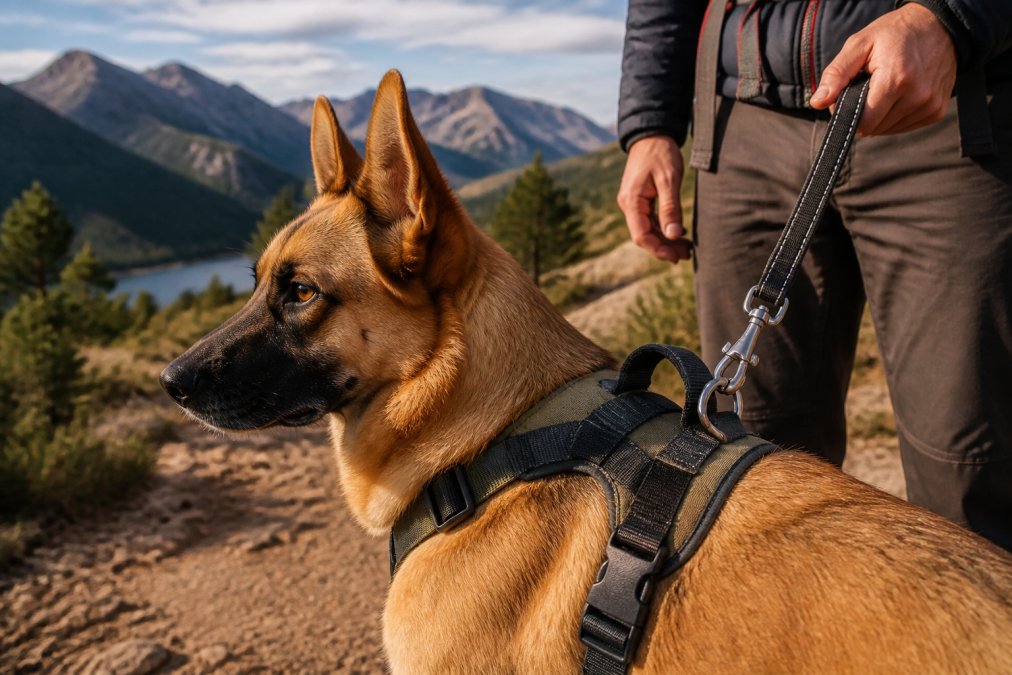
For casual walkers, a mid-weight harness with plastic quick-release buckles and standard webbing is plenty. For daily runners and pullers, prioritize padded, ergonomic fit, front-clip designs, and metal hardware. Working and hiking dogs need the full package: ripstop or ballistic fabric, welded D-rings, reflective trim for visibility, and breathability so the harness doesn't chafe on long outings.
The Proudpetshop No-Pull Adventure Harness ($37.99) is built for the middle and upper tiers of that range, with a front-clip design that redirects pulling tension onto the chest rather than the neck, plus breathable padding for longer wear. For dogs that also destroy their beds, the Bite-Proof Sofa Bed ($161.99) uses a dedicated bite-proof and scratch-proof fabric with a washable, waterproof cover.

Dog Gear Maintenance Tips
Dog gear maintenance tips come down to three habits: rinse after dirty outings, hand-wash with mild soap, and inspect hardware monthly. Most gear failures trace back to skipped inspections, not manufacturing defects.
- Rinse mud and salt off webbing after every hike to protect the DWR coating
- Hand-wash with mild soap and air-dry; skip the dryer, which degrades coatings and elastic (pubmed.ncbi.nlm.nih.gov)
- Check bar-tack stitching and D-ring anchors monthly for fraying or loosening
- Reapply a DWR spray when water stops beading on the fabric surface
- Store gear dry and out of direct sun to slow UV resistance breakdown
Warranty and Manufacturer Support
Warranty terms vary widely, and they are worth reading before you buy. Many manufacturers cover defects in materials and workmanship for a set period but exclude chewing, normal wear, and UV damage, the exact failures most owners actually experience. The gap between what a warranty sounds like and what it covers is where most disputes happen.
Reading the Fine Print
A meaningful warranty names what is covered and what is excluded. Look for language that specifies defects in materials and workmanship, and check whether the warranty period is measured from purchase or from manufacture. Some brands require proof of purchase and original packaging; others accept a dated photo. The most common exclusions are chewing, normal wear and tear, UV damage, and improper use. If a warranty excludes all four, it covers very little in practice.
Lifetime Guarantee vs. Defect Warranty
A lifetime guarantee sounds stronger than a one-year defect warranty, but the terms matter more than the label. Some lifetime guarantees cover only manufacturing defects for the life of the product, which may be defined as the expected lifespan of the gear rather than your dog's lifetime. Others offer replacement at a discount rather than free. A defect warranty with clear terms and a straightforward claims process is often more valuable than a vague lifetime guarantee with heavy exclusions.
Satisfaction Guarantees
A satisfaction guarantee covers the gap between a defect warranty and real-world disappointment. If a harness fits poorly or your dog chews through it in a week, a satisfaction guarantee may still allow a return or exchange within a set window. Proudpetshop backs every purchase with a 30-day satisfaction guarantee, which covers that gap. When comparing brands, check whether a satisfaction guarantee exists alongside any defect warranty, the combination is more useful than either alone.
Evaluating Manufacturer Support
Beyond the warranty text, look at how a company handles claims. A clear return process, responsive customer service, and published warranty terms are signs of a brand that stands behind its gear. A warranty that requires mailing in a form and waiting weeks for a decision is technically a warranty but practically a deterrent. Read reviews that mention warranty experiences, and check whether the brand offers replacement parts for wear items like buckles or webbing sections.
Common Mistakes to Avoid
Frequently Asked Questions
What materials make dog gear the most durable?
Look for ripstop fabric, nylon webbing, and abrasion-resistant synthetic fibers. These materials resist tearing and hold up to daily use. Hardware matters too: quick-release buckles, D-rings, and load-bearing clips should be heavy-duty. Stitching reinforcement like bar-tack stitching at stress points adds strength. DWR coatings help with weather resistance. Avoid gear made from thin cotton or single-layer fabric that wears through quickly.
How often should I replace my dog's gear?
Replace gear when you notice frayed stitching, cracked buckles, stretched webbing, or missing reflective trim. For daily-wear harnesses, inspect monthly. Active dogs may need new gear every 6-12 months. Carriers used weekly should last 1-2 years with proper care. If a D-ring bends or a buckle won't latch securely, stop using it immediately. Regular cleaning and proper storage extend gear life, but safety comes first when hardware integrity is compromised.
Are reinforced seams necessary for dog harnesses and carriers?
Yes. Reinforced seams, especially bar-tack stitching at stress points, prevent gear failure under load. Without them, seams can pull apart during walks or travel. Check for double-stitched edges and reinforced webbing attachment points. Tensile strength matters: a harness should hold several times your dog's weight. If seams look single-stitched or loose, the gear is not built for daily use or strong pullers.
What should I look for in heavy-duty dog adventure gear?
Prioritize abrasion-resistant materials, corrosion-resistant hardware, and ergonomic fit. Look for adjustable straps, neoprene padding for comfort, and reflective trim for visibility. Breathability matters for long hikes. Check that buckles are quick-release but secure. Gear for adventure should also be weather-resistant with DWR coating or waterproof construction. Test all adjustment points before heading out. If the gear shifts or rubs, it is not the right fit.
Dogs test gear in ways no spec sheet predicts, and the gap between "durable" and "actually durable" shows up fast. Proudpetshop builds for that reality, with gear like the No-Pull Adventure Harness, the Bite-Proof Sofa Bed, and the CloudLift Bed, each chosen for the hardware, stitching, and materials that survive daily wear. Every order ships free over $50 and comes with a 30-day satisfaction guarantee. Get started with Proudpetshop and gear that holds up to the dog you actually have.