
Table of Contents
- Start With the Trail: Matching Harness Type to Your Hike
- What Separates Durable Dog Harnesses From Disposable Ones
- Your Dog Harness Fit Guide: Sizing, Adjustment, and Escape Prevention
- Dog Harness Safety Features That Matter on Steep Terrain
- Why the Best Padded Dog Harness Reduces Chafing on Long Hikes
- How to Clean and Maintain a Dog Harness for Years of Trail Use
- A Pre-Hike Inspection Checklist for Every Harness
- Conclusion
- Frequently Asked Questions
Last Updated: October 20, 2026
Start With the Trail: Matching Harness Type to Your Hike
Durable dog harnesses start with one question: what does the trail demand? A padded back-clip harness that works on a flat path can fail on a rocky scramble. At Proudpetshop, this mismatch is the biggest reason a harness gets retired early.
Trail conditions should drive the harness type, not the other way around:
- Front-clip harness - Best for dogs that pull. The leash attachment point sits on the chest, so tension redirects the dog's forward motion. This is the configuration most hikers want for descents.
- Back-clip harness - Simple and unobstructed, good for calm dogs on open, level ground.
- Three-strap harness - Adds a belly strap for stability. The extra strap spreads load and reduces shifting on uneven footing.
- Adjustable harness with a lift handle - The right pick for steep terrain, scrambling, or older dogs needing mobility assistance.
Decide harness type and trail type together: a front-clip on a dog that never pulls just adds weight, while a back-clip on a puller turns every downhill into a tug-of-war.
What Separates Durable Dog Harnesses From Disposable Ones
Durability is not a marketing label. It is the sum of materials, stitching, and hardware, and each one fails in a predictable way. The American Kennel Club's guidance on harness selection and fit is a useful starting reference for the basics, but trail use puts far more stress on a harness than a walk around the block. Most buying guides stop at naming materials.
A Practical Durability Inspection Checklist
Run this five-minute hands-on inspection before trusting a harness on a hike; it catches failures that "tough" or "heavy-duty" claims gloss over.
- Webbing: Bend a section back on itself. Look for fraying, thin or shiny abrasion spots, and sun-bleached patches. It should feel dense and uniform, not limp or fuzzy.
- Stitching: Examine seams at load points, leash attachment, chest panel, strap junctions. Bar-tack stitching is a good sign; single-line stitching on a weight-bearing seam is a warning. Loose threads or gaps mean the stitch tension is off.
- Buckles: Fasten each several times; you want a positive click and no wobble. Check for cracks, bent prongs, or sharp edges that abrade webbing.
How Trail Conditions Degrade Common Materials
Here is how common materials hold up under real trail conditions:
- Nylon webbing: Resists abrasion and holds shape when wet, but absorbs water and dries slowly; repeated soaking can stiffen it. Rinse regularly to remove grit from the weave.
- Polyester webbing: Similar strength to nylon with better UV resistance and less water absorption, making it better for wet climates or swimming dogs. Slightly stiffer than nylon.
- Polypropylene webbing: Lighter and cheaper, but degrades faster in sunlight and resists abrasion poorly. Fine for occasional use, poor for rocky, brushy trails.
Hardware should be metal or high-grade acetal, not thin plastic. Metal lasts longer but adds weight; acetal is lighter and corrosion-resistant but can crack in extreme cold. Use metal for rocky, high-stress terrain and acetal for weight savings on milder trails.
Washing and Abrasion: The Two Biggest Durability Killers
Mud and grit act like sandpaper inside seams, so rinsing after muddy hikes extends the harness's life. Air dry only, machine drying warps plastic hardware and shrinks webbing. Abrasion wears webbing from the outside in, so inspect strap edges that contact rock and brush; a damp harness loses strength faster, making drying as important as cleaning.
Durability comes down to abrasion resistance, water management, and hardware quality. Inspect before buying and rinse and dry after every muddy trip, and a well-built harness outlasts several cheap ones.
Your Dog Harness Fit Guide: Sizing, Adjustment, and Escape Prevention
A dog harness fit guide comes down to two measurements and one test: chest girth at the widest point behind the front legs, neck circumference, then the two-finger rule.
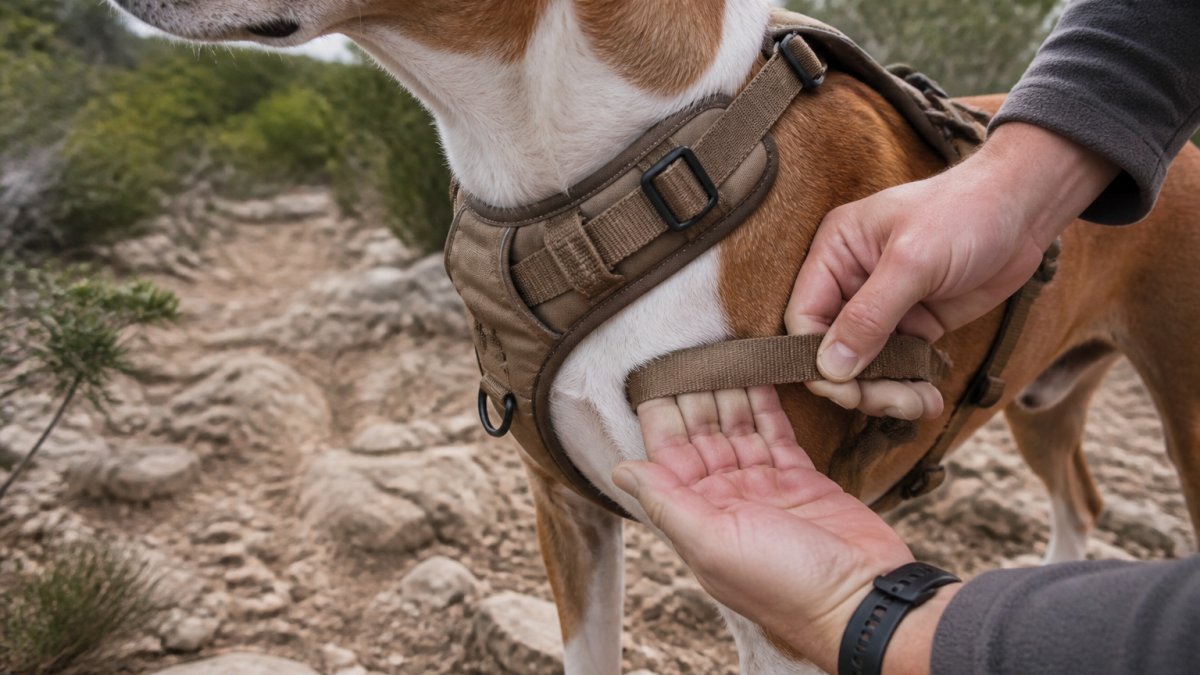
A well-fitted harness lets you slide two fingers under every strap without slack.
Dogs back out of harnesses when the chest strap sits too low or the neck opening is too wide.
| Fit Check | What to Look For | Warning Sign |
|---|---|---|
| Chest girth | Two fingers slide under strap | Strap digs in or gapes |
| Neck opening | Snug, no gap at the throat | Dog can pull a leg through |
| Belly strap | Sits behind the ribcage | Sits on the soft underbelly |
| Shoulder range | Full leg swing, no rubbing | Restricted stride or chafing |
Dog Harness Safety Features That Matter on Steep Terrain
Dog harness safety features matter most when the ground is not flat, where the harness becomes a control and assistance tool, not just a restraint. Features only help if they suit your dog and are checked before every hike.
The features that earn their place:
- Front-clip attachment point for redirecting a pulling dog on descents
- Lift handle on the back for assisting a dog over a rock step or ledge
- Reflective stitching for low-light visibility
A common mistake is buying a lift-handle harness without checking where the handle sits. Too far back gives poor leverage and can tip the dog off balance; it should sit centered over the shoulders.
When a Harness Is Unsuitable for Lifting
Not every harness should be used to lift a dog, even with a handle. Lifting is only safe if the harness distributes load across the chest and shoulders rather than the belly or throat. Avoid lifting with:
- A back-clip-only harness with no chest support, which can shift and choke under load
- A harness with a belly strap that sits on the soft underbelly rather than behind the ribcage
- Any harness where the handle is stitched to a single layer of webbing rather than reinforced into the main load path
For dogs with mobility issues, a dedicated mobility harness with a rear sling or hip-positioned handle may suit better than a standard hiking harness. If your dog is large or unsteady, practice lifting on flat ground with two people before trusting a handle on a ledge.
Pre-Hike Safety Checks
Run these checks before every hike, with a deeper inspection at the start of each season:
Proud Pet Shop No-Pull Adventure Harness →
- Fit check: Slide two fingers under every strap. The chest strap should sit behind the front legs, not on the throat; the belly strap behind the ribcage.
- Buckle and seam inspection: Fasten each buckle and listen for a positive click. Check load-point seams for loose threads and tug gently on the leash attachment to confirm it is secure.
- Escape-risk assessment: Watch for gaps at the neck opening or a chest strap that sits too low. For dogs with a history of escaping, test the fit indoors with a light drag first.
Matching Safety Features to Your Dog
Safety features should match the dog, not just the trail:
- Coat type: Short-coated or thin-skinned dogs chafe more easily, so breathable lining and smooth webbing matter more. Long-coated dogs trap debris under straps; check for matting after each hike.
- Body shape: Deep-chested breeds need a chest panel that clears the sternum; narrow, slender dogs need more adjustment points to keep the harness from twisting.
- Age and mobility: Senior or arthritic dogs benefit from a lift handle and wider padding, but may need a mobility-specific design if they cannot bear weight on a standard harness.
The USDA APHIS pet safety and travel resources cover broader animal welfare considerations, and the same principle applies on trail: control without pressure on the throat is the goal. A harness that fits your dog, suits the terrain, and passes a pre-hike check is the one that keeps both of you safe on steep ground.
Why the Best Padded Dog Harness Reduces Chafing on Long Hikes
The best padded dog harness prevents chafing by distributing pressure across a wide panel instead of narrow straps.
Breathable lining matters as much as thickness: a thick, non-breathable pad traps heat and moisture against the skin, softening the coat and making rubbing worse.
Pressure distribution is the other half. A padded harness should spread load across the chest and shoulders, not pinch at the armpits.
The Proudpetshop No-Pull Adventure Harness, at $37.99, is built around this idea: a breathable, padded lining that minimizes heat retention and friction, with a front-clip attachment point that redirects pulling force onto the chest panel.

How to Clean and Maintain a Dog Harness for Years of Trail Use
Cleaning a dog harness is simple, and skipping it shortens its life: mud, salt, and sweat work into webbing and stitching, and grit acts like sandpaper inside the seams.
A practical routine:
- Rinse the harness with cool water after muddy hikes.
- Hand wash with mild soap, no bleach and no fabric softener.
- Scrub the webbing with a soft brush where dirt has packed in.
- Rinse thoroughly and air dry away from direct heat.
- Check buckles and D-rings for grit before the next hike.
Never machine dry a harness. Heat warps plastic hardware and shrinks webbing. For leather components, use a leather conditioner sparingly and keep them out of prolonged soaking.
Washability is a real buying criterion: a harness you can rinse and air dry in an hour gets maintained, while one requiring special care gets put away wet, and that is how mildew and weakened stitching start.
A Pre-Hike Inspection Checklist for Every Harness
A pre-hike inspection takes two minutes and catches the failures that end hikes early. Run this checklist before every trip, with a deeper check at the start of each season.
- Webbing: no fraying, no thinning, no sun-bleached spots
- Stitching: no loose threads at any seam, especially load points
- Buckles: positive click, no cracks, no bent prongs
Durability under real hiking conditions comes down to abrasion and water resistance: rock, gravel, and brush wear webbing from the outside in, and a harness that stays damp loses strength faster.
Conclusion
The hard part of choosing durable dog harnesses for hiking is not finding options. It is resisting the urge to buy on looks and instead matching the leash attachment point, padding, and hardware to the dog and the trail.
At Proudpetshop, we built our Adventure & Safety category around that idea. The No-Pull Adventure Harness pairs front-clip control with breathable padding and reflective stitching, and every order ships free over $50 with a 30-day satisfaction guarantee.
Frequently Asked Questions
How should a hiking harness fit a dog?
A hiking harness should sit snug but not tight, with two fingers able to slide under each strap. The chest panel should rest across the breastbone, not on the throat, and the back strap should clear the shoulder blades so the dog's front legs move freely. Check every adjustment point after the first few minutes of walking, since padded straps settle once they warm up. A harness that shifts side to side or rubs under the front legs needs resizing before you hit steeper ground.
What materials make durable dog harnesses last longer?
Look for nylon or polyester webbing with reinforced seams and bar-tack stitching at stress points, plus metal or heavy-duty acetal buckles rather than thin plastic clips. Abrasion resistance matters most on granite and scree, so webbing density and stitch quality tell you more than a brand name. Leather holds up well but needs more care in wet conditions. Whatever the material, check the seams where the leash attachment point and lift handle connect, since those take the heaviest load.
How do I check a dog harness for wear before a hike?
Run a five-minute check before every hike: flex each buckle to confirm it clicks and releases cleanly, tug the webbing at every adjustment point to spot fraying, and inspect stitching around the leash attachment point and lift handle for loose threads. Look for flattened padding or worn fabric where straps cross the chest. Hold the harness up to light to spot thin spots in the webbing. Any cracked plastic, frayed edge, or pulled stitch means retire the harness before the trail, not after.
Do dogs walk better with a harness or collar on hikes?
Most dogs hike better in a harness because pressure spreads across the chest instead of concentrating on the trachea. A front-clip harness also redirects pulling, which helps on descents and around wildlife. Collars work for identification and short walks but put strain on the neck during steep scrambles or if a dog lunges. For any hike with elevation change or technical footing, a properly fitted harness gives you more control and your dog more comfort.