
Table of Contents
- Why Most Dog Collars Fail Within a Year
- The Most Durable Dog Collar Materials Compared
- Hardware: The Real Weak Point in Long Lasting Dog Collars
- How to Measure for the Perfect Fit
- How to Clean Dog Collars to Extend Their Life
- When to Replace a Dog Collar: 5 Warning Signs
- Final Checklist for Choosing a Collar That Lasts
- Frequently Asked Questions
Last Updated: September 8, 2026
Choosing a long lasting dog collar comes down to three things: the material, the hardware, and how well you maintain it. Most collars fail not because of the fabric wearing through, but because a buckle cracks, a D-ring bends, or stitching unravels at the seam. Durability is a design decision, not a price tag.
Why Most Dog Collars Fail Within a Year
The biggest mistake owners make is buying a collar based on looks rather than construction. A collar that fails during a walk is a safety hazard; a dog that slips a weak martingale or snaps a corroded buckle can run into traffic or fight with another animal.
Most failures trace back to a few predictable points. The stitching that connects the D-ring to the webbing is often the first casualty, especially on collars with thin thread or loose tension. Hardware is the second culprit; cheap zinc alloy buckles corrode and crack under repeated stress. Finally, material degradation from sun, water, and dirt weakens the entire structure over time. The American Kennel Club's guide on collar safety emphasizes that regular inspection is critical, noting that owners should check for fraying and hardware damage before every walk to prevent unexpected breakage.
The Most Durable Dog Collar Materials Compared
Material selection is the foundation of collar longevity, but the choice goes deeper than picking between nylon, leather, and biothane. The durability of each material is determined by its specific construction, weave, and finish.
Nylon Webbing: The Abrasion Champion
Nylon's durability is a function of its weave and denier. A standard collar might use 1000D nylon, but a truly long-lasting option often uses a tighter, higher-denier weave like 1680D ballistic nylon, the same material used in high-end luggage for its abrasion and tear resistance.
Construction specifics to look for:
- Heat-sealed or cut and burned ends: This prevents the webbing from unraveling at the edges, a common failure point.
- Box-stitched and bar-tacked hardware: The D-ring and buckle attachment points should be reinforced with multiple passes of stitching, not just a single straight line.
- Thread type: Look for UV-resistant and rot-resistant thread, such as bonded nylon or polyester. Standard thread can degrade and snap after prolonged sun exposure.
The trade-off: While nylon is strong and quick-drying, it can absorb oils and odors, and its color fades with prolonged UV exposure. For a dog that swims in saltwater, salt crystals can act as an abrasive, wearing down fibers if not rinsed.
Leather: The Classic That Demands Care
The term "leather" covers a wide spectrum of quality. Full-grain leather, which retains the natural grain and is not sanded down, is the most durable. It develops a patina and molds to the dog's neck, but its longevity is entirely dependent on maintenance. Leather is porous and will absorb moisture, leading to rot and cracking if not regularly conditioned.
The hidden weakness: The stitching on a leather collar is often the first point of failure, as thread can cut into the leather over time. A high-quality collar will have the stitching recessed or protected. For owners committed to a monthly conditioning routine, a full-grain leather collar can last for many years; for those who want a set-and-forget option, it is the wrong choice.
Biothane: The Modern, Hygienic Standard
Biothane is a synthetic material consisting of a polyester or nylon core coated with a thermoplastic polyurethane (TPU). This gives it the tensile strength of webbing with the waterproof, non-porous surface of a plastic. It does not absorb water, dirt, or bacteria, the primary causes of material degradation and odor in other fabrics.
The science of its durability: The TPU coating is resistant to UV rays, oils, chemicals, and mildew, making a biothane collar essentially immune to the environmental factors that break down nylon and leather (pubs.acs.org). The primary point of failure is not the material itself, but the hardware and its bonding to the material.
The Eco-Conscious Angle: A Missed Opportunity
Most durability guides ignore the environmental impact of these materials. Nylon and biothane are petroleum-based synthetics that will not biodegrade in a landfill. Leather, while natural, is often chrome-tanned, a process that uses heavy metals and produces toxic waste. A growing niche of manufacturers are using vegetable-tanned leather and recycled nylon or polyester webbing. While these options may have slightly different performance characteristics, they offer a way to prioritize longevity without compromising on sustainability.
Making the Choice: A Decision Matrix
To move beyond generalities, consider the following decision matrix based on your dog's specific lifestyle:
| Material | Best For | Longevity Threat | Maintenance Level | Eco-Impact |
|---|---|---|---|---|
| Ballistic Nylon | Hiking, rough play, everyday use | UV degradation, fraying at cut ends | Low (machine washable) | High (petroleum-based) |
| Full-Grain Leather | Urban walks, formal settings, dogs with sensitive skin | Rot from moisture, cracking from dryness | High (requires conditioning) | Moderate (tanning process) |
| Biothane | Swimming, water sports, muddy environments | Hardware failure, not the material itself | Very Low (wipe clean) | High (petroleum-based) |
| Recycled Synthetics | Eco-conscious owners, everyday use | Similar to nylon, but may have lower initial strength | Low | Low (recycled content) |
| Vegetable-Tanned Leather | Eco-conscious owners, classic look | Similar to leather, but less resistant to water | High | Low (natural tanning) |
This matrix highlights that the 'most durable' material is a function of the environment it will face. A biothane collar is the most durable in a wet, abrasive environment, while a ballistic nylon collar is the most durable for a dry, high-friction environment. Leather is the most durable only if the owner performs the required maintenance.
Hardware: The Real Weak Point in Long Lasting Dog Collars
You can buy the strongest webbing on the market, but if the buckle is made of pot metal, the collar will still fail. Hardware integrity is the most overlooked factor in collar longevity. The D-ring, buckle, and slider must be made of corrosion-resistant materials like solid stainless steel or brass, not plated zinc.
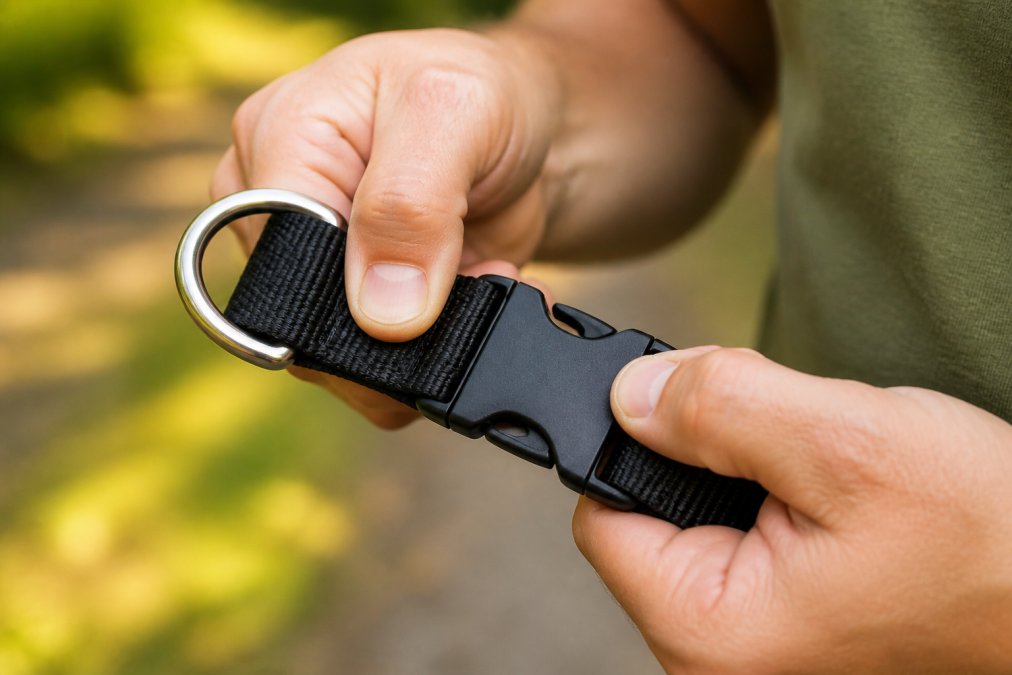
Buckle Failure: Plastic vs. Metal
The side-release buckle is the most common point of failure on a modern dog collar. The market is dominated by two types:
-
Acetal Plastic Buckles: These are the standard on most mass-market collars. They are lightweight and inexpensive, but prone to two failure modes: stress cracking (where repeated flexing of the release tabs creates micro-fractures that propagate into a full crack, often snapping cleanly in half) and tab shearing (where the thin release tabs shear off under a hard pull, rendering the buckle impossible to release).
-
Solid Metal Buckles: These are the gold standard for durability. However, not all metal is created equal. Zinc alloy (pot metal) is a cheap, porous casting alloy prone to white, powdery corrosion that weakens the metal and causes cracking. Stainless steel is the most durable option, corrosion-resistant, strong, and not prone to fatigue. Brass is excellent for saltwater environments but is softer than stainless steel and can bend under extreme force.
The test: A high-quality buckle should have a firm, positive click with no play or wobble. Press the release tabs and pull the two halves apart; a strong buckle requires deliberate, firm pressure to release, while a weak one releases with a light touch or feels 'mushy'.
D-Ring Failure: The Anchor Point
The D-ring is the critical connection point between the collar and the leash. Its failure is catastrophic. The primary failure modes are:
- Bending: A thin-gauge D-ring can bend under the force of a strong pull. Once bent, it loses its shape and can slip out of the stitching that holds it in place. This is a common issue with collars that use a stamped metal D-ring.
- Welding Failure: Many D-rings are made from wire that is bent into shape and welded at one point. This weld is a stress point. If the weld is poor, it can crack and snap. The Pet Safety Crusader's guide to collar hardware safety recommends avoiding collars where the hardware is welded rather than solid cast, as welds create stress points that can snap.
- Corrosion: A D-ring that is plated (e.g., chrome-plated zinc) will eventually have the plating wear away, exposing the base metal to corrosion. This corrosion weakens the metal and creates a rough surface that can fray the leash or the collar webbing.
The test: Look for a D-ring that is a solid, one-piece forging or casting, not a bent wire with a visible weld. Check the gauge (thickness) of the metal; a thicker gauge is always stronger. Try to bend it with your hands; if it flexes easily, it is too thin.
The Stitching Connection: The Invisible Weak Link
The most robust hardware is useless if the stitching that attaches it to the webbing fails. This is the most common failure point on all collars. Key factors include thread type (standard polyester is not UV-stable; bonded nylon is more resistant to UV and abrasion), stitch density (a higher number of stitches per inch creates a stronger seam), and reinforcement (attachment points should be reinforced with a 'box-stitch' and a 'bar-tack' to distribute stress; a single line of stitching is a recipe for failure).
A Practical Hardware Checklist
When evaluating a collar, use this checklist: (1) Buckle: Is it solid stainless steel or brass? Does it click firmly? Are the release tabs thick and robust? (2) D-Ring: Is it a solid cast or forged piece? Is the gauge thick? Is there a visible weld? (3) Stitching: Is it dense, tight, and reinforced at stress points? Is the thread thick and UV-resistant? (4) Rivets vs. Stitching: Rivets can create a hard point that irritates the skin; stitching is generally more comfortable and can be repaired.
How to Measure for the Perfect Fit
Ergonomic fit is about safety and durability. A collar that is too loose slides and chafes, wearing down the material and allowing the dog to back out. A collar that is too tight puts pressure on the trachea and can cause coughing or injury. The goal is a snug fit that allows two fingers to slip easily between the collar and the dog's neck.
To measure correctly, use a flexible tape measure around the base of the dog's neck, where the collar naturally rests. Keep it snug but not tight, then add about two inches to find the correct collar size, allowing room for growth or winter coat changes. This two-finger rule is the standard safety check used by veterinarians and trainers. If you are between sizes, size up.
How to Clean Dog Collars to Extend Their Life
Collar maintenance is the cheapest way to extend the life of your gear, yet it is the step most owners skip. Dirt and oils from a dog's coat act as an abrasive, breaking down fibers and stitching over time.
For nylon and biothane collars, a quick rinse under warm water with mild dish soap removes most debris. For deeper cleaning, soak in warm water with gentle detergent for 15 minutes, scrub with a soft brush, and hang to dry completely before reattaching.
For leather collars, wipe with a damp cloth to remove surface dirt, then apply a leather conditioner to keep it supple and prevent cracking. Never submerge leather in water, as this strips the natural oils. A well-maintained leather collar can last for years, while a neglected one will dry out and snap within months.
When to Replace a Dog Collar: 5 Warning Signs
Even the best collar has a lifespan. Knowing when to replace a dog collar prevents a sudden failure during a critical moment. Inspect your collar monthly and look for these five warning signs:
- Frayed or broken stitching: Loose threads or separating webbing compromise structural integrity.
- Cracked or bent hardware: A sticking buckle, a misshapen D-ring, or visible corrosion means the metal is fatigued.
- Material discoloration or stiffness: Brittle nylon or hard, dry spots on leather indicate degrading tensile strength.
- A stretched or misshapen fit: If the collar no longer holds its adjustment and slides freely, the material has stretched beyond safe limits.
- A strong, lingering odor: Odors persisting after cleaning indicate embedded bacteria, which can cause skin irritation like contact dermatitis.
If you notice any of these signs, retire the collar immediately. The cost of a new collar is far less than the cost of an emergency vet visit.
Final Checklist for Choosing a Collar That Lasts
Selecting a durable collar comes down to a simple checklist. First, choose a material that matches your dog's environment, whether that is weatherproof biothane for swimmers or heavy-duty nylon for hikers. Second, verify the hardware is solid metal, not plated, and check the buckle action for a firm click. Third, ensure a proper fit using the two-finger rule. Fourth, commit to a monthly cleaning and inspection routine. Finally, buy from a retailer that stands behind its products; a 30-day satisfaction guarantee signals that the seller trusts its gear. Proudpetshop curates its adventure and safety gear with this exact standard in mind.
Frequently Asked Questions
What are the most durable dog collar materials?
For long lasting dog collars, biothane and high-quality nylon webbing are top choices. Biothane is waterproof, odor-resistant, and won't rot or fray. Nylon webbing, especially military-grade with heavy-duty stitching, offers excellent abrasion resistance. Full-grain leather is durable but requires more maintenance and isn't waterproof. Avoid cheap vinyl or thin fabrics that crack and tear quickly.
How often should you replace a dog collar for safety?
Inspect your dog's collar monthly and replace it when you see signs of wear. This is typically every 1-2 years for daily-use nylon collars, depending on your dog's activity level. Replace it immediately if you notice frayed edges, cracked leather, a stretched or broken buckle, or a D-ring that has lost its shape. A collar that fails during a walk could lead to your dog escaping.
Are leather or nylon collars more long-lasting?
For most active dogs, high-quality nylon webbing lasts longer than leather. Nylon resists water, doesn't crack in extreme temperatures, and handles rough play better. Leather can last for years with meticulous care, but it requires regular conditioning and must stay dry to prevent rot. Biothane combines the look of leather with the durability of synthetic materials, making it a strong contender for the most long lasting dog collars.
What features should I look for in a heavy-duty dog collar?
Focus on hardware integrity first. Look for solid cast or welded D-rings and buckles, not stamped metal. The stitching should be heavy-duty with reinforced stress points. A corrosion-resistant coating on all metal parts prevents rust. For durability, the material should have high tensile strength and abrasion resistance. Consider adding a Smart Finder Tag for safety and peace of mind.