
Table of Contents
- How to Choose an Orthopedic Dog Bed: A Step-by-Step Guide
- Step 1: Measure Your Dog With a Dog Bed Size Guide
- Step 2: Match Bed Shape to Your Dog's Sleeping Position
- Step 3: Compare Foam Types, Including Memory Foam Dog Bed Options
- Step 4: Choose an Orthopedic Dog Bed for Senior Dogs and Large Breeds
- Step 5: Prioritize a Washable Orthopedic Dog Bed for Easy Care
- Step 6: Check Durability, Materials, and Full-Body Support
- Step 7: Weigh Cost Against Long-Term Value
- Frequently Asked Questions
Last Updated: October 12, 2026
How to Choose an Orthopedic Dog Bed: A Step-by-Step Guide
An orthopedic dog bed is a sleep surface built with dense support foam to cushion joints and spread a dog's weight evenly. Choosing one comes down to seven checks: measure your dog, match the shape to how they sleep, compare the foam, account for age and size, insist on a washable cover, inspect the build, and weigh cost against lifespan.
Most beds sold as "orthopedic" are just thick polyester. The label costs nothing; the foam inside is what your dog lies on.
What Makes a Bed Orthopedic (and Why It Matters)
A bed earns the orthopedic label through its foam, not its cover. High-density foam holds its shape under body weight, so a dog's hips, elbows, and spine stay level instead of sinking into a soft dip, that even support takes pressure off joints. A standard plush bed does the opposite: soft on day one, compressed within weeks.
Step 1: Measure Your Dog With a Dog Bed Size Guide
The right bed size starts with one measurement: your dog's length from the base of the tail to the tip of the front paws while lying stretched out. Add 6 to 12 inches so they can sprawl without hanging off the edge. A bed that is too small defeats the purpose, because your dog curls to fit and puts pressure back on the joints.
How to Measure Length and Width
Have your dog lie down on a hard floor, ideally after a walk when they are relaxed, and note two numbers:
- Length: base of the tail to the tip of the front paws, fully stretched
- Width: shoulder to shoulder, across the widest point of the chest
Guessing from your dog's weight is the most common mistake we see, and it leads to beds a size too small.
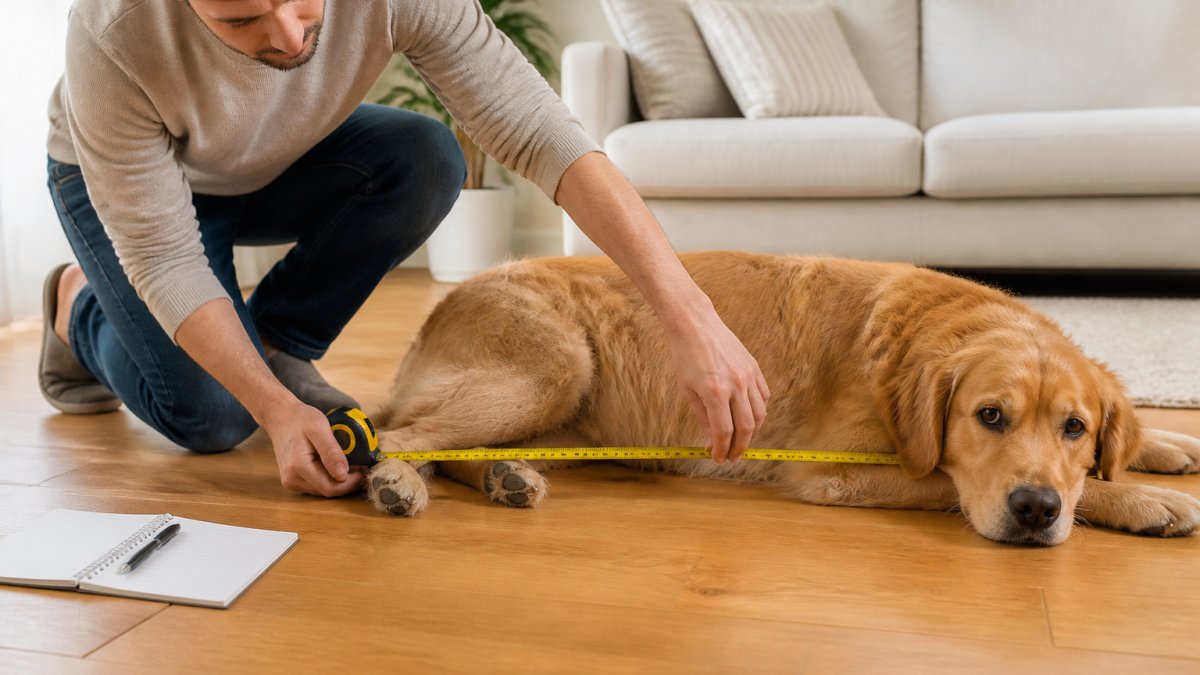
Why You Should Add 6-12 Inches of Room to Stretch
Dogs change position several times a night. A bed sized to their exact measurements forces them to curl, compressing the spine and hips.
Add 6 inches for a dog that sleeps curled. The American Kennel Club's dog care library notes that sleep position varies widely by breed and age, so a little extra room is never wasted.
Step 2: Match Bed Shape to Your Dog's Sleeping Position
Bed shape should follow how your dog actually sleeps, not how the bed looks in a photo. Watch them for two or three nights before you buy. Three sleep styles each point to a different shape:
- Curler: sleeps in a tight ball. A bolster bed with raised sides gives them a wall to press against.
- Sprawler: lies flat with legs out. A flat mattress with no bolsters gives them full room.
- Head-rester: drapes their chin over an edge. A sofa-style bed with raised sides supports the neck.
Step 3: Compare Foam Types, Including Memory Foam Dog Bed Options
Memory foam dog beds contour to the body and slowly return to shape, which helps dogs with achy joints. Support foam is denser and firmer, and it sits underneath to stop the bed from bottoming out. The best beds use both: a memory foam top layer over a denser base. A single block of soft foam is the giveaway of a cheap bed, great in the store, flat in a month.
Foam Specifications and Objective Quality Checks
You can judge foam without trusting the marketing copy. Look for three things:
- Density: measured in pounds per cubic foot (lb/ft³). Higher is firmer and lasts longer. If the listing does not state it, ask.
- Layer count: a memory foam top over a support foam base beats one thick block of the same foam.
- Recovery: press the foam and let go. It should return to shape within a few seconds, not stay dented.
What the Numbers Actually Mean
Density is the single most useful spec because it predicts how long the foam will hold its shape under a dog's weight. Foam below 2 lb/ft³ compresses quickly under a large dog.
Thickness matters too, but only paired with density. A 4-inch bed of 3 lb/ft³ foam outperforms a 7-inch bed of 1.5 lb/ft³ foam, because the thinner dense bed resists bottoming out while the thicker soft bed collapses.
How to Read a Foam Label
Manufacturers use different terms for the same thing, so translate before comparing:
- "High-density" is meaningless on its own. Ask for the lb/ft³ number.
- "CertiPUR-US" is a real third-party certification for foam content and emissions. It does not certify support or durability, but confirms the foam meets material safety standards.
- "Therapeutic" and "orthopedic" are marketing words, not specs. Neither has a legal definition for pet beds.
Matching Foam to Your Dog
Use your dog's weight and sleep habits to set a floor for what you will accept:
- Under 25 lb: 2 lb/ft³ or higher, 3-inch sleep surface minimum.
- 25 to 60 lb: 2.5 lb/ft³ or higher, 4-inch sleep surface minimum, layered construction preferred.
- Over 60 lb: 3 lb/ft³ or higher, 4- to 6-inch sleep surface, layered construction strongly preferred.
If your dog is a chewer, remember that foam is not chew-proof. Pair the bed with a chew-resistant cover or a raised cot if your dog has a history of destroying bedding.
Step 4: Choose an Orthopedic Dog Bed for Senior Dogs and Large Breeds
An orthopedic dog bed for senior dogs matters most, because older dogs lose muscle mass and carry less natural padding over their joints. The same goes for large breeds: a 70-pound dog puts far more load on foam than a 15-pound one, so density and thickness matter more as size goes up.
Watch for these signs that your dog needs more support:
- Stiffness when getting up after a nap
- Reluctance to climb stairs or jump on the couch
- Shifting position frequently at night
For heavier dogs, look for a bed rated to their weight and sized generously. The Proud Pet Shop Comfort Den XL is built for dogs up to 80 pounds at 41 x 28 x 7 inches, with high-density orthopedic foam and raised bolster sides for head and neck support.
Proud Pet Shop Comfort Den XL →
Step 5: Prioritize a Washable Orthopedic Dog Bed for Easy Care
A washable orthopedic dog bed is not a luxury, it is what keeps the bed usable for years. Foam cores trap odor, dander, and accidents. If the cover cannot come off and go in the machine, the bed becomes a problem you avoid instead of a place your dog loves.
Check three things before buying:
- Removable cover: it should unzip fully, not just at one corner
- Waterproof liner: protects the foam core from accidents and spills
- Machine washable fabric: look for stain-resistant and odor-resistant material
A Care Routine That Protects the Foam
The cover is the easy part. The foam is what you are preserving, and most foam damage comes from moisture, heat, and compression, not the dog. A practical routine:
- Weekly: vacuum the cover with a brush attachment to lift hair and dander before it works into the fabric.
- Every 2 to 4 weeks: wash the cover in cold or warm water on a gentle cycle with a mild detergent. Skip fabric softener and bleach, which break down the water-resistant coating and the foam.
- After every accident: remove the cover immediately, blot the foam with a clean towel, and let the foam air-dry completely before reassembling. Never put the foam core in a washing machine or dryer.
Drying Without Damaging the Foam
Heat is the enemy of memory foam: a dryer on high degrades the cell structure and causes the foam to lose its recovery. Air-dry the cover on a line or rack, or use the lowest heat setting only if the care tag allows it. For the foam core, stand it on its edge in a well-ventilated room with a fan, a thick core can take 24 to 48 hours to dry fully after a soak.
When to Replace an Orthopedic Dog Bed
Replace the bed when the foam stops springing back. Press the center with your palm. If it stays flat or you can feel the floor through it, the support is gone.
Use these specific triggers to decide:
- Permanent compression: a visible dip that does not recover within a minute of getting up.
- Bottoming out: you can feel the floor through the bed when you press with moderate pressure.
- Crumbling or flaking: the foam is breaking down at the edges or shedding.
If two or more are true, the bed is no longer doing its job. Replacing it is cheaper than the joint discomfort of a dog sleeping on a collapsed surface.
Accessibility and Special Needs
A washable cover matters even more for dogs with mobility limitations or incontinence. Look for:
- Low-entry design: a bed with a low front edge or no bolster on one side, so the dog can step in without lifting a leg.
- Waterproof liner plus a spare cover: one cover on the bed, one in the wash.
- Moisture-wicking top fabric: helps dogs that run hot or drool.
A bed that is hard to clean gets avoided; one that is easy to clean stays in service for its full lifespan.
Step 6: Check Durability, Materials, and Full-Body Support
Full-body support means the bed holds your dog from head to tail, not just under the belly. A bed that sags at the edges lets the head and hips drop, which is exactly where older dogs need help, so look for a firm base and structured edges. Durability comes down to construction, not thickness alone:
- High-density foam that keeps its shape over time
- Reinforced stitching at the seams and bolsters
- Non-slip base so the bed stays put on tile or hardwood
A bed that slides across the floor or loses its shape is a bed your dog will stop using.
Step 7: Weigh Cost Against Long-Term Value
A cheap bed is only cheap if it lasts. Most low-cost beds flatten within a season, so you buy two or three in the time a good one lasts. The real math is initial price against replacements avoided:
| Bed Type | Upfront Cost | Typical Lifespan | Best For |
|---|---|---|---|
| Standard plush bed | Low | Months | Puppies, light chewers |
| Mid-range foam bed | Medium | 1-2 years | Adult dogs, average use |
| Orthopedic foam bed | Higher | Several years | Senior dogs, large breeds |
Check foam density, cover, and warranty before the price tag. A bed that lasts three times as long is the better buy even at double the cost.
Choosing the right bed means measuring your dog, matching the shape to how they sleep, and checking the foam instead of the label. At Proudpetshop, we stock comfort essentials built for real households, including the Comfort Den XL with high-density orthopedic foam, a waterproof removable cover, and a non-slip base.

Frequently Asked Questions
How do I measure my dog for an orthopedic bed?
Measure your dog from the tip of the nose to the base of the tail while they are lying flat on their side, then add 6 to 12 inches so they can stretch out. Also measure shoulder width and add a few inches for turning room. For example, a dog measuring 30 inches long needs a bed at least 36 to 42 inches long. The Proud Pet Shop Comfort Den XL at 41 x 28 x 7 inches fits dogs up to 80 pounds.
Is memory foam better than standard foam for an orthopedic dog bed?
Memory foam contours to your dog's body and distributes weight to reduce pressure on joints, while standard support foam provides a firm base that prevents sinking. The best orthopedic dog beds combine both: a dense support foam base topped with memory foam. Look for high-density foam (3 pounds per cubic foot or higher) because low-density foam flattens within months and loses its orthopedic benefit.
Are orthopedic dog beds good for older dogs?
Yes. Orthopedic beds are especially helpful for senior dogs because aging joints lose cartilage cushioning, and conditions like arthritis become more common. A supportive bed with memory foam and bolster sides helps maintain body alignment, reduces pressure on hips and elbows, and makes it easier for older dogs to get up. A waterproof, machine-washable cover also matters for senior dogs who may have occasional accidents.
How often should you replace an orthopedic dog bed?
Replace an orthopedic dog bed when the foam no longer springs back after you press it, when it develops permanent indentations or a visible sag, or when the cover is torn beyond repair. For most beds, that means every 1 to 3 years depending on foam density and how much your dog weighs. Heavier dogs compress foam faster. A washable cover extends the bed's life by protecting the foam from moisture and odor.