
Table of Contents
- What You'll Need Before You Start
- Step 1: Vacuum the Pet Bed Weekly
- Step 2: How Often to Wash a Dog Bed
- Step 3: How to Remove Pet Hair From Fabric
- Step 4: Machine Washing and Drying the Right Way
- Step 5: How to Clean a Memory Foam Pet Bed
- Step 6: Choosing the Best Pet-Safe Laundry Detergent
- Step 7: Odor Removal and Stain Treatment
- Frequently Asked Questions
Last Updated: September 30, 2026
What You'll Need Before You Start
Keeping a pet bed clean starts with having the right supplies on hand. Gather everything before you begin so you can move through each step without stopping.
Here's what you'll need:
- Vacuum with an upholstery attachment
- Mild, pet-safe laundry detergent
- Baking soda
- White vinegar
- Enzymatic cleaner for stains and odors
- Lint roller or rubber gloves
- Spare blanket or towel for layering
- Washer and dryer access
A common mistake is grabbing whatever detergent is closest. Many standard detergents leave chemical residue that irritates paws and skin. Stick with a mild, pet-safe formula from the start.
This guide from Proudpetshop walks you through every step, from weekly vacuuming to deep stain treatment. By the end, you'll know exactly how to keep pet bed clean without damaging the fabric or exposing your pet to harsh chemicals.
Step 1: Vacuum the Pet Bed Weekly
Weekly vacuuming is the fastest way to control hair, dander, and dust mites between washes. It takes about five minutes and prevents loose debris from working its way into the fabric.
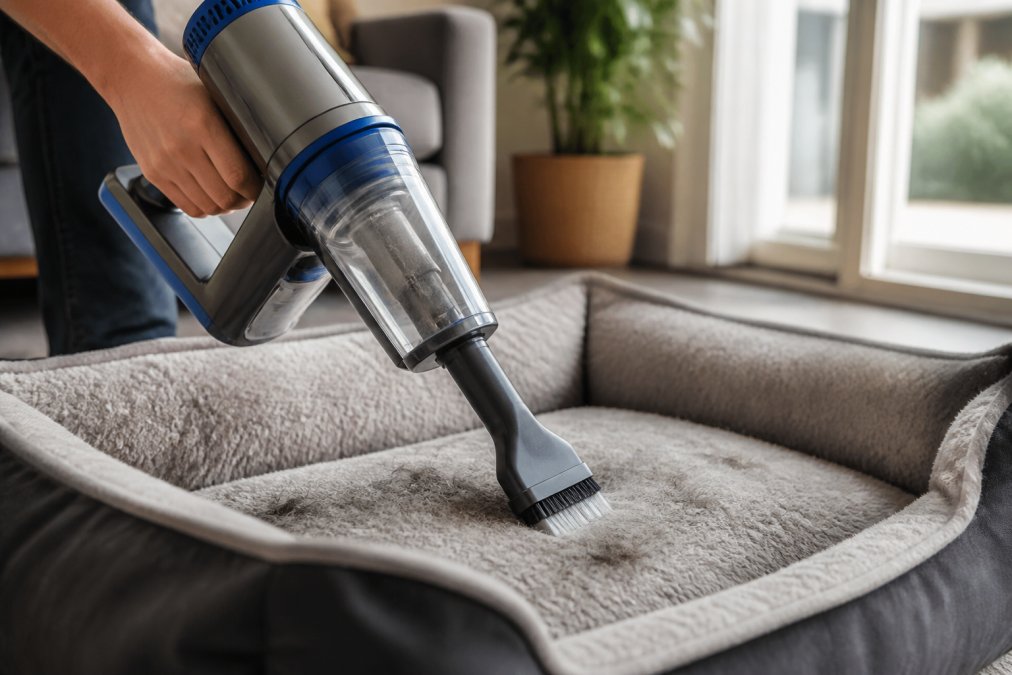
Use an upholstery attachment on low suction. Run it across the entire surface, including seams and corners where hair collects. For embedded hair, switch to a rubber glove or lint roller after vacuuming.
Step 2: How Often to Wash a Dog Bed
Most pet beds should be washed every two to four weeks. Beds used by pets with allergies, skin conditions, or heavy shedding need more frequent washing. That baseline is where most guides stop, but the right cadence depends on three things they rarely mention: your pet, the bed's materials, and whether anyone in the household has allergies.
Wash Frequency by Pet Type
| Pet Type | Wash Frequency | Why |
|---|---|---|
| Short-haired dogs | Every 3-4 weeks | Less shedding, slower odor buildup |
| Long-haired dogs | Every 2 weeks | Heavy shedding, more trapped dander |
| Cats | Every 2-3 weeks | Dander and hair accumulate fast |
| Senior pets | Every 1-2 weeks | Accidents and skin sensitivity |
| Pets with allergies | Weekly | Allergen control requires frequent washing |
Wash Frequency by Bed Material
This is the part most guides skip. The cover and the core have different tolerances, and treating them the same is how beds get ruined.
| Material | Cover Cadence | Core Cadence | Notes |
|---|---|---|---|
| Polyester plush | Every 2 weeks | N/A (cover only) | Holds dander; wash hot only if label allows |
| Memory foam | Every 2 weeks | Spot clean monthly | Never submerge; water collapses cell structure |
| Orthopedic foam | Every 2 weeks | Spot clean monthly | Dense foam dries slowly, air dry 24+ hours |
| Faux fur | Weekly | N/A | Mats easily; brush before washing |
| Waterproof liner | Wipe weekly | N/A | Hand wipe only; heat degrades the coating |
| Bite-proof fabric | Every 2-3 weeks | N/A | Abrasion-resistant weaves trap less hair |
The Allergen Angle Most Guides Miss
If anyone in the home has pet allergies, wash frequency is not a comfort preference, it is the primary control measure. Dander and dust mites accumulate in the cover and the foam core, and both trigger symptoms. For allergen households, wash the cover weekly in hot water if the care label permits, and vacuum the core with a HEPA-filter vacuum at the same interval.
Step 3: How to Remove Pet Hair From Fabric
Removing pet hair from fabric works best with dry methods first, then wet cleaning. Trying to wash a hair-covered bed just pushes hair deeper into the fabric and clogs your machine.
Start dry. Here's the order that works:
- Vacuum both sides with an upholstery attachment
- Run a lint roller over the surface
- Use damp rubber gloves in circular motions to lift embedded hair
- Shake the bed outdoors to release loosened fur
Tools That Lift Embedded Hair
Some tools work better than others for stubborn hair. A rubber-bristled brush pulls hair out of woven fabric without snagging threads. Lint rollers handle surface hair fast. For memory foam, skip stiff brushes and use a vacuum with a brush attachment only.
Step 4: Machine Washing and Drying the Right Way
Machine washing is safe for most pet beds if you follow the fabric care label. Use cold water, a gentle cycle, and mild detergent. Hot water can shrink filling and fade covers.
Proud Pet Shop Calming Donut Bed →
- Tumble dry on low heat for 20-30 minutes
- Air dry the rest of the way to prevent shrinkage
- Fluff memory foam by hand after drying
- Never use high heat on waterproof liners
Fabric Care by Bed Type
| Bed Type | Wash Method | Dry Method |
|---|---|---|
| Plush covers | Machine wash, cold | Tumble dry low |
| Memory foam | Spot clean core, wash cover | Air dry only |
| Orthopedic pad | Wash cover, wipe core | Air dry |
| Waterproof liner | Hand wipe | Air dry |
| Bite-proof fabric | Machine wash, cold | Tumble dry low |
Step 5: How to Clean a Memory Foam Pet Bed
Memory foam pet beds need spot cleaning, not full machine washing. Water breaks down the foam's cell structure and destroys the support that makes it useful for joints.
Here's the safe method:
- Remove the zippered cover and machine wash it separately
- Vacuum the foam core on both sides
- Mix mild detergent with cool water
- Dab stains with a cloth, never soak the foam
- Let the core air dry away from direct sun
Step 6: Choosing the Best Pet-Safe Laundry Detergent
The best pet-safe laundry detergent is free of dyes, perfumes, and harsh chemicals. Look for formulas labeled gentle or free-and-clear. That is the standard advice, but it leaves out the two things owners actually need: why each ingredient matters, and what to do when you would rather mix your own.
What to Avoid and Why
- Synthetic fragrances, Phthalates and synthetic musks bind to fabric and release slowly. Pets lick their bedding, so residue ends up ingested.
- Optical brighteners, These are designed to stay on fabric after rinsing. They are the residue most likely to irritate paws and skin.
- Chlorine bleach, Breaks down protein fibers in wool and degrades waterproof coatings on liners.
- Fabric softeners with heavy perfume, Coat fibers in a waxy film that traps dander and reduces absorbency, which is the opposite of what you want on a pet bed.
- Enzymatic boosters in every load, Useful for accidents, unnecessary for routine washes. Save them for stains.
Non-Toxic DIY Solutions That Actually Work
If you want to skip commercial detergent entirely, these three ingredients cover almost every situation. The key is matching the ingredient to the job.
A Simple DIY Wash Recipe
For a routine wash on a machine-washable cover:
- Add 1/2 cup baking soda to the drum
- Add 1-2 tablespoons castile soap to the detergent dispenser
- Run a cold, gentle cycle
- Add 1/2 cup white vinegar to the rinse dispenser
- Tumble dry low or air dry
Test any DIY mix on a hidden seam first. Vinegar can fade some dyes, and castile soap can leave a film on synthetic waterproof coatings.
Step 7: Odor Removal and Stain Treatment
Odor removal starts with an enzymatic cleaner, not soap. Enzymatic cleaners break down the proteins in urine, drool, and vomit that cause smell. Regular detergent only masks them.
Follow this stain treatment protocol:
- Blot fresh stains with a clean cloth, never rub
- Apply enzymatic cleaner and let it sit 10-15 minutes
- Blot again with a damp cloth
- Sprinkle baking soda once dry, then vacuum
- Repeat for set-in stains
Frequently Asked Questions
How often should you wash a dog bed?
Most pet beds need a full wash every two weeks. Dogs that shed heavily, drool, or spend time outdoors may need weekly washing. Senior dogs with incontinence or pets recovering from illness need washing every few days. Between washes, vacuum the surface once a week and spot clean accidents right away. A removable zippered cover makes frequent washing easier on the bed's structure.
What is the best way to remove pet hair from a bed before washing?
Start with a lint roller or rubber glove to lift loose hair, then run a vacuum upholstery attachment over the fabric. For embedded hair, use a deshedding brush or damp rubber squeegee. Shake the bed outside before washing so loose hair does not clog your machine. Skipping this step leaves hair behind that can redeposit on the bed after washing.
Can I use regular laundry detergent to wash pet beds?
Standard detergent can leave chemical residue that irritates paws and skin, especially on pets with allergies. Choose a pet-safe, fragrance-free detergent labeled for sensitive skin. Avoid fabric softener and dryer sheets, which coat fibers and reduce moisture wicking. For stubborn odors, add half a cup of baking soda or white vinegar to the wash cycle instead of scented boosters.
How do I get the smell out of a pet bed without washing it?
Sprinkle baking soda generously over the dry bed, let it sit for 15 to 30 minutes, then vacuum it up. For urine or vomit, blot the area with a cloth, spray a 50/50 white vinegar and water solution, and let it air dry. An enzymatic cleaner breaks down odor molecules at the source. These spot-cleaning methods work between full washes but do not replace them.