
Table of Contents
- Before You Go: Health Checks and Identification
- How to Acclimate a Dog to a Carrier Before Travel Day
- Choosing the Best Dog Carrier Backpack 2026: Fit, Ventilation, and Safety
- Your Pet Travel Safety Checklist for Cars, Planes, and Trains
- Emergency Pet Travel Kit Essentials to Pack Every Trip
- Breed-Specific Travel Risks and Budget-Friendly DIY Safety Setups
- After the Trip: Post-Travel Decompression and Digital Safety Tools
- Conclusion: Keep Pets Safe Traveling with Preparation and the Right Gear
- Frequently Asked Questions
Last Updated: October 1, 2026
Before You Go: Health Checks and Identification
The most effective way to keep pets safe traveling starts weeks before you pack the car. A vet visit, current ID, and a little paperwork prevent most trip-derailing problems.
How to Acclimate a Dog to a Carrier Before Travel Day
Acclimating a dog to a carrier means building positive associations over several days so it feels like a familiar den, not a trap. A pet that relaxes inside its carrier travels with far less anxiety.
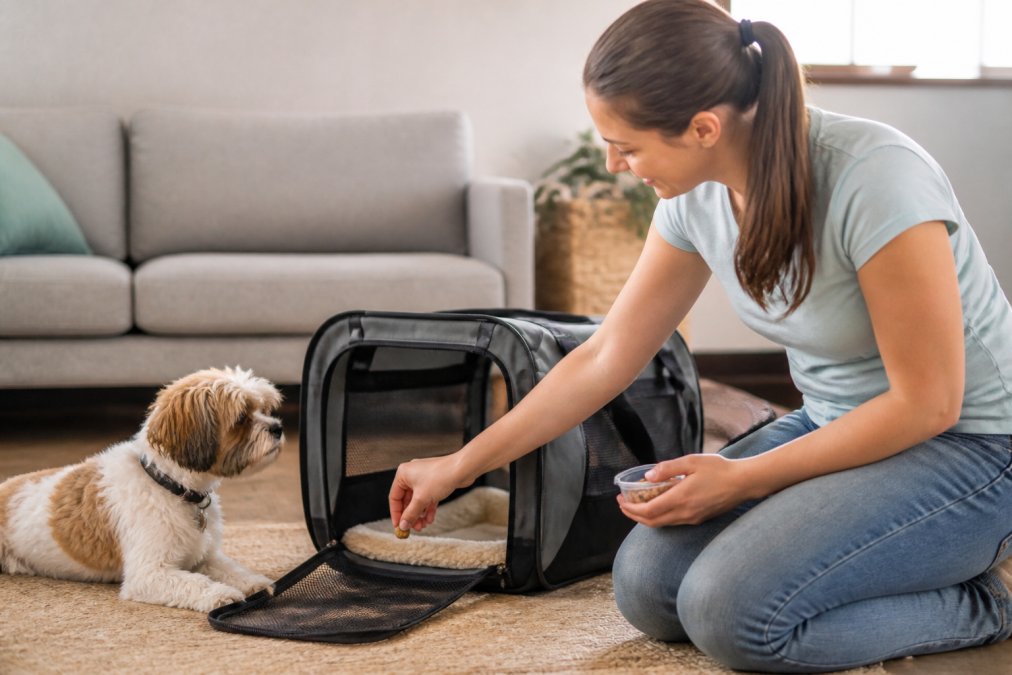
A 7-Day Carrier Training Plan
- Day 1-2: Leave the carrier open in a common room with a favorite blanket inside. Toss treats near it, never inside.
- Day 3-4: Place treats just inside the entrance. Let your dog enter and exit freely.
- Day 5: Close the door for 10-15 seconds while feeding treats through the mesh.
- Day 6: Carry the closed carrier a few steps around the house, then release.
- Day 7: Take a short 5-minute car ride, then return home and reward.
Short, repeated sessions beat one long one. If your dog whines, back up a step rather than pushing through.
Choosing the Best Dog Carrier Backpack 2026: Fit, Ventilation, and Safety
The best dog carrier backpack 2026 is sized to your pet's actual measurements, not the breed label. Measure from base of neck to tail and note standing height, then match that to the carrier's interior dimensions.
Your Pet Travel Safety Checklist for Cars, Planes, and Trains
A pet travel safety checklist keeps essentials from getting lost on departure day. Run through it the night before every trip, and confirm the mode-specific rules below before you book.
| Travel Mode | Restraint | Key Rule | Break Frequency |
|---|---|---|---|
| Car | Crash-tested harness or secured carrier | Never in front seat | Every 2-3 hours |
| Plane (cabin) | Airline-approved carrier under seat | Confirm size limits first | Per airline policy |
| Plane (cargo) | IATA-compliant crate | Check breed restrictions | Direct flights only |
| Train | Leashed or in carrier | Verify operator pet policy | At each stop |
Car Travel: Restraints, Rest Stops, and Cabin Rules
Unrestrained pets become flying debris in a sudden stop, and a pet on your lap is a distracted driving hazard. Secure your dog in a crash-tested harness or carrier, and never let a pet ride with its head out the window.
Air Travel: Cabin vs. Cargo, Crate Sizing, and Temperature Embargoes
Cabin travel is generally safer for small pets, but airlines cap carrier dimensions and pet counts per flight. Most carriers require the pet to stand, turn around, and lie down naturally inside, and the carrier must fit fully under the seat in front of you. Confirm your aircraft's under-seat dimensions before buying; a bag that fits a regional jet may not fit a wide-body.
- Temperature embargoes. Most airlines will not accept a pet in cargo when the forecasted temperature at any point on the route falls below roughly 45°F or rises above roughly 85°F. These thresholds vary by carrier and by whether the animal is acclimated, so check the airline's published pet embargo policy for your travel dates.
- Crate requirements. Cargo crates must meet International Air Transport Association (IATA) live animal regulations: rigid construction, ventilation on at least three sides, a secure latching door, and enough interior height for the pet to stand without its head touching the roof. Many airlines also require metal hardware rather than plastic clips on the door.
Rail Travel: Operator Policies and Onboard Rules
Rail is the least standardized of the three modes. Amtrak permits small pets in carriers on many routes, but the pet must stay in the carrier at all times and the carrier must fit under the seat or on your lap. Weight limits and per-train pet caps apply, and some routes ban pets entirely. Verify the operator's policy for your route before buying a ticket.
Border and Documentation Rules for Air and Rail
For any border crossing, rabies vaccination and a health certificate are baseline requirements, and some destinations impose quarantine. A few mechanics matter more than the general rule:
- Health certificate timing. The certificate must be issued by an accredited veterinarian within a short window before travel, commonly 10 days for many destinations. A certificate issued too early is invalid at the border.
- Rabies documentation. Proof of a current rabies vaccination is required for essentially all crossings, and some destinations require a specific titer test that takes weeks to process.
- State-to-state movement. Most states do not require a health certificate for a pet traveling by car or train, but a few do for certain species or for animals entering from specific regions. Check the destination state's animal health authority if you are unsure.
Emergency Pet Travel Kit Essentials to Pack Every Trip
Emergency pet travel kit essentials fit in a single zip pouch and cover what actually happens: motion sickness, minor cuts, a pet that won't settle, and the flat tire that turns a four-hour drive into eight. Build it once, restock after every trip, and keep it in the car.
The Core Kit
- First aid supplies: gauze pads, self-adhesive wrap, antiseptic wipes, tweezers, blunt-tip scissors, and a small bottle of saline for flushing wounds or eyes.
- Current medications plus a written dosage schedule. Include the pet's weight and the prescribing vet's phone number; an emergency clinic will ask for both.
- Copies of vaccination records and the health certificate. Keep a paper copy even if you have a digital version, because not every border or front desk can read a phone screen.
- Collapsible bowl and bottled water. Bring more than you think you need; a stressed pet drinks less, and unfamiliar tap water can upset a sensitive stomach.
- Waste bags, a spare leash, and a towel. The spare leash matters most: a leash that snaps at a rest stop is the most common way a pet gets loose on a trip.
- A recent photo of your pet and your vet's phone number. A photo from departure morning beats one from last year for a lost-pet poster.
- A pet-safe calming aid if your vet recommends one. Ask about this at the pre-trip exam, not at the gate.
Mode-Specific Additions
A car kit and a flight kit are not the same. Add these based on how you are traveling:
Proud Pet Shop RoadTrip Ride Guard →
- Car: a reflective emergency triangle, a jug of water larger than the collapsible bowl holds, and a shade screen for the window nearest the crate. A car in summer sun can reach dangerous temperatures within minutes even with windows cracked.
- Plane: a collapsible travel bowl that fits in the carrier, a small absorbent pad for the carrier floor, and a copy of the health certificate in the carrier pocket. Do not put food in the carrier for a flight; offer water at the gate instead.
- Train: a quiet toy or chew that fits in the carrier, and a lightweight mat the pet already knows. Rail travel is often longer than a flight, and familiarity reduces stress.
What Not to Pack
- Human medications. Never give a pet human medication for motion sickness without veterinary guidance. Several common over-the-counter drugs are toxic to dogs and cats, and sedation risks rise with altitude and pre-existing conditions.
- Loose food in the kit. A bag of kibble that has been open in a hot car for weeks can spoil. Pack sealed portions and rotate them.
- A harness or carrier the pet has never worn. Travel day is not the day to introduce new gear. Break in every restraint item at home first.
Breed-Specific Travel Risks and Budget-Friendly DIY Safety Setups
Breed-specific travel risks are the gap most guides skip. Flat-faced breeds such as pugs and bulldogs struggle to regulate breathing in heat and stress, making cargo hold travel genuinely dangerous. Many airlines restrict or ban these breeds in cargo for that reason.
After the Trip: Post-Travel Decompression and Digital Safety Tools
Post-travel decompression is the step almost everyone skips. Pets experience routine disruption just as people do, and a few days of normalcy prevents stress behaviors from settling in.
CDC guidance on traveling with pets
Conclusion: Keep Pets Safe Traveling with Preparation and the Right Gear
Traveling with a pet comes down to preparation before departure and gear that holds up once you're moving. Most problems, from a rejected carrier at the gate to a stressed pet that won't eat, trace back to a skipped step.
Frequently Asked Questions
What is the safest way for a dog to travel safely in a car?
The safest setup uses a crash-tested harness attached to a seat belt or a secured carrier in the back seat. Keep pets out of the front seat and never let them ride with their head out the window, since flying debris can cause eye and ear injuries. A non-slip seat cover like the Proud Pet Shop RoadTrip Ride Guard ($34.99) adds stability and protects upholstery. Plan rest stops every 2 to 3 hours for water, bathroom breaks, and a short walk.
What should I include in a pet travel safety checklist?
A solid pet travel safety checklist covers identification (collar tags and microchip), restraint gear (crash-tested harness or carrier), health documents (rabies vaccination proof and health certificate), water and food bowls, waste bags, medications, and a pet first aid kit. Add emergency contact information for your vet and a 24-hour animal hospital at your destination. Confirm pet-friendly accommodation and check border crossing or quarantine regulations if you are crossing state or international lines.
How do I acclimate a dog to a carrier without causing stress?
Start at least a week before travel. Leave the carrier open in a common area with treats and a favorite toy inside. Feed meals near it, then inside it. Once your dog enters willingly, close the door for a few seconds and gradually extend the time. Add short walks or car rides with the carrier. This gradual acclimatization builds positive associations and reduces travel anxiety. For a hands-free option, the Proud Pet Shop TrailFold Carrier ($34.99) has mesh panels and a safety leash attachment that help pets feel secure.
What are the CDC requirements for traveling with pets?
For international travel, the CDC requires dogs to be at least 6 months old, microchipped, and accompanied by a valid rabies vaccination certificate. Some countries also require a health certificate issued by a USDA-accredited veterinarian within 10 days of travel. Check the CDC website and your destination's embassy for current rules, since requirements change. For domestic travel, airlines set their own policies, often requiring a health certificate and advance booking for cabin pets.
Can my 50-pound dog fly in the cabin with me?
Most airlines only allow pets up to 20 pounds in the cabin, and the carrier must fit under the seat in front of you. A 50-pound dog generally must fly in the cargo hold, which has temperature and ventilation controls but carries more risk. If cargo travel is unavoidable, book a direct flight, avoid extreme weather, and acclimate your dog to the travel crate weeks in advance. Check individual airline policies, as weight limits and carrier sizes vary.
What are emergency pet travel kit essentials?
Pack a pet first aid kit with gauze, adhesive tape, antiseptic wipes, tweezers, and a digital thermometer. Include a 3-day supply of food and medications, bottled water, collapsible bowls, a spare leash, waste bags, and a copy of vaccination records. Add a recent photo of your pet and emergency contact information for your vet and a local animal hospital. A GPS-enabled tag like the Proud Pet Shop Smart Finder Tag ($34.99) helps reunite you if your pet gets lost during the trip.
How do I manage motion sickness and travel anxiety in pets?
Feed a light meal 3 to 4 hours before departure, not right before. Keep the car well-ventilated and at a comfortable temperature. For anxiety, use calming pheromone sprays or a favorite blanket in the carrier. Desensitize your pet to short car rides first. If your vet approves, over-the-counter motion sickness medication for dogs may help, but never give human medications without veterinary guidance. Sedation carries risks, especially for flat-faced breeds, so discuss options with your vet.