
Table of Contents
- Why Pet Hair Buildup Happens and How to Stop It
- Step 1: Establish a Daily Pet Grooming Routine for Shedding
- Step 2: Select the Best Vacuum for Pet Hair
- Step 3: Remove Pet Hair from Upholstery and Furniture
- Step 4: Control Airborne Dander with Air Purifiers
- Step 5: Clean Hardwood Floors and Hard Surfaces
- Step 6: Wash Pet Bedding and Accessories Regularly
- Step 7: Manage Seasonal Shedding with Preventative Tools
Last Updated: August 23, 2026
Why Pet Hair Buildup Happens and How to Stop It
Pet hair buildup results from natural shedding cycles. When loose fur isn't removed during grooming, it falls out on its own, embedding into fabric and becoming airborne as dander. This cycle accelerates during spring and fall when pets undergo their heaviest shedding periods. The solution isn't accepting defeat, it's implementing a prevention strategy that removes loose fur before it becomes a household problem.
Step 1: Establish a Daily Pet Grooming Routine for Shedding
Daily grooming is the single most effective way to prevent pet hair buildup. A five-minute daily session removes significantly more hair than a weekly thirty-minute session because you're staying ahead of the shedding cycle. When you groom daily, you remove hair that's ready to shed before it falls onto your furniture and floors.
Choosing the Right Grooming Tools
Deshedding tools and undercoat rakes are specifically designed to remove loose hair from the undercoat without damaging the topcoat. These tools have fine, closely-spaced teeth that grab loose fur and pull it away cleanly. A standard brush or comb won't reach the undercoat where most shedding originates.
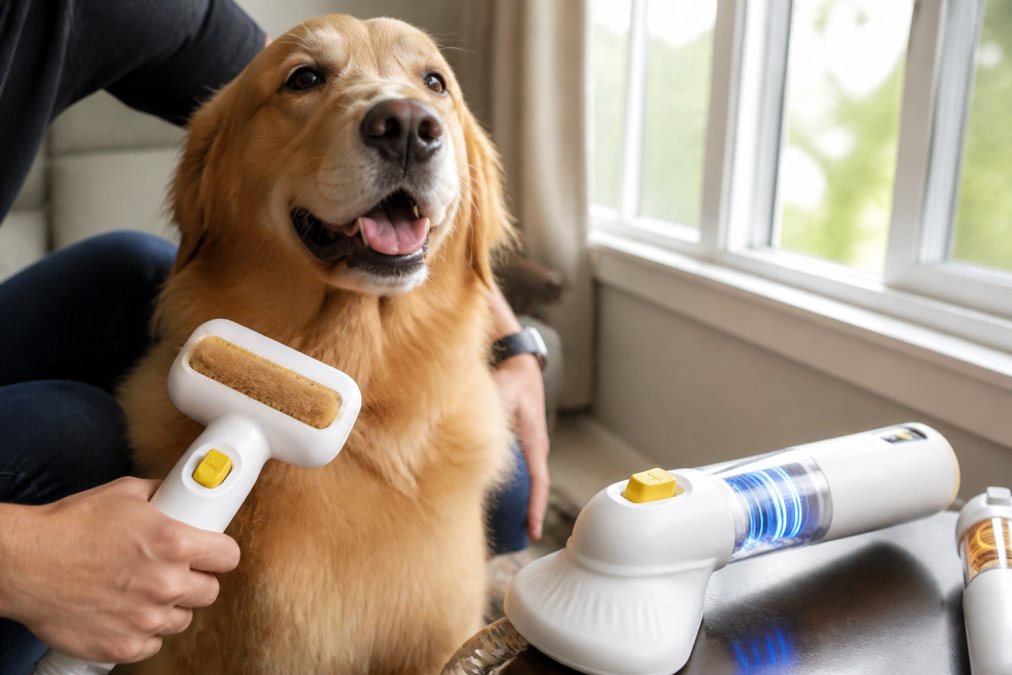
For cats, a metal comb with medium spacing works better than a brush because cats have sensitive skin. For dogs, an undercoat rake or a grooming glove with fine rubber bristles captures significantly more loose hair than traditional brushes. The Proud Pet Shop Deshedding Vacuum Kit combines grooming with immediate suction capture, pulling loose hair directly into a contained storage bin as you work.

Grooming Frequency by Season
During peak shedding periods in spring and fall, extend sessions to ten or fifteen minutes, or groom twice daily if you have multiple pets (aafco.org). During moderate shedding seasons, five minutes daily usually suffices. The Proud Pet Shop Cat Corner Groomer enables autonomous grooming by allowing cats to remove loose hair independently by rubbing against mounted bristles, reducing manual brushing needs while continuously capturing loose fur.
Step 2: Select the Best Vacuum for Pet Hair
A vacuum designed for pet hair has several critical features that standard models lack. HEPA filtration traps allergens and dander rather than releasing them back into the air. Strong suction power prevents hair from scattering when you lift the vacuum head. A motorized brush roll designed for pet hair doesn't jam as easily as standard brush rolls.
Key Features to Look For
When evaluating a vacuum for pet hair prevention, prioritize these features:
- HEPA filtration system: Captures dander and allergens, reducing airborne particles that settle on surfaces
- Dedicated pet hair brush roll: Designed with spacing that prevents hair from wrapping around the brush
- High suction power: Maintains performance even when the bin is half-full
- Easy-empty bin: A design that doesn't create dust clouds when emptying
- Washable filters: Reduces ongoing filter replacement costs
- Upholstery attachment: Essential for removing hair from furniture before it becomes embedded
Maintenance and Filter Care
Check your filter weekly during peak shedding season. Most pet-specific vacuums have washable filters that you can rinse under warm water rather than replacing. Empty the bin after every session, even if it's not completely full, as a half-full bin reduces suction by fifteen to twenty percent (peer-reviewed research).
Step 3: Remove Pet Hair from Upholstery and Furniture
Pet hair embeds itself into fabric deeply. Preventing hair from accumulating on upholstery means addressing it immediately rather than letting it build up over weeks.
Fabric-Specific Cleaning Methods
For microfiber and synthetic upholstery, a damp rubber glove works exceptionally well. Dampen a rubber glove slightly, put it on, and run your hand across the fabric in one direction. The moisture creates enough friction to lift hair without damaging the fabric.
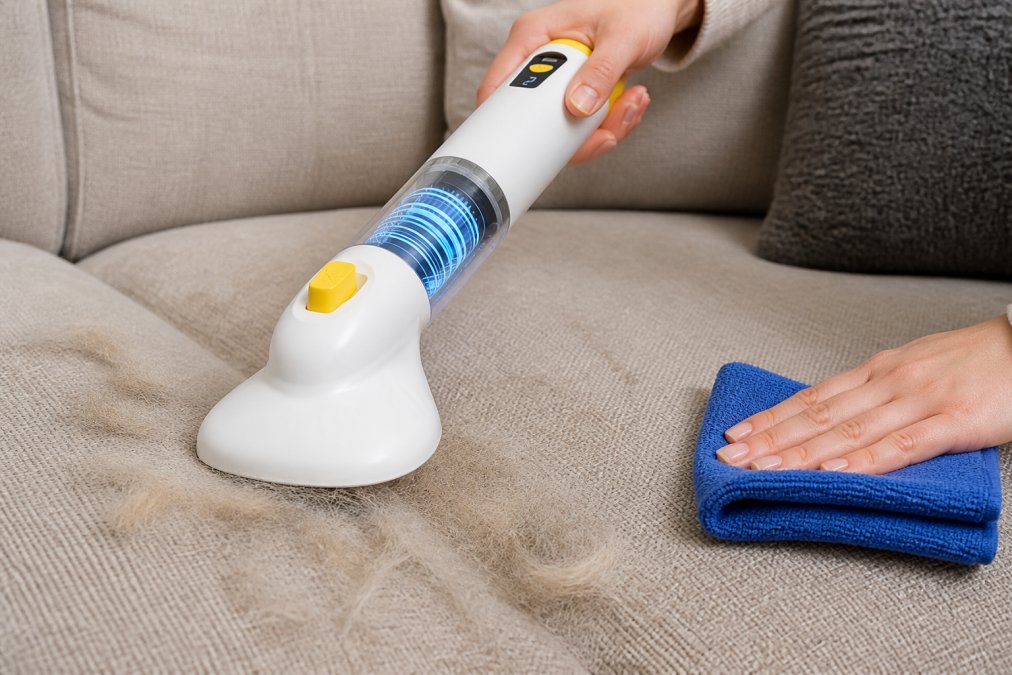
For natural fabrics like cotton or linen, a lint roller followed by a fabric brush works better. For leather furniture, use a microfiber cloth slightly dampened with water. Electrostatic tools designed for pet hair removal work on most upholstery types by using static electricity to attract and lift loose hair.
Using Washable Covers and Protective Barriers
The most effective prevention method for furniture is stopping hair from reaching the fabric in the first place. Pet-specific furniture covers designed for this purpose are sized to fit specific furniture pieces, preventing gaps where hair can sneak underneath. Place covers on areas where pets spend the most time and wash them every two to three weeks during peak shedding season.
Step 4: Control Airborne Dander with Air Purifiers
Pet dander floats in the air for hours after shedding occurs, settling on surfaces throughout your home. An air purifier designed to capture pet dander reduces the amount of hair and allergen particles that settle on furniture and floors. HEPA filters in pet-specific air purifiers capture particles as small as 0.3 microns, which includes most pet dander and hair fragments (the EPA).
Position the air purifier in rooms where your pets spend the most time, or in central locations where air circulates throughout your home. Run the purifier continuously during peak shedding seasons. Air purifiers work best when combined with other prevention methods rather than as a standalone solution.
Step 5: Clean Hardwood Floors and Hard Surfaces
Pet hair shows up dramatically on hardwood floors and tile, but these areas are easier to manage than upholstery because hair doesn't embed into them. Daily sweeping or vacuuming of hard floors removes hair before it accumulates. A robot vacuum designed for pet hair can handle this continuously, running on a schedule and removing hair throughout the day.
Microfiber dust mops capture more hair than traditional brooms because the static charge attracts hair rather than just pushing it around. For tile and vinyl, wet mopping works well and helps capture hair that might otherwise scatter.
Step 6: Wash Pet Bedding and Accessories Regularly
Pet bedding accumulates hair, dander, and allergens faster than any other household item. Wash pet bedding weekly during peak shedding season, every two weeks during moderate shedding. Use hot water to kill dust mites and allergens, and wash separately from human bedding.
Pet toys and fabric accessories also collect hair and dander. Washable toys should be cleaned weekly. Collars, leashes, and harnesses that contact your pet's coat daily pick up loose hair and dander and should be washed weekly in warm water.
Step 7: Manage Seasonal Shedding with Preventative Tools
Seasonal shedding peaks in spring and fall when many pets shed their entire undercoat. During peak shedding season, increase grooming frequency to twice daily if possible and extend each session from five minutes to ten or fifteen minutes.
Deshedding Vacuums and Electrostatic Tools
Deshedding vacuums combine grooming with immediate suction capture, making them exceptionally effective during peak shedding season. These tools use a grooming head with fine teeth that remove loose undercoat hair, and the suction immediately pulls the hair into a sealed bin. Electrostatic grooming tools work on a different principle, using static electricity to attract and lift loose hair without suction. Both tools work best when used daily during peak shedding season.
Non-Toxic DIY Solutions for Extra Control
A damp cloth or sponge works similarly to the damp rubber glove method, with moisture creating friction that lifts hair without damaging fabric or skin. Adding a half cup of white vinegar to the rinse cycle during washing helps remove embedded hair and reduces dander. Baking soda sprinkled on pet bedding before washing helps absorb odors and loosens embedded hair. These DIY solutions work best as supplements to your primary prevention strategy.
Preventing pet hair buildup requires consistent effort across multiple fronts, but the payoff is a home where hair doesn't accumulate faster than you can manage it. Daily grooming, the right vacuum, furniture protection, and seasonal intensity adjustments interrupt the shedding cycle before it becomes a problem. Start with daily grooming and add other strategies based on your pet situation. The Proud Pet Shop Deshedding Vacuum Kit and Cat Corner Groomer are specifically designed to make this process easier by removing loose hair efficiently and reducing the manual effort required.

| Prevention Method | Frequency | Best For | Impact |
|---|---|---|---|
| Daily grooming | Every day | All pets | Removes loose hair before shedding |
| Vacuuming | 3-4 times weekly | Hard floors | Captures hair before embedding |
| Furniture covers | Wash every 2-3 weeks | High-traffic areas | Prevents hair embedding entirely |
| Air purifier | Continuous | Airborne dander | Reduces allergen circulation |
| Bedding washing | Weekly during peak shedding | Pet sleeping areas | Removes concentrated hair sources |
| Seasonal intensification | Peak shedding periods | Spring and fall | Manages increased shedding volume |
Frequently Asked Questions
How often should you brush your pet to reduce home shedding?
Brush dogs and cats 3-5 times weekly during normal shedding seasons, and daily during peak shedding periods (spring and fall). Daily grooming removes loose fur before it falls onto furniture and floors, significantly reducing the amount of hair buildup in your home. Short-haired pets need less frequent brushing than long-haired breeds, but consistency matters more than duration. Even 5-10 minutes daily prevents hair accumulation better than one long session weekly.
What's the best way to prevent pet hair buildup on furniture?
Combine three strategies: use washable furniture covers, brush your pet daily, and vacuum upholstery with a pet-hair-specific vacuum weekly. Microfiber cloths and damp rubber gloves are highly effective for removing embedded fur from fabric. The Proud Pet Shop Deshedding Vacuum Kit ($59.99) captures loose hair directly during grooming, preventing it from settling on surfaces. For fabric-specific care, test cleaning methods on hidden areas first to avoid damage to delicate upholstery.
Does vinegar help remove pet hair from laundry and fabrics?
White vinegar can help loosen pet hair from fabrics during washing. Add half a cup to your wash cycle to reduce static electricity, which causes hair to cling to fibers. However, vinegar works best as a preventative tool alongside proper grooming and vacuuming, not as a standalone solution. For best results, remove visible pet hair with a lint roller or brush before washing, then use vinegar in the rinse cycle. Always test on inconspicuous areas first, as vinegar can affect some dyes.
What tools effectively pull pet hair from the air and reduce dander?
HEPA-filter air purifiers capture airborne dander and loose fur particles that vacuums miss. Pair this with a deshedding vacuum that has strong suction power and a sealed filtration system. Electrostatic tools like microfiber dusters attract static-charged hair from surfaces. The Proud Pet Shop Cat Corner Groomer ($24.99) enables autonomous grooming, allowing cats to remove loose fur independently throughout the day, reducing airborne allergens. Regular grooming brushes with rubber bristles also capture undercoat hair before it becomes airborne.
This article was written using GrandRanker