
Table of Contents
- Why Slings Work for Puppies: Safety and Bonding
- Are Dog Slings Safe for Puppies: What You Need to Know
- Choosing the Right Sling for Your Puppy
- Step-by-Step: How to Fit and Secure Your Puppy in a Sling
- How Long Can a Puppy Stay in a Sling
- How to Get a Puppy Used to a Sling: Acclimation Plan
- When Not to Use a Sling: Limits and Red Flags
- Frequently Asked Questions
Last Updated: October 17, 2026
Why Slings Work for Puppies: Safety and Bonding
Learning how to safely carry a puppy in a sling starts with understanding that a puppy sling is a hands-free carrier that holds your young dog securely against your body, keeping your arms free.
Puppies feel secure near you. A sling keeps your young dog calm during vet visits, short walks, or errands, while you stay mobile and the bond between you strengthens through close contact, especially in those first weeks away from littermates.
The real advantage isn't just convenience. When you carry a puppy in a sling, you control the environment: your young dog can't jump, fall, or get stepped on in a crowd, which reduces stress for both of you.
Are Dog Slings Safe for Puppies: What You Need to Know
Yes, dog slings are safe for puppies when you choose the right sling and use it correctly. But "safe" depends on three critical factors: your puppy's age and size, your sling's design, and how you position your young dog inside it.
Age and Size Considerations
Most puppies are ready for a sling around 8 weeks old. At that age they usually weigh 2 to 5 pounds, depending on breed. The key is matching your puppy's weight to the sling's capacity.
Never put a puppy in a carrier that's too large. Excess room lets your young dog wriggle, shift position, or even fall. Conversely, a sling that's too snug restricts movement and breathing. The Proud Pet Shop Sidekick Sling, for example, accommodates pets up to 15 pounds, making it suitable for most puppies from 8 weeks through their first few months of growth.

Size isn't just about weight. A toy breed puppy might stay under 10 pounds for life, while a large breed puppy could reach 15 pounds by 4 months.
Breathing, Temperature, and Posture Checks
A safe sling keeps your puppy's airway clear and allows normal breathing. Your young dog's nose and mouth should never be blocked by fabric or pressed against your body. Position your puppy so their face is visible and open to air.
Temperature matters too. Puppies overheat quickly because they can't regulate body temperature as well as adult dogs. Feel your puppy's ears and paws while they're in the carrier; if they're hot to the touch, take them out to cool down.
Posture is the third pillar of safety. Your puppy should rest horizontally with their spine aligned. Avoid slings that force an upright or twisted posture, which strains developing muscles and bones. A well-designed sling cradles the chest, belly, and hind legs evenly.
Choosing the Right Sling for Your Puppy
The best sling for your puppy balances weight capacity, ventilation, support, and ease of use. Start by identifying your primary use case, errands, neighborhood walks, or vet visits, since that shapes which features matter most.
Weight Capacity and Room to Move
Check the sling's maximum weight capacity first. Your puppy needs enough room to shift position slightly without being cramped. A sling rated for 15 pounds works well for most puppies because it provides adequate space without being oversized.
Interior dimensions matter as much as the weight limit. Your puppy should be able to stand, turn around, and lie down comfortably, not be wedged in place. Look for adjustable sizing or multiple size options to match your puppy's frame without excess fabric bunching.
Ventilation and Support Features
Breathable fabric is non-negotiable. Mesh panels on the sides and front of the sling allow air circulation, keeping your puppy cool during transport.
Support features include padded shoulder straps and a reinforced base that cradles your puppy's weight, reducing strain during extended wear. A soft buckle closure, like the one on the Proud Pet Shop Sidekick Sling, prevents accidental opening.

Look for slings with interior safety leash attachment points, which keep your puppy secured even if they wriggle partially out of the fabric. Exterior pockets for treats, waste bags, or a phone keep essentials within reach.
Step-by-Step: How to Fit and Secure Your Puppy in a Sling
Understanding how to safely carry a puppy in a sling means getting the fit right, which is the foundation of safe carrying. A poorly fitted sling strains your body and leaves your puppy unstable, so follow these steps every time.
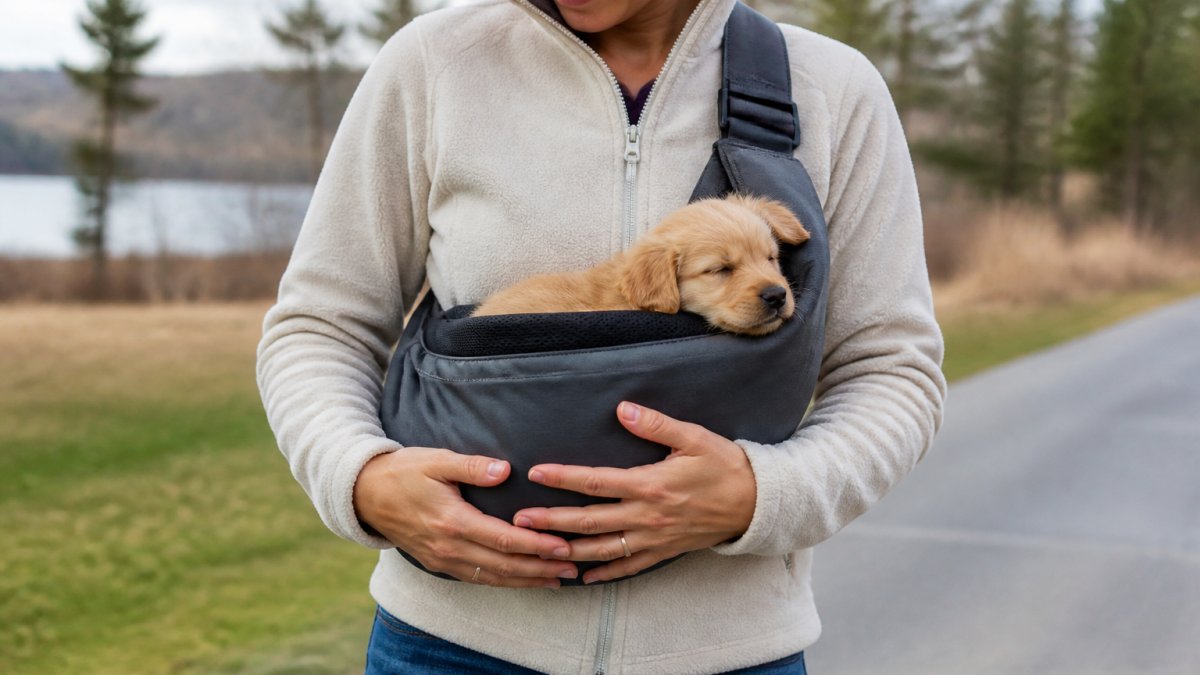
Adjusting the Sling to Your Body
Start with the sling empty and unfastened. Slip your arm through the main strap so the sling sits diagonally across your torso, resting comfortably against your shoulder and ribs without twisting or bunching.
Tighten the shoulder strap so the sling sits snug, you should fit one finger between strap and shoulder. Too loose and the sling sags your puppy into an unsafe position; too tight and it restricts movement and causes shoulder pain.
Check the strap length: the sling's opening should sit at roughly chest height so you can easily see your puppy's face and reach them without awkward bending.
Positioning Your Puppy Safely
Hold your puppy gently and lower them into the sling opening, guiding their body into a horizontal position with their belly facing you. Their head should be level with your chin or slightly lower. Never position your young dog vertically or at an angle, which strains the spine and restricts breathing.
Support your puppy's weight with both hands until they're settled, then watch their breathing and body language. If they seem anxious, speak in a calm, reassuring tone to help them relax.
Once your puppy is positioned, secure the closure, fastening both sides evenly so the fabric is snug but not restrictive. Slide your hand between fabric and body to check the fit, you should fit two fingers comfortably.
Proud Pet Shop Sidekick Sling →
Preventing Wriggling and Escape
Puppies naturally wriggle as they explore and test boundaries. A secure sling minimizes this by keeping the fabric snug around your young dog's body, so make sure the closure is fully fastened and no edges are loose.
If your puppy pushes their head or front legs out, gently guide them back down and speak reassuringly. Don't let their legs dangle over the edge, that encourages climbing out and risks a fall.
For puppies that persistently wriggle, consider using a sling with a secondary safety leash attachment. This backup system prevents escape even if your puppy manages to partially dislodge themselves from the fabric. The Proud Pet Shop TrailFold Carrier includes an interior safety leash point for this exact reason.
How Long Can a Puppy Stay in a Sling
Duration depends on your puppy's age, the sling's design, and their comfort level. Young puppies tire quickly, so limit sling time to 15-30 minutes.
As your puppy grows and gets accustomed to the carrier, you can gradually extend duration. Always watch for signs of discomfort: excessive panting, whining, or attempts to escape. These signals mean your puppy needs a break.
Never use a sling as a substitute for a crate or pen. Puppies need space to play, explore, and burn energy; a sling is for transport and short outings, not all-day confinement.
Temperature and activity level also affect safe duration. On warm days, reduce sling time to prevent overheating, and remember a brisk walk heats your puppy faster than standing still. Prioritize comfort over convenience.
How to Get a Puppy Used to a Sling: Acclimation Plan
Most puppies need time to adjust to a sling. A gradual acclimation process prevents anxiety and builds positive associations with the carrier.
Short Sessions and Positive Reinforcement
Begin by letting your puppy explore the sling lying on the floor, sniffing and walking around it. Reward curiosity with treats and praise so the sling becomes a normal object, not something to fear.
Next, hold the empty sling near your body at chest height and reward calm behavior with treats, gradually bringing it closer until your puppy is comfortable with it against your torso.
Now introduce your puppy to the sling for just 30 seconds, holding them gently while standing still. Keep your voice calm, offer treats, then release and praise them.
Extend duration gradually, from 30 seconds to one minute, then two, building over two to three weeks until your puppy stays in the sling for 15-20 minutes without distress.
Recognizing Distress Signals
Learn to distinguish normal adjustment from genuine distress. Brief whining or slight squirming is normal; heavy panting, persistent crying, or thrashing against the fabric is not.
If your puppy shows distress, remove them immediately and don't scold. Let them calm down and try again later with a shorter duration, forcing a distressed puppy to stay creates negative associations that are hard to reverse.
Watch your puppy's ears, tail, and posture: relaxed ears and a soft body mean comfort, while pinned-back ears, a tucked tail, or rigid muscles indicate stress. Stop the session and try again another time.
When Not to Use a Sling: Limits and Red Flags
Slings are versatile, but they're not appropriate for every situation. Knowing when to skip the sling keeps your puppy safe and prevents negative experiences.
Avoid slings in crowded, chaotic environments where excessive noise and stimulation can cause anxiety and stress even inside the carrier.
Don't use a sling as a substitute for proper socialization. Your puppy needs hands-on interaction with people, other dogs, and new environments; a sling is for safe transport.
Consult a veterinarian if your puppy shows excessive drooling, vomiting, diarrhea, or lethargy in the sling.
Never use a sling for puppies with respiratory conditions, heart problems, or orthopedic issues without veterinary approval.
Frequently Asked Questions
How should I carry my puppy safely in a sling?
Carry your puppy in a sling by ensuring the carrier fits snugly against your body with the puppy in a horizontal position, supported firmly under the hindquarters and chest. Adjust the sling straps so the puppy sits at mid-torso height, close enough that you can see its face without moving. Keep one hand supporting the puppy's weight during the first few trips, and check that the puppy can breathe freely with no restriction around the neck or face. Start with short 5-10 minute sessions to build comfort.
Are dog slings safe for puppies of all ages?
Dog slings are safest for puppies 8 weeks and older with adequate neck and spine development. Puppies under 4 pounds may slip or shift in standard slings, so check weight capacity before purchasing. Always consult your veterinarian if your puppy has any orthopedic concerns, developmental delays, or health conditions before using a sling.
How long can a puppy stay in a sling without harm?
Most puppies can safely stay in a sling for 15-30 minutes at a time, depending on age and size. Always monitor your puppy for signs of discomfort, restlessness, or heavy panting, and take breaks between outings. Extended periods in a sling can restrict movement, so rotate between sling carrying, ground walking, and free play throughout the day.
How do I get my puppy used to a sling?
Start acclimation by letting your puppy inspect the sling while it's on the ground for 2-3 days. Then place the sling on your body without the puppy inside for short periods so it becomes familiar with the sight and smell. Next, gently place your puppy in the sling while seated for 2-3 minutes, offering treats and praise. Gradually increase duration and move to standing, then short walks around your home. Keep sessions positive and never force a frightened puppy into the sling; patience builds trust over 1-2 weeks.