
Table of Contents
- Why Dogs Should Not Ride Loose in Vehicles
- Dog Car Travel Safety Tips: Choosing Your Restraint Method
- How to Choose a Dog Travel Crate That Fits Your Vehicle
- Securing Crates with Anchor Straps and Tether Systems
- Backseat vs. Front Seat: Where Your Dog Should Sit
- Portable Pet Carriers for Small Dogs on Road Trips
- Preparing Your Dog for Car Travel: Reducing Anxiety
- Conclusion
Last Updated: August 25, 2026
Why Dogs Should Not Ride Loose in Vehicles
A loose dog in a moving vehicle becomes a projectile in a crash. At just 30 mph, an unrestrained 60-pound dog generates roughly 2,700 pounds of force on impact (nhtsa.gov). That's enough to cause severe injury or death to your pet, and potentially to you or your passengers.
Beyond crash risk, loose dogs distract drivers. A dog moving around the cabin pulls your attention from the road, increases reaction time, and creates unsafe conditions for everyone in the vehicle. Even well-behaved dogs can shift suddenly, lunge at windows, or climb into the front seat at critical moments.
The National Highway Traffic Safety Administration emphasizes that proper animal restraint is a safety issue, not just a comfort one. Securing your dog in a car isn't about convenience, it's about preventing injury and keeping your vehicle under control during normal driving and emergency situations.
Dog Car Travel Safety Tips: Choosing Your Restraint Method
The safest way to secure a dog in a car depends on your dog's size, temperament, and your vehicle layout. You have three primary options: crash-tested harnesses, seat belt systems, and hard-sided crates. Each offers different levels of protection and practicality.

Crash-tested harnesses are the most portable option for medium and large dogs. These restraint systems attach to your vehicle's seat belt and distribute crash forces across your dog's chest and torso rather than the neck. A quality safety harness prevents your dog from becoming a projectile while allowing some movement and visibility.
Seat belt attachments work by connecting a harness to your car's existing seat belt system. This method is effective for dogs that tolerate harnesses well and provides reliable restraint during normal driving. However, harnesses alone offer less impact protection than a full containment system during high-speed collisions.
Hard-sided crates offer the most comprehensive protection by fully containing your dog and absorbing impact energy. A properly secured crate prevents your dog from moving around the cabin, reduces distraction, and protects your pet in severe crashes. The trade-off is reduced visibility for your dog and less portability for frequent travelers.
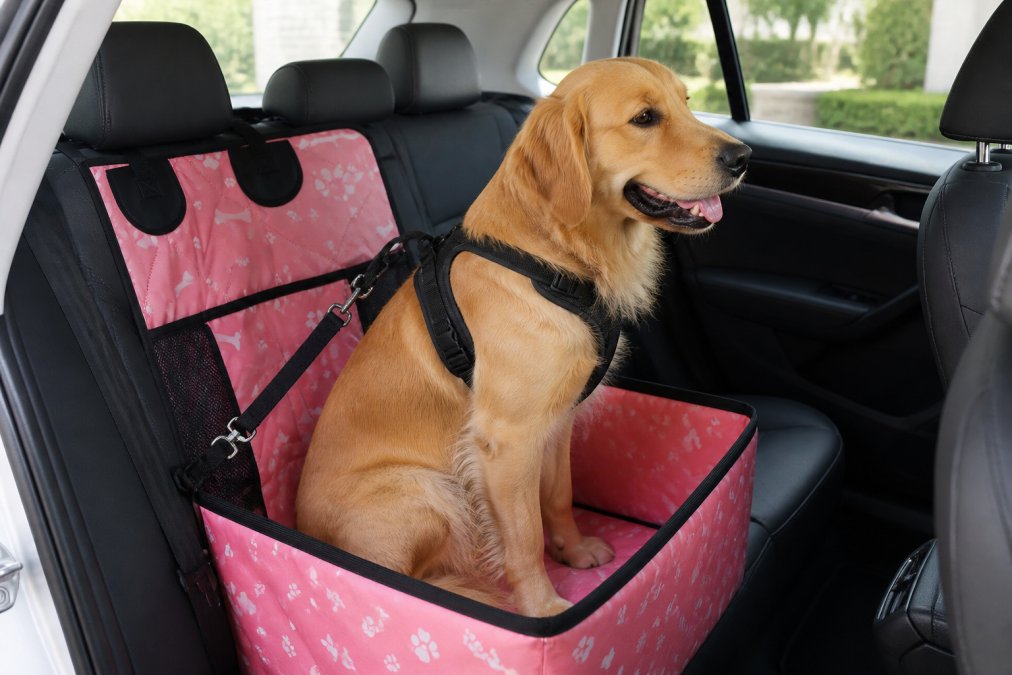
Crash-Tested Harnesses vs. Seat Belts vs. Crates
Understanding the differences between these three restraint methods helps you choose the right option for your situation.
| Restraint Type | Best For | Protection Level | Portability | Setup Time |
|---|---|---|---|---|
| Crash-Tested Harness | Medium/large dogs, frequent travel | Moderate (chest/torso) | High | 2-3 minutes |
| Seat Belt Attachment | Dogs under 50 lbs, short trips | Moderate (depends on harness) | Medium | 1-2 minutes |
| Hard-Sided Crate | Long trips, anxious dogs, maximum safety | High (full containment) | Low | 5-10 minutes |
Crash-tested harnesses have undergone impact testing and are designed to prevent your dog from becoming a projectile during collisions. They're easier to put on than crates and don't restrict your dog's view of the road. However, they offer less complete protection than a fully enclosed crate and work best for dogs that tolerate harnesses without excessive pulling or anxiety.
Seat belt attachments are simple but vary widely in quality. A basic leash clipped to a seat belt offers minimal restraint and no impact protection. A proper harness with a seat belt loop provides better control and some protection during crashes, though not as much as a dedicated safety harness.
Hard-sided crates provide the most comprehensive protection by fully containing your dog and absorbing crash impact energy. Your dog cannot move around the cabin, reducing distraction and preventing injuries from sudden stops. The downside is setup time, reduced visibility for your dog, and difficulty transporting the crate between vehicles.
How to Choose a Dog Travel Crate That Fits Your Vehicle
Selecting the right crate starts with measuring your vehicle's cargo space and your dog's dimensions. A crate should be large enough for your dog to stand, turn around, and lie down comfortably, but not so large that your dog slides around during turns or stops (aaha.org).
Measure your dog from nose to tail base while standing, then add 2-4 inches for comfortable movement. Measure height from floor to the top of your dog's head while standing, then add 2-3 inches. Use these measurements to select a crate size that matches your vehicle's available space.
Hard-sided crates are more durable and provide better impact protection than soft-sided carriers. They're ideal for larger dogs and vehicles with dedicated cargo areas. Soft-sided crates work well for smaller dogs and offer better portability, though they provide less impact protection and less containment during sudden movements.
Ventilation is critical for longer trips. Look for crates with multiple ventilation panels on all sides to ensure adequate airflow, especially during warm weather. Poor ventilation can cause overheating, anxiety, and motion sickness during travel.
Consider your vehicle's tie-down system. Some vehicles have cargo area anchor points; others require you to use seat belt attachments or aftermarket anchor straps. Check your vehicle's manual or contact the manufacturer to understand your available securing options.
Securing Crates with Anchor Straps and Tether Systems
Once you've selected the right crate, proper installation is essential. A loose crate becomes a projectile in a crash, defeating the entire purpose of containment.
Anchor straps are heavy-duty webbing straps with buckles or hooks that secure your crate to vehicle tie-down points. Most vehicles have built-in anchor points in the cargo area, typically located near the floor along the rear and sides. Check your vehicle's manual to locate these points.
Tether systems use multiple attachment points to secure the crate from front, rear, and sides. A properly tethered crate should not shift more than one inch in any direction when you push on it firmly (nhtsa.gov). Test the installation before your trip by applying pressure to all sides of the crate.
Installation steps for hard-sided crates:
- Position the crate in your vehicle's cargo area, ensuring it doesn't block the driver's view or obstruct emergency exits.
- Identify all available anchor points (floor-mounted hooks, seat rail anchors, or cargo tie-down points).
- Attach anchor straps to at least two anchor points at the rear of the crate and one at the front if possible.
- Tighten all straps firmly, the crate should not rock or shift when you apply pressure.
- Double-check all connections before each trip.
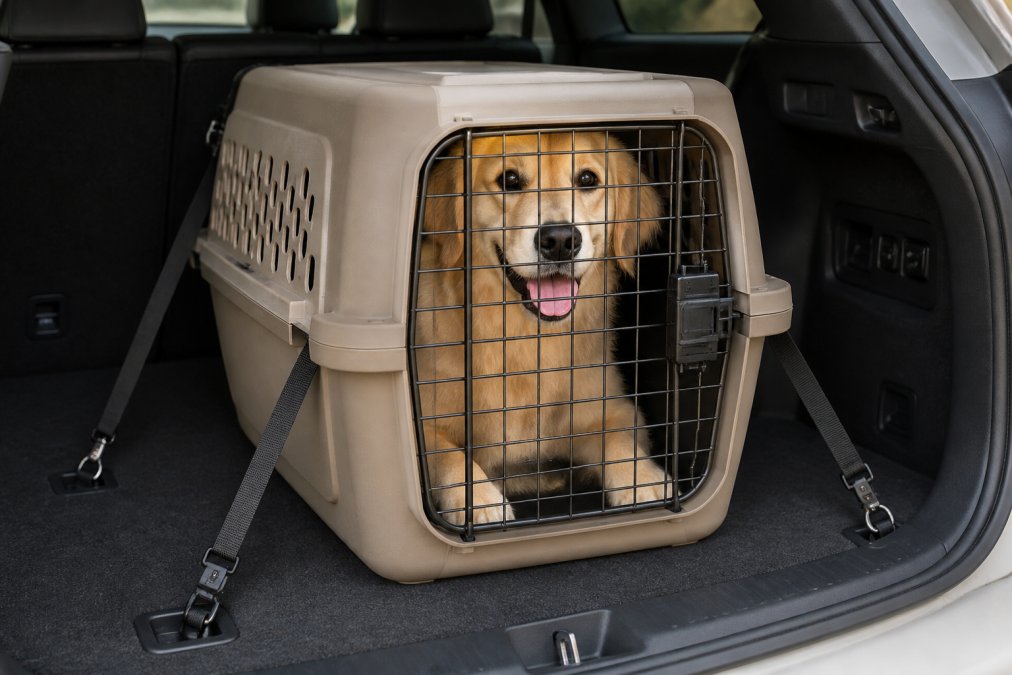
For vehicles without built-in anchor points, aftermarket solutions include seat belt attachments and universal anchor systems. These bolt to existing vehicle structures and provide reliable tie-down points for crate installation.
Backseat vs. Front Seat: Where Your Dog Should Sit
The back seat is always the safer location for your dog during vehicle travel. Front seats expose your dog to airbag deployment, which can cause serious injury or death even at low speeds.
Airbag deployment generates tremendous force, typically 100+ mph in the first milliseconds of activation. A dog in the front seat, especially a smaller dog, can be severely injured or killed by airbag impact. Even large dogs are at risk of neck and spinal injuries from airbag force.
The back seat also provides better restraint options. Back seat anchor points are more accessible for installing crates or harnesses, and your dog is farther from the driver's line of sight, reducing distraction.
If you have a small dog that travels frequently, consider a back-seat carrier or harness system rather than allowing the dog in the front. The Proud Pet Shop TrailFold Carrier ($34.99) is designed for smaller dogs and can be secured in the back seat, keeping your pet contained and safe during travel.

Position your dog behind the passenger seat rather than behind the driver if possible. This arrangement reduces distraction and provides better protection if the driver's side is impacted in a collision.
Portable Pet Carriers for Small Dogs on Road Trips
Small dogs under 20 pounds have different travel needs than larger breeds. Portable carriers designed specifically for small dogs offer containment, comfort, and ease of transport between vehicle and destination.
Soft-sided carriers with mesh ventilation panels keep small dogs secure while allowing visibility and airflow. These carriers are lightweight, collapsible for storage, and easy to move from car to building. Look for carriers with reinforced handles and secure closure systems to prevent escape.
Hard-sided carriers provide more protection but are heavier and less portable. They work well if your small dog spends most of the trip in the vehicle and you don't need frequent transitions to other locations.
The Proud Pet Shop Sidekick Sling ($28.99) offers an alternative for very small dogs. This hands-free carrier positions your dog against your body, allowing you to move freely while keeping your pet secure and calm. The breathable panel reduces anxiety, and the adjustable strap accommodates most body sizes.
For longer trips, consider a carrier with ventilation mesh on multiple sides to ensure adequate airflow. Position the carrier in the back seat and secure it with a seat belt or anchor strap to prevent it from shifting during driving.
Portable pet carriers should have a comfortable interior with a removable, washable pad. Include a small water bowl and offer hydration breaks every 2-3 hours during longer trips.
Preparing Your Dog for Car Travel: Reducing Anxiety
Many dogs experience travel anxiety, which manifests as panting, drooling, whining, or motion sickness. Proper preparation reduces anxiety and makes car travel safer and more comfortable for everyone.
Start with short trips. Take your dog on brief 5-10 minute drives around your neighborhood before attempting longer journeys. Gradually increase trip duration as your dog becomes comfortable with vehicle movement and sounds.
Create positive associations. Reward calm behavior in the vehicle with treats and praise. Practice entering and exiting the vehicle calmly. Never use the car only for stressful trips like veterinary visits, include occasional pleasant drives to the park or a friend's house.
Use a familiar space. Include a blanket or bed from home in your dog's crate or carrier. Familiar scents reduce anxiety and help your dog feel secure during travel.
Manage motion sickness. Some dogs experience motion sickness due to inner ear sensitivity or anxiety. Avoid feeding your dog immediately before travel, wait 2-3 hours after meals. Offer small amounts of water during stops rather than continuous access.
Provide mental stimulation. Boredom increases anxiety during long trips. Include puzzle toys, chew toys, or long-lasting treats in your dog's crate. Rotate toys during stops to maintain interest.
Consider calming aids. If your dog shows severe anxiety, consult your veterinarian about options like anxiety wraps, calming supplements, or medication. Never attempt to medicate your dog without professional guidance.
The Proud Pet Shop RoadTrip Ride Guard ($34.99) provides a designated safe zone in your vehicle with a non-slip surface that reduces sliding and anxiety. The familiar texture and contained space help anxious dogs feel more secure during travel.

Securing your dog in a car for travel isn't optional, it's essential for safety. Whether you choose a crash-tested harness, seat belt system, or crate, the key is consistent use and proper installation. Your dog's safety during travel depends on the restraint system you select and how carefully you use it on every trip.
At Proudpetshop, we understand that pet owners want reliable, durable gear that actually protects their dogs. The Proud Pet Shop RoadTrip Ride Guard and TrailFold Carrier are designed specifically for safe, comfortable travel. Both products come with a 30-day satisfaction guarantee and free shipping on orders over $50, because your dog's safety shouldn't come with uncertainty. Start your next road trip with a restraint system you trust, and give your dog the protection they deserve.
Frequently Asked Questions
What is the safest way to secure a dog in a car?
The safest way combines three elements: a crash-tested restraint system (harness, crate, or carrier), proper vehicle placement (backseat), and secure attachment. Crash-tested harnesses attached to seat belts offer the best balance of safety and accessibility. Hard-sided crates with anchor straps provide maximum containment for anxious dogs. Soft carriers work for small dogs under 15 lbs on shorter trips. Avoid the front seat due to airbag deployment risk.
Should my dog ride in a crate or use a harness for car travel?
Choose based on your dog's size, temperament, and trip length. Harnesses suit dogs comfortable with movement and shorter trips; they allow your dog to see out and feel less confined. Crates provide superior crash protection and contain anxious or motion-sick dogs effectively. For portable pet carriers for small dogs, soft-sided options like the Proud Pet Shop TrailFold Carrier ($34.99) combine portability with safety for pets under 15 lbs. Larger dogs benefit from hard-sided crates with anchor straps for maximum stability.
Can my dog ride in the front seat safely?
No. Front seats expose dogs to airbag deployment during crashes, which can cause serious injury or death. Airbags deploy at 200+ mph and create significant projectile risk for pets. Additionally, front-seat dogs distract drivers and increase collision likelihood. Always place your dog in the backseat, secured with a harness, crate, or carrier. This positioning protects both your pet and your driving safety.
How do I know if a dog travel crate is the right size?
Your dog should stand, turn around, and lie down comfortably inside. Too-small crates restrict movement and increase stress; too-large crates allow excessive shifting during braking or turns, reducing impact protection. Measure your dog's height (nose to head) and length (nose to tail base), then add 2-4 inches to each dimension. For how to choose a dog travel crate, consider your vehicle's cargo space and whether you need portability, soft-sided options collapse for storage, while hard-sided crates offer better crash protection.
This article was written using GrandRanker