
Table of Contents
- Why Some Dogs Eat So Fast (And Why It Matters)
- Dangers of Bloat in Dogs: What Every Owner Should Know
- Best Slow Feeder Dog Bowls to Stop Gulping Fast
- Puzzle Toys and Snuffle Mats for Mealtime Enrichment
- DIY Slow Feeder Ideas for Dogs Using Items You Already Own
- Step-by-Step: How to Slow Down Fast Eating Dogs at Home
- When to Talk to Your Vet About Fast Eating
- Conclusion
Last Updated: August 19, 2026
Why Some Dogs Eat So Fast (And Why It Matters)
Fast eating in dogs is more than a minor inconvenience, it carries real health risks. Understanding why dogs gulp their food is the first step to fixing it, because the solution depends entirely on the root cause. The real issue is that gulping behavior has multiple causes, and a snuffle mat won't fix anxiety-driven eating any more than behavioral modification alone will help a breed hardwired to eat fast.
Scarcity Mindset and Resource Guarding
Some dogs eat fast because they believe the food might disappear. This scarcity mindset stems from canine pack ancestry, where food competition was real. Dogs that experienced early food insecurity, shelter life, or littermate competition may never fully unlearn the urgency.
Resource guarding amplifies this behavior. A dog that guards food eats as fast as possible to prevent others from taking it. The behavior looks like aggression but is closer to panic. Separating pets at mealtimes often reduces gulping speed noticeably within the first week.
Breed-Specific Tendencies Toward Gulping
Certain breeds are significantly more prone to fast eating. Labrador Retrievers, Beagles, and Golden Retrievers are notorious for inhaling meals. Deep-chested breeds like Great Danes, German Shepherds, and Standard Poodles are particularly concerning because their anatomy makes them more vulnerable to bloat when they eat fast and swallow air.
Brachycephalic breeds (flat-faced dogs like Bulldogs and Boxers) face a different problem: their shortened airways mean fast eating compounds aerophagia, the swallowing of excess air during meals. Knowing your dog's breed tendencies helps you prioritize the right interventions.
Dangers of Bloat in Dogs: What Every Owner Should Know
The dangers of bloat in dogs are serious enough that every fast-eating dog owner should understand them. Bloat isn't just discomfort, it can be fatal within hours.
What Is Gastric Dilatation-Volvulus (GDV)?
Gastric dilatation-volvulus (GDV) is a life-threatening condition where the stomach fills with gas and rotates on itself, cutting off blood supply to surrounding organs. It is one of the most time-sensitive emergencies in veterinary medicine. Without surgical intervention, GDV is fatal.
Fast eating contributes directly to GDV risk. When a dog gulps kibble rapidly, it swallows large amounts of air alongside the food. That aerophagia causes the stomach to distend. In deep-chested breeds with more mobile stomachs, distension creates the conditions for volvulus, the twisting that makes GDV a surgical emergency. According to the American Kennel Club's veterinary health resources, large and giant breeds with deep chests face the highest GDV risk, and fast eating is consistently cited as a contributing factor.
Warning Signs to Watch After Fast Eating
Act immediately if you see any of these signs after a fast meal:
- Unproductive retching or attempting to vomit without bringing anything up
- Visible distension or hardness in the abdomen
- Excessive drooling or salivation
- Restlessness, pacing, or inability to get comfortable
- Pale or white gums
- Rapid, shallow breathing
Contact your veterinarian immediately if these signs appear.
Best Slow Feeder Dog Bowls to Stop Gulping Fast
Slow feeder bowls work by forcing the dog to work around raised ridges, mazes, or textured surfaces to access kibble. The result is a meal that takes several times longer to finish, which reduces aerophagia and gives the stomach time to signal fullness before the dog has overeaten.
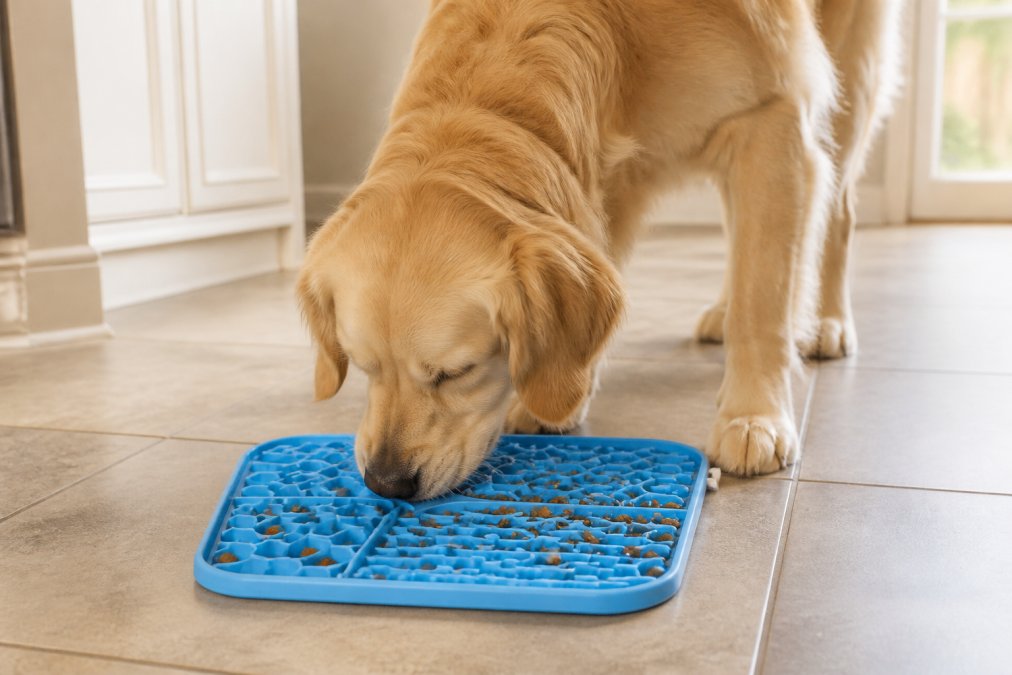
The best slow feeder dog bowls are dishwasher safe, made from non-toxic materials, and have a non-slip base. Maze depth matters too, shallow mazes work for small dogs but barely inconvenience large breeds.
The Proud Pet Shop Slow-Feeding System (3-Piece Set) at $15.99 is one of the most accessible entry points. It's dishwasher safe, designed to reduce meal anxiety, and works for both dogs and cats. The physical act of sniffing and working around obstacles activates a dog's foraging instincts, which produces a calming neurological effect beyond just slowing the eating pace.

| Bowl Feature | Why It Matters |
|---|---|
| Raised ridges or maze pattern | Forces dog to eat around obstacles, slowing food intake |
| Non-slip base | Prevents bowl from sliding, reduces frustration |
| Dishwasher safe | Ensures consistent hygiene without extra effort |
| Appropriate maze depth | Shallow for small breeds, deeper for large breeds |
| Non-toxic materials | Safe for daily contact with food and saliva |
Puzzle Toys and Snuffle Mats for Mealtime Enrichment
Puzzle toys and snuffle mats convert mealtime into a mental workout. Where a slow feeder bowl slows physical intake, a puzzle toy or snuffle mat engages the dog's nose and problem-solving instincts, extending meal duration while providing genuine mental stimulation.
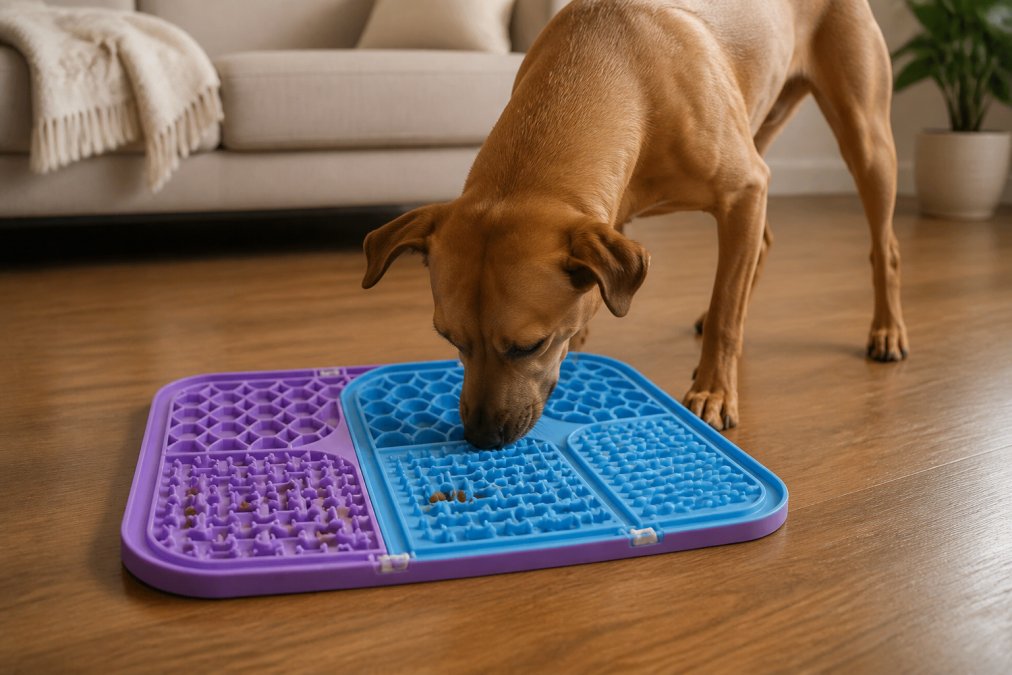
A snuffle mat works by hiding kibble or treats within fabric folds that the dog must sniff through to find. The foraging behavior this triggers is one of the most naturally satisfying activities for a dog's brain. Many owners report that their dogs are calmer after snuffle mat meals than after regular bowl meals, even when the caloric intake is identical.
The Proud Pet Shop Sniffing Petal Mat at $29.99 has a layered felt petal design that hides food at multiple depths. For dogs that need escalating difficulty, the Proud Pet Shop IQ Treat Puzzle at $34.99 offers adjustable difficulty levels. Dogs learn puzzle patterns quickly, so adjustable difficulty keeps the challenge genuine.


According to the American Veterinary Society of Animal Behavior's enrichment guidelines, regular cognitive engagement through food puzzles supports behavioral health and reduces stress-related behaviors in dogs.
DIY Slow Feeder Ideas for Dogs Using Items You Already Own
The best slow feeder doesn't have to cost anything. Many DIY slow feeder ideas work just as well as commercial products for mild-to-moderate fast eaters.
Muffin tin method: Spread kibble across the cups of a standard muffin tin. Place a tennis ball in each cup to add an obstacle layer. Meal duration typically triples compared to flat surface feeding.
Spread on a flat surface: Scatter kibble across a clean baking sheet or silicone mat. The dog has to move from piece to piece instead of scooping a mouthful at once.
Frozen meals: Mix kibble with water or bone broth, pour into a silicone mold or ice cube tray, and freeze. Your dog licks and chews through the frozen block, dramatically extending meal time.
Hand-rolled kibble in a towel: Scatter kibble across a small towel, then roll it loosely. Your dog has to unroll and sniff through the layers to find the food.
Step-by-Step: How to Slow Down Fast Eating Dogs at Home
Here is a structured approach to slowing down fast eating dogs that addresses both behavioral and physical drivers. Follow the steps in order.
Step 1: Measure Portions and Schedule Fixed Mealtimes
Start with portion control. Many fast eaters are also overfed, which creates a cycle: the dog eats fast, gets more food to compensate for apparent hunger, and the gulping behavior is reinforced. Weigh food portions using a kitchen scale rather than estimating by cup. Fixed mealtimes at consistent times give the dog a reliable framework, which reduces urgency.
Step 2: Separate Pets During Feeding
If you have multiple pets, separate them completely during mealtimes. A dog that can see or smell another pet eating will eat faster regardless of what bowl it's using. Separate feeding areas eliminate the competitive trigger.
Step 3: Add Water or Bone Broth to Kibble
Adding water or bone broth to dry kibble softens it and makes it physically harder to gulp. The liquid also slows the dog down by changing the texture of each mouthful. According to veterinary nutrition guidance from Tufts University's Cummings School of Veterinary Medicine, adding moisture to dry food can support digestive health and slow food intake in dogs prone to gastrointestinal distress. Use low-sodium broth with no onion or garlic, both of which are toxic to dogs.
Step 4: Try Hand Feeding for Behavioral Modification
Hand feeding removes the bowl entirely and delivers kibble piece by piece from your hand. This forces the dog to take food at your pace, not its own. It also builds focus and impulse control, which carries over to bowl feeding over time. Use it for two to four weeks while you introduce slow feeding tools.
Step 5: Transition Gradually to Slow Feeding Tools
Switching to a slow feeder cold will frustrate a dog accustomed to flat bowls. Transition over five to seven days:
- Days 1-2: Use the slow feeder with only a small portion of the meal. Finish the rest in the regular bowl.
- Days 3-4: Split the meal 50/50 between the slow feeder and the regular bowl.
- Days 5-7: Move fully to the slow feeder.
For dogs that need automated portion control, the Proud Pet Shop Automatic Feeder at $159.99 dispenses set portions at programmed intervals, which is particularly useful for multi-pet households. Consistent timing removes the urgency that builds when a dog doesn't know when the next meal is coming.
When to Talk to Your Vet About Fast Eating
Most fast-eating dogs can be managed at home with the steps above. But some cases warrant a veterinary consultation first.
Talk to your vet if your dog:
- Regularly vomits or regurgitates within minutes of eating
- Shows signs of abdominal pain or distension after meals
- Has lost or gained significant weight despite consistent portions
- Is a deep-chested large breed that has recently started eating faster than usual
- Displays anxiety or aggression around food that has worsened over time
Fast eating can occasionally signal an underlying medical issue, including intestinal parasites, malabsorption disorders, or endocrine conditions that affect hunger regulation. According to canine health resources from the Cornell University College of Veterinary Medicine, dogs with a history of GDV or those in high-risk breeds should be evaluated before significant dietary changes are made.
| Step | Method | Best For |
|---|---|---|
| 1 | Measure portions, fixed mealtimes | All fast eaters |
| 2 | Separate pets during feeding | Multi-pet households |
| 3 | Add water or bone broth to kibble | Dry-food dogs, digestion issues |
| 4 | Hand feeding | Behavioral modification, anxious dogs |
| 5 | Transition to slow feeder bowl or puzzle toy | All fast eaters, long-term solution |
The core challenge with fast-eating dogs isn't finding the right product. It's matching the right intervention to the right cause. Proudpetshop's slow feeding range, including the Slow-Feeding System, Sniffing Petal Mat, and IQ Treat Puzzle, covers the full spectrum from basic pace control to advanced mealtime enrichment, all backed by a 30-day satisfaction guarantee and free shipping on orders over $50. Get started with Proudpetshop and turn chaotic mealtimes into a calming, enriching routine your dog actually benefits from.
Frequently Asked Questions
Is it dangerous for a dog to eat too quickly?
Yes. Fast eating causes dogs to swallow large amounts of air alongside their food, a condition called aerophagia. This leads to gastrointestinal distress, bloating, vomiting, and regurgitation. In deep-chested breeds, rapid food intake is a known risk factor for gastric dilatation-volvulus (GDV), a life-threatening condition where the stomach twists. Even in dogs without a GDV risk, chronic gulping strains digestion and can cause ongoing discomfort. Slowing down mealtime is one of the most straightforward ways to protect your dog's long-term health.
Can fast eating lead to bloat in dogs?
Fast eating is one of the contributing factors to bloat, also called gastric dilatation-volvulus or GDV. When a dog gulps kibble rapidly, it swallows air that fills the stomach. In some dogs, especially large and deep-chested breeds like Great Danes, German Shepherds, and Standard Poodles, the stomach can then rotate on itself. GDV is a surgical emergency with a high fatality rate if untreated. Using a slow feeder dog bowl, puzzle toy, or snuffle mat to extend mealtime is one practical step toward reducing that risk.
Why does my dog eat so fast even with a slow feeder?
Some dogs work around slow feeders by tilting the bowl, scooping kibble out onto a flat surface, or eating around the ridges rather than through them. If your dog has outsmarted a basic slow feeder bowl, try a snuffle mat, a puzzle toy with adjustable difficulty, or scatter feeding across a larger flat surface. Dogs with a strong scarcity mindset, often rescues or dogs from multi-pet households, may need additional behavioral modification alongside physical feeding tools to genuinely slow down their food intake.
What are the best tools to prevent rapid ingestion in dogs?
The most effective tools include slow feeder bowls with raised ridges or maze patterns, snuffle mats that hide kibble in fabric folds, and interactive puzzle feeders that require problem-solving before food is released. Automatic feeders that dispense small portions at timed intervals also help by removing the option to eat a full meal in one go. For dogs with severe gulping habits, combining two or more of these tools, for example, a snuffle mat for one meal and a puzzle feeder for another, produces faster behavioral improvement than any single tool alone.
This article was written using GrandRanker