
Table of Contents
- Why Dogs Dig: Find the Root Cause First
- How to Stop Dog from Digging Under Fence Lines
- Mental Stimulation for Dogs: Puzzle Toys and Scent Games
- Dog Digging Deterrents That Are Safe and Effective
- Create a Designated Digging Pit Your Dog Can Use
- Supervision, Redirection, and Positive Reinforcement Training
- Heat-Related Digging, Breed Tendencies, and Apartment Solutions
- Conclusion
- Frequently Asked Questions
Last Updated: October 1, 2026
Why Dogs Dig: Find the Root Cause First
Learning how to stop dog from digging starts with one question: why is your dog digging? Digging is normal canine behavior, not revenge. Dogs dig to cool off, burn energy, chase smells, or because the soil feels good.
Boredom and Under-Stimulation
Boredom is the most common driver of destructive behavior. An under-stimulated dog with energy to burn will find a job, and digging is satisfying.
Watch for these signs of boredom-related behavior:
- Digging in the same spot every day
- Chewing furniture or shoes
- Pacing, whining, or barking at nothing
- Digging right after you leave for work
Prey Drive and Subterranean Pests
Some dogs dig because something lives under the lawn. Moles, voles, and gophers are common subterranean pests, and a dog with strong prey drive will excavate the whole tunnel system to reach them.
How to Stop Dog from Digging Under Fence Lines
The fastest fix for how to stop dog from digging under fence is a buried barrier plus more supervision. Dogs dig at fence lines to get out or to patrol territory.
Here's the practical setup that works:
- Bury chicken wire or hardware cloth 12 to 18 inches deep along the fence
- Bend the bottom edge outward in an L-shape so digging dogs hit wire
- Fill the trench back in and pack the soil firm
- Place large rocks or pavers along the fence base as a second layer
Barrier Frustration and Denning Instinct
Barrier frustration happens when a dog sees or smells something exciting beyond the fence but can't reach it, so it digs to get through.
Mental Stimulation for Dogs: Puzzle Toys and Scent Games
Mental stimulation for dogs often tires them faster than a long walk. Fifteen minutes of problem-solving can equal an hour of running.
Two tools do most of the work:
- Puzzle feeders turn meals into a job. The Proud Pet Shop IQ Treat Puzzle has adjustable difficulty, a non-slip base, and dishwasher-safe parts, so you can make it harder as your dog gets smarter.
- Snuffle mats tap into scent games. The Proud Pet Shop Sniffing Petal Mat hides kibble between felt petals, so your dog forages instead of gulping.
Dog Digging Deterrents That Are Safe and Effective
Safe dog digging deterrents make a spot unpleasant through smell, texture, or surprise, never pain or fear. That matters because the deterrents most recommended on forums are also the ones most likely to send your dog to the vet or erode your bond.


- Citrus (peels, rind, or citrus-scented spray): Dogs generally dislike the smell of citrus. Scatter fresh peels in the hole or spray a diluted citrus solution along the surface. Reapply after rain, because the scent fades fast.
- Coffee grounds worked into the soil: The bitter smell and gritty texture discourage digging. Use spent grounds, not fresh, and work them into the top inch of soil. Don't pile them, moldy grounds attract pests.
- Vinegar spray: A 1:1 white vinegar and water mix sprayed on the soil surface adds an unpleasant scent. Test a small patch first, since vinegar can affect soil pH and harm some plants.
- Motion-activated sprinklers: These startle a dog with a sudden spray of water. They work well at fence lines and in garden beds, but you need a water source and the dog has to be outdoors unsupervised for them to trigger. Some dogs figure out the pattern and dig when the sprinkler is off.
- Rocks or gravel in the hole: The rough texture under the paws is a deterrent. This is the option most likely to backfire, see the warning below.
What Repels Dogs from Digging Without Causing Harm
The safest deterrents target smell and texture. The riskiest ones are the ones people reach for first.
Matching the Deterrent to the Cause
A deterrent only works if it matches the cause. A sprinkler won't stop a dog digging a cooling hollow, that dog needs shade and water. Citrus peels won't stop a mole chase; the mole has to go first. Use deterrents as a short-term layer while you fix the root cause.
A Note on Deterrents and Multi-Dog Households
With multiple dogs, a deterrent aimed at one digger affects the others. Sprinklers spray every dog that walks past. Watch reactions, a confident dog may ignore it, while a sensitive one may avoid the yard entirely. If that happens, switch to a smell- or texture-based deterrent that only affects the spot.
Proud Pet Shop IQ Treat Puzzle →
Create a Designated Digging Pit Your Dog Can Use
A designated digging pit gives your dog a legal place to dig, redirecting the behavior instead of fighting it. Most dogs take to a sandbox within a week if you seed it with buried toys.
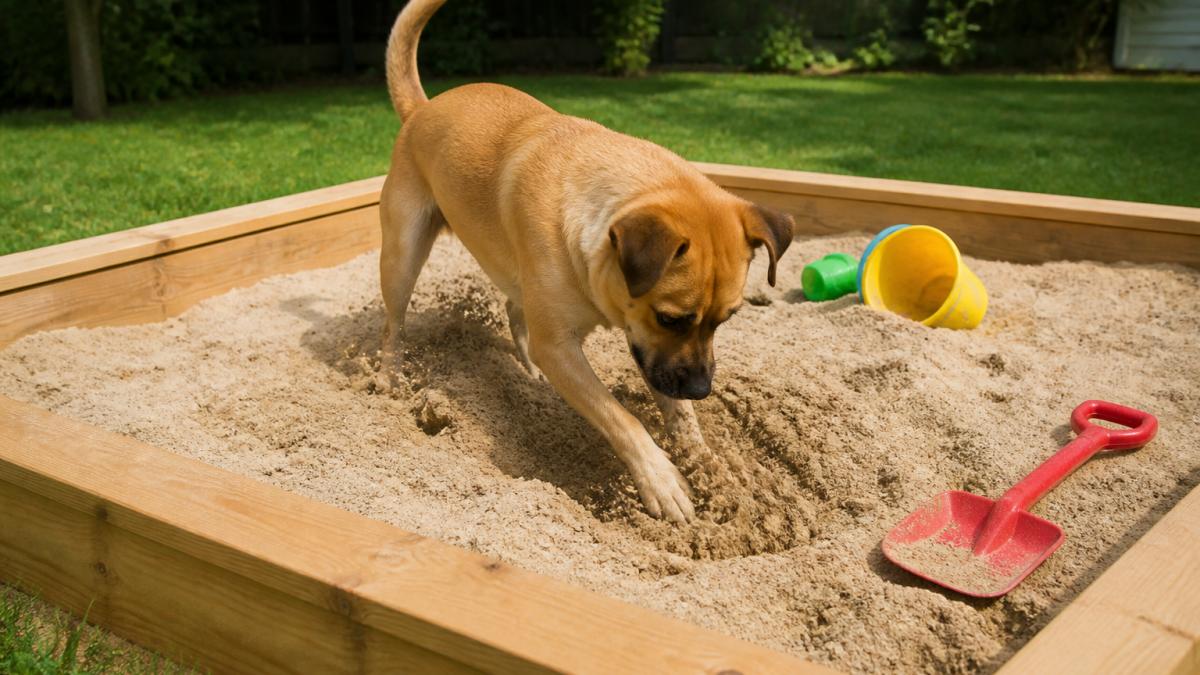
Build it in five steps:
- Pick a shaded corner away from the fence
- Frame a 3-by-3-foot area with landscape timbers
- Fill with loose sand or soft topsoil, not gravel
- Bury a few treats and toys to spark interest
- Praise every dig in the pit, every single time
Supervision, Redirection, and Positive Reinforcement Training
Positive reinforcement training beats punishment for digging. Reward the behavior you want and interrupt the behavior you don't.
The routine looks like this:
- Supervise outdoor time for the first few weeks
- Interrupt digging with a cheerful "let's go" and a treat
- Redirect to the pit, a puzzle, or a training session
- Reward the moment your dog chooses the right outlet
Heat-Related Digging, Breed Tendencies, and Apartment Solutions
This section covers three scenarios most guides skip: dogs digging to cool down, breeds whose background makes digging nearly instinctive, and dogs without a yard.
Heat-Related Digging
Heat-related digging is easy to spot: your dog digs a shallow, bowl-shaped hollow, turns a few times, and lies in it. The dug-out soil is cooler than the surface, and the hollow traps shade.
Breed Tendencies: Why Some Dogs Dig More Than Others
Digging isn't generic. Breed background tells you how hard your dog will dig and what will satisfy them.
- Terriers (Jack Russell, Cairn, West Highland, Scottish): Bred to go to ground after vermin. Digging is the job, not a flaw. These dogs need scent work, flirt poles, and a designated digging pit more than they need a deterrent.
- Dachshunds: Also bred to pursue prey underground. They dig with focus and persistence, often at fence lines or along foundations where small animals travel.
- Northern breeds (Huskies, Malamutes, Samoyeds): Dig to create cool beds and to excavate dens. They also dig to escape, so fence-line barriers matter more for this group than for most.
- Hounds (Beagles, Basset Hounds, Coonhounds): Scent-driven diggers. If a scent trail leads under the fence, they'll follow it. Scent games and long sniff walks burn that drive.
- Retrievers and companion breeds (Labradors, Golden Retrievers, Poodles): Less likely to dig from instinct, more likely to dig from boredom. Exercise and puzzle feeders usually solve it.
Apartment and Balcony Digging
Digging isn't off the table without a yard, it just moves indoors or onto a balcony. The fix is the same: give the dog a legal outlet.
- Balcony sand tray: A shallow, rimmed tray filled with play sand gives a small dog or a terrier a place to dig. Put it in a corner, seed it with buried toys, and sweep up the spill. Check your building's rules on sand and water on balconies before you set one up.
- Indoor dig box: A plastic storage bin or kiddie pool filled with sand, shredded paper, or fabric scraps works for dogs who dig at couch cushions or carpet edges. Start with a shallow layer so the dog doesn't scatter it across the room.
- Snuffle mats and lick mats: These tap the same foraging drive that sends a dog digging through the couch. The Proud Pet Shop Slow-Feeding System helps here, since licking a mat calms anxious dogs who dig when left alone.
- Carpet and couch digging: If your dog digs at furniture, redirect to a dig box or a snuffle mat, and cover the targeted spot with a throw or a textured mat the dog doesn't like. Don't punish, the dog is looking for an outlet, not trying to destroy your things.
Repairing the Damage: Lawn Maintenance After Digging
Repair craters before they spread. Rake the edges flat, fill with topsoil, press firm, sprinkle grass seed, water lightly, and keep your dog off until it takes.

Conclusion
Digging is solvable, but it takes matching the fix to the cause. Boredom, prey drive, heat, and fence frustration each need a different answer; a scattershot approach wastes time.
Frequently Asked Questions
What repels dogs from digging?
Several dog digging deterrents work without causing harm. Burying chicken wire just below the surface makes digging uncomfortable. Citrus peels, vinegar sprays, or commercial pet-safe repellents can discourage specific spots. Motion-activated sprinklers startle dogs away from flower beds. For fence lines, line the base with rocks or concrete. Combine deterrents with redirection to a designated digging pit so your dog has an appropriate outlet. Always test deterrents on a small area first and avoid anything toxic or sharp.
What dog breeds are prone to digging?
Terriers, Dachshunds, and other earth dogs dig because of strong prey drive and denning instinct. Northern breeds like Huskies and Malamutes dig to create cool spots in warm weather. Herding breeds such as Border Collies and Australian Shepherds dig from boredom-related behavior when under-stimulated. Retrievers and Beagles often dig to bury or find items. Breed tendencies do not guarantee digging, but they help you match the right fix. A terrier needs more scent games and puzzle toys than a low-drive companion breed.
Do dogs grow out of digging?
Most dogs do not simply grow out of digging. Puppies may dig less as they mature, but adult digging usually points to an unmet need: boredom, prey drive, separation anxiety, or heat. Without addressing the root cause, the behavior continues or shifts to another destructive behavior. Consistency matters. Combine supervision, redirection, mental stimulation, and environmental enrichment. If digging starts suddenly in an adult dog, rule out anxiety or a new subterranean pest problem before assuming it is just habit.
Is digging a sign of anxiety in dogs?
Digging can signal separation anxiety when it happens mainly while you are away. Anxious dogs often dig at doors, fence lines, or craters near exits in an attempt to escape. Other anxiety signs include pacing, drooling, and destructive behavior indoors. If anxiety is the cause, mental stimulation for dogs and structured alone-time training help, but severe cases need a canine behaviorist or veterinarian. Calming tools like lick mats paired with a slow-feeding system can also reduce stress during alone time.