
Table of Contents
- Is a Crate Necessary for New Rescue Dogs? A Decision Framework
- How to Crate Train a Rescue Dog Without Adding Stress
- Should Rescue Dogs Sleep in a Crate?
- How Long to Crate a Rescue Dog: Duration by Age and Health
- Crate Alternatives for Dogs Who Panic or Need More Room
- Signs of Crate Distress and When to Call a Vet or Trainer
- Setting Up a Safe Space: Beds, Dens, and Gear That Help
- Conclusion: Match the Tool to the Dog
- Frequently Asked Questions
Last Updated: October 8, 2026
Is a Crate Necessary for New Rescue Dogs? A Decision Framework
No, a crate is not necessary for every new rescue dog. Whether a crate helps or hurts depends on the dog's history, temperament, and how you use it.
Rescue dogs arrive with unknown histories. Some were crate-trained and feel safe in an enclosed space. Others were confined for long hours and now panic at the sight of a crate door. The tool itself is neutral.
Below, we cover three questions to ask before buying a crate, when a crate is the wrong call, and how to build a calm first two weeks if you do decide to crate train.
Three Questions to Ask Before You Buy a Crate
Question 1: Does this dog already have crate experience? Ask the shelter or foster directly. A dog that was crate-trained in a previous home often settles in a crate within days. A dog with no crate history needs a slow, positive introduction.
Question 2: How does the dog handle being alone? If your rescue dog settles on a bed or mat while you step out, a crate may be unnecessary.
Question 3: What is your goal? Common goals include house training, preventing destructive chewing, and giving the dog a quiet place to rest. Match the tool to the goal. A crate is not the answer for every goal.
| Goal | Crate Helps? | Better First Step |
|---|---|---|
| House training | Often | Fixed schedule plus supervision |
| Destructive chewing | Sometimes | Dog-proofed room plus exercise |
| Alone-time anxiety | Rarely | Gradual absence training |
| A quiet place to rest | Yes | Crate or covered bed |
When a Crate Is the Wrong Call
A crate is the wrong tool for a dog that shows severe panic in enclosed spaces. Signs include drooling, frantic escape attempts, and nonstop barking. Forcing crate training on a dog in this state can deepen fear and slow the whole adjustment period.
Skip the crate if your dog already rests calmly in a dog-proofed room. Some rescue dogs settle faster with a baby gate and an exercise pen than with a closed door.
How to Crate Train a Rescue Dog Without Adding Stress
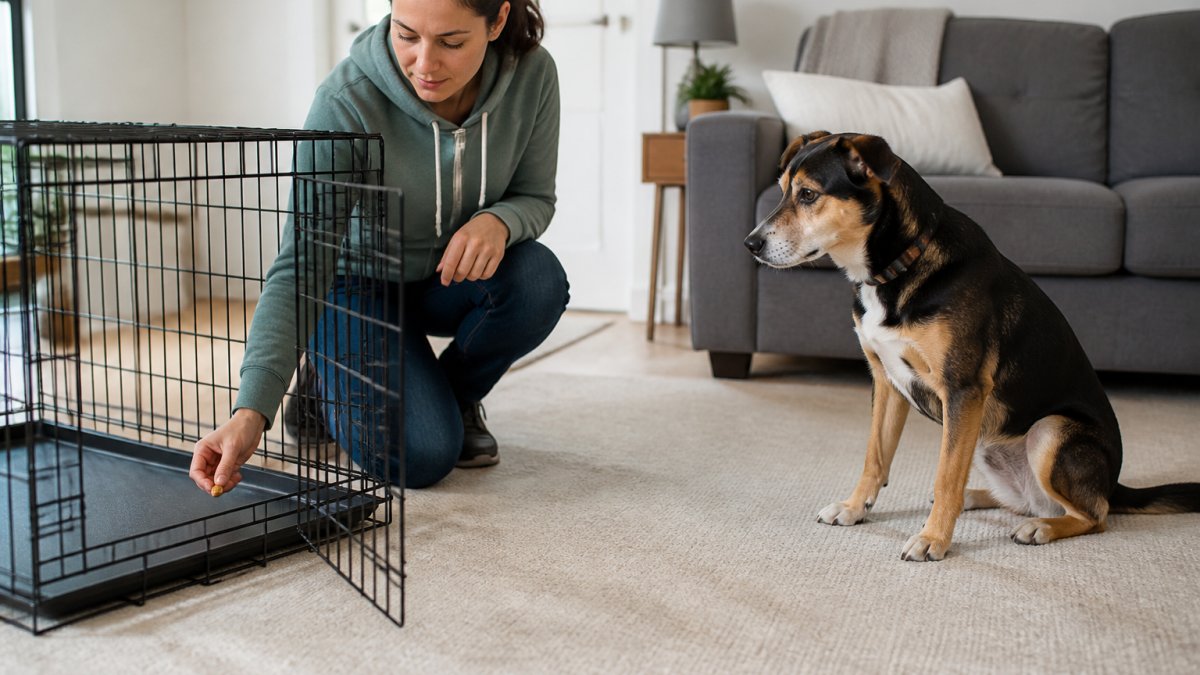
Crate training a rescue dog works best when you move slowly and pair the crate with things the dog already loves. Short sessions, treats, and meals inside the crate build a positive association before you ever close the door.
Step-by-Step: The First Two Weeks
- Days 1 to 2: Leave the crate door open. Toss treats inside. Let the dog come and go freely.
- Days 3 to 4: Feed meals inside the crate with the door open. Sit nearby and stay calm.
- Days 5 to 6: Close the door for 10 to 30 seconds during meals. Open it before the dog whines.
- Days 7 to 9: Build to 5-minute sessions with the door closed while you stay in the room.
- Days 10 to 14: Step out of the room for short absences. Return before the dog gets upset.
The pace depends on the dog. Some rescue dogs move through these steps in a week. Others need a month. Watch the dog, not the calendar.
Common Mistakes That Slow Progress
- Rushing to closed-door sessions before the dog relaxes inside
- Leaving the dog crated longer than its age or health allows
- Responding to whining by opening the door, which rewards the noise
- Skipping exercise before crate time, so the dog has pent-up energy
- Using a crate that is too large or too small for the dog
Should Rescue Dogs Sleep in a Crate?
Many rescue dogs sleep well in a crate, but it is not required. A crate can help a new dog settle at night because it limits space and reduces the urge to patrol the house.
Consider your dog's signals. A rescue dog that paces at night or chews furniture may settle faster in a crate. A dog that sleeps soundly on a bed from night one does not need one.
If you do crate at night, place the crate in your bedroom for the first few weeks. Rescue dogs often settle faster when they can hear and smell you nearby.
How Long to Crate a Rescue Dog: Duration by Age and Health
Crate duration should scale with age, health, and bladder control. A general rule is one hour of crating per month of age, up to a maximum of four to five hours for adult dogs during the day.
| Dog | Max Daytime Crate Time | Notes |
|---|---|---|
| Puppy (2-3 months) | 1-2 hours | Needs frequent potty breaks |
| Puppy (4-6 months) | 3-4 hours | Build gradually |
| Adult dog | 4-5 hours | Add a midday break |
| Senior dog | Shorter, varies | May need more bathroom trips |
| Dog with health issues | Ask your vet | Follow medical advice |
Overnight crating can run longer because most dogs sleep through the night. Puppies still need a potty break every few hours.
Crate Alternatives for Dogs Who Panic or Need More Room
If your rescue dog shows panic in enclosed spaces, or simply needs more room than a crate allows, you have four practical alternatives.
Baby gate. A pressure-mounted or hardware-mounted gate that blocks off a hallway, kitchen, or doorway without closing the dog in.
Dog-proofed room. A bathroom, laundry room, or small bedroom with hazards removed: cords tucked away, trash secured, cabinets latched, nothing chewable within reach.
Proud Pet Shop Cozy Cabin Den →
Den-style or covered bed. A bed with raised sides, a hood, or a cover that creates an enclosed, cave-like feel without a door.
How to choose. Match the alternative to the reason you wanted a crate in the first place:
- House training: baby gate plus a fixed schedule and frequent potty breaks.
- Destructive chewing: dog-proofed room plus exercise and appropriate chews.
- Alone-time anxiety: gradual absence training first; a pen or room only after the dog can be calm for short absences.
- A calm rest space: den-style bed or covered bed in a low-traffic corner.
Signs of Crate Distress and When to Call a Vet or Trainer
Crate distress shows up in clear physical signs. Watch for drooling, panting when it is not hot, nonstop barking or whining, frantic scratching at the door, and escape attempts that leave the dog injured. These are not stubborn behaviors. They are fear responses.
Stop crate training and try an alternative if you see these signs. Forcing the issue can make the fear worse and set back the whole adjustment period.
Call your veterinarian or a certified behavior professional if:
- The dog injures itself trying to escape
- Distress continues after two weeks of slow, positive training
- The dog shows separation anxiety that goes beyond crate time
- You are unsure whether the dog's behavior is fear or a medical issue
A veterinary visit is also worth scheduling for any new rescue dog. It rules out pain or health problems that can look like behavior issues.
Setting Up a Safe Space: Beds, Dens, and Gear That Help
A crate only works if the space inside feels safe. Soft bedding, a quiet corner, and a routine that includes naps and rest all help a rescue dog settle. The same setup works for a den-style bed or a dog-proofed room.
At Proudpetshop, we stock comfort essentials built for this exact job. The Proud Pet Shop Cozy Cabin Den gives small dogs and cats an enclosed, den-like space with a washable fleece cover. For dogs that need a calming nest instead of an enclosed box, the Proud Pet Shop Calming Donut Bed uses a raised rim to cradle the head and neck, which helps anxious dogs relax. For larger dogs or senior dogs needing joint support, the Proud Pet Shop Comfort Den XL offers orthopedic foam and raised bolster sides rated for dogs up to 80 lbs.


Whichever you choose, keep the space in a low-traffic area. Add a worn t-shirt with your scent. Stick to a routine for meals, naps, and rest so the dog knows what comes next.
Conclusion: Match the Tool to the Dog
Every rescue dog arrives with a different history, and no single tool fits them all. A crate helps some dogs settle, sleep, and learn boundaries. For others, it adds stress and slows the adjustment period.
Start with the three questions. Watch your dog's signals during the first two weeks. If the crate works, build duration slowly. If it does not, switch to an exercise pen, baby gate, or dog-proofed room without guilt.
Frequently Asked Questions
Is a crate necessary for a new rescue dog?
No, a crate is not automatically necessary. It helps with house training, safe alone time, and giving a shy dog a quiet retreat, but many rescue dogs settle fine with a baby-gated room, an exercise pen, or a dog-proofed space. Base the decision on the individual dog: age, health, prior crate experience, and how the dog reacts during the first few days. If the dog panics in a crate, an alternative setup is the more humane choice.
Should a rescue dog sleep in a crate on the first night?
It depends on the dog. A dog with prior positive crate experience may settle faster in a crate placed near your bed, where it can hear and smell you. A dog with unknown history or visible fear may do better in a small dog-proofed room with a bed and water. Whichever you choose, keep the first night low-key, skip long goodbyes, and expect some whining as part of the adjustment period.
How long can I leave a rescue dog in a crate?
General guidelines: puppies need a potty break roughly every two to three hours, adult dogs can typically handle three to four hours during the day, and most dogs should not exceed six hours. Senior dogs and dogs with health conditions need shorter stretches. Overnight, most adult dogs can sleep seven to eight hours. Always pair crate time with exercise, meals, and bathroom breaks before and after.
What are safe crate alternatives for a rescue dog?
An exercise pen gives more floor space while still limiting access. A baby gate across a kitchen or hallway creates a contained zone. A dog-proofed room with the door closed works for dogs who stay calm. A tether station attached to sturdy furniture can work for short supervised periods. Each option needs water, bedding, and a chew toy, and none should be used to replace exercise or bathroom breaks.
How do I know if my rescue dog is comfortable in a crate?
A comfortable dog enters willingly, settles within a few minutes, naps, and greets you calmly when you return. Warning signs include drooling, pacing, constant barking or whining, escape attempts, and accidents despite being house trained. If you see these, shorten sessions, add higher-value treats, or switch to an alternative setup. Persistent distress is worth a call to your veterinarian or a certified behavior professional.
The first weeks with a new rescue dog set the tone for everything that follows. At Proudpetshop, we stock the comfort essentials that make those weeks easier, from den-style beds to calming donut beds and orthopedic options for larger or senior dogs. Every purchase comes with a 30-day satisfaction guarantee, free shipping on orders over $50, and a 4.8/5 rating from more than 1,200 pet parents. Get started with Proudpetshop and give your rescue dog a safe space it actually wants to use.