
Table of Contents
- The Verdict: Is a Cooling Mat for Dogs Worth It?
- How Do Dog Cooling Mats Work
- Cooling Mat vs. Cooling Bed: Which Solves Your Dog's Heat Relief Problem
- How Long Do Dog Cooling Mats Stay Cool and When They Stop Working
- How to Choose a Cooling Mat for Dogs: Size, Durability, and Price
- What a Cooling Mat Cannot Do: Safety Limits and Heatstroke Prevention
- Conclusion: Making the Right Choice for Your Dog
- Frequently Asked Questions
Last Updated: October 4, 2026
The Verdict: Is a Cooling Mat for Dogs Worth It?
A cooling mat for dogs is worth buying if your dog shows signs of heat stress, struggles to sleep in warm weather, or recovers slowly after exercise. The real question isn't whether cooling mats work, they do, but whether your specific dog needs one and which type makes sense for your situation.
The difference comes down to your dog's age, coat type, activity level, and your climate. Some dogs stop panting excessively and sleep deeper; others prefer regular beds even in summer.
A cooling mat for dogs typically requires no electricity and lasts 2-3 years with proper care. It's a supplemental tool that reduces body temperature by 5-10 degrees but cannot replace air conditioning, shade, or fresh water.
How Do Dog Cooling Mats Work
Dog cooling mats use one of three core technologies, each with distinct cooling performance, duration, and maintenance trade-offs.
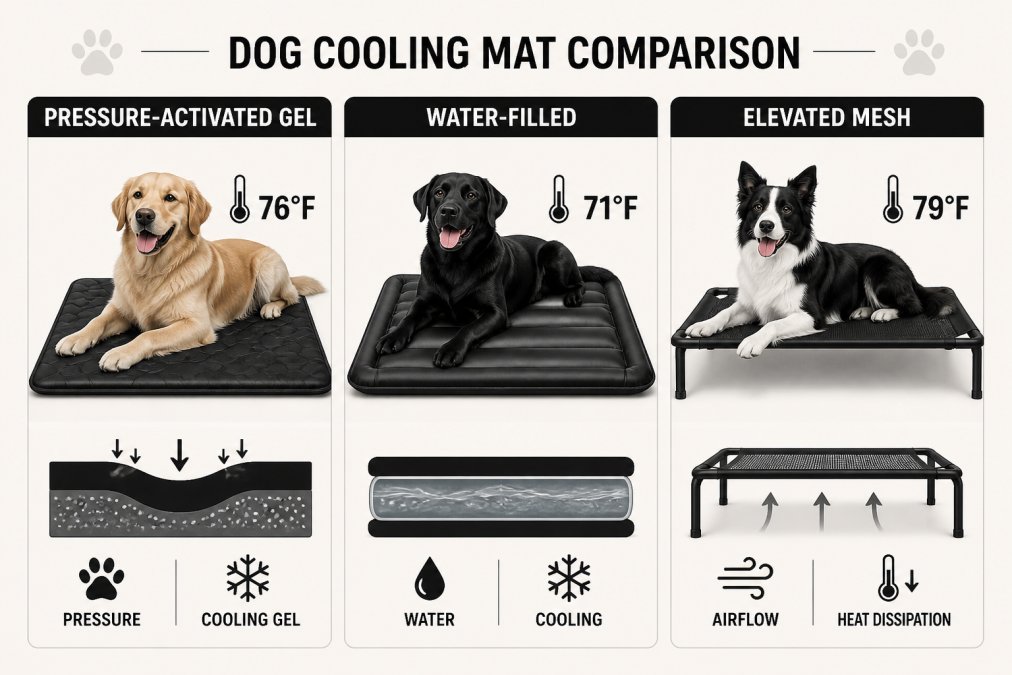
Pressure-Activated Gel Mats
Pressure-activated gel mats use a non-toxic gel that activates when your dog lies on it, absorbing thermal energy through passive heat transfer, no electricity required.
Cooling performance: A pressure-activated mat reduces surface temperature by 5-10 degrees Fahrenheit. The cooling effect is immediate but temporary; once your dog leaves, it returns to room temperature within 15-30 minutes.
Duration: 30-60 minutes of active cooling per use.
Lifespan and durability: Pressure-activated mats typically last 12-24 months. The gel can crystallize or lose its properties after 18+ months. Any puncture ends effectiveness immediately.
Water-Activated Cooling Mats
Water-activated mats require you to fill a sealed chamber before use, delivering extended cooling without electricity.
Cooling performance: Water-activated mats stay 8-15 degrees cooler than ambient temperature for several hours, less intense than gel mats initially but more sustained overall.
Duration: 4-8 hours of cooling per activation, depending on mat size, water volume, ambient temperature, and your dog's body weight.
Setup and maintenance: Water-activated mats require filling before use and periodic refilling. Store in a cool, dry place to prevent mold growth.
Lifespan and durability: Water-activated mats typically last 2-3 years if the seal remains intact. Punctures or seal failures lead to water leakage and mold growth, making the mat unusable.
Phase-Change Material (PCM) Mats
Phase-change mats use materials that absorb heat at a specific temperature threshold, then release it slowly as your dog's body temperature rises.
Cooling performance: PCM mats maintain a consistent temperature (typically 55-65 degrees Fahrenheit) for longer periods than pressure-activated gel. They don't require water or electricity and activate passively like gel mats.
Duration: 2-4 hours of consistent cooling, longer than pressure-activated mats but shorter than water-filled designs.
Lifespan: 2-3 years with proper care, similar to water-activated mats. PCM materials can degrade if exposed to extreme heat or direct sunlight.
Which Technology Performs Best?
Pressure-activated gel mats work best for young, active dogs needing quick, portable cooling. Water-activated mats excel for senior dogs or those in very hot climates needing extended cooling, though they require setup and maintenance.
Cooling performance varies by ambient temperature, dog weight, mat size, sunlight exposure, and cover material. Most cooling mats work best as supplemental tools, not primary cooling solutions.
Cooling Mat vs. Cooling Bed: Which Solves Your Dog's Heat Relief Problem
A cooling mat for dogs is a flat, portable surface for temporary relief. A cooling bed combines cushioning with cooling technology. Choose based on whether you need heat relief alone or heat relief plus orthopedic support.
Cooling mats work well for:
- Dogs that overheat during exercise or hot weather
- Temporary cooling during the warmest hours of the day
- Dogs that sleep in different locations (portable, easy to move)
- Budget-conscious owners (typically $25-$60)
- Active dogs that don't need extra cushioning
Cooling beds work better for:
- Senior dogs with joint pain or arthritis
- Dogs that need consistent support throughout the day
- Dogs that benefit from raised surfaces (like the Proud Pet Shop CloudLift Bed at $99) that improve airflow
- Dogs that appreciate a defined sleeping space
- Long-term comfort solutions (rated for 3-5 years of use)
The Proud Pet Shop CloudLift Bed is an elevated cooling bed with breathable mesh that provides structural support, works year-round, and keeps your dog away from ground-level humidity.

For apartment dwellers or dogs that sleep in one primary spot, a cooling bed makes more financial sense. For multi-dog households or dogs that move around frequently, a mat offers flexibility at a lower price point.
How Long Do Dog Cooling Mats Stay Cool and When They Stop Working
A pressure-activated cooling mat for dogs stays cool for 30-60 minutes of active contact, then gradually warms to room temperature. Once your dog leaves, the mat stops working.
Proud Pet Shop Cooling Recovery Mat →
Water-activated mats stay cool for 4-8 hours depending on ambient temperature and mat size.
Cooling performance degrades over time. After 1-2 years, gel may lose its pressure-activated response. Tears or punctures reduce effectiveness dramatically. Chew-resistant covers last 2-3 years; standard mats often fail after 12-18 months.
The mat stops working when the gel is punctured, the cover is torn, the gel crystallizes, or your dog ignores it. Direct sunlight warms mats faster; cool, dry storage extends lifespan.
| Factor | Impact on Cooling Duration |
|---|---|
| Pressure-activated mat | 30-60 minutes per use |
| Water-activated mat | 4-8 hours per use |
| Ambient temperature | Cooler rooms extend duration; hot rooms reduce it |
| Mat size | Larger mats hold more gel and stay cool longer |
| Cover condition | Tears or punctures end effectiveness immediately |
| Gel age | Degrades after 1-2 years of regular use |
How to Choose a Cooling Mat for Dogs: Size, Durability, and Price
Size Selection and Sleeping Posture
Measure your dog's length from nose to tail and add 6-12 inches. A mat that's too small reduces cooling effectiveness; one that's too large wastes money.
Consider your dog's sleeping style: stretched-out sleepers need full body length plus 6 inches; curled sleepers benefit from extra space; side sleepers need width.
Durability Assessment by Dog Type
For dogs that chew or dig at bedding: Choose a mat with a reinforced, chew-resistant cover. These cost $10-$20 more upfront but last 2-3 times longer.
For senior dogs or dogs with joint pain: An elevated cooling bed with orthopedic cushioning ($80-$120) provides better long-term value than a basic mat.
For puppies: Start with an affordable pressure-activated mat ($25-$40) to test interest. Invest in a durable option later if they show consistent use.
For brachycephalic breeds (bulldogs, pugs, French bulldogs): These breeds are at higher risk for heatstroke. Choose a mat your dog will actually use regularly, even if it costs more.
Price-to-Lifespan Calculation and Long-Term Value
Calculate cost per year of use. A $30 mat lasting 12 months costs $30/year; a $50 mat lasting 24 months costs $25/year; a $100 bed lasting 48 months costs $25/year.
Check for a 30-day satisfaction guarantee (allows risk-free testing), 1-year manufacturer warranty (covers defects but not chewing or punctures), or no warranty (common for budget mats).
Budget for replacement every 12-18 months if your dog is destructive or uses the mat daily; expect 2-3 years for seasonal use. Multi-dog households should consider two mats for rotation.
Puppies (under 12 months): Start with an affordable mat to test interest; expect replacement costs if they chew.
Adult dogs (1-7 years): A pressure-activated mat is usually sufficient for occasional cooling; water-activated mats are better for dogs spending long hours outdoors.
Senior dogs (7+ years): An elevated cooling bed with orthopedic cushioning is usually better value than a basic mat.
Dogs with health conditions: A cooling mat is a helpful supplement but cannot replace active heat management. Consult your veterinarian.
Most cooling mats can be spot-cleaned with a damp cloth and mild soap. Machine-washable covers extend lifespan. Water-activated mats require periodic water changes to prevent mold growth.
What a Cooling Mat Cannot Do: Safety Limits and Heatstroke Prevention
A cooling mat for dogs is not a treatment for heatstroke and cannot prevent it alone. Heatstroke occurs when core body temperature exceeds 104-106 degrees Fahrenheit. A mat reduces surface temperature by 5-10 degrees at best and won't cool fast enough if your dog's internal temperature is dangerously high. Early signs (excessive panting, drooling, lethargy, vomiting, collapse) require immediate veterinary attention.
A cooling mat for dogs works best as a preventive tool. It does not replace fresh water, shade, air conditioning, limiting exercise during peak heat, or veterinary monitoring for at-risk dogs.
Dogs at highest risk for heatstroke include flat-faced breeds, overweight dogs, thick-coated dogs, seniors, and dogs with heart or respiratory conditions. For these dogs, a cooling mat is a helpful supplement, not a safety solution. Owners must manage heat exposure actively.
Conclusion: Making the Right Choice for Your Dog
A cooling mat for dogs is worth buying if your dog shows heat sensitivity, struggles to sleep in warm weather, or recovers slowly after activity. Young, active dogs benefit most from affordable pressure-activated mats. Senior dogs or those with joint pain benefit more from elevated cooling beds.
At Proudpetshop, we recommend starting with the Proud Pet Shop Cooling Recovery Mat ($28.99) if you're testing whether your dog responds to cooling technology. It activates with water, requires no electricity, and includes a durable, chew-resistant cover that outlasts standard gel pads. If your dog is older, shows joint stiffness, or needs year-round comfort, the CloudLift Bed ($99) delivers better long-term value with breathable mesh, waterproof durability, and elevated design that improves airflow. Both products come with our 30-day satisfaction guarantee, so you can try cooling solutions risk-free and return them if your dog doesn't respond. Get started with Proudpetshop and find the cooling solution that keeps your dog comfortable through every season.

Frequently Asked Questions
Do dogs really need cooling mats?
Dogs don't strictly need cooling mats, but they benefit from them in hot weather. Cooling mats provide relief during high temperatures and help reduce heat-related stress on joints and muscles. Senior dogs and breeds with thick coats are especially vulnerable to overheating. A cooling mat gives your dog a comfortable place to regulate body temperature without requiring electricity or ice packs. However, a cooling mat is not a substitute for shade, fresh water, and limiting outdoor activity during peak heat hours.
How long do dog cooling mats stay cool?
Most gel-based cooling mats stay cool for 2-4 hours depending on room temperature and how much body weight activates the gel. Pressure-activated mats like the Proud Pet Shop Cooling Recovery Mat work continuously as long as your dog is lying on them, since body weight keeps the gel activated. Cooling duration decreases in very hot environments. Elevated cooling beds with airflow, like the CloudLift Bed, provide consistent temperature regulation throughout the day by preventing heat absorption from the ground.
Are cooling mats safe for dogs?
Yes, cooling mats are safe when used correctly. Choose mats with chew-resistant covers to prevent your dog from puncturing the gel layer. Supervise use with puppies or aggressive chewers. Pressure-activated gel mats require no electricity, making them safer than heated alternatives. Avoid using cooling mats as a primary heatstroke treatment, they reduce discomfort but cannot replace veterinary care. Always provide fresh water and shade alongside any cooling product.
What is the best cooling mat for a dog that destroys toys?
The Proud Pet Shop Cooling Recovery Mat ($28.99) features a durable, chew-resistant cover designed to withstand active pets. The gel layer is sealed inside protective material that resists puncturing from normal chewing. For dogs with severe destructive behavior, the elevated CloudLift Bed ($99.00) offers an alternative approach, the breathable mesh and frame design eliminates soft surfaces to destroy, while improving airflow for natural cooling. Both options are built for durability and come with a 30-day satisfaction guarantee.