
Table of Contents
- Lightweight Pet Carrier for Camping vs. Standard Carrier: The Core Differences
- How to Choose a Pet Carrier for Camping
- Best Breathable Pet Carriers for Hiking
- Safety Features for Pet Travel Gear
- Weight-to-Durability Ratio for Outdoor Adventures
- Cleaning and Long-Term Maintenance
- Frequently Asked Questions
Last Updated: September 19, 2026
Lightweight Pet Carrier for Camping vs. Standard Carrier: The Core Differences
When you're planning a camping trip with your pet, choosing the right lightweight pet carrier camping gear makes the difference between a smooth adventure and an exhausting ordeal. A lightweight pet carrier for camping transforms how you travel with your companion, but understanding what sets it apart from a standard carrier is crucial before you invest. At Proudpetshop, we help pet owners select gear that matches their actual needs rather than just picking whatever's available.
The core distinction isn't just weight. A lightweight carrier designed for camping prioritizes portability, ventilation, and durability on the trail. Standard carriers, by contrast, are engineered for stationary use, think vet visits or short car rides. They're bulkier, often harder to access, and typically lack the breathability your pet needs during extended outdoor activity.
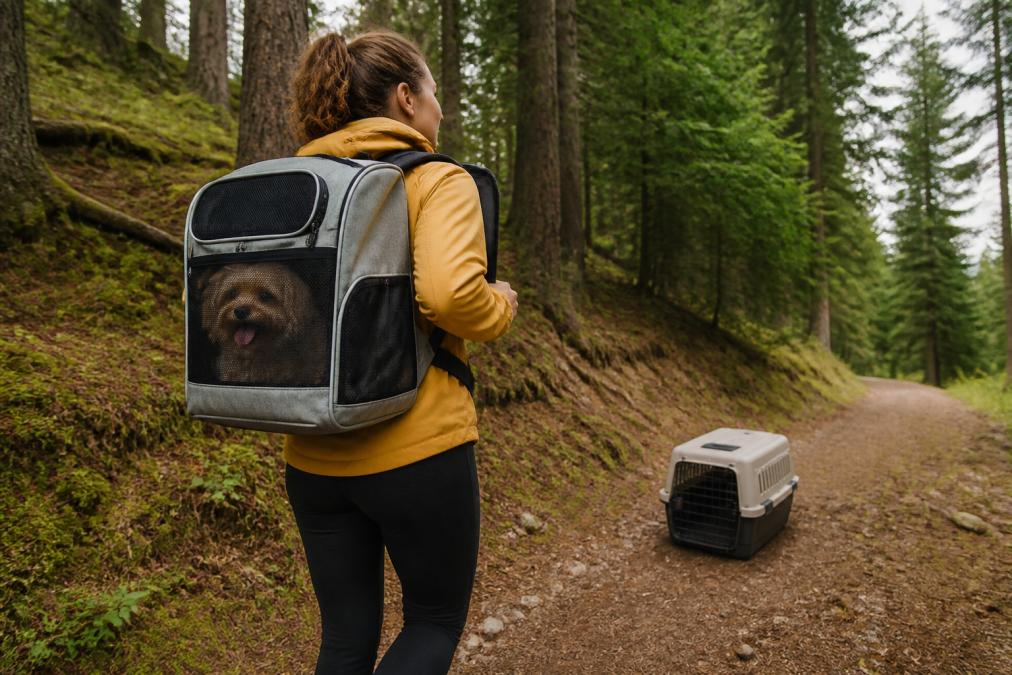
Weight and Portability: What Matters on the Trail
A standard pet carrier typically weighs between 8-15 pounds empty, depending on material. Add your pet, and you're carrying 20-30 pounds for miles. That's exhausting. A lightweight camping carrier weighs 3-6 pounds empty, meaning your total load stays manageable even on longer treks.
Portability isn't just about raw weight, though. It's about how the carrier distributes that weight. Backpack-style carriers like the Proud Pet Shop TrailFold Carrier ($34.99) use adjustable shoulder straps to spread weight evenly across your shoulders and back. Your hands stay free for balance, trekking poles, or helping your pet navigate obstacles. Standard carriers force you to grip a handle, which strains your wrist and arm after 30 minutes of walking.

Foldability matters too. A lightweight carrier designed for camping often collapses when empty, fitting into your pack or trunk without taking up dedicated space. Standard carriers maintain their rigid shape, consuming significant storage whether you're using them or not.
Soft-Sided vs. Hard-Sided Design
Soft-sided carriers dominate the camping market because they're inherently lighter and more flexible. The fabric shell typically uses nylon or polyester with breathable mesh panels. This construction lets your pet see their surroundings, reducing anxiety during the journey.
Hard-sided carriers, usually plastic or composite materials, offer superior structural integrity but weigh considerably more. They excel at protecting pets in vehicle accidents or rough handling, which matters for car travel or airline transport. For camping, that protection comes at a weight cost you don't need on the trail.
A practical middle ground exists: soft-sided carriers with reinforced frames. They're lighter than hard-sided options but more durable than fabric-only designs. The Proud Pet Shop Sidekick Sling ($28.99) features a soft buckle-close design with breathable panels that keep your pet secure without excessive weight.
How to Choose a Pet Carrier for Camping
Selecting the right carrier depends on your specific camping style and pet type. A weekend car-camping trip with a cat requires different gear than a multi-day backpacking adventure with a small dog. The wrong choice means unnecessary weight, poor ventilation, or a pet too stressed to enjoy the experience.
Sizing Guidelines for Pets
Your pet must have room to stand, turn around, and lie down comfortably inside the carrier. A cramped carrier increases anxiety and restricts blood flow during long trips. Measure your pet from nose to tail base, then add 4-6 inches to find the minimum carrier length. For width, measure across their widest point and add 2-3 inches.
The Proud Pet Shop TrailFold Carrier comes in three sizes (S, M, L) to match different pets. Small breeds and cats fit the S size, medium dogs need M, and larger small dogs work in L. Choosing the correct size prevents your pet from sliding around during movement while keeping the overall carrier weight reasonable.

Weight capacity matters as much as interior dimensions. Check the manufacturer's specifications carefully, exceeding the weight limit stresses the frame and straps, creating safety risks.
Durability and Material Quality
Camping exposes gear to moisture, UV rays, rough terrain, and repeated stress. A carrier that works fine for vet visits will fail quickly in the field. Look for carriers with reinforced stitching, high-denier nylon or polyester fabric, and weather-resistant materials.
Mesh panels should use sturdy mesh that resists tearing if your pet panics or scratches. Zippers need to be heavy-duty and smooth-operating, a stuck zipper during an emergency creates dangerous delays.
Interior construction matters equally. A removable, washable liner protects the carrier's frame from dirt and moisture while making cleanup simple after muddy adventures. Quality carriers include this feature as standard.
Best Breathable Pet Carriers for Hiking
Breathability directly impacts your pet's comfort and safety during outdoor activity. A carrier without adequate ventilation traps heat and moisture, risking heat stress even in cool weather when your pet's anxiety elevates their body temperature.
Ventilation and Mesh Panel Design
The best hiking carriers feature mesh panels on multiple sides, front, back, and both sides. This design ensures air circulation regardless of how the carrier is positioned on your body. Single-sided mesh creates dead zones where air stagnates, defeating the purpose.
Proud Pet Shop TrailFold Carrier →
Mesh quality determines whether ventilation actually works. Fine mesh prevents insects from entering but must still allow air to pass freely. Some carriers use mesh that's too dense, creating a barrier effect that looks breathable but functions poorly. Test ventilation by placing your hand inside, you should feel air movement, not just see light through the material.
The Proud Pet Shop TrailFold Carrier prioritizes breathability with extensive mesh panels positioned strategically on the sides and front. This positioning keeps your pet visible and cool while maintaining security during movement.
Pet Comfort During Long Outdoor Trips
Extended exposure to new environments triggers stress in pets. A carrier that allows your pet to see their surroundings reduces anxiety by letting them monitor what's happening rather than imagining threats. Mesh panels serve this psychological function alongside physical ventilation.
Interior padding makes a difference on long trips. A cushioned floor reduces fatigue from hours of standing or lying on hard plastic.
Temperature management extends beyond ventilation. In summer, avoid direct sunlight by positioning the carrier in the shade or covering the back with a lightweight fabric. In cooler months, ensure adequate airflow prevents condensation buildup inside the carrier, which creates a damp, uncomfortable environment.
Safety Features for Pet Travel Gear
A lightweight carrier that fails to secure your pet creates worse problems than extra weight. Safety features protect your pet during unexpected situations, sudden stops, uneven terrain, or startled reactions to wildlife.
Interior Tethers and Secure Closures
An interior safety leash attachment point prevents your pet from escaping if a zipper fails or you accidentally open the carrier. This tether keeps your pet secured to the carrier's frame while still allowing movement inside. The Proud Pet Shop TrailFold Carrier includes a dedicated safety leash attachment point clipped inside the main compartment for exactly this reason.
Secure closures matter tremendously. Heavy-duty zippers with smooth operation prevent accidental openings during movement.
The buckle-close design of the Proud Pet Shop Sidekick Sling provides a soft, secure enclosure that prevents accidents during activity while remaining easy to operate with one hand if necessary.
Airline Approval and Cabin-Friendly Standards
If you plan to fly with your pet, carrier specifications matter legally.
| Feature | Lightweight Camping Carrier | Standard Carrier |
|---|---|---|
| Weight (empty) | 3-6 lbs | 8-15 lbs |
| Primary use | Hiking, camping, travel | Vet visits, short car trips |
| Ventilation | Extensive mesh panels | Limited or single-sided |
| Portability | Backpack or sling style | Handle-based |
| Foldability | Collapses when empty | Rigid structure |
| Durability focus | Trail conditions | Stationary use |
| Pet visibility | High (mesh design) | Low (solid walls) |
Weight-to-Durability Ratio for Outdoor Adventures
The best camping carriers don't sacrifice durability for lightness. A carrier that weighs 4 pounds but fails after two trips wastes money and strands you with a broken piece of gear. Understanding the relationship between weight and durability helps you identify carriers that actually last.
Lightweight doesn't mean fragile.
Cleaning and Long-Term Maintenance
A carrier you use regularly needs cleaning after muddy adventures and periodic maintenance to prevent deterioration. Carriers designed for camping anticipate this need with washable components and accessible construction.
Frequently Asked Questions
Are lightweight pet carriers durable enough for outdoor use?
Yes, when built with quality materials like reinforced nylon and polyester. Lightweight carriers designed for camping prioritize durability alongside portability by using high-tensile fabrics and reinforced stitching at stress points. The Proud Pet Shop TrailFold Carrier, for example, combines lightweight construction with mesh panels and safety tether attachment points, making it suitable for hiking and camping. The key is selecting carriers specifically engineered for outdoor conditions rather than general travel.
What features make a pet carrier suitable for camping?
A camping-ready carrier needs ventilation mesh panels for airflow, removable and washable liners for easy cleaning after outdoor use, safety tethers to prevent escapes, adjustable straps to reduce shoulder strain on long treks, and weather-resistant materials. Lightweight construction matters because you'll carry it for extended periods, but structural integrity is equally important. Look for carriers that balance these features without sacrificing either portability or your pet's security and comfort.
How do I know if a lightweight pet carrier will actually last longer than a standard one?
Lightweight carriers designed for camping often outlast standard carriers because they use higher-grade materials specifically chosen for durability under stress. Check for reinforced seams, heavy-duty zippers, and materials like reinforced nylon rather than thin plastic or low-grade fabric. Customer reviews mentioning multi-season use and rough handling are reliable indicators. Proud Pet Shop backs products with a 30-day satisfaction guarantee, so you can test durability risk-free and return it if it doesn't hold up to your outdoor use.
Can I use a standard hard-sided carrier for hiking or camping?
Standard hard-sided carriers are difficult to use for hiking because they're bulky, heavy, and lack the portability needed for long trails. They're designed for stationary use like car travel or vet visits. Lightweight soft-sided carriers with mesh ventilation, shoulder straps, and foldable designs are far more practical for camping because they distribute weight evenly, allow hands-free carrying, and pack down when not in use. For outdoor adventures, a lightweight carrier designed for active use is the better choice.