
Table of Contents
- Why Portable Pet Water Bottles Fall Short on the Trail
- Collapsible Dog Bowl for Hiking: The Simplest Swap
- How Much Water Does a Dog Need Per Mile?
- Best Dog Hiking Gear Essentials to Pair With Your Water Setup
- Comparison: Water Bottle vs Collapsible Bowl vs Hydration Bladder
- Common Mistakes When Switching to Pet Water Bottle Alternatives
- Conclusion
- Frequently Asked Questions
Last Updated: September 16, 2026
Why Portable Pet Water Bottles Fall Short on the Trail
Most squeeze-bottle designs leak within a season, and the narrow trough forces dogs to lap awkwardly while you hold the bottle steady. That's the core problem with the standard portable pet water bottle: it's built for a parking lot, not a switchback.
A portable pet water bottle is a handheld bottle with an attached drinking trough that lets you dispense water to your dog on demand. The concept works. The execution usually doesn't.
Three failure points show up again and again. The gasket wears out and drips into your pack. The trough holds a few ounces, so a thirsty dog needs repeated refills. And the bottle itself adds weight you carry for the dog's benefit alone.
That last point matters more than most hikers admit. Below, we'll cover the alternatives that actually earn their place in your pack, plus how much water your dog really needs per mile.
Collapsible Dog Bowl for Hiking: The Simplest Swap
A collapsible dog bowl for hiking is the lowest-friction replacement for a bottle: it weighs almost nothing, folds flat, and lets your dog drink at a natural pace from a full bowl instead of a narrow spout.
The trade-off is obvious. You need to pour water from your own supply, so you're sharing your bottle or bladder with your dog. Many hikers carry a separate lightweight bottle just for the dog, which solves the hygiene question and keeps rationing simple.
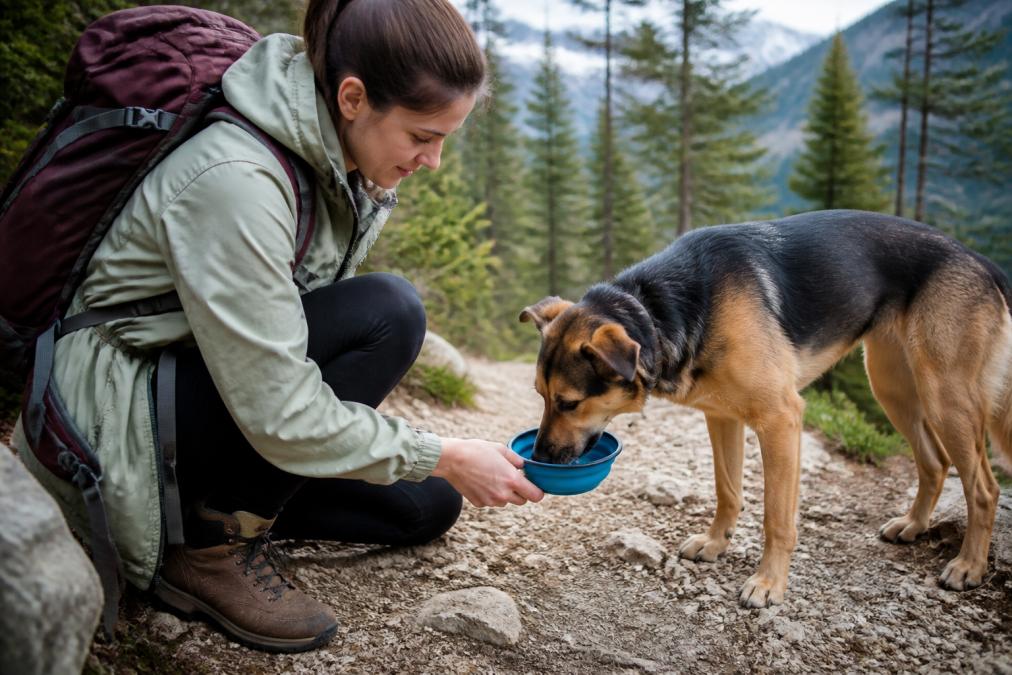
What most guides miss is stability. A soft-sided bowl on uneven ground tips when a dog drinks enthusiastically. Look for a bowl with a rigid rim or a wide base, and set it in a shallow depression or against a rock.
Cleanup is the other factor. Silicone bowls rinse easily at a stream crossing or with a splash from your bottle, and they dry fast when clipped to the outside of your pack.
How Much Water Does a Dog Need Per Mile?
The short answer: roughly 0.5 to 1 ounce of water per pound of body weight per day for a typical hike, adjusted upward for heat, altitude, and effort. A 50-pound dog on a moderate five-mile trail commonly needs somewhere between 10 and 20 ounces, but individual dogs vary widely.
Breaking that into mileage is where owners get confused. There's no fixed "ounces per mile" figure that applies to every dog, because pace, terrain, coat thickness, and temperature change the math constantly.
A practical approach:
- Weigh your dog and note the daily baseline range above
- Add water for climbs, direct sun, and temperatures above 75°F
- Offer water every 15 to 20 minutes rather than waiting for a rest stop
- Watch for heavy panting, thick saliva, or lagging behind, all early signs of overheating
Dogs that gulp water too fast after hard exertion can swallow air and bloat. Offer small amounts frequently instead of one large bowl.
Best Dog Hiking Gear Essentials to Pair With Your Water Setup
Water is one piece of a system. The best dog hiking gear essentials work together, and a hydration plan fails if the rest of your kit isn't up to the trail.
Start with a hands-free leash or a well-fitted harness. A dog pulling on a collar while you fumble with a bowl is a recipe for spilled water and a sore throat.
Then think about heat, because overheating drives water demand more than distance does. The Proud Pet Shop Cooling Recovery Mat ($28.99) activates with plain water and needs no freezer or power source, which makes it useful at a trailhead before you start or back at the car after a summer hike. Its chew-resistant cover holds up to dogs that treat gear as a toy.
Proud Pet Shop Cooling Recovery Mat →

Round out the kit with:
- A collapsible bowl clipped to the outside of your pack
- A dedicated dog water bottle or bladder, kept separate from yours
- Paw protection for hot rock and rough granite
- A small first-aid pouch with gauze and tweezers
- Waste bags and a spare carabiner
Pack weight adds up fast. Every item should justify itself on the specific trails you actually hike.
Comparison: Water Bottle vs Collapsible Bowl vs Hydration Bladder
Each option solves a different problem. Here's how they stack up for a day hike with a dog.
| Setup | Weight | Best For | Main Drawback |
|---|---|---|---|
| Portable pet water bottle | Moderate | Short walks, quick stops | Leaks, small trough, awkward lapping |
| Collapsible bowl | Very light | Most day hikes | Needs a separate water source |
| Hydration bladder + bowl | Moderate | Long or hot hikes | Bulky, harder to ration |
| Separate dog bottle + bowl | Light | Multi-dog households | One more item to carry |
The bladder setup wins on long, hot routes where you and your dog both drink heavily. The collapsible bowl wins on almost everything else, because it's cheap, light, and has no moving parts to break.
If you're coming from a squeeze bottle, expect the first hike with a bowl to feel slower. You'll stop more often. That's the point.
Common Mistakes When Switching to Pet Water Bottle Alternatives
The biggest mistake is under-packing water because a bowl feels lighter than a bottle. The bowl weighs less, but the water still weighs the same, and dogs drink more from a bowl than from a narrow trough.
Other recurring errors:
- Skipping the pre-hike drink. Offer water before you leave the trailhead, not just on the trail.
- Sharing one bottle with no backup. If your dog drains it, you have nothing left.
- Ignoring altitude. Dogs dehydrate faster at elevation, and signs show up later than you'd expect.
- Forgetting the return trip. Water needs are calculated for the whole hike, not the halfway point.
- Using a bowl with no rim. Flimsy bowls collapse under an eager dog and dump the water.
A common mistake is treating hydration as a dog problem when it's really a planning problem. Weigh the water, count the miles, and build in a margin.
Conclusion
The real challenge with pet water bottle alternatives isn't finding a replacement. It's building a hydration system you'll actually carry and use on every hike, not just the first one.
Proudpetshop stocks gear built for that kind of repeated use, from the Proud Pet Shop Cooling Recovery Mat ($28.99) for post-hike cooldowns to adventure and safety essentials that hold up to daily wear. Every order ships fast and tracked, ships free over $50, and comes with a 30-day satisfaction guarantee, so you can test your setup on real trails without risk. Get started with Proudpetshop and build a hiking kit your dog can rely on.
Frequently Asked Questions
How much water should a dog drink while hiking?
Most dogs need about 0.5 to 1 ounce of water per pound of body weight daily, and hiking increases that. A 40-pound dog might drink 20 to 40 ounces on a moderate hike. Offer water every 15 to 20 minutes, especially on warm days. Watch for signs of dehydration like heavy panting, tacky gums, or lagging behind. If your dog refuses water, try a collapsible bowl instead of a bottle, since many dogs prefer lapping from an open bowl.
What is the best way to carry water for a dog on a long hike?
For hikes over three miles, carry water in a hydration bladder or wide-mouth bottle for yourself, plus a separate supply for your dog. A collapsible dog bowl for hiking weighs almost nothing and lets your dog drink naturally. Many hikers carry two liters total for a medium dog on a half-day hike, refilling at streams when safe. Avoid sharing your own bottle spout with your dog, since backwash and bacteria transfer both ways.
Are silicone dog bowls safe for hiking?
Food-grade silicone bowls are safe, lightweight, and pack flat. Look for bowls labeled BPA-free and dishwasher-safe. Silicone tolerates hot and cold water without leaching, unlike some cheap plastics. Rinse the bowl after each hike to prevent bacteria buildup. A collapsible bowl also doubles as a food dish for overnight trips, so you carry one item instead of two. Replace the bowl if it develops cracks or a persistent smell.
What are the benefits of using a collapsible bowl over a bottle?
Collapsible bowls let dogs drink in a natural lapping position, which encourages more water intake than squeezing a bottle into their mouth. They pack flat, weigh a few ounces, and fit in a side pocket. Bottles with attached troughs can leak, grow mold in the trough, and are harder to clean. A bowl also works for sharing water between two dogs and doubles as a food dish. For pet water bottle alternatives, a collapsible bowl is the simplest, cheapest upgrade.