
Table of Contents
- How to Compare Portable Pet Carriers for Small Dogs
- Soft-Sided Pet Carriers for Small Dogs: Pros, Cons, and Best Picks
- Backpack and Front-Facing Portable Pet Carriers
- Airline Approved Dog Carriers: What You Need to Know
- How to Measure a Dog for a Carrier
- Anxiety Reduction and Multi-Modal Travel Tips
- Carrier Comparison Table and How to Choose
- Conclusion
Last Updated: August 20, 2026
Choosing the wrong carrier is one of the most common mistakes small-dog owners make, and the consequences range from a stressed pet to a rejected bag at the airline gate. At Proudpetshop, we've reviewed portable pet carriers for small dogs, from budget slings to structured backpacks. Below, you'll find a safety-first breakdown, two standout product picks, airline compliance essentials, and a sizing guide you can use today.
Quick Picks:
- Best Overall: Proud Pet Shop TrailFold Carrier ($34.99), front-carry backpack with breathable mesh and zipper lock
- Best Budget Sling: Proud Pet Shop Sidekick Sling ($28.99), adjustable crossbody with a 15 lb weight limit
- Best For: Toy breeds, teacup puppies, and small dogs under 15 lbs who travel frequently
How to Compare Portable Pet Carriers for Small Dogs
The real evaluation comes down to two factors most buyers overlook: safety engineering and how the carrier distributes weight on the human body.

Safety Features and Ventilation
A safe carrier keeps your pet contained without restricting airflow. Mesh windows on at least two sides are the baseline requirement. Look for breathable fabric panels that span a full side of the carrier, not decorative cutouts.
The interior should include a safety tether, which clips to your dog's harness or collar to prevent escape if the zipper opens unexpectedly. A double-zipper design with a latch or loop closure prevents curious dogs from nosing their way out.
For hard-sided options, durable plastic construction protects against compression in overhead bins. Soft-sided carriers compress more easily, which is why a removable, firm base is critical: it keeps the floor rigid so your dog isn't sinking into fabric.
Ergonomics for the Person Carrying
A carrier that wrenches your shoulder after 20 minutes will get left at home, defeating the purpose entirely.
Padded shoulder straps at least 2 inches wide with foam or gel padding are essential for backpack-style carriers. For sling-style carriers, an adjustable strap that distributes weight across the chest rather than one shoulder reduces fatigue significantly.
Front-facing chest carriers keep your pet at your center of gravity, which is more stable for both of you than a side-loaded sling. Hands-free designs let you manage stairs, doors, and transit without juggling a bag.
Soft-Sided Pet Carriers for Small Dogs: Pros, Cons, and Best Picks
Soft-sided pet carriers dominate the market for good reason: they're lightweight, collapsible, and generally easier to store than rigid travel crates. For most small-dog owners, a soft-sided carrier handles everyday errands, vet visits, and cabin-approved air travel without issues.
The tradeoff is structural. A collapsible carrier compresses under pressure in crowded spaces. A quality washable liner and reinforced base mitigate this, but don't eliminate it.
Soft-sided carriers work best for:
- Dogs under 15 lbs who travel by car, transit, or short-haul flights
- Owners who need a portable, storable option for occasional use
- Pets comfortable in enclosed, fabric environments
Where soft-sided carriers fall short:
- Extended outdoor use in rain or rough terrain
- Dogs that push against walls or chew fabric
- Overhead bin storage where compression is a real risk
According to the American Veterinary Medical Association's pet travel guidance, carriers should allow pets to stand, turn around, and lie down comfortably.
Backpack and Front-Facing Portable Pet Carriers
Backpack-style and front-facing carriers solve the ergonomic problem that slings and tote-style bags create: uneven weight distribution that strains one side of the body.
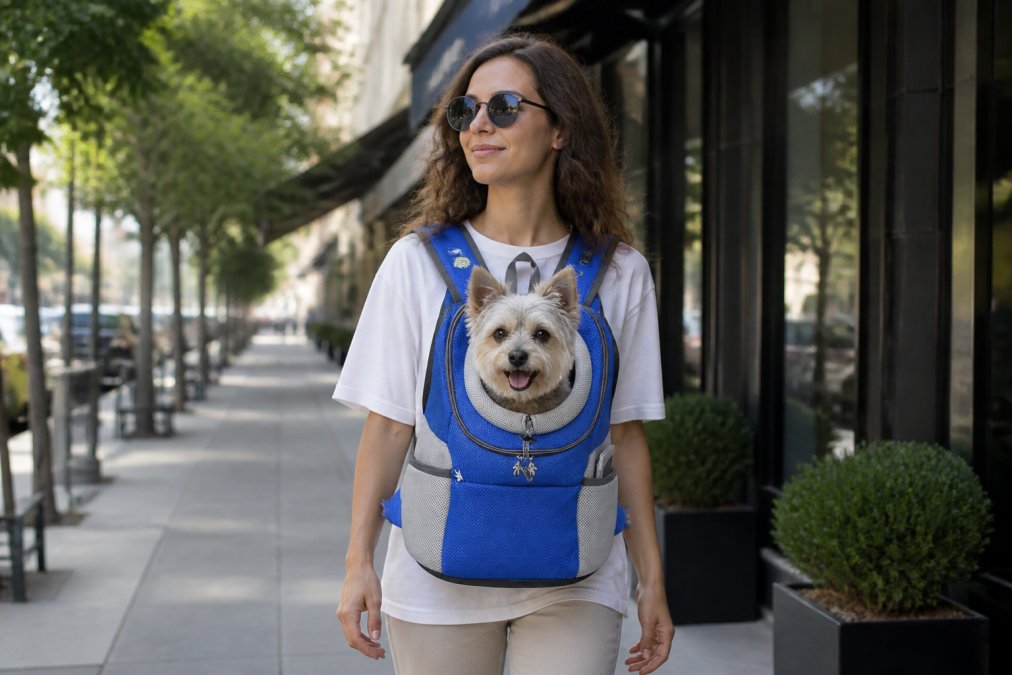
Front-facing designs position your dog against your chest, keeping the pet's weight centered over your core. This is a meaningful ergonomic advantage over traditional backpack carriers where the pet sits behind you.
Proud Pet Shop TrailFold Carrier ($34.99)
The TrailFold Carrier is the top pick for owners who want a genuinely hands-free carrying experience. It functions as both a front-carry chest pack and a backpack, with adjustable straps that accommodate different torso lengths. The breathable mesh panels cover the full front face, giving your dog a clear sightline and continuous airflow.
The harness-like zipper lock prevents the zipper from being pushed open from the inside, a real failure point on budget mesh carriers. The removable base keeps the floor firm.
Pros:
- True hands-free front-carry design
- Zipper lock prevents escape
- Breathable mesh on the full front panel
- Converts between front and back carry positions
Cons:
- Not airline-approved for under-seat use in its full configuration
- Interior space is snug for dogs above 12 lbs
Shop the TrailFold Carrier at Proudpetshop
Proud Pet Shop Sidekick Sling ($28.99)
The Sidekick Sling takes a crossbody approach that keeps your dog close without full backpack structure. The adjustable strap crosses the chest, distributing the 15 lb weight limit across your torso rather than a single shoulder.
The breathable panel keeps air circulating, and the design works well for dogs that prefer to observe their surroundings from a secure, partially enclosed position. It's the better pick for urban errands and short walks.
Pros:
- Lightweight and genuinely portable
- Adjustable strap fits most body types
- 15 lb weight limit covers most toy and small breeds
- Fast access for putting pets in and out
Cons:
- Less structured than backpack carriers
- Single carry position only
Shop the Sidekick Sling at Proudpetshop

Airline Approved Dog Carriers: What You Need to Know
Airline approved dog carriers must meet strict dimensional requirements, and those requirements vary by airline. Generic dimensions don't apply universally.
Airline-approved carriers share these baseline characteristics:
- Soft-sided construction (most airlines prohibit hard-sided carriers in the cabin)
- Maximum dimensions that fit under the seat in front of you (typically 18 x 11 x 11 inches, but verify with your specific airline)
- Leak-proof bottom or waterproof liner
- Adequate ventilation on at least two sides
- Secure closures with no loose hardware
The U.S. Department of Transportation's air travel with pets regulations governs the broader framework for pet transport, but individual airlines set their own size limits and fee structures. Always check your airline's specific carry-on pet policy before purchasing.
TSA compliant carriers don't require your pet to stay inside during security screening. Your dog will walk through the metal detector while the empty carrier goes through the X-ray machine. A carrier with a top-opening zipper makes this process faster.
Weight limits for in-cabin pet travel typically cover the pet plus the carrier combined. A dog that weighs 10 lbs in a carrier that weighs 3 lbs puts you at 13 lbs combined, which may exceed some airlines' 10 lb combined limits. Weigh your carrier before you weigh your dog.
How to Measure a Dog for a Carrier
Getting the sizing right is the step most buyers skip, and it's the reason so many carriers get returned. A carrier that's too small causes anxiety and physical discomfort; one that's too large doesn't provide the enclosed, den-like security that most small dogs prefer.
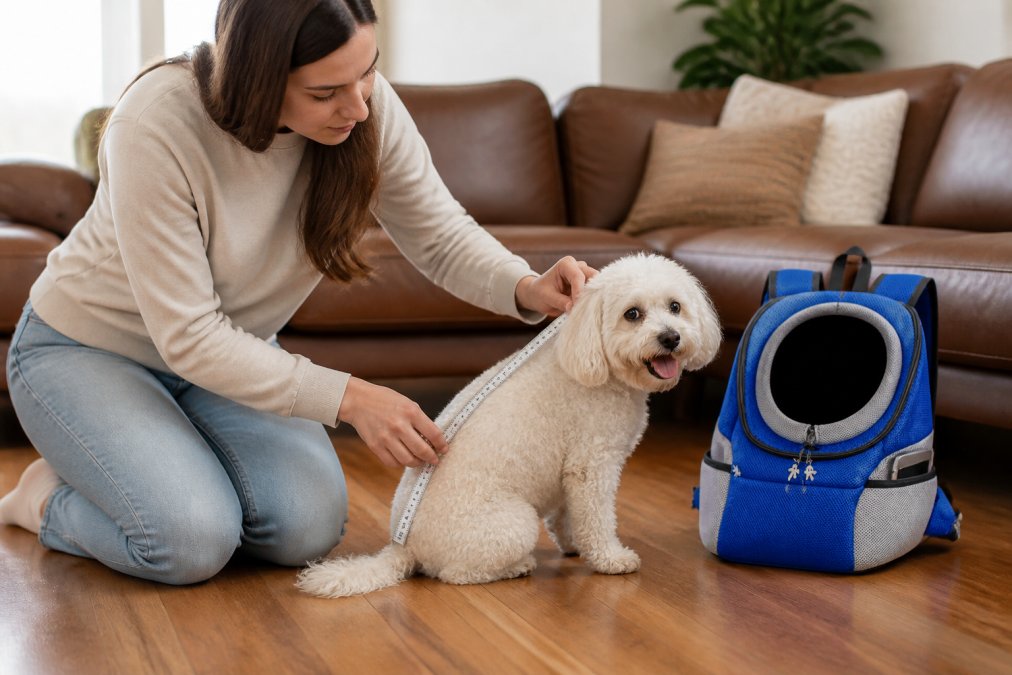
Take three measurements:
- Length: Measure from the tip of your dog's nose to the base of the tail. Add 2-4 inches for comfortable interior space.
- Height: Measure from the floor to the top of your dog's head while standing.
- Width: Measure the widest point of your dog's body across the shoulders.
The carrier's interior dimensions must exceed all three measurements.
| Dog Size | Typical Weight | Recommended Interior Length |
|---|---|---|
| Teacup / Toy | Under 5 lbs | 12-14 inches |
| Small | 5-10 lbs | 14-17 inches |
| Small-Medium | 10-15 lbs | 17-20 inches |
| At weight limit | 15 lbs | Verify carrier specs |
A dog that can stand, turn a full circle, and lie down with legs extended is in a correctly sized carrier.
Anxiety Reduction and Multi-Modal Travel Tips
Carrier anxiety is real and often underaddressed. A technically excellent carrier will still fail if your dog associates it with stress. Anxiety reduction starts before the trip and requires deliberate conditioning.
Anxiety-reduction features to look for:
- Partial coverage: carriers with a removable or adjustable hood let anxious dogs feel enclosed without being fully sealed
- Familiar scent: interior pockets or a removable base that can hold a worn t-shirt or familiar blanket
- Visibility control: mesh windows that can be partially covered reduce visual overstimulation
The American Kennel Club's guidance on crate training and travel acclimation recommends introducing any enclosed carrier as a resting space at home for at least two weeks before using it for travel. Dogs that associate the carrier with sleep show markedly different behavior in transit.
Multi-modal travel scenarios require planning beyond single-trip carrier selection:
- Car + flight: Your carrier needs to work in both environments. For vehicle use, a carrier with a safety tether that clips to a seatbelt anchor provides crash protection. For flight, soft-sided construction and under-seat dimensions take priority.
- Transit + walking: A hands-free, front-facing design handles both without requiring you to switch carriers.
- Long-haul road trips: Ventilation and interior space matter more than weight. A collapsible carrier that can expand when not in an airline context gives your dog more room during extended drives.
The Center for Pet Safety's crash test research on pet travel products has documented significant variation in how carriers perform in simulated crash conditions.
Carrier Comparison Table and How to Choose
The right carrier depends on your primary use case, your dog's weight, and how you'll actually carry it.
| Carrier | Price | Weight Limit | Best For | Key Feature |
|---|---|---|---|---|
| Proud Pet Shop TrailFold | $34.99 | ~15 lbs | Outdoor walks, hands-free carry | Front/back convertible, zipper lock |
| Proud Pet Shop Sidekick Sling | $28.99 | 15 lbs | Urban errands, quick trips | Crossbody adjustable strap |
| Generic soft-sided tote | Varies | 8-12 lbs | Airline cabin, vet visits | Collapsible, airline dimensions |
| Hard-sided travel crate | Varies | 10-20 lbs | Cargo hold, car travel | Durable plastic, rigid structure |
How to choose:
- For airline travel: Prioritize under-seat dimensions and soft-sided construction. Verify the specific airline's size requirements before buying.
- For daily walks and errands: A front-facing or crossbody design with padded shoulder straps is most practical. The Sidekick Sling handles this well at an accessible price point.
- For outdoor adventures: The TrailFold Carrier's convertible design and secure zipper lock make it the better pick for real distance.
- For anxious dogs: Choose a carrier with partial visibility control and a removable washable liner that can hold a familiar scent.
- For multi-modal trips: You may need two carriers, or a convertible design that works across contexts.
Finding the right portable pet carrier for small dogs takes more than picking the lightest option or the one with the best photos. Proudpetshop's TrailFold Carrier and Sidekick Sling are built for real-world use: breathable mesh construction, secure closures, and ergonomic carry designs that work across multiple travel scenarios. Both come with a 30-day satisfaction guarantee and free shipping on orders over $50. Get started with Proudpetshop and give your dog a carrier they'll actually be comfortable in.
Frequently Asked Questions
What features should I look for in a portable dog carrier?
Focus on ventilation (mesh windows on at least two sides), a secure latch or zipper lock, a safety tether inside to clip to your dog's harness, and a washable liner. For longer trips, padded shoulder straps and a removable base pad matter a lot. Check that the carrier's interior dimensions give your dog enough room to stand and turn around. Lightweight, collapsible designs are easiest to store between uses.
Are soft-sided or hard-sided carriers better for small dogs?
Soft-sided carriers are generally better for small dogs used as carry-on luggage or daily transport. They flex to fit under an airplane seat, weigh less, and tend to have more breathable fabric panels. Hard-sided travel crates offer more structural protection and are preferred for cargo holds or vehicle use where crash-resistance matters. For toy breeds and teacup puppies traveling in the cabin, a soft-sided, airline-approved carrier is the practical choice.
How do I know if a pet carrier is airline approved?
Check the carrier's dimensions against the specific airline's published under-seat measurements before you book, these vary by carrier and aircraft type. Most domestic airlines require a soft-sided carrier no larger than roughly 18 x 11 x 11 inches, though exact specs differ. The carrier must fit completely under the seat in front of you with your pet inside. Always confirm the policy directly with the airline, as rules change and TSA compliant does not automatically mean every airline will accept it.
How do I measure my dog for a portable carrier?
Measure your dog's length from the base of the neck to the base of the tail, then measure height from the floor to the top of the shoulders. Add 2 to 4 inches to each measurement to find the minimum interior space your dog needs. A dog that weighs under 15 pounds typically fits most standard small-dog carriers, but weight limits and body shape both matter. Stocky or barrel-chested breeds may need a wider carrier than their weight alone suggests.
What can I use instead of a pet carrier for a small dog?
A crossbody sling bag designed for pets works well for short trips and errands, it keeps your dog close to your body with hands-free carrying. Pet strollers are another option for dogs that dislike enclosed spaces. For vehicle travel, a crash-tested pet car seat or a secured travel crate provides safety without a traditional carrier. None of these substitutes are accepted as airline carry-on replacements, where an airline-approved soft-sided carrier is required.
This article was written using GrandRanker