
Table of Contents
- Why Puppy-Proofing Your Apartment Matters
- Assess Your Space from Your Puppy's Eye Level
- Remove Hazards: Breakables, Valuables, and Chewables
- Set Up Boundaries with Gates and Closed Doors
- Puppy Crate and Playpen Setup for Apartment Living
- Create a Puppy-Proofing Checklist for Your Home
- Puppy-Proofing a Balcony and Outdoor Spaces
- How to Help Your Puppy Adjust to a New Apartment Home
- Frequently Asked Questions
Last Updated: October 6, 2026
Why Puppy-Proofing Your Apartment Matters
Bringing a new puppy home is exciting, but risky if your puppy proof apartment isn't ready.
Puppy-proofing an apartment means removing dangers before they happen, the difference between a safe first few months and an emergency vet visit.
The good news: puppy-proofing doesn't require expensive renovations, just attention. This guide walks you through it, room by room.
Assess Your Space from Your Puppy's Eye Level
Your puppy sees your apartment differently, noticing floor-level things you walk past daily.
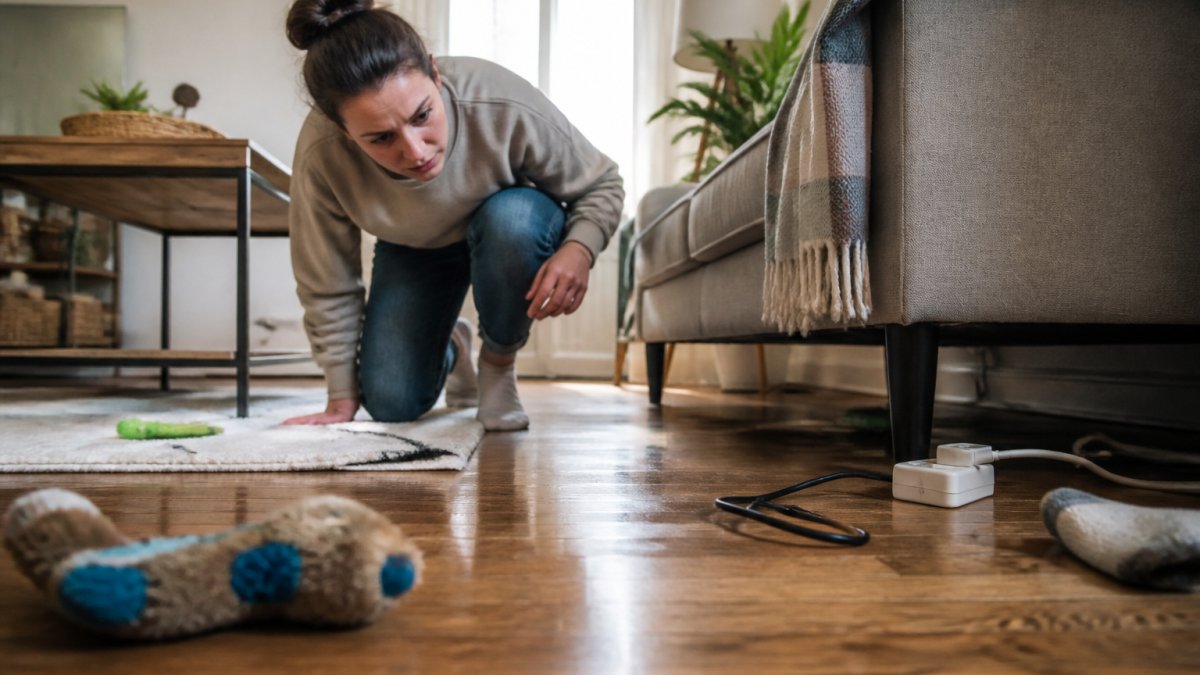
What do you see? Electrical cords at nose height, shoes under the couch, small objects under tables.
Walk through each room this way, living room, bedroom, kitchen, bathroom, noting what's accessible, breakable, or swallowable. Take photos of problem areas if it helps.
Remove Hazards: Breakables, Valuables, and Chewables
Puppies destroy things. Not out of spite. They're exploring. They're teething. They're bored. Removing temptation is easier than managing behavior.
Clear surfaces and low shelves. Move breakables, valuables, and anything you'd be upset to lose, picture frames, remotes, phone chargers, out of reach.
Then tackle the floor, where most hazards live, puppies find things you forgot existed.
Securing Shoes, Socks, and Small Objects
Shoes and socks are irresistible to puppies. They smell like you. They're the perfect size to carry.
Put shoes in a closed closet or container, never by the door or under furniture.
Small objects are equally dangerous, hair ties, coins, buttons, small toys.
Check under furniture carefully, since puppies find things that rolled under couches months ago, and vacuum regularly.
Managing Electrical Cords and Outlets
Chewing electrical cords can kill a puppy. Secure all cords immediately.
Use cord covers or protective tubing, cheap at any hardware store, on cords along baseboards, behind furniture, and near your puppy's sleeping area.
Bundle cords so they're not dangling, a dangling cord looks like a toy.
Outlets are another hazard. Use outlet covers or safety plugs, essential and renter-friendly where you can't modify walls permanently.
Storing Toxic Foods, Medications, and Chemicals
Chocolate, grapes, raisins, xylitol, onions, and garlic are toxic to dogs (People Foods to Avoid Feeding Your Pets).
Keep medications in a closed cabinet, not on a nightstand. Store cleaning supplies in a locked cabinet or high shelf.
Be especially careful in the kitchen, where puppies eat dropped food, raid trash cans, and chew dish towels.
Set Up Boundaries with Gates and Closed Doors
Boundaries prevent accidents and give your puppy structure.
Baby gates work well in apartments. Install no-drill gates in doorways to keep your puppy out of the kitchen, bathroom, and bedroom, perfect for rentals.
Keep doors shut to rooms you don't want your puppy in, including laundry rooms, home offices with cords, and storage closets.
Create a designated puppy-safe area, your living room, a section of your kitchen, or a hallway, with no hazards.
Puppy Crate and Playpen Setup for Apartment Living
A crate is one of the most useful tools for apartment living, not cruel, but a safe space that prevents accidents when you cannot supervise, and keeps your puppy out of the way during deliveries, maintenance visits, or cooking.
Sizing the Crate Correctly
Choose a crate just big enough for your puppy to stand without ducking, turn around, and lie down stretched out. Measure from nose to tail base and add 2 to 4 inches. Too large, and puppies eliminate in one corner and sleep in another, slowing house training; too small, and they may resist going in.
Because puppies grow fast, most owners face a choice:
- Buy an adult-size crate with a divider panel. Usually the most economical path: start with the divider at the puppy's current size and move it back as they grow. A divider costs far less than replacing a crate two or three times.
- Buy a small crate now and size up later. Works if you have storage space, but in a small apartment that extra crate becomes clutter fast.
Unsure of your puppy's adult size? Ask your veterinarian at the first wellness visit for a realistic range.
Proud Pet Shop IQ Treat Puzzle →
Where to Put the Crate in a Small Apartment
Placement matters more in an apartment than in a house. Two approaches:
- Main living area. Your puppy can see and hear you, which reduces whining and helps house training because you notice pacing or circling sooner. The trade-off: the crate takes up floor space and may need moving when guests visit.
- Bedroom. Some puppies settle faster near their person at night. The trade-off: you may not hear early potty signals as clearly, and the crate becomes a permanent fixture in a small room.
Avoid isolating the crate in a hallway, bathroom, or closet. Puppies that can't see their people often panic, leading to barking neighbors will hear through shared walls.
Renter-Friendly Setup
- Use a crate mat or washable rug underneath to protect carpet and hardwood from accidents and scratches.
- Skip anything requiring drilling or wall mounting. Freestanding crates and wire pens don't damage walls or trim.
- If your lease restricts pets to certain rooms, keep the crate in an allowed area so a maintenance visit doesn't create a problem.
Playpens and Exercise Pens
A playpen contains your puppy when you don't want them in a crate, adding another layer of protection in your puppy proof apartment. A wire exercise pen with a floor mat folds flat for storage.
Inside both the crate and the pen, use only toys that can't be shredded and swallowed. Avoid squeakers, tearable stuffing, and anything small enough to fit inside your puppy's mouth.
Make the crate comfortable with a soft bed, like the Proud Pet Shop Calming Donut Bed ($39.99). Its raised rim mimics being held, helping anxious puppies settle faster.

Create a Puppy-Proofing Checklist for Your Home
A checklist keeps you organized so you don't miss anything. Here's a room-by-room breakdown:
| Room | Hazard | Action |
|---|---|---|
| Living Room | Cords, breakables, small objects | Secure cords, move items high, vacuum floor |
| Kitchen | Toxic foods, trash, chemicals | Lock cabinets, use lidded trash can, secure cleaners |
| Bedroom | Cords, medications, small items | Move meds to cabinet, secure cords, pick up items |
| Bathroom | Medications, chemicals, trash | Lock cabinets, secure trash, remove toxic plants |
| Entryway | Shoes, coats, small items | Use closed closet, hang coats high |
| Balcony | Falls, plants, escape routes | Check railings, remove toxic plants, secure gates |
Print this checklist and walk through each room, checking off items as you go. It takes 1-2 hours.
Puppy-Proofing a Balcony and Outdoor Spaces
Most puppy-proofing guides stop at the front door. In an apartment, the riskiest spaces are often shared ones: balconies, windows, hallways, elevators, stairwells, laundry rooms, and entryways. This section covers those, plus rental constraints.
Balcony Fall and Escape Prevention
Balconies are the highest-risk area in most apartments. A puppy can squeeze through gaps you'd never notice from standing height.
- Check railing gaps. Measure between balusters or panels. If a gap is wider than about 4 inches, a small puppy can pass through or get a head stuck. Temporary mesh or netting attached with zip ties or tension rods closes those gaps without drilling.
- Check the bottom rail. Many balconies have a gap between the deck and the bottom of the railing that a determined puppy can push under. Block it with a low panel or sturdy lattice held by tension.
- Check furniture. A chair, planter, or storage box near the railing becomes a staircase. Move climbable items away from the edge.
If your lease prohibits permanent modifications, tension-mounted and zip-tied barriers are the standard workaround. Check your lease first, and photograph the balcony before and after for your move-out inspection.
Windows
Open windows are an underrated hazard, screens aren't designed to hold a puppy's weight. Use window stops, or open only from the top if your windows tilt, and never leave a puppy alone with a reachable open window.
Shared Hallways, Elevators, and Stairwells
These aren't your space, but your puppy uses them daily.
- Hallways. Keep your puppy on a short leash. Other residents may have dogs, and a loose puppy can bolt toward an open stairwell or elevator.
- Elevators. Pick up small puppies or have them sit before the doors open. Elevator doors close fast, and a leash caught in a closing door can drag a puppy.
- Stairwells. Carry small puppies up and down stairs until they're coordinated enough to manage them safely. A fall down a flight of stairs is a common apartment injury.
Shared Laundry Rooms and Trash Areas
If your building has a shared laundry room or trash chute, treat it as off-limits unless your puppy is on a short leash and you're watching closely. Detergent pods, dryer sheets, and discarded food packaging are hazards you can't control.
Toxic Plants on Balconies and Patios
Inspect every plant within your puppy's reach. Common toxic plants include lilies, azaleas, and sago palms (Toxic and Non-Toxic Plant List, Dogs). When in doubt, move the plant out of reach or rehome it; your veterinarian or poison control can confirm a specific plant.
Rental and Lease Considerations
- Read your pet policy. Many leases specify approved areas, weight limits, and breed restrictions. Knowing these before you set up a balcony or patio space prevents problems later.
- Protect the surfaces. Use outdoor rugs or mats under water bowls and potty areas to prevent staining on concrete or wood decking.
- Document condition. Take dated photos of the balcony, patio, and any shared space you use. This protects your security deposit if a landlord later claims damage.
If you have a small patio or yard, treat it like an extension of your indoor space: remove hazards, secure boundaries, and supervise.
How to Help Your Puppy Adjust to a New Apartment Home
Puppy-proofing is just the first step, your puppy also needs time to adjust.
Establish a routine immediately. Puppies thrive on predictability, so keep feeding, potty, play, and sleep times consistent.
Create a quiet space where your puppy can retreat, their crate or a corner of your living room.
Introduce your puppy to your apartment slowly.
Use enrichment toys to keep your puppy occupied. The Proud Pet Shop IQ Treat Puzzle ($34.99) provides mental stimulation that tires puppies out without requiring a walk.

For puppies that eat too fast or get anxious during meals, the Proud Pet Shop Sniffing Petal Mat ($29.99) slows eating and engages natural foraging instincts, reducing digestive issues and providing mental enrichment.

Be patient. Adjustment takes weeks or months, not days.
Puppy-proofing your apartment takes effort upfront, but it pays off immediately: fewer vet visits, fewer destroyed items, and a puppy that feels secure. Our Calming Donut Bed, IQ Treat Puzzle, and Sniffing Petal Mat support your puppy's safety and comfort during this critical adjustment period.
Frequently Asked Questions
What are the most dangerous household items for puppies in an apartment?
Toxic foods (chocolate, grapes, xylitol), medications, cleaning chemicals, electrical cords, small objects that cause choking, and houseplants like lilies and sago palms are serious hazards. Store all medications and chemicals in high cabinets with childproof locks. Keep trash in a secure, lidded can. Secure electrical cords behind furniture or inside cord covers. Remove toxic houseplants entirely or place them on high shelves your puppy cannot reach.
How do I puppy-proof my apartment when I work full-time and can't supervise constantly?
Use a puppy crate or playpen as a safe containment space when you're away. Crate training teaches your puppy to rest safely for a few hours at a time. Set up a designated puppy-safe area with a water bowl, absorbent pads for accidents, and safe toys like the Proud Pet Shop IQ Treat Puzzle to keep them mentally stimulated. Hire a dog walker or ask a friend to check in midday if your puppy is very young.
What's included in a good puppy-proofing checklist?
A comprehensive puppy proofing checklist should cover: removing breakables and valuables from low shelves, securing electrical cords and outlets, storing medications and chemicals safely, keeping trash in a lidded can, moving toxic houseplants, picking up shoes and small objects, checking for gaps behind appliances, securing baby gates at doorways, and ensuring your crate or playpen is properly set up. Go room-by-room to ensure nothing is missed.
How long does it take a puppy to adjust to a new apartment?
Most puppies begin settling into a new home within 3-5 days, but full adjustment typically takes 3-4 weeks. During the first week, expect accidents, whining, and exploration. Maintain a consistent routine for feeding, potty breaks, and sleep. Use a calming bed like the Proud Pet Shop Calming Donut Bed to help your puppy feel secure. Be patient, consistency and positive reinforcement speed up the adjustment process significantly.
Can I puppy-proof a balcony safely, or should I keep my puppy off it entirely?
You can puppy-proof a balcony, but it requires caution. Install secure railings or a pet safety net to prevent falls or escapes. Remove toxic plants, ensure no gaps exist where a puppy could squeeze through, and never leave your puppy unattended on a balcony. Check that the surface is safe (not too hot in summer) and provide shade and water if your puppy spends time there. For small puppies, a gated playpen on the balcony is safer than free access.