
Table of Contents
- Travel Dog Bed vs Crate Mat: Key Differences
- How to Secure a Dog Bed in the Car
- Washable Dog Travel Mats and Maintenance
- Dog Car Safety Standards and Crash Protection
- Comfort and Support: Orthopedic Foam vs Basic Padding
- Durability and Scratch Resistance for Active Dogs
- Which Option Should You Choose?
- Frequently Asked Questions
Last Updated: September 17, 2026
Travel Dog Bed vs Crate Mat: Key Differences
When you're planning a road trip with your dog, choosing between a travel dog bed and a crate mat fundamentally changes how your pet experiences the journey. A travel dog bed for car trips is a cushioned sleeping surface designed to fit vehicle seating, while a crate mat is a flat pad sized to fit inside a travel crate. The distinction matters because each serves different safety, comfort, and restraint needs.
Travel beds typically feature orthopedic foam, waterproof linings, and non-slip bottoms that anchor to car seats. Crate mats offer simpler padding, often with machine-washable covers. The real difference emerges when you consider your dog's anxiety level, your vehicle layout, and how much protection your upholstery needs.
Both options have genuine advantages, but they're built for different travel scenarios.
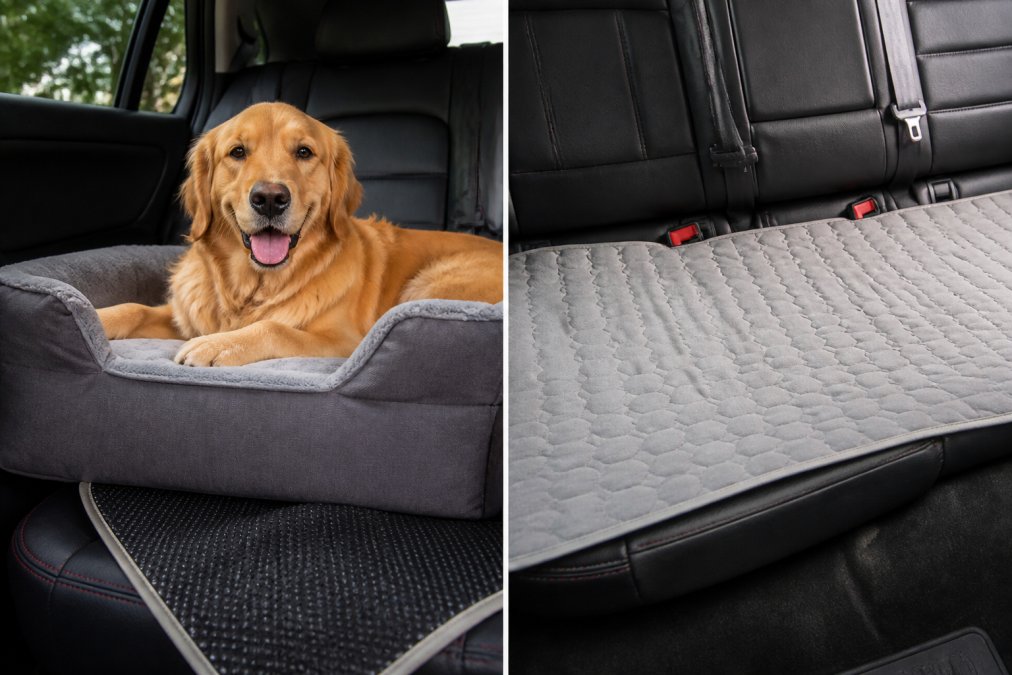
Travel beds excel when your dog travels loose in the backseat or cargo area. They provide cushioning, contain messes, and keep your dog from sliding during acceleration or hard braking. Crate mats work best inside a secured travel crate, offering a softer surface than bare plastic and fitting snugly within the crate's dimensions.
The choice also depends on your dog's temperament. Anxious dogs often feel more secure in a crate with padding underneath. Confident travelers who don't need containment benefit from the freedom a travel bed allows. Senior dogs with joint issues need the orthopedic support that quality travel beds provide, while younger, active dogs may do fine with basic padding.
| Feature | Travel Dog Bed | Crate Mat |
|---|---|---|
| Best for | Loose backseat travel, senior dogs | Crate-confined travel |
| Cushioning | High (orthopedic foam common) | Basic to moderate |
| Containment | Minimal | Full (via crate) |
| Waterproof | Usually yes | Often yes |
| Non-slip backing | Yes | No (sits inside crate) |
| Storage pockets | Sometimes | Rarely |
| Machine washable | Yes | Yes |
How to Secure a Dog Bed in the Car
Securing a travel dog bed properly prevents it from sliding during turns or emergency stops. The foundation is a non-slip backing that grips your vehicle's seat fabric without adhesive or permanent fasteners.
Start by clearing the backseat of debris and wiping it clean so the non-slip material makes full contact. Unroll your travel bed and position it where your dog will spend most time, then press down firmly across the entire surface for 10-15 seconds. The friction between the non-slip backing and the seat fabric creates the anchor.
For added security on longer trips, some owners use seat belt straps looped through attachment points on the bed's frame. This prevents the bed from shifting if you brake suddenly. The Proud Pet Shop RoadTrip Ride Guard includes built-in storage pockets and a non-slip car mat design that handles this without additional equipment, making it practical for owners who want simplicity.

Check the bed's position before each trip. Press down on the corners and edges to ensure they're still gripping the seat. If the bed shifts easily, reposition it and apply firmer pressure. On very hot days, the seat fabric can become slippery, so recheck your setup before long drives in summer.
Never rely on the bed alone for restraint. Combine it with a safety harness or crash-tested carrier if your dog needs containment. The bed keeps messes contained and provides comfort, but it doesn't prevent your dog from moving around the car during motion or an accident.
Washable Dog Travel Mats and Maintenance
Machine-washable covers are the standard for both travel beds and crate mats because dogs shed, have accidents, and track mud into vehicles. The ability to remove and wash the cover extends the life of your gear significantly.
Before washing, shake out loose hair and debris outdoors. For fresh accidents or spills, blot the area with paper towels rather than rubbing, which pushes moisture deeper into the foam. Most covers handle cold or warm water on a gentle cycle. Avoid bleach and fabric softeners, which can degrade waterproof coatings and reduce the non-slip backing's grip.
Air dry whenever possible. Machine drying can damage waterproof linings and cause shrinkage. Lay the cover flat or hang it in a shaded area. If you're in a hurry, a quick tumble on low heat followed by air drying works, but full air drying is gentler on the material.
The core foam or padding underneath the cover also needs attention. Spot clean stains with a damp cloth and mild soap. For deeper cleaning, use a wet vacuum or hose the bed down outdoors, then allow it to dry completely in sunlight before putting the cover back on. Sunlight naturally kills bacteria and odors without chemicals.
Proud Pet Shop RoadTrip Ride Guard →
Proudpetshop's CloudLift Bed features a breathable mesh design that resists moisture buildup, making it easier to maintain than traditional fabric beds. The waterproof surface wipes clean quickly, and the elevated design keeps the bed off damp ground during outdoor trips.

Store your bed in a cool, dry place between trips. Moisture trapped in storage breeds mold and odors. If your bed develops a musty smell, spray it lightly with white vinegar solution and let it air dry in direct sunlight for a few hours.
Dog Car Safety Standards and Crash Protection
Vehicle safety standards for pets are less formal than for humans, but crash-test data exists. Organizations like the Center for Pet Safety have tested pet carriers and restraint systems to measure how they perform in simulated crashes (CPS Certified). A travel bed alone does not provide crash protection because it doesn't restrain your dog.
During a sudden stop or collision, an unrestrained dog becomes a projectile. A 60-pound dog in a 30-mph collision experiences forces equivalent to falling from a three-story building. Travel beds cushion against bumps and reduce sliding during normal driving, but they don't prevent injury in crashes.
Crash-tested carriers and harnesses reduce injury risk significantly. If you're using a travel bed, pair it with a safety harness that connects to your vehicle's seat belt system. This combination gives you both comfort during normal travel and protection during emergencies.
While no federal standard mandates specific pet restraint systems, many states and insurance companies recognize that unrestrained pets increase accident risk and liability.
Choose a bed or mat with a sturdy frame if you plan to use a safety harness.
Comfort and Support: Orthopedic Foam vs Basic Padding
Waterproof linings matter as much as foam quality. A waterproof barrier prevents accidents and spills from soaking into the foam, which would destroy the cushioning and create odors. Quality travel beds have waterproof covers or linings that protect the core material from moisture.
Durability and Scratch Resistance for Active Dogs
Active dogs destroy standard bedding quickly. Sharp nails, teeth, and constant movement wear through fabric in weeks. Scratch-resistant and bite-proof materials extend the life of your travel gear from months to years.
Which Option Should You Choose?
Choose a travel dog bed if your dog travels loose in the backseat, doesn't need containment, and benefits from cushioning during long drives. Travel beds work best for confident dogs, senior dogs needing orthopedic support, and owners who prioritize comfort and upholstery protection.
Frequently Asked Questions
What is the best dog bed for car rides?
The best travel dog bed for car rides depends on your dog's size, age, and behavior. Orthopedic foam beds with raised sides provide superior support and reduce travel anxiety, while crate mats offer basic protection and easy cleaning. For senior dogs or those prone to car sickness, a cushioned travel bed with non-slip backing prevents sliding during acceleration and sudden stops. The Proud Pet Shop RoadTrip Ride Guard ($34.99) combines affordability with non-slip security for small to medium dogs, while the Calming Donut Bed ($39.99) helps anxious dogs settle during trips.
Can I use a crate mat as a dog bed for travel?
Crate mats can work for travel, but they have limitations. They provide basic cushioning and easy cleaning, but lack the pressure-relieving support of dedicated travel beds. Crate mats don't prevent sliding in the car during turns or stops, which can increase your dog's anxiety. They also offer minimal head and neck support compared to travel beds with bolster sides. For dogs with joint issues, anxiety, or those on long drives, a proper travel dog bed delivers better comfort and safety.
What are the safety benefits of using a travel dog bed in the car?
Travel dog beds with non-slip backing prevent your pet from sliding across seats during acceleration, braking, or sharp turns, reducing injury risk. Raised sides and bolster support keep your dog secure and reduce movement during sudden stops. A contained sleeping space also minimizes driver distraction. Waterproof and machine-washable covers protect your vehicle interior from accidents and mud, and the confined area helps anxious dogs feel more secure, reducing panic-related behaviors that could distract you while driving.
How do washable dog travel mats compare to fixed car seat covers?
Washable dog travel mats (like the Proud Pet Shop RoadTrip Ride Guard) offer flexibility, you can remove them for cleaning and reposition them as needed. Fixed car seat covers provide permanent protection but are harder to clean. Washable mats with machine-washable covers make post-trip cleanup quick, especially after muddy outdoor activities. The removable design also lets you use the mat in multiple vehicles or adjust placement for different dogs. For frequent travelers, washable mats balance convenience with durability.