
Table of Contents
- What to Buy Before Bringing Home a Rescue Cat: A Prioritized Checklist
- What to Put in a Cat Safe Room for Your New Arrival
- Choosing the Best Cat Carrier for Adoption
- Food, Water, and Litter: Getting the Basics Right
- Preparing Your Home for the First Night With a New Cat
- Understanding the 3-3-3 Rule for Rescue Cats
- Budgeting for Your New Rescue Cat
- Frequently Asked Questions
Last Updated: October 4, 2026
What to Buy Before Bringing Home a Rescue Cat: A Prioritized Checklist
Knowing what to buy before bringing home a rescue cat is exciting, but showing up unprepared creates stress for both you and your new companion. A scared or overwhelmed cat needs the right setup to feel safe.
You don't need everything at once. Some items are non-negotiable; others can wait a few weeks.
Tier 1: Must-Have Items (Before Day One)
Litter box and litter: Buy one basic litter box and one bag of unscented, clumping litter. You can experiment with preferences later.
Food and water bowls: Use separate, shallow bowls for food and water. Stainless steel or ceramic works best; plastic retains odors and bacteria.

Cat food: Ask the shelter what food your cat currently eats. Buy at least a week's worth of the same brand and flavor to avoid digestive upset.
Carrier: You need a secure carrier to transport your cat home safely. The Proud Pet Shop TrailFold Carrier works for most rescue cats. It features adjustable straps, breathable mesh panels, and a removable washable pad.

Collar and ID tag: Even indoor cats need a collar and ID tag. If your cat escapes during the first stressful days, an ID tag is your best chance of recovery.
Tier 2: Essential Items (First Week)
Cat bed: A comfortable bed gives your cat a designated resting spot. The Proud Pet Shop Cozy Cabin Den at $39.99 is ideal for rescue cats. The enclosed design creates a den-like space where scared cats feel secure. The removable, washable cover keeps it clean through accidents or shedding.

Water fountain: Cats often drink more from moving water. The Proud Pet Shop Stainless Steel Cat Fountain at $55.99 encourages hydration with its quiet pump and multi-stage filtration. The 2.2-liter capacity means fewer refills, and the stainless steel design resists bacterial growth.
Scratching post: Cats scratch to mark territory and shed old claw sheaths. A scratching post prevents furniture damage and gives your cat an outlet for natural behavior.
Basic toys: Simple toys like feather wands or small balls let your cat play and burn energy.
Tier 3: Nice-to-Have Items (Can Wait)
These improve your cat's life but aren't urgent. Buy them after your cat settles in.
Window perch: Cats love watching birds and outdoor activity. A window hammock or perch gives your cat entertainment and mental stimulation.
Calming aids: Some rescue cats benefit from calming beds or pheromone diffusers like the Proud Pet Shop Calming Donut Bed at $39.99, which features a raised rim that helps anxious cats feel secure.
Litter box furniture: Decorative litter boxes hide the box and contain odor. These are luxury items, not necessities.
What to Put in a Cat Safe Room for Your New Arrival
A safe room is your rescue cat's home base for the first 1-2 weeks. It requires hazard removal and strategic placement to prevent accidents, escapes, and poisoning.
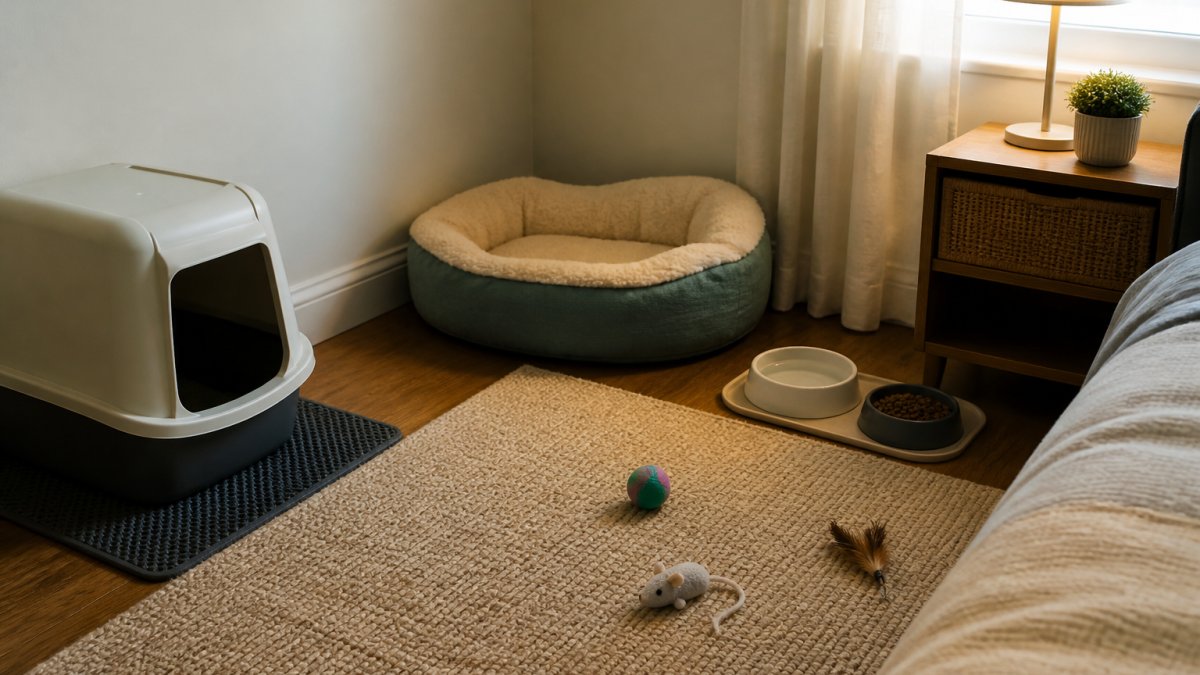
Essential items for the safe room:
- Litter box (placed away from food and water)
- Food bowl and water bowl (separate, on opposite side from litter)
- Cat bed or hiding spot (the Cozy Cabin Den works perfectly here)
- A few toys for mental stimulation
- Window access if possible (natural light helps)
- Scratching post or scratching pad
Critical hazards to remove or secure:
Toxic plants: Remove lilies, sago palms, azaleas, dieffenbachia, oleander, and philodendrons from the safe room, even small amounts can cause kidney failure or severe illness.
Electrical cords and outlets: Bundle cords behind furniture or use cord covers. Cover unused outlets with safety plugs.
Medications and supplements: Store all human medications, vitamins, and supplements in a closed cabinet or drawer. Acetaminophen, ibuprofen, and many prescription drugs are toxic to cats.
Cleaning products and chemicals: Move bleach, disinfectants, pesticides, drain cleaners, and laundry detergent pods to a locked cabinet or outside the safe room.
Small objects and choking hazards: Remove rubber bands, hair ties, string, yarn, needles, and small toys that could cause intestinal blockages.
Windows and screens: Inspect all window screens for tears or gaps. A frightened cat may bolt through a damaged screen. Keep windows closed or use secure window locks.
Doors and escape routes: Close closet doors, cabinet doors, and any space where a cat could hide or escape. Check for gaps under doors or behind furniture where a scared cat might wedge itself and become trapped.
Why placement matters:
Place the litter box away from food and water bowls, cats naturally eliminate away from where they eat. Position the water bowl separately from the food bowl on the opposite side of the room.
A scared rescue cat needs predictability and safety. Removing hazards prevents poisoning, choking, electrocution, and escape. Keep the room quiet and let your cat explore at their own pace.
Choosing the Best Cat Carrier for Adoption
The best cat carrier balances safety, comfort, and practicality.
What to look for:
- Ventilation on multiple sides (mesh panels, not just one opening)
- Removable, washable pads (for accidents or shedding)
- Secure latches that won't pop open
- Comfortable straps if you're carrying it by hand
- Size appropriate for your cat's weight and build
The Proud Pet Shop TrailFold Carrier checks all these boxes. It features breathable mesh on the sides and front, a removable washable pad, and a safety leash attachment inside to prevent escapes. The adjustable straps distribute weight evenly, making it comfortable to carry for longer distances.
Proud Pet Shop TrailFold Carrier →
Food, Water, and Litter: Getting the Basics Right
Getting food, water, and litter right prevents the most common problems that lead to adoption failure. Litter box issues are the #1 reason cats are returned to shelters.
Food transition: Ask the shelter what food your cat ate. Buy the same food to start. After 7-10 days, gradually mix in new food if you want to switch.
Water: Fresh water should be available at all times. Some cats prefer running water and drink more from fountains than bowls. Change water daily; stagnant water can harbor bacteria and algae.
Litter box placement: Place the litter box away from food and water in a quiet, low-traffic area with an escape route. If your home has multiple levels, place a litter box on each level.
Litter box size and type: Buy a box at least 1.5 times the length of your cat's body. Uncovered boxes are better than covered boxes, covered boxes trap odor and limit escape routes. Start with an uncovered, standard-sized box.
Litter type and quantity: Use unscented, clumping litter. Fill the box with 2-3 inches of litter. Scoop at least once daily. Start with one large bag and reorder after your cat settles.
Common litter problems and solutions:
If your cat avoids the litter box, try adding a second box in a different location, cleaning more frequently, trying a different litter texture, or ensuring the box is large enough and accessible. If avoidance persists after 2-3 weeks, consult your veterinarian to rule out medical issues.
Enzymatic cleaners for accidents: If your cat has accidents outside the box, clean the area with an enzymatic cleaner (not ammonia-based cleaners, which smell like urine and encourage re-soiling).
Preparing Your Home for the First Night With a New Cat
The first night sets the tone for your rescue cat's adjustment. Preparation matters more than you think.
Before your cat arrives:
- Set up the safe room completely (litter, food, water, bed, toys)
- Make sure all windows and doors are secure
- Remove toxic plants and chemicals
- Hide electrical cords or cover them
- Close off rooms you don't want your cat accessing
- Prepare a quiet space away from household activity
When your cat arrives:
- Let your cat out of the carrier in the safe room, not in a busy area
- Don't force interaction, let your cat explore at their own pace
- Sit quietly nearby if your cat is curious, but don't chase or grab
- Leave the litter box, food, and water accessible
- Keep the lights dim and noise low
During the first night:
- Don't expect your cat to eat or use the litter box immediately
- Some cats hide for hours or days, this is normal
- Check on your cat periodically, but give space
- Keep other pets and children away from the safe room
- Leave the door open so your cat can access everything
Your cat may not eat, drink, or use the litter box on day one. This is stress-related and normal. Most cats settle within 24-48 hours.
Understanding the 3-3-3 Rule for Rescue Cats
The 3-3-3 rule describes how rescue cats adjust over time. Understanding this timeline helps you have realistic expectations.
The 3-3-3 rule breaks down like this:
- First 3 days: Your cat is in shock. They may hide, not eat, or barely interact. They're adjusting to a completely new environment.
- First 3 weeks: Your cat starts exploring and testing boundaries. They're learning your routines and beginning to trust.
- First 3 months: Your cat's true personality emerges. They're bonded to you and comfortable in their new home.
This timeline varies by cat. Some settle faster. Others take longer, especially if they experienced trauma or spent years in shelters.
What this means for you: Don't judge your cat's personality based on the first week. A shy, hiding cat might become outgoing and playful after a few weeks. Give your rescue cat at least a month before deciding if the match is right.
Budgeting for Your New Rescue Cat
Understanding ongoing costs helps you prepare financially for cat ownership.
Initial setup costs (first month):
- Litter box and litter: $20-40
- Food and water bowls: $15-30
- Cat food (first month): $20-50
- Carrier: $35-100
- Cat bed: $30-60
- Toys and scratching post: $20-50
- Collar and ID tag: $10-20
- Veterinary exam and vaccines: $100-300
Total first month: $250-650 depending on your choices
Monthly ongoing costs:
- Cat food: $20-50
- Litter: $15-30
- Veterinary care (annual average): $15-30 per month
- Toys and replacements: $10-20
Total monthly: $60-130
Annual costs: $720-1,560
These are estimates. Premium foods, multiple cats, or health issues increase costs. Budget-conscious owners can reduce costs by buying litter in bulk and choosing basic toys.
Bringing home a rescue cat is rewarding, but preparation matters. Start with Tier 1 essentials before day one. Add Tier 2 items during the first week. Skip Tier 3 until your cat is settled and you understand their personality.
Our durable carriers, comfortable beds, and hydration systems are designed for real cats in real homes. With the right gear and realistic expectations, your rescue cat will adjust and thrive. Get started with Proud Pet Shop and find everything you need to welcome your new companion home with confidence.
Frequently Asked Questions
What is the 3-3-3 rule for rescue cats?
The 3-3-3 rule describes the adjustment timeline for adopted cats: 3 days to decompress in a safe room, 3 weeks to begin showing personality, and 3 months to fully settle in and trust their new home. This timeline helps rescue cat owners understand that behavioral changes are normal and patience during early weeks prevents stress-related problems. Not every cat follows this exactly, but it's a helpful framework for managing expectations during the transition.
What supplies do I need for a rescue cat's safe room?
A safe room needs a litter box, food and water bowls, a bed or hiding spot, toys, and scratching posts. The Proud Pet Shop Cozy Cabin Den provides a secure enclosed space that reduces anxiety, while the Stainless Steel Cat Fountain encourages hydration. Include vertical perches so your cat can observe from above, and keep the room quiet and away from household traffic. These items create the foundation for a frightened cat to decompress before exploring the rest of your home.
How long does it take a rescue cat to adjust to a new home?
Most rescue cats need 3 to 8 weeks to fully adjust, though some take longer depending on their background and temperament. Shy or frightened cats may hide for the first 1-2 weeks, which is normal behavior. By week 3-4, many cats begin exploring and showing personality. Avoid rushing introductions to other pets or unfamiliar people during this period. Patience and a consistent routine help your adopted cat feel safe and accelerate the bonding process.
Should I buy the same food my rescue cat was eating at the shelter?
Yes, start with the same food the shelter provided to avoid digestive upset. If you want to switch brands later, do so gradually over 7-10 days by mixing increasing amounts of new food with the old. Ask the shelter or rescue organization what food, brand, and feeding schedule they used. Sudden diet changes can cause vomiting or diarrhea, which adds stress during an already sensitive adjustment period for your new cat.