
Table of Contents
- Winter Safety Tips for Outdoor Cats: A Complete Guide
- How Cold Is Too Cold for Cats
- How to Keep Outdoor Cats Warm in Winter
- Straw vs Blankets for Outdoor Cat Shelter
- How to Keep Cat Water from Freezing Outside
- Increase Food Intake and Monitor Nutrition
- Protect Outdoor Cats from Winter Hazards
- Track Your Outdoor Cat's Location and Safety
- Frequently Asked Questions
Last Updated: October 10, 2026
Winter Safety Tips for Outdoor Cats: A Complete Guide
Outdoor cats face serious risks when temperatures drop. Winter safety tips for outdoor cats aren't optional, they're essential to keeping your pet healthy and alive during the harshest months. The difference between a prepared cat and an unprepared one often comes down to a few critical supplies and habits.
Hypothermia, frostbite, dehydration, and malnutrition compound when temperatures plummet and food sources disappear. Cats aren't equipped to survive a harsh winter without human intervention.
How Cold Is Too Cold for Cats
Most outdoor cats can tolerate temperatures down to around 45°F with minimal risk. Below 45°F requires active protection; below 20°F, outdoor cats face genuine survival threats without proper shelter and resources.
The critical threshold depends on your cat's age, health, and coat. Senior cats, kittens, and those with thin fur or health issues (arthritis, kidney disease) deteriorate faster in the cold. Bring vulnerable cats inside when temperatures dip below 45°F.
Wind chill matters as much as actual temperature. A 30°F day with strong wind is far more dangerous than a calm 20°F day. When conditions turn severe, bring your cat indoors temporarily.
How to Keep Outdoor Cats Warm in Winter
Keeping outdoor cats warm requires a two-part approach: insulated shelter and layered bedding. Without both, even the most resilient cat will struggle.

Provide Insulated Shelter
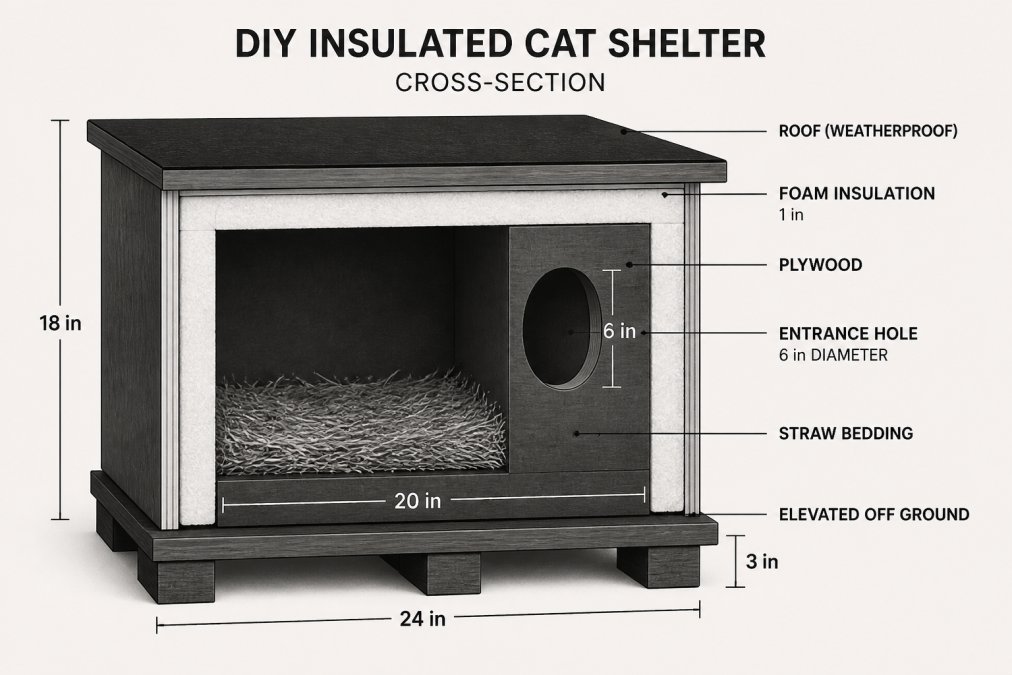
An insulated shelter is non-negotiable. A cardboard box collapses when wet and offers minimal thermal protection. You need an enclosed structure that blocks wind and traps body heat.
The best shelters have small entrance holes (about 4-5 inches in diameter) to allow cats in while blocking predators. Place the shelter against a wall or fence to reduce wind exposure, and elevate it 2-4 inches off the ground to prevent moisture seepage and rot.
A DIY shelter costs less than commercial options: line a plastic storage bin (18-24 inches wide) with 2-3 inches of rigid foam insulation, cut an entrance hole, and you've created effective shelter for under $30.
Safety and sizing checks:
- Measure your cat before building; the shelter should allow them to stretch slightly but not sprawl.
- Inspect the entrance hole monthly for ice or debris blockage.
- Check for cracks or damage to insulation weekly.
- Ensure the shelter is stable and won't tip in wind.
- Verify commercial shelters have weatherproof seams and drainage holes.
Layer Bedding for Maximum Warmth
Bedding inside the shelter matters enormously. Layer multiple materials to create insulation from below and above.
Start with 4-6 inches of straw (hollow and insulating better than hay) on the shelter floor, fluffed to maximize air pockets. Add blankets or towels on top to trap warmth. Optional: add a waterproof outdoor heated pad (40-50 watts) under the straw layer to prevent overheating or burns.
Bedding maintenance and safety:
- Change bedding weekly or immediately when damp; wet bedding loses insulation and accelerates heat loss.
- Keep extra bedding on hand for quick swaps.
- Discard bedding with mold or mildew odor.
- Ensure blankets have no loose threads or holes.
- For heated pads, verify cord protection and automatic shutoff; test before winter.
Straw vs Blankets for Outdoor Cat Shelter
Straw is superior for the shelter floor because its hollow air pockets create insulation. Blankets compress under a cat's weight but excel as top layers.
| Material | Best Use | Insulation Value | Durability | Maintenance |
|---|---|---|---|---|
| Straw | Floor base layer | Excellent | Good (needs weekly change) | Replace when wet or soiled |
| Blankets | Top layers | Good | Fair (can tear) | Wash weekly, replace if damaged |
| Hay | Not recommended | Poor (absorbs moisture) | Fair | Molds quickly when wet |
| Newspaper | Filler only | Minimal | Poor | Replace frequently |
Never use hay alone, it absorbs moisture. The winning combination is straw underneath with blankets on top for maximum warmth.
How to Keep Cat Water from Freezing Outside
Water freezes solid below 32°F, and dehydration in winter is as dangerous as hypothermia. Cats need constant access to fresh water.
A heated water bowl designed for outdoor use (plug-in or battery-powered) costs $20-40 and eliminates daily ice-breaking.

If heated bowls aren't practical, place water bowls in a sheltered location away from wind and insulate them with straw or blankets. Change water multiple times daily; fresh water is better than stale ice.
Position water bowls near the shelter entrance so your cat doesn't venture far in extreme cold.
Increase Food Intake and Monitor Nutrition
Outdoor cats burn significantly more calories in winter to maintain body heat, a cat needing 200 calories in summer may need 300-400 in winter. Without increased food, your cat will lose weight rapidly and become vulnerable to illness.
Feed your outdoor cat three to four smaller meals daily during winter to keep metabolism active and ensure fuel for body heat generation.
Switch to higher-calorie foods if possible. Wet food contains more calories per serving and digests more efficiently; if impractical, choose premium dry food with higher fat content.
Proud Pet Shop Smart Finder Tag →
Monitor your cat's weight weekly. You should feel their ribs with light pressure but not see them protruding. If your cat loses weight despite increased feeding, consult a veterinarian.
Protect Outdoor Cats from Winter Hazards
Antifreeze poisoning is a major threat. Antifreeze tastes sweet but even a small amount is lethal. Clean up spills immediately and store antifreeze securely. Seek emergency veterinary care if ingestion is suspected.
Frostbite affects ears, paws, and tail tips first. Check these areas regularly for discoloration, swelling, or blistering. Frostbite damage is permanent, so prevention is critical. Cats with white or thin-furred ears are at higher risk.
Hypothermia develops when core body temperature drops dangerously low. Signs include shivering, lethargy, confusion, and unresponsiveness. If you notice these symptoms, bring your cat inside immediately and warm them gradually with blankets. Rapid rewarming can cause shock.
Dehydration sneaks up in winter because cats are less motivated to drink cold water. Encourage drinking by providing warm water and keeping bowls unfrozen.
Track Your Outdoor Cat's Location and Safety
Even with perfect shelter and food, outdoor cats face unpredictable dangers. A cat might wander farther than usual, get trapped somewhere, be hit by a car, or disappear entirely. Real-time location awareness and solid identification provide peace of mind and can be lifesaving.
Identification: The First Line of Defense
Multiple forms of identification increase the odds that a lost or injured cat will be returned to you.
Collar and ID tag: Your cat should wear a breakaway collar (designed to release if snagged on a branch or fence) with a current ID tag. The tag should include your name, phone number, and address.
Microchip: A microchip is a permanent form of identification implanted under the skin (usually between the shoulder blades). If your cat is found and taken to a shelter or veterinary clinic, staff will scan for a microchip.
Photo documentation: Keep recent, clear photos of your cat showing distinctive markings, scars, or features. If your cat goes missing, you'll need these for lost-pet posters and social media alerts. Include a full-body shot and close-ups of the face and any unique markings.
Monitoring and Location Tracking
GPS and Bluetooth tracking devices clip onto your cat's collar and provide real-time or periodic location updates via a smartphone app.

GPS trackers use cellular networks or satellite signals to pinpoint your cat's location within a few feet. They require a monthly subscription (typically $10-20) and have battery life of 3-7 days depending on the model. GPS trackers are accurate but heavier and more expensive than Bluetooth alternatives.
Bluetooth trackers (such as AirTag or Tile) use your phone's Bluetooth range (typically 30-100 feet) to locate your cat. They're lightweight, inexpensive ($25-40 one-time cost), and have longer battery life (3-12 months).
Choose a tracker based on your cat's roaming habits and your budget. For a cat that stays close to home, a Bluetooth tracker and solid ID tag are sufficient.
Establish a Winter Monitoring Routine
Create a consistent schedule to check on your outdoor cat's safety and well-being:
- Daily: Verify that shelter is accessible and dry, food and water are available and unfrozen, and your cat is present and responsive. Note any changes in behavior, appetite, or physical condition.
- Weekly: Inspect shelter integrity (no cracks, gaps, or damage), refresh bedding, check your cat's body for signs of frostbite or injury (especially ears, paws, and tail), verify that any tracking device is functioning and securely attached, and confirm that collar and ID tag are in place and readable.
- After severe weather: Check immediately for shelter damage, ice blockage at the entrance, or signs that your cat is in distress. Be prepared to bring your cat indoors temporarily if conditions are extreme.
Emergency Preparedness: What to Do If Your Cat Goes Missing
If your outdoor cat doesn't return or goes missing during winter:
- Search immediately and systematically. Check hiding spots near your home (under decks, in bushes, garages, sheds). Cats often hide nearby rather than roaming far when injured or frightened.
- Contact local shelters and veterinary clinics within a 5-mile radius. Provide your cat's description, microchip number, and photo. Ask them to check for your cat daily and call you if they arrive.
- Post on social media and lost-pet websites. Use platforms like Nextdoor, Facebook lost-pet groups, and PawBoost. Include clear photos, your cat's name, the date and location they went missing, and your contact information.
- Post physical flyers in your neighborhood, at local businesses, and on community bulletin boards. Include a photo, description, and your phone number.
- Check with neighbors directly. Ask them to look in garages, sheds, and basements where a cat might seek shelter.
- If your cat is microchipped, contact the registry to confirm your information is current and alert them that your cat is missing. Some registries have lost-pet notification services.
Winter makes lost cats harder to find because they're less visible and may shelter in places you wouldn't normally search. Start your search immediately, the first 24 hours are critical.
Frequently Asked Questions
How cold is too cold for outdoor cats?
Outdoor cats can tolerate cold better than indoor cats, but temperatures below 45°F (7°C) begin to pose risks. Once temperatures drop below 32°F (0°C), frostbite and hypothermia become serious threats. Cats with thin coats, senior cats, or very young kittens are at higher risk in freezing conditions. Provide heated shelters and monitor your cat closely during extreme cold. If temperatures consistently fall below freezing, consider bringing your cat indoors temporarily.
What is the best material for outdoor cat shelter in winter: straw or blankets?
Straw is superior to blankets for outdoor cat shelters because it provides better insulation and won't retain moisture like blankets do. Wet blankets lose their insulating properties and can actually make cats colder. Use straw as the primary bedding material, replacing it regularly to keep it dry. Avoid hay, which can mold and cause respiratory issues. Line the shelter with straw at least 3-4 inches deep for optimal warmth.
How can I keep my outdoor cat's water from freezing?
Use heated water bowls designed for outdoor use, or place regular bowls inside an insulated box with a heat source. Stainless steel bowls like the Proud Pet Shop Stainless Steel Cat Fountain ($55.99) can help provide a constant supply of clean water. Check water multiple times daily and replace it if it begins to freeze. Adding a small aquarium heater to a large bowl (supervised carefully) or using heated pet fountains keeps water liquid and encourages drinking during cold months.
Do outdoor cats need more food in winter?
Yes, outdoor cats burn significantly more calories maintaining body heat in winter, so increase food portions by 25-50% during cold months. Provide high-calorie, protein-rich food that supports energy production. Feed at consistent times, preferably in the morning and evening. Wet food provides additional hydration and calories compared to dry kibble. Monitor your cat's weight and adjust portions if they appear too thin or gain excess weight.
How do I protect outdoor cats from antifreeze and other winter hazards?
Antifreeze is toxic to cats and tastes sweet, making it attractive. Store antifreeze safely away from outdoor areas where cats roam. Use pet-safe alternatives when possible. Keep cats away from salt and ice melt products, which irritate paws and can cause poisoning if ingested. Provide regular paw checks and wash paws with warm water after outdoor time. Install a GPS tracker like the Proud Pet Shop Smart Finder Tag ($34.99) to monitor your cat's location and respond quickly if they venture into dangerous areas.