
Table of Contents
- Why Anxious Cats Struggle With Travel
- Getting a Cat Used to a Carrier: The Foundation
- What to Put in a Cat Carrier for Travel
- How to Calm a Cat in the Car
- How Long Can a Cat Travel in a Carrier: Safe Duration Guidelines
- Pre-Travel Health Checks and Medication Protocols
- Post-Arrival Decompression: Helping Your Cat Settle
- Frequently Asked Questions
Last Updated: October 19, 2026
Why Anxious Cats Struggle With Travel
Travel is stressful for cats, and anxious cats travel with heightened anxiety levels. Unlike dogs, cats don't naturally adapt to new environments or moving vehicles. They rely on familiar scents, sounds, and spaces to feel safe.
Feline anxiety during travel stems from loss of control. Cats can't predict what happens next. The car engine roars. The carrier sways. Strange smells flood in.
When anxious cats travel with proper preparation, it isn't just about making the trip easier, it's about preventing behavioral problems that can emerge weeks later.
The good news: you can reduce this stress significantly. The key is preparation, not medication. Most cat owners skip the groundwork and wonder why their cats panic. They throw the cat in a carrier and hit the road.
This guide walks you through a proven approach. We'll show you how to desensitize your cat to the carrier, what to pack, how to manage the car ride itself, and, critically, how to help your cat decompress once you arrive.
Getting a Cat Used to a Carrier: The Foundation
Carrier desensitization is the single most important step. Without it, every trip becomes a battle. With it, your cat may actually walk into the carrier willingly.
The process takes two weeks minimum. Don't skip this. Cats need time to associate the carrier with safety, not fear. Start indoors. Leave the carrier door open. Let your cat explore it at their own pace.
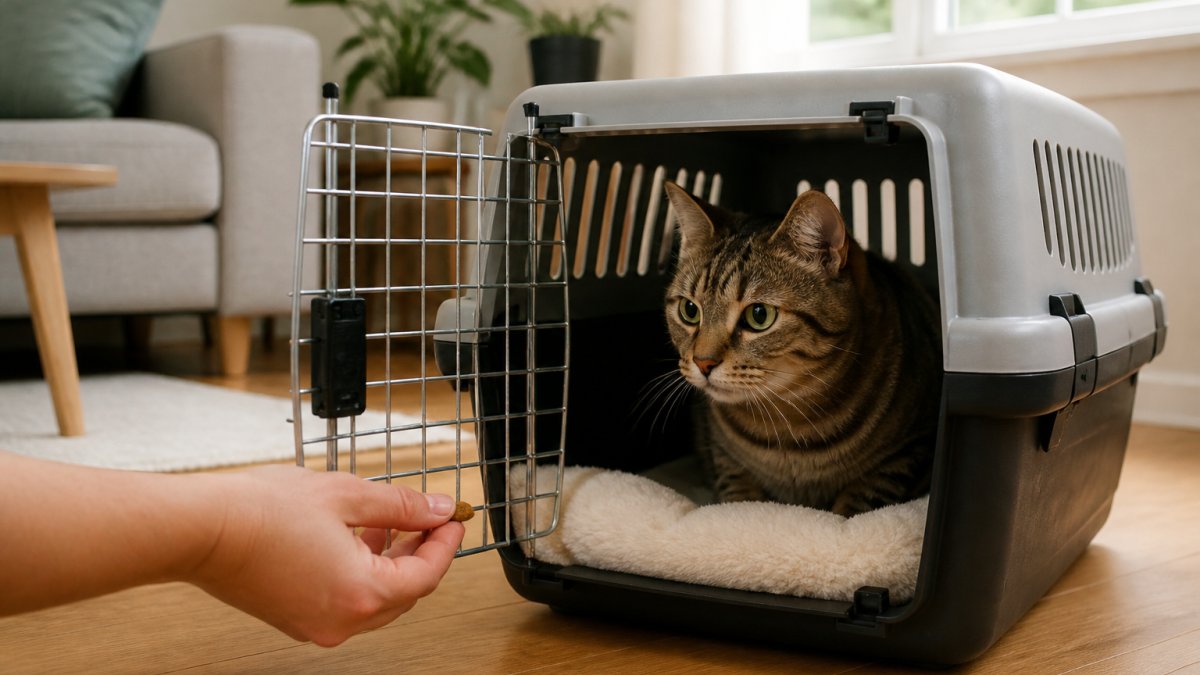
Week 1: Carrier Desensitization Indoors
Day 1-2: Place the carrier in a room where your cat spends time. Leave the door open. Don't force anything. Toss treats inside. Let curiosity do the work.
Day 3-4: Feed your cat near the carrier. Gradually move the food bowl closer to the entrance, then inside. Many cats will enter the carrier on their own if food is involved.
Day 5-7: Close the door for short periods, just 30 seconds at first, while your cat is inside eating or playing. Open it immediately. No stress. Repeat daily, adding 10-15 seconds each day.
By the end of week one, your cat should enter the carrier without resistance and stay inside for 1-2 minutes with the door closed.
Week 2: Short Practice Trips
Day 8-10: Close the carrier door while your cat is inside. Pick it up and carry it around your home for 30 seconds. Set it down. Open the door. Reward with treats or play.
Day 11-13: Put your cat in the carrier. Walk to your car. Open the car door. Let your cat see the vehicle. Don't start the engine yet. Return inside.
Day 14: Start the engine while your cat is in the carrier (still parked in your driveway). Keep it running for 30 seconds. Turn it off. Reward.
Optional, Day 15: Take a 2-minute drive around your block. Short, predictable, positive.
This gradual approach prevents the shock that causes travel-related stress in cats. Your cat learns: carrier = safe. Car = not scary. Movement = temporary.
What to Put in a Cat Carrier for Travel
The contents of the carrier matter as much as the carrier itself. Everything inside should reduce anxiety and provide comfort.
Familiar bedding is essential. Use a blanket or bed your cat already sleeps on. It carries their own scent, which is calming.
Water and food: For trips under 4 hours, skip the water bowl inside the carrier (it spills). Offer water before you leave and immediately upon arrival.
Pack a small amount of their regular food. Stress can upset digestion, so keep portions light. Many cats won't eat during travel, and that's normal. Don't force it.
Pheromone products help significantly. Feliway or similar feline pheromone sprays create a calming effect. Spray the bedding 15 minutes before travel.
Toys and enrichment: Include a small toy or puzzle toy to provide distraction. Avoid toys with small parts that could become hazards if the carrier shifts.
Waste management: Bring a portable litter box or disposable litter pads. For multi-hour trips, offer a litter box at rest stops.
Medications: If your vet prescribed calming supplements or anti-anxiety medication, keep them easily accessible in a labeled container.
The Proud Pet Shop TrailFold Carrier ($34.99) includes a removable, washable pad at the base, this is ideal because you can pre-treat it with pheromone spray and replace it if accidents happen.

How to Calm a Cat in the Car
The car environment is chaotic for cats. Noise, vibration, movement, and unfamiliar smells trigger stress responses.
Before you leave: Keep the car quiet. No loud music. No sudden acceleration. Drive smoothly. Avoid slamming doors or making startling noises.
Temperature control: Cats overheat easily. Keep the car cool. Never leave your cat in a parked car, even with windows cracked.
Reduce visual stimuli: Drape a light blanket over part of the carrier. This creates a den-like space and blocks overwhelming visual changes.
Avoid handling: Don't try to comfort your cat during the drive. Reaching into the carrier or talking constantly can increase anxiety.
Play calming music: Some cats respond to soft, classical music or cat-specific calming music.
Use scent: A small item with your own scent (a worn shirt or pillowcase) can be calming. It signals safety and familiarity.
Consider supplements: Talk to your vet about calming supplements like L-theanine or tryptophan-based products. These are gentler than sedation and don't require a prescription.
Rest stops: For trips over 3 hours, stop every 2 hours. Open the carrier in a safe, enclosed space (never outside).
| Action | Timing | Purpose |
|---|---|---|
| Pheromone spray on bedding | 15 minutes before | Reduces stress response |
| Calming supplement | 30-60 minutes before | Promotes relaxation |
| Light blanket over carrier | At departure | Creates safe den space |
| Rest stop | Every 2-3 hours | Bathroom break, hydration |
| Quiet music | During entire drive | Masks car noise |
How Long Can a Cat Travel in a Carrier: Safe Duration Guidelines
Most healthy adult cats can travel safely in a carrier for 4-6 hours without major stress. Beyond 6 hours, the risk of dehydration, bathroom accidents, and behavioral problems increases significantly.
Under 2 hours: Low risk. Most cats tolerate this easily with basic preparation.
Proud Pet Shop TrailFold Carrier →
2-4 hours: Moderate risk. Offer water at the halfway point if possible. Watch for signs of distress (excessive vocalization, panting, drooling).
4-6 hours: Higher risk. Plan a rest stop. Your cat needs bathroom access and hydration. Some cats show signs of behavioral regression after 6+ hours, they may refuse food or become withdrawn for days.
Over 6 hours: Consider breaking the trip into two days. A hotel stop reduces stress and allows your cat to decompress partially. This is especially important for senior cats or those with health conditions.
Kittens and senior cats: Reduce travel duration by 25-50%. Young kittens (under 12 weeks) shouldn't travel more than 1-2 hours.
Signs your cat is in distress:
- Excessive meowing or yowling
- Panting or rapid breathing
- Drooling or foaming at the mouth
- Refusal to move or extreme lethargy
- Vomiting or diarrhea
If you see these signs, stop immediately. Find a safe, quiet space. Let your cat rest. If symptoms persist, contact a vet.
Pre-Travel Health Checks and Medication Protocols
Before any trip, schedule a vet visit. Your cat should be healthy enough to travel. Some conditions, heart disease, respiratory issues, or untreated pain, make travel dangerous.
What your vet should check:
- Heart and lung function
- Signs of infection or illness
- Current medication needs
- Age-related health concerns
- Stress tolerance based on medical history
Medications to discuss: If your cat has a history of severe feline anxiety, ask about anti-anxiety options. Trazodone and gabapentin are common choices.
Calming supplements like L-theanine or tryptophan are available over-the-counter, but discuss them with your vet first. Some interact with other medications.
Microchip and ID: Before traveling, ensure your cat is microchipped and wearing an ID collar with current contact information. If your cat escapes during travel, this is your safety net.
Health certificate: If crossing state lines or flying, you may need a health certificate signed by your vet within 10 days of travel. Check your destination's requirements.
Medications during travel: Keep all medications in their original containers, labeled clearly. Store them at the correct temperature. Never leave medications in a hot car.
Emergency vet contacts: Before you leave, research emergency veterinary clinics at your destination. Have their phone numbers saved. Know where the nearest 24-hour vet is located.
Post-Arrival Decompression: Helping Your Cat Settle
This is where most guides stop, and where most cat owners fail. The travel itself is only half the battle.
The first 2 hours:
Don't immediately release your cat into the new space. This causes sensory overload.
Place the carrier in this room and open the door. Let your cat exit at their own pace. Some cats emerge immediately.
Hours 2-24:
Keep your cat confined to the decompression room.
Offer food and water, but don't be alarmed if your cat doesn't eat. Many cats skip meals for 12-24 hours after travel.
Days 2-7:
Gradually expand your cat's access to the new space. Open doors to adjacent rooms one at a time.
Continue using pheromone diffusers in the new space. Feliway plug-ins or sprays help environmental enrichment by creating a familiar scent profile.
Signs of successful decompression:
- Eating and drinking normally
- Using the litter box consistently
- Grooming themselves
- Seeking interaction with you
- Sleeping in normal patterns
Signs of prolonged stress:
- Refusing food for more than 24 hours
- Not using the litter box
- Excessive hiding (beyond 48 hours)
- Aggression or hissing when approached
- Excessive vocalization
If stress persists beyond 3-4 days, contact your vet. Some cats benefit from short-term anti-anxiety medication to help them transition.
Creating a safe space in the new environment:
Cats need a place they can retreat to feel secure. Set up a quiet corner with:
- A covered bed or den (the Proud Pet Shop Cozy Cabin Den at $39.99 works perfectly for this)
- Familiar bedding from home
- A water bowl slightly away from the litter area
- Toys and enrichment items
This safe space allows your cat to decompress on their own schedule. Don't force interaction. Let them come to you when they're ready.
Travel doesn't have to mean stress for your anxious cat.
At Proudpetshop, we've built our carrier and comfort products specifically for this journey. The Calming Donut Bed ($39.99) and Cozy Cabin Den ($39.99) create the safe spaces your cat needs before and after travel.

Frequently Asked Questions
How long does it take to get a cat used to a carrier?
Most cats respond to carrier desensitization within 2-4 weeks of consistent, gentle exposure. Start by leaving the carrier open in your home with treats and familiar bedding inside. Gradually increase time spent inside, then practice short trips around the house before attempting car travel. Every cat's timeline differs based on temperament and past experiences, so patience is essential. Some anxious cats may need 6-8 weeks of preparation before longer journeys.
What should I put in a cat carrier for travel?
Include familiar bedding or a blanket with your cat's scent, a small water bowl, and absorbent pads in case of accidents. Add a favorite toy or treat to create positive associations. Avoid overstuffing the carrier, your cat needs room to stand and turn. Consider placing a removable pad like the one in the Proud Pet Shop TrailFold Carrier ($34.99) for easy cleanup. Keep the carrier well-ventilated and ensure your cat can see out slightly to reduce sensory overload during travel.
Can I give my cat medication to calm travel anxiety?
Only a veterinarian should prescribe anxiety medication for travel. Common options include mild sedatives or anti-anxiety medications given 30-60 minutes before departure. Never use over-the-counter human medications or supplements without veterinary approval. Schedule a pre-travel consultation at least two weeks before your trip so your vet can assess your cat's anxiety level and recommend appropriate protocols. Some cats respond well to pheromone therapy or calming supplements.
How can I reduce my anxious cat's stress during a car trip?
Keep the car environment calm by maintaining a moderate temperature, avoiding loud music, and minimizing sudden movements or stops. Cover part of the carrier with a light blanket to create a den-like space that reduces visual stimuli and sensory overload. Take breaks every 2-3 hours on longer trips to let your cat rest. Use pheromone diffusers designed for feline anxiety, and speak in a soft, reassuring voice. The Proud Pet Shop Calming Donut Bed ($39.99) can be placed inside larger carriers to provide comfort and security during transport.