
Table of Contents
- Recognizing Motion Sickness Signs in Cats
- Why Cats Get Motion Sickness: The Inner Ear and Travel Anxiety
- Carrier Training for Car Rides: A Gradual Desensitization Plan
- Feeding Your Cat Before a Car Ride: Timing and Best Practices
- Cat Motion Sickness Medication: When to Talk to Your Veterinarian
- How Long Can a Cat Travel in a Car: Distance and Duration Guidelines
- Travel Day Checklist and Post-Trip Care
- Frequently Asked Questions
Last Updated: October 17, 2026
Recognizing Motion Sickness Signs in Cats
Preventing cat motion sickness during travel starts with knowing what to look for. Common signs include drooling, lip licking, restlessness, vocalization, and nausea. Some cats vomit during or shortly after car rides, while others show subtle stress behaviors like excessive meowing or attempts to hide.
Early recognition matters because it helps you intervene before a trip becomes stressful for your pet. Watch for these specific indicators:
- Excessive drooling or lip licking
- Panting or rapid breathing
- Restlessness or inability to settle
- Meowing or crying more than usual
- Vomiting or retching
- Dilated pupils or wide eyes
- Attempts to escape or hide
Not every cat shows motion sickness the same way. Some cats display obvious physical symptoms like vomiting, while others become anxious and vocal. A few remain quiet but visibly tense.
The vestibular system in your cat's inner ear controls balance and spatial awareness. When a car moves, this system sends signals to the brain that can trigger nausea and disorientation, similar to how humans experience motion sickness. Understanding this connection helps explain why some cats struggle more than others during travel.
Why Cats Get Motion Sickness: The Inner Ear and Travel Anxiety
Motion sickness in cats stems from two main sources: physical vestibular sensitivity and psychological travel anxiety. Both contribute to preventing cat motion sickness during travel being challenging without a strategic approach.
The inner ear contains fluid-filled canals that detect movement and position (pubmed.ncbi.nlm.nih.gov). When a car accelerates, decelerates, or turns, this fluid shifts, sending conflicting signals to the brain. Young kittens and some adult cats have more sensitive vestibular systems, making them prone to nausea.
Travel anxiety compounds the physical response. A cat confined in an unfamiliar space, hearing engine noise, and feeling motion creates a stressful environment. This anxiety triggers a stress response that worsens nausea and can lead to vomiting or behavioral issues.
Environmental factors amplify both issues:
- Sudden acceleration or hard braking increases vestibular stimulation
- Poor ventilation raises stress levels and body temperature
- Loud noises from traffic or engine stress the nervous system
- Unfamiliar or unsafe carriers increase psychological anxiety
- Long trips without breaks compound cumulative stress
The good news is that travel anxiety responds well to gradual desensitization, while vestibular sensitivity can be managed through medication and environmental control. Combining both approaches gives most cats the best chance of comfortable travel.
Carrier Training for Car Rides: A Gradual Desensitization Plan
Preventing cat motion sickness during travel requires starting with carrier training weeks before any actual trip.
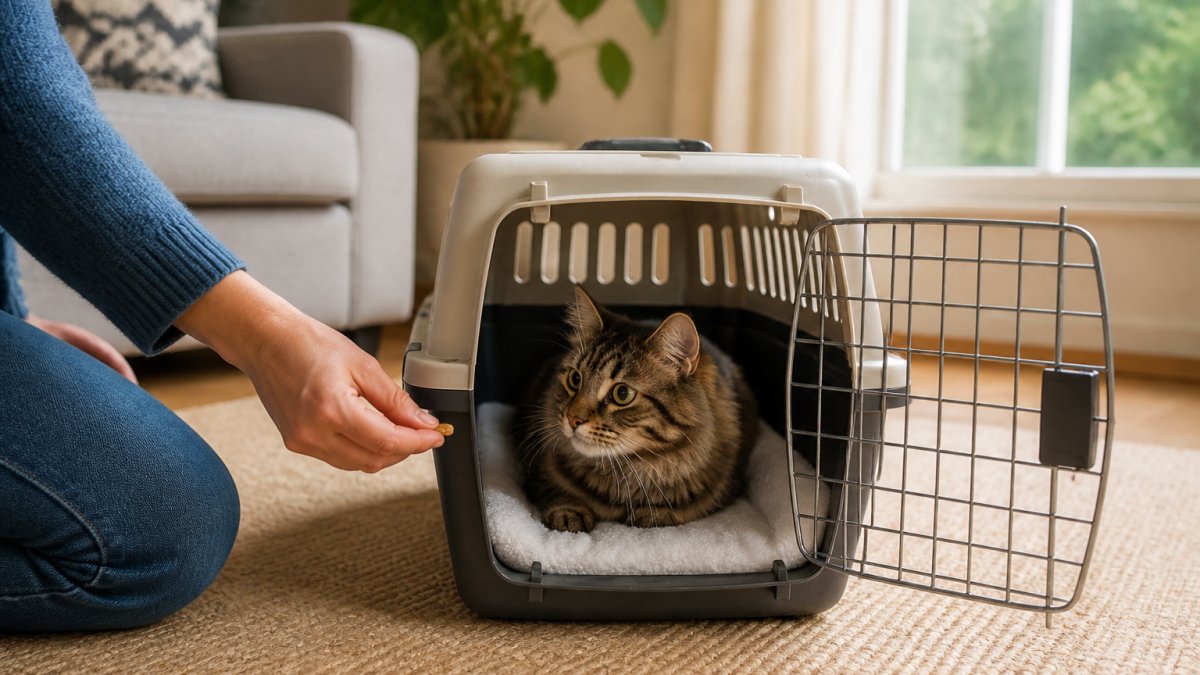
Begin by leaving the carrier open in your home for several days. Place familiar bedding and a favorite toy inside to create positive associations. Let your cat explore at their own pace without forcing entry.
Once your cat enters the carrier willingly, begin closing the door for short periods while you're home. Start with 30 seconds, then gradually increase to 2-3 minutes. Reward calm behavior with treats and praise.
A practical desensitization timeline looks like this:
| Week | Goal | Duration | Action |
|---|---|---|---|
| 1 | Carrier familiarity | Daily | Leave open, place treats inside |
| 2 | Door closure comfort | 30-180 seconds | Close door while home, reward calm behavior |
| 3 | Stationary car time | 5-10 minutes | Sit in parked car with carrier |
| 4 | Short practice drives | 5-15 minutes | Drive around the block, return home |
| 5 | Gradual distance increase | 15-30 minutes | Extend route, maintain calm environment |
After carrier comfort is established, move the carrier to your car while parked. Sit with your cat for 5-10 minutes without starting the engine. Repeat this several times before starting the engine.
The Proud Pet Shop TrailFold Carrier offers excellent ventilation and a removable pad that makes carrier training easier.

Each step should take at least 3-5 days before progressing. Never rush this process. Cats that feel pressured often develop stronger anxiety, making future travel more difficult.
Feeding Your Cat Before a Car Ride: Timing and Best Practices
Feeding timing directly impacts preventing cat motion sickness during travel. An empty stomach reduces nausea risk, but you must balance this against your cat's nutritional needs and comfort.
The standard recommendation is to withhold food for 4-6 hours before travel. This allows the digestive system to process previous meals, reducing the likelihood of vomiting. However, the exact timing depends on your cat's individual sensitivity and trip length.
For short trips under 2 hours, withholding food for 4 hours works well. For longer journeys, consult your veterinarian about appropriate fasting periods. Some cats need only 2-3 hours without food, while sensitive cats benefit from 6-8 hours.
Water management requires different consideration. Provide water until 1-2 hours before departure, then withhold it during the trip. A dehydrated cat is uncomfortable, but a full bladder creates urgency and stress.
Practical feeding guidelines for travel days:
- Feed a light, easily digestible meal 8-10 hours before departure
- Withhold food for 4-6 hours immediately before travel
- Offer water until 1-2 hours before the trip
- Bring portable water bowls for rest stops on long journeys
- Avoid new foods or treats on travel days
- Skip treats immediately before and during the trip
Never introduce new food on a travel day. Unfamiliar food increases digestive upset and nausea. Stick with your cat's regular diet and only familiar treats.
Cat Motion Sickness Medication: When to Talk to Your Veterinarian
Some cats need medication to manage motion sickness, especially those with severe vestibular sensitivity or high travel anxiety. Your veterinarian can recommend options based on your cat's individual health and the trip duration.
Proud Pet Shop TrailFold Carrier →
Common medication types include antihistamines and anti-nausea drugs. Meclizine and diphenhydramine are antihistamines that reduce inner-ear sensitivity and nausea (pubmed.ncbi.nlm.nih.gov). These typically work best when given 30-60 minutes before travel.
Sedation is another option for extremely anxious cats, but it's not a first-line approach. Sedatives mask anxiety rather than addressing the underlying motion sickness, and they carry risks for older cats or those with certain health conditions.
Important medication considerations:
- Dosing must be individualized by your veterinarian based on your cat's weight and health
- Some medications cause drowsiness; others don't
- Medication timing matters, give it early enough before travel to take effect
- Not all cats respond equally to the same medication
- Side effects vary by individual cat and medication type
- Your cat's age, weight, and existing health conditions affect medication safety
Start any new medication on a short practice trip before a long journey. This allows you to observe your cat's response and adjust timing if needed.
Never give medication without veterinary guidance. Your vet can assess whether medication is necessary, recommend the safest option for your cat, and provide proper dosing instructions.
How Long Can a Cat Travel in a Car: Distance and Duration Guidelines
Understanding safe travel duration helps prevent excessive stress and motion sickness. Most cats tolerate short trips of 30 minutes to 1 hour reasonably well. Longer trips require breaks and additional management.
For trips under 2 hours, most healthy adult cats manage with proper preparation. Breaks become important for trips lasting 2-4 hours.
Trips exceeding 4 hours require significant planning. Consider splitting the journey across two days if possible. Your cat needs time to recover, eat, use a litter box, and experience a calmer environment between driving sessions.
Age affects tolerance. Kittens under 6 months and senior cats over 15 years tolerate extended car travel less well than healthy adults.
Travel duration guidelines by cat age and health:
- Healthy adult cats: up to 4 hours with breaks
- Senior cats (12+): up to 2 hours with breaks
- Kittens (under 6 months): up to 1 hour
- Cats with health conditions: consult your veterinarian
- Overweight or anxious cats: shorter durations recommended
During longer trips, maintain a comfortable temperature. Heat stress worsens motion sickness and creates serious health risks. Keep the car cool, ensure good ventilation, and never leave your cat in a parked car unattended.
The Proud Pet Shop RoadTrip Ride Guard creates a secure, controlled environment that helps cats feel safer during longer journeys.

Travel Day Checklist and Post-Trip Care
Preparation on travel day determines whether your cat experiences motion sickness or travels comfortably. A thorough checklist ensures nothing is forgotten.
Pre-travel checklist:
- Feed your cat 4-6 hours before departure
- Provide water until 1-2 hours before leaving
- Give medication 30-60 minutes before departure if prescribed
- Use the bathroom and empty the litter box
- Ensure the carrier is secure and properly ventilated
- Pack portable litter box, litter, and waste bags
- Bring water bowls and bottled water for breaks
- Include familiar bedding and a favorite toy in the carrier
- Verify the car temperature is comfortable (68-72°F ideal)
- Plan rest stops every 1-2 hours for trips over 2 hours
- Have your veterinarian's contact information and destination vet location
During travel:
- Avoid sudden acceleration, hard braking, or aggressive turns
- Keep the car temperature stable and well-ventilated
- Minimize loud music or sudden noises
- Speak calmly to your cat if they show stress
- Do not open the carrier while driving
- Stop every 1-2 hours on long trips
After arrival, give your cat time to decompress. Many cats need 30 minutes to several hours to recover from travel stress. Provide fresh water, food, and access to a litter box in a quiet space. Some cats may not eat or use the litter box immediately, this is normal.
Post-trip care:
- Allow 30 minutes to 2 hours for your cat to settle
- Offer fresh water and a light meal
- Provide a clean litter box in a quiet location
- Monitor for continued nausea or vomiting
- Watch for behavioral changes or stress signs
- Resume normal feeding schedule the next day
- Clean the carrier thoroughly if there was any vomiting or accidents
If your cat shows persistent vomiting, diarrhea, or behavioral changes after travel, contact your veterinarian. Most post-travel issues resolve within 24 hours, but some cats need veterinary attention.
Preventing cat motion sickness during travel requires planning, patience, and the right gear. Start carrier training weeks ahead, manage feeding carefully, and create a secure travel environment. For many cats, gradual desensitization and environmental control solve motion sickness without medication. When medication is needed, work with your veterinarian to find the safest option for your pet.
Frequently Asked Questions
What are the signs my cat has motion sickness?
Common signs of motion sickness in cats include vomiting, drooling, lip licking, restlessness, vocalization, and lethargy. Some cats may also pant excessively or refuse to eat. If your cat shows these symptoms during or after car rides, motion sickness is likely the cause. Always consult your veterinarian to rule out other conditions and discuss medication options if symptoms persist.
Should I feed my cat before a car ride?
It's best to withhold food for 2-4 hours before a car trip to reduce nausea and vomiting risk. However, ensure your cat stays hydrated by offering water up to 30 minutes before departure. For longer trips lasting more than 3-4 hours, pack a small meal and plan a travel break in a safe location where your cat can eat and use a litter box away from the car.
What medication can help with cat motion sickness?
Common veterinary options include meclizine (an antihistamine) and other antiemetics prescribed specifically for motion sickness. Sedatives may also be recommended for anxious cats. Dosing is individualized based on your cat's weight and health status, so never give over-the-counter medication without veterinary guidance. Your veterinarian can assess your cat's symptoms and recommend the safest option for your specific trip duration and distance.
How long can my cat safely travel in a car?
Most cats tolerate short trips of 30 minutes to 2 hours reasonably well, especially with proper carrier training and stress reduction. For longer journeys, plan travel breaks every 2-3 hours so your cat can stretch, use a litter box, and hydrate. Trips exceeding 8 hours should include overnight stops. Always ensure proper ventilation, comfortable temperature, and a secure carrier to minimize stress and motion sickness symptoms during extended travel.