
Table of Contents
- Quick Comparison: Top Compact Pet Carriers for Small Spaces
- Why Apartment Dwellers Need a Collapsible Cat Carrier (and Dog Carrier Too)
- Airline Approved Compact Pet Carriers: What to Check Before You Fly
- How to Store Pet Gear in Small Apartments: Space-Saving Strategies
- Key Features That Make a Compact Pet Carrier Apartment-Friendly
- Soft-Sided vs. Hard-Sided Carriers: Which Is Better for Apartment Living?
- Noise Reduction and Durability: What Apartments Demand
- Frequently Asked Questions
Last Updated: September 15, 2026
Quick Comparison: Top Compact Pet Carriers for Small Spaces
The best compact pet carriers for apartments prioritize collapsible storage, breathable mesh, and airline-friendly dimensions over bulky hard-shell construction. This guide from Proudpetshop breaks down exactly what to look for, plus two carriers we recommend for tight floor plans.
Apartment living changes what "good" means in a pet carrier. A carrier that eats half a closet or rattles against hallway walls defeats the purpose. Below, we'll show you how to pick one that stores flat, moves quietly, and keeps your pet secure on vet visits, transit, and flights.
| Carrier | Price | Weight Limit | Best For | Storage Style |
|---|---|---|---|---|
| Proud Pet Shop Sidekick Sling | $28.99 | 15 lbs | Cats, small dogs, quick errands | Folds flat, crossbody |
| Proud Pet Shop TrailFold Carrier | $34.99 | Small pets | Hands-free walks, longer trips | Front or back carry, removable pad |
Both options ship free on orders over $50 and carry a 30-day satisfaction guarantee.

Why Apartment Dwellers Need a Collapsible Cat Carrier (and Dog Carrier Too)
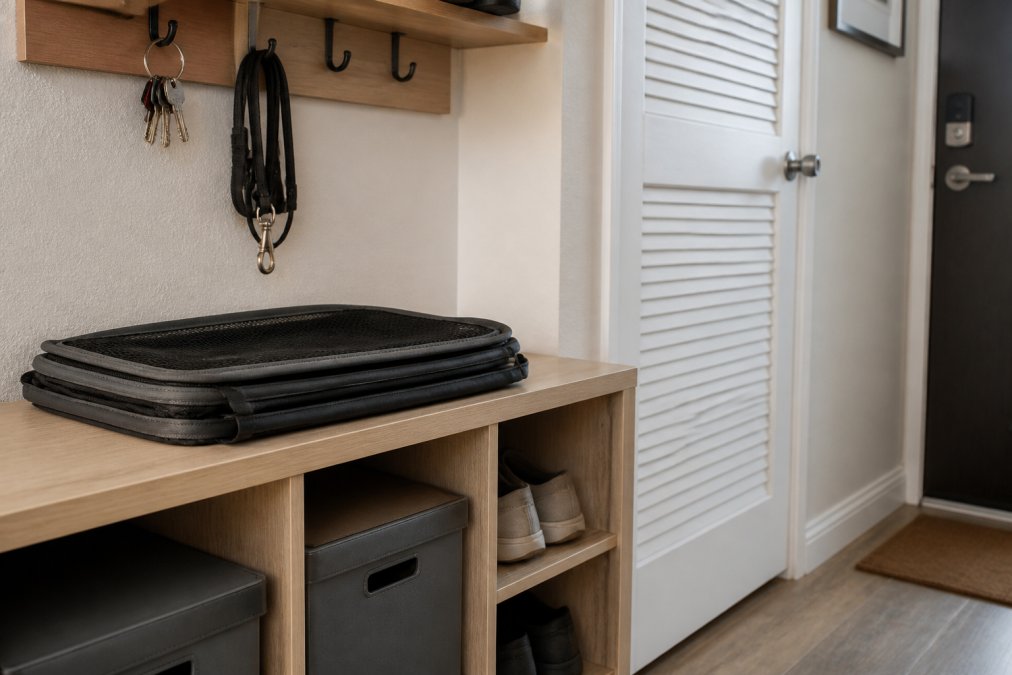
A collapsible cat carrier solves the storage problem hard-sided crates create in small apartments. It folds flat between uses, slides under a bed or behind a door, and weighs less than a plastic crate of the same size.
In a 600-square-foot apartment, a traditional crate usually lives on the closet floor, wedged behind shoes. A foldable design turns that dead space into usable storage. Dog owners get the same benefit, especially with smaller breeds that fit a sling or soft backpack.
Storage Benefits of Collapsible Designs
Folding carriers reclaim floor space fixed crates permanently occupy. One that collapses to a few inches thick fits on a shelf, in a drawer, or on a hook, and for renters who move often, that portability matters as much as performance.
Airline Approved Compact Pet Carriers: What to Check Before You Fly
An airline-approved compact pet carrier must fit under the seat in front of you and meet your airline's published size and weight limits. There is no universal standard, so verify the numbers with your carrier before booking, but the practical ranges are narrow enough to shop with confidence.
Most domestic airlines allowing in-cabin pets cap the combined pet-plus-carrier weight between 15 and 25 lbs, with under-seat maximums around 17 to 19 inches long, 10 to 11 inches wide, and 8 to 10 inches tall for soft-sided carriers (transportation.gov). Hard-sided carriers must be slightly smaller because they cannot flex. Always confirm current numbers on the airline's own pet policy page, since limits vary by aircraft.
airline pet travel policies and carrier requirements
Under-Seat Dimensions and Weight Limits
Under-seat space varies by aircraft and seat class, even within one airline. A regional jet's cubby can be several inches shallower than a mainline narrowbody, and bulkhead rows have less usable depth because the seat in front is a wall. Check the carrier's exterior dimensions against the airline's stated maximum, then confirm the weight limit covers pet and bag together.
Soft-sided carriers with flexible mesh walls squeeze into tight spaces rigid carriers cannot, which is why most airlines require soft-sided in-cabin carriers (transportation.gov). A carrier with rigid framing on all six sides may meet the listed dimensions on paper and still fail at the gate.
How to Measure Your Pet for an In-Cabin Carrier
Measure your pet sitting down, not stretched out, and compare that against the carrier's interior space, not its exterior dimensions. A carrier that meets the size rule but crowds your pet defeats the purpose of a calm flight.
A simple method most practitioners use:
- Have your pet stand on a flat surface and measure from the base of the tail to the front of the chest.
- Measure from the floor to the top of the head, or to the shoulder if your pet will lie down in the carrier.
- Measure the widest point across the shoulders.
- Add roughly 2 inches to each dimension so your pet can turn around and lie down flat.
- Compare those numbers to the carrier's interior length, width, and height, not the exterior.
If your pet is right at the edge of the weight limit, weigh them on a home scale, then weigh the empty carrier, and add the two. Airlines weigh the combined load, and a carrier that feels light in your hand can still push you over.
Apartment Angle: Practice the Airport Run Before You Fly
Apartment dwellers have an advantage travel guides ignore: you can rehearse the airport sequence without leaving the building. Do dry runs where you load your pet, ride the elevator down, walk a block, and sit for 20 minutes. This surfaces problems, a digging strap, a zipper your pet can nose open, a sliding pad, while you can still fix them.
It also trains your pet to associate the carrier with calm, low-stakes trips instead of only the vet. A carrier that already smells like the lobby is far less stressful on travel day.
How to Store Pet Gear in Small Apartments: Space-Saving Strategies
Storing pet gear in small apartments works best when every item has a vertical or hidden home. Carriers fold into closets, food bins stack under sinks, and over-door hooks hold leashes and slings. These habits keep a small space livable:
- Fold collapsible carriers flat and slide them under the bed or on a high closet shelf
- Hang slings and leashes on over-door hooks instead of piling them on counters
- Use one labeled bin per pet for food, meds, and grooming tools
- Keep a small "go bag" with a spare leash, waste bags, and a collapsible bowl near the door
- Rotate seasonal gear out of prime storage rather than letting it accumulate
The goal is a system you can maintain on a busy morning, not a perfect closet.
Key Features That Make a Compact Pet Carrier Apartment-Friendly
An apartment-friendly carrier combines breathability, secure closures, and comfortable padding in a package that stores easily. Miss one and the carrier becomes a hassle you avoid using.
Mesh ventilation keeps air moving so your pet stays calm on warm elevator rides and crowded sidewalks. Locking zippers stop a nervous cat or dog from pushing a seam open mid-trip. A washable liner matters more than most buyers expect, since carriers pick up hair, dander, and the occasional accident.
The Proud Pet Shop TrailFold Carrier ($34.99) hits these marks with breathable mesh, an adjustable harness-like zipper lock, a removable pad, and a built-in safety leash.

Ventilation, Comfort, and Safety
Soft-Sided vs. Hard-Sided Carriers: Which Is Better for Apartment Living?
What Each Design Actually Does Well
Durability for Daily Apartment Use
Noise and Neighbor Considerations
The Verdict for Small Spaces
Noise Reduction and Durability: What Apartments Demand
Frequently Asked Questions
What is the best collapsible cat carrier for small apartments?
Look for a carrier that folds flat to under 3 inches thick and weighs less than 2 pounds. Soft-sided models with mesh panels and locking zippers work well. The Proud Pet Shop Sidekick Sling ($28.99) holds pets up to 15 lbs and collapses for closet storage. Check that the frame holds its shape when expanded and that the liner is washable.
Are soft-sided pet carriers better for apartment storage than hard-sided ones?
Yes, for most apartment dwellers. Soft-sided carriers collapse flat, slide under beds, or hang on hooks. Hard-sided carriers keep their shape and take up shelf space. Soft-sided models with durable polyester and scratch-resistant mesh also weigh less, making them easier to carry on public transit or to veterinary visits. The trade-off is slightly less structural protection, but quality soft-sided carriers still keep pets secure.
How do I choose the right size compact pet carrier for my cat or small dog?
Measure your pet from nose to tail and add 2-3 inches. The carrier should let them stand, turn around, and lie down. For airline-approved compact pet carriers, check the specific airline's under-seat dimensions, as they vary. Most small dogs under 15 lbs and average cats fit in carriers around 17 x 11 x 10 inches. Always verify weight limits, like the 15 lb cap on the Proud Pet Shop Sidekick Sling.
Can a compact pet carrier double as a safe space for my pet at home?
Yes. Leave the carrier open in a quiet corner with a familiar blanket inside. Pets learn to see it as a den, which reduces pet anxiety during travel or vet visits. A collapsible cat carrier works well for this because you can keep it set up at home and fold it away when guests arrive. The Proud Pet Shop TrailFold Carrier ($34.99) has a removable pad and safety leash, making it suitable for both home and travel use.