
Table of Contents
- What Makes a Dog an Effective Protector
- Guard Dog Training Basics: Foundation and Methods
- Difference Between Guard Dogs and Watchdogs
- Top Protector Dog Breeds
- Protective Dog Breeds for Families: Safety and Compatibility
- Legal Liability and Responsibility
- Conclusion
- Frequently Asked Questions
Last Updated: September 2, 2026
What Makes a Dog an Effective Protector
A protector dog combines specific behavioral traits, physical capabilities, and trainability that allow them to assess threats, respond appropriately, and remain stable under pressure. Understanding what separates an effective guardian from a poorly matched family pet is critical before bringing one home.
Natural Protective Instinct and Territorial Behavior
Protective instinct runs deep in certain dog breeds, rooted in their original working purposes. These dogs were selectively bred to guard livestock, property, and people, instincts that remain encoded in their temperament today. A dog with genuine protective instinct naturally monitors their environment and alerts to unfamiliar activity without extensive training.
Territorial behavior differs from aggression. A territorial dog establishes boundaries around their home and family, displaying alertness rather than unprovoked hostility. Breeds like German Shepherds and Doberman Pinschers exhibit strong territorial instincts paired with intelligence that allows them to discriminate between situations. They alert to unfamiliar sounds, position themselves between their family and potential threats, and remain calm during routine activity.
Temperament, Confidence, and Loyalty
Confidence is essential; a fearful dog either retreats from threats or reacts unpredictably through fear-based aggression. A dog with stable, confident temperament can evaluate situations calmly and respond proportionally. Loyalty to their family creates the motivation for protection, dogs protect what they value. Fearlessness matters in critical moments; German Shepherds, Rottweilers, and Boxers typically display fearlessness as a baseline characteristic.
Guard Dog Training Basics: Foundation and Methods
Training transforms natural protective instinct into controlled, reliable behavior. Without proper training, even the most protective breed becomes unpredictable.
Professional Training vs. Owner-Led Socialization
Professional guard dog training offers advantages that owner-led approaches cannot match. Certified trainers understand canine behavior at depth and know how to shape protective responses without creating liability issues.
Owner-led socialization focuses on exposing your dog to varied environments, people, and situations during critical developmental windows. Many owners combine both: professional training for foundational protection work paired with ongoing socialization to maintain balance.
Obedience, Aggression Management, and Positive Reinforcement
Obedience forms the foundation of any protection dog's training. A dog that won't reliably sit, stay, or come on command cannot be safely managed in public or during stressful situations. Aggression management requires nuance, the goal is to control when and how protective aggression is expressed. A well-trained protector should be calm with family members and approved guests, alert to strangers, and capable of escalating only when a genuine threat is present.
Positive reinforcement has become the dominant training methodology for good reason. Dogs trained through reward-based methods develop stronger bonds with their handlers, retain training more reliably, and show fewer behavioral problems than those trained through punishment or intimidation.
Difference Between Guard Dogs and Watchdogs
A watchdog alerts you to potential threats through barking and heightened attention. Any dog with a reasonable bark and territorial instinct can function as a watchdog. A guard dog actively intervenes to protect people or property, requiring specific breeding, extensive training, and ongoing management.
Most households actually need a watchdog rather than a full guard dog. A watchdog provides security through early warning, allowing you to respond to potential threats, with far fewer liability concerns and less intensive management than a trained protection dog.
Top Protector Dog Breeds
1. German Shepherd: Intelligent and Fearless
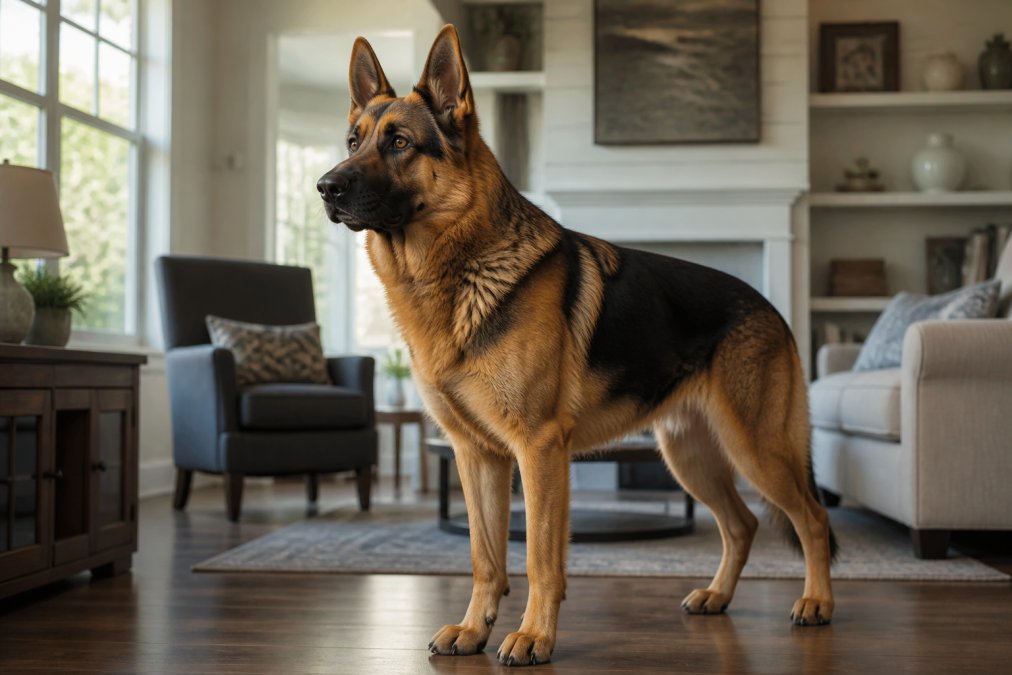
The German Shepherd stands as the gold standard for protection work. Originally developed in Germany during the late 1800s as a herding dog, the breed quickly proved invaluable for police and military work. German Shepherds combine intelligence, loyalty, athleticism, and natural protective instinct into a package that's difficult to match.
What makes German Shepherds exceptional is their combination of traits. They're highly trainable, capable of learning complex commands and discrimination tasks. They possess natural territorial instinct without excessive aggression toward family members. Their alertness is legendary; German Shepherds notice everything in their environment and respond appropriately.
The breed requires significant exercise and mental stimulation. German Shepherds were developed for working all day and become destructive and anxious without adequate activity. They thrive with experienced owners who can provide consistent training, regular exercise, and clear leadership.
2. Doberman Pinscher: Alert and Loyal
Dobermans were developed in Germany during the 1890s specifically for protection work (akc.org). The breed combines elegance with athleticism, creating a dog that's both visually imposing and genuinely capable. Dobermans are intensely loyal to their families while remaining alert to potential threats.
The Doberman's defining characteristic is their responsiveness to their owner's emotional state. These dogs are remarkably attuned to subtle shifts in your mood and behavior, making them naturally protective without requiring constant commands. Dobermans require experienced handlers who understand the breed's sensitivity and intelligence. With proper care, they're confident, stable, and remarkably gentle with their families.
The breed is prone to dilated cardiomyopathy, a heart condition that can be serious. Responsible breeders screen for this condition. The breed's shorter lifespan, typically 10-12 years, is another consideration for families planning long-term commitment (akc.org).
3. Rottweiler: Confident and Stable
Rottweilers have suffered from poor reputation due to irresponsible breeding and ownership, but properly bred and trained Rottweilers are among the most reliable protectors available, combining size, strength, intelligence, and steady temperament.
The Rottweiler's protective nature is understated compared to more reactive breeds. These dogs observe carefully, assess situations, and respond only when necessary. This calm confidence makes them excellent family protectors. Rottweilers require socialization from puppyhood to develop into well-adjusted family members. A properly socialized Rottweiler is friendly with family guests, calm in public settings, and alert without being hypervigilant.
The breed's size, typically 80-135 pounds, requires owners who can manage their physical strength. Training and exercise are non-negotiable for this breed.
4. Boxer: Energetic and Family-Friendly
Boxers combine protective instinct with genuine playfulness and affection. Rather than the serious, reserved demeanor of German Shepherds or Rottweilers, Boxers are protective without being aloof, making them excellent choices for families seeking a guardian that remains engaged with household life.
Originally developed in Germany as hunting and fighting dogs, modern Boxers have been refined into versatile family protectors. They're athletic and powerful, capable of deterring threats through their presence alone, while remaining enthusiastic about play and interaction with family members. Boxers require substantial exercise and mental stimulation. For families with active lifestyles, Boxers integrate seamlessly into daily routines.
The breed's short coat requires minimal grooming, and their general health is strong compared to some protection breeds. Boxers typically live 10-12 years.
5. Bullmastiff: Powerful and Devoted
Bullmastiffs were developed by crossing Bulldogs with Mastiffs, creating a dog that combines the Bulldog's determination with the Mastiff's size and power. The result is a devoted family protector that's surprisingly gentle with loved ones despite their imposing appearance.
The Bullmastiff's protective style relies on physical presence and calm authority rather than aggression. These large dogs, typically 100-130 pounds, simply occupying space in your home provides significant deterrent value. Bullmastiffs are less demanding than some protection breeds in terms of exercise requirements, making them suitable for families unable to provide the intense daily exercise that German Shepherds or Boxers require.
The breed's short lifespan, typically 8-10 years, is a significant consideration. Health screening is crucial, as the breed is prone to hip dysplasia and certain cancers.
6. Great Dane: Imposing Yet Gentle
Great Danes are often overlooked as protection dogs because of their reputation as gentle giants, but their sheer size and imposing appearance provide significant protective value. A 150-pound dog standing at shoulder height creates an unmistakable deterrent, regardless of temperament.
Despite their size, Great Danes are remarkably gentle dogs. They're known for their affection toward family members and even their friendliness toward strangers. A Great Dane will still alert to threats and position themselves protectively if they sense danger. Their protection comes through intimidation and presence rather than aggression.

Great Danes require careful breeding and health management. The breed is prone to hip dysplasia, heart conditions, and bloat, a life-threatening emergency that can occur suddenly. The breed's shorter lifespan, typically 7-10 years, means families should be prepared for earlier loss.
Protective Dog Breeds for Families: Safety and Compatibility
Exercise, Socialization, and Apartment Suitability
Exercise requirements vary significantly across breeds, and matching your lifestyle to your dog's needs is essential for long-term success. German Shepherds and Dobermans require substantial daily exercise, ideally 1-2 hours of active activity combined with mental stimulation. Apartments can work for these breeds only if owners commit to daily walks, running, training sessions, or dog sports.
Boxers fall into a similar category, requiring consistent exercise and engagement. Rottweilers and Bullmastiffs are more apartment-compatible despite their size, content with moderate daily exercise and significant rest periods.
Socialization is non-negotiable for all protection breeds, particularly in apartment settings where dogs encounter more people. Puppies should be exposed to varied people, environments, and situations during critical developmental windows, typically between 3 and 16 weeks of age (avsab.org). This early socialization prevents fearfulness and teaches dogs to distinguish between normal activity and genuine threats.
Cost of Ownership and Long-Term Care
Protection dog ownership carries significant financial commitments beyond the initial purchase price.
Veterinary care for large protection breeds runs higher than smaller dogs. Annual wellness exams, vaccinations, preventive care, and specialized health screening add to these costs. Food costs scale with size; monthly food costs for large protection breeds typically range from $80 to $200.
Insurance and liability considerations matter significantly. Some homeowner's insurance policies exclude certain breeds or charge higher premiums for protection dogs. Liability insurance specifically covering dog-related incidents costs $200-$500 annually.
For families committed to providing quality care, Proudpetshop offers essential comfort products that support long-term dog health. The Proud Pet Shop Comfort Den XL at $149.99 provides orthopedic support for large dogs, particularly valuable for senior protection dogs experiencing joint stress. The Proud Pet Shop CloudLift Bed at $99.00 offers elevated sleeping surfaces that reduce stress on joints while maintaining comfort across seasons.

Legal Liability and Responsibility
Dog bite liability represents a serious legal and financial concern for protection dog owners. In most jurisdictions, dog owners are legally responsible for injuries their dogs cause. Protection dog owners face particularly high liability exposure because courts recognize that these dogs are trained or selected for protective aggression.
Homeowner's insurance typically covers dog bite liability up to certain limits, usually $100,000 to $300,000. However, many policies exclude certain breeds or deny coverage entirely for protection dogs. Before committing to a protection breed, verify your insurance coverage and understand any exclusions.
Negligence standards vary by jurisdiction, but generally, owners are expected to exercise reasonable care in managing their dogs. This includes secure fencing, leashing in public, proper training, and socialization. Breed-specific legislation exists in many areas, with some jurisdictions restricting or banning certain protection breeds entirely. Before selecting a protection dog breed, research local regulations.
Documentation matters significantly in liability situations. Maintain records of training, health screening, vaccinations, and any incidents involving your dog. This documentation demonstrates that you've exercised reasonable care in managing your protection dog.
Conclusion
Selecting a protector dog requires balancing protective capability with family compatibility, legal considerations, and long-term commitment. The best protector dogs combine natural protective instinct with stable temperament, intelligence, and trainability, allowing them to integrate into family life while remaining effective guardians.
German Shepherds, Dobermans, Rottweilers, Boxers, Bullmastiffs, and Great Danes each offer distinct advantages depending on your specific situation. Your choice should reflect your living situation, exercise capacity, experience level, and genuine security needs. Most households benefit more from a watchdog than from a fully trained protection dog requiring intensive management.
At Proudpetshop, we understand that protection dogs are working partners requiring specialized care and comfort. Our Proud Pet Shop No-Pull Adventure Harness at $37.99 provides control during walks without neck strain, essential for managing large protection breeds safely. The Proud Pet Shop Smart Finder Tag at $34.99 ensures your protection dog remains traceable if they ever escape, offering peace of mind for owners of valuable working dogs. Whether you're preparing your home for a new protector or optimizing care for an existing one, Proudpetshop's durable, tested gear supports your dog's comfort and your family's security with our 30-day satisfaction guarantee.

Frequently Asked Questions
Q: What dog breed is the best for protection?
A: German Shepherds rank among the best protector dogs due to their intelligence, trainability, and natural protective instinct. Doberman Pinschers and Rottweilers also excel as guardians when properly socialized and trained. The best choice depends on your living situation, family composition, and commitment to training. Working breeds with stable temperaments and high loyalty respond best to obedience training and perform reliably as home defenders.
Q: What is the difference between a guard dog and a watchdog?
A: A watchdog alerts you to threats through barking and alertness but may not actively confront an intruder. A guard dog is trained to take action, physically protecting property and people if necessary. Watchdogs require minimal training, while guard dogs need professional training and socialization to manage aggression appropriately. Most families benefit from a watchdog's deterrent effect without the liability of a fully trained protection dog.
Q: Are protective dogs good with children?
A: Yes, many protective breeds are excellent with children when raised with them and properly socialized from puppyhood. Boxers, Bullmastiffs, and Great Danes are known for their gentle nature with kids despite their protective instincts. Success depends on early socialization, consistent training, and supervision. Protective dogs with stable temperaments bond strongly with family members and naturally guard children as part of their pack loyalty.
Q: Do protector dogs require professional training?
A: Professional training is highly recommended for guard dogs, especially if you want reliable protection behavior. A trainer can teach bite work, aggression management, and controlled response to threats while preventing unpredictable behavior. Many families start with basic obedience training and socialization at home, then consult professionals for advanced protection work.
Q: What dogs are lazy but protective?
A: Great Danes and Bullmastiffs are naturally protective despite lower exercise needs compared to working breeds. These larger dogs act as effective deterrents through size and presence alone, barking when strangers approach. Their calm temperament makes them suitable for apartment living while maintaining their guarding instinct. Mastiff-type breeds bond closely with family and will defend without requiring the high-energy training demands of German Shepherds or Dobermans.
This article was written using GrandRanker