
Table of Contents
- Why Cat Grooming Tools Matter for Shedding Control
- Best Cat Brushes for Shedding by Coat Type
- Cat Deshedding Tools That Remove Loose Hair
- Best Brush for Short-Haired Cats and Seasonal Shedding
- How Often to Brush a Cat for Optimal Shedding Control
- Safe At-Home Grooming: Technique, Frequency, and When to Seek Help
- Common Grooming Mistakes and Tool Limitations
- Frequently Asked Questions
Last Updated: October 10, 2026
Why Cat Grooming Tools Matter for Shedding Control
Cat shedding isn't just a cosmetic problem, which is why investing in cat grooming tools for shedding at home is essential. When you ignore it, loose hair accumulates on furniture, clothing, and floors. It triggers allergies. It clogs your vacuum. It ends up in your cat's digestive system during self-grooming, which can lead to hairballs and intestinal blockages (Hair Balls in Cats: A normal nuisance or a sign that something is wrong?).
The right cat grooming tools for shedding at home solve this before it becomes a problem. They remove loose and dead hair before your cat sheds it everywhere. They keep your home cleaner. They reduce the risk of health complications. Most importantly, they strengthen the bond between you and your cat through regular, gentle handling.
The tools you choose matter far more than how much you spend. A $15 tool used correctly beats a $100 tool used wrong every time.
Best Cat Brushes for Shedding by Coat Type
Matching your tool to your cat's coat type is the first rule of effective grooming. A slicker brush designed for long-haired cats can irritate short-haired cats. A wide-tooth comb won't reach the undercoat where most shedding originates.
How to Choose a Brush: A Decision Guide by Coat Type
Use this framework to identify which tools suit your cat:
Short-haired cats (1 inch or less): Prioritize soft-bristled brushes, rubber grooming mitts, or fine-tooth metal combs. Avoid slicker brushes and undercoat rakes, their wires sit too close to the skin and cause irritation. Short-haired cats shed year-round but don't accumulate mats, so your goal is removing loose surface hair without discomfort.
Medium-haired cats (1-3 inches): Slicker brushes become your primary tool. They reach the undercoat without sitting flush against the skin. Add a wide-tooth comb for occasional tangles.
Long-haired cats (over 3 inches): Start with a slicker brush for regular maintenance, then add an undercoat rake as your primary deshedding tool. Use a wide-tooth comb weekly to prevent mats before they form.
Cats with thick undercoats (Maine Coons, Persians, Ragdolls, etc.): These breeds shed 40-60% more than average cats, especially during seasonal transitions. Invest in a dedicated undercoat rake or deshedding comb as your primary tool, used 2-3 times weekly year-round and daily during spring and fall.
Cats prone to matting or with existing tangles: Prioritize a wide-tooth comb for detangling, then establish a slicker brush routine to prevent future mats. If mats are severe or close to the skin, consult a professional groomer rather than risk skin damage.
Slicker Brushes and Rounded Pins
A slicker brush has a flat, rectangular head with short wires close together that grab loose hair and mats without pulling at the skin. They work best for medium to long coats and cats prone to matting. Use gentle, short strokes rather than aggressive pressure. The main limitation: they don't reach deep into thick undercoats and are a surface tool only.
Wide-Tooth Combs for Tangles
A wide-tooth comb detangles mats and knots without causing pain. Start at the outer edge of the mat and work inward to prevent painful skin-pulling. The limitation: they don't remove much loose hair and are a maintenance tool, not a primary shedding solution.
Undercoat Rakes and Deshedding Combs
Undercoat rakes reach through the topcoat to grab loose undercoat hair. They're more aggressive than slicker brushes and highly effective during seasonal shedding peaks, especially for cats with thick undercoats. Some have a self-cleaning button that retracts teeth to release captured hair.
Cat Deshedding Tools That Remove Loose Hair
Deshedding tools target the undercoat where most shedding originates. They pull out loose and dead hair before it falls out naturally. This is where you see the biggest reduction in household shedding.
Undercoat Removal and Dead Hair Capture
Deshedding combs reach through the topcoat to grab loose undercoat hair. Use short, gentle strokes in the direction of hair growth, never scrape or push hard. For cats with heavy undercoats, they reduce shedding by 40-60% during seasonal peaks. They require more technique than basic brushes and improper use can irritate skin.
Vacuum-Integrated Grooming Systems
The Proud Pet Shop Deshedding Vacuum Kit combines a grooming brush with suction power, capturing hair immediately and preventing it from spreading throughout your home. It reduces allergens and is faster than traditional brushing. The limitation: it costs more upfront ($59.99) and requires storage space, though it's invaluable for multi-cat households or cats with thick undercoats.

| Tool Type | Best For | Shedding Reduction | Ease of Use |
|---|---|---|---|
| Slicker brush | Medium to long coats | Moderate | Easy |
| Wide-tooth comb | Detangling mats | Low | Easy |
| Undercoat rake | Heavy undercoats | High | Moderate |
| Vacuum kit | Minimal airborne fur | High | Easy |
Best Brush for Short-Haired Cats and Seasonal Shedding
Short-haired cats shed year-round but intensify during spring and fall. Use soft-bristled brushes or rubber mitts rather than metal tools, which sit too close to the skin. The Proud Pet Shop Cat Corner Groomer ($24.99) offers a passive alternative for cats who resist traditional brushing. Increase grooming frequency to twice weekly during spring and fall to reduce visible shedding by half.

How Often to Brush a Cat for Optimal Shedding Control
Short-haired cats: Once weekly normally; twice weekly during spring and fall. Long-haired cats: Three times weekly year-round; daily during seasonal peaks. Cats with mats: As needed plus preventive brushing. Consistency matters more than duration, a 5-minute weekly session beats a 30-minute monthly session.
Start with a schedule your cat accepts. If your cat tolerates only 2 minutes per session, that's your baseline. Extend gradually as your cat becomes comfortable. A cat that dreads grooming will hide when you reach for the brush. A cat that tolerates it will sit still or even seek out the sensation.
Safe At-Home Grooming: Technique, Frequency, and When to Seek Help
Proper technique prevents pain, skin irritation, and negative associations with grooming. Most grooming problems stem not from tool choice but from incorrect application. Learning the mechanics of safe brushing transforms your results and your cat's willingness to cooperate.
Proud Pet Shop Cat Corner Groomer →
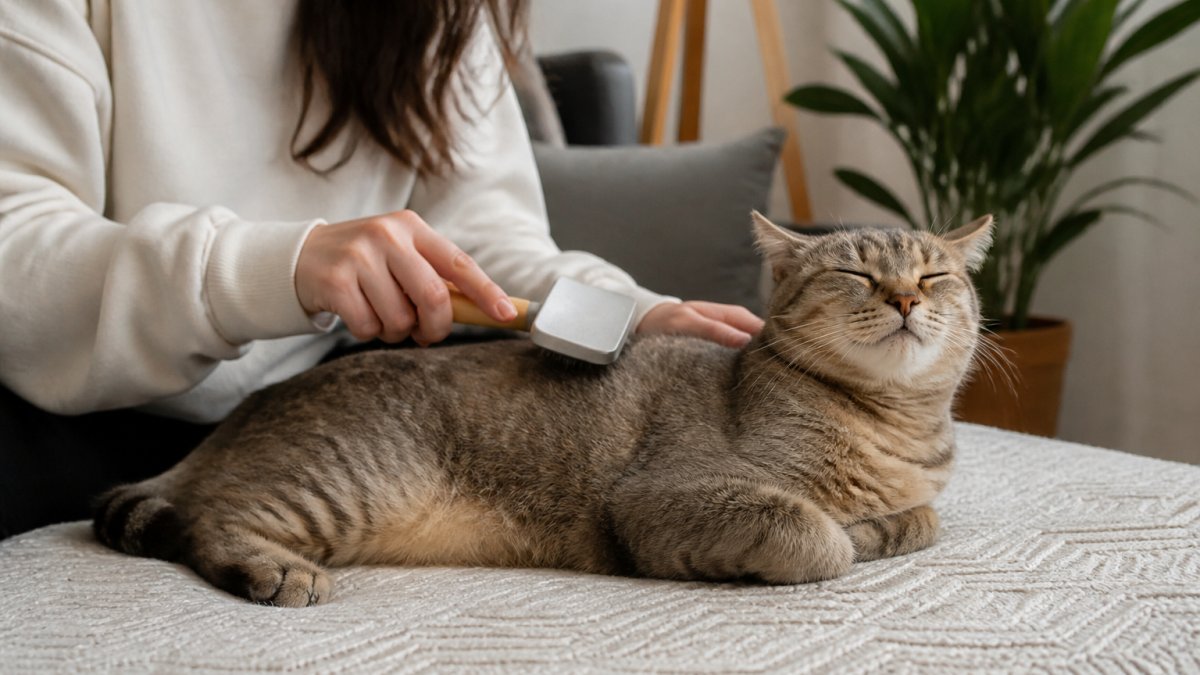
Step-by-Step Grooming Technique
Brush direction: Always brush in the direction of hair growth, from head toward tail. On legs, brush downward; on belly, toward rear legs; on face, gently downward and outward. Pressure: Use light to moderate pressure, your hand should feel like a gentle weight, not a scraping force. Strokes should be 2-4 inches for slicker brushes and undercoat rakes; 6-8 inches for soft-bristled brushes. If you see skin redness, you're using too much pressure. Session structure: Start with 5-10 minutes in a calm environment, working one body section at a time. Sensitive areas: Use lighter pressure on belly, inner thighs, and armpits; use only soft-bristled brushes or fingertips on face and ears. Hair removal: Remove accumulated hair after each stroke to prevent matting and maintain brush effectiveness.
Reading Your Cat's Comfort Level
Watch for discomfort signs: pulling away, hissing, skin flinching, tail swishing, ears flattening, or attempting to bite or scratch. Stop immediately. Signs of tolerance: relaxed posture, purring, leaning into the brush, or seeking out grooming sessions.
Grooming Frequency by Coat Type and Season
Short-haired cats: Once weekly during normal shedding periods (fall and winter). Twice weekly during spring and early summer when shedding intensifies. Use soft-bristled brushes or rubber mitts only.
Medium-haired cats: Twice weekly year-round. Three times weekly during spring and fall seasonal transitions. Alternate between slicker brush sessions and wide-tooth comb sessions to prevent over-grooming with any single tool.
Long-haired cats: Three times weekly year-round minimum. Daily during spring and fall peak shedding. Long-haired cats mat quickly if grooming lapses; consistency is non-negotiable.
Cats with thick undercoats: Three times weekly year-round with undercoat rake. Daily during seasonal peaks. These cats shed continuously and benefit from frequent, dedicated undercoat removal.
The key insight most guides miss: consistency matters more than duration. A 5-minute weekly session beats a 30-minute monthly session. Regular grooming keeps the undercoat healthy, prevents mat formation, and conditions your cat to accept handling. Sporadic grooming creates crisis management situations where you're fighting mats and excessive shedding.
Gentle Grooming for Sensitive and Senior Cats
Sensitive cats need soft-bristled brushes only, short sessions (3-5 minutes), and calm environments. Some respond better to grooming after meals or during rest periods. Senior cats benefit from gentle, short strokes with minimal pressure, focusing on mat-prone areas (armpits, behind ears, hindquarters). Grooming helps monitor their skin and coat health.
Recognizing Shedding That Signals Health Issues
Normal shedding produces loose hair you can brush out easily. Abnormal shedding indicates underlying problems that require veterinary attention.
Watch for these warning signs: hair loss in patches (not general shedding), skin redness or irritation, excessive scratching, scabs, or open sores. These suggest allergies, parasites, fungal infections, or other health issues requiring veterinary attention. Sudden increases in shedding without seasonal explanation also warrant a vet visit. Hyperthyroidism, stress, poor nutrition, and skin conditions all cause excessive shedding. Your vet can identify the cause and recommend treatment.
Common Grooming Mistakes and Tool Limitations
The biggest mistake is using the wrong tool for your cat's coat type. A slicker brush on a short-haired cat causes irritation.
The second mistake is inconsistent grooming. Cats don't benefit from sporadic intense sessions. They benefit from regular, gentle sessions. A 10-minute weekly commitment beats a 60-minute monthly effort.
The third mistake is forcing grooming on a resistant cat. If your cat hates the brush, you're creating negative associations.
Tool limitations matter too. No single tool removes all shedding. A slicker brush handles surface hair. An undercoat rake reaches deeper. A wide-tooth comb prevents mats.
Vacuum systems like the Proud Pet Shop Deshedding Vacuum Kit ($59.99) solve the "loose hair everywhere" problem but don't replace basic brushing. They're an addition to your routine, not a replacement.
Cat shedding control starts with the right tools matched to your cat's coat type and temperament. Consistency beats intensity. At Proudpetshop, we stock grooming solutions designed for real households with real cats.
Frequently Asked Questions
How often should I brush my cat to control shedding?
Brush short-haired cats 2-3 times per week during normal shedding seasons, and daily during peak seasonal shedding periods. Long-haired cats need daily brushing year-round to prevent matting and reduce loose hair. Regular brushing removes dead hair before it sheds onto furniture and reduces the amount of hair your cat ingests during self-grooming, which can lead to hairballs. Cats with sensitive skin or anxiety may tolerate shorter, more frequent sessions better than longer grooming periods.
What are the best cat grooming tools for removing loose hair?
Cat deshedding tools, slicker brushes, and wide-tooth combs are most effective. Deshedding brushes specifically target the undercoat where dead hair accumulates. The Proud Pet Shop Deshedding Vacuum Kit ($59.99) captures loose fur directly into a canister, preventing airborne dander and making cleanup immediate. For cats that groom passively, the Proud Pet Shop Cat Corner Groomer ($24.99) allows autonomous coat care through self-rubbing against soft bristles mounted in a corner, reducing manual brushing needs.
Are deshedding tools safe for cats?
Yes, deshedding tools are safe when used correctly on appropriate coat types. Tools with soft bristles or rounded pins designed for cat grooming won't irritate healthy skin. Avoid metal combs with sharp teeth on sensitive areas. Never apply heavy pressure, and stop immediately if your cat shows signs of discomfort. Senior cats, anxious cats, and those with skin conditions should be groomed gently and less frequently. If your cat has existing skin irritation, patches of hair loss, or excessive itching, consult your veterinarian before using any grooming tool.
What's the difference between brushes for short-haired and long-haired cats?
Short-haired cats benefit from slicker brushes and rubber grooming tools that remove surface loose hair and stimulate circulation without deep penetration. Long-haired cats need wide-tooth combs to work through the undercoat and prevent mats and tangles before they form. Long-haired cats also require more frequent grooming because their longer coat traps more dead hair and tangles more easily. Seasonal shedding affects both, but long-haired cats shed more visibly and require year-round maintenance, while short-haired cats may need intensive grooming only during peak shedding seasons.