
Table of Contents
- Is a Dog Camping Tent Worth It for Small Pets?
- Pros and Cons of Separate Pet Camping Shelter
- Types of Dog-Friendly Tents and Shelter Options
- Tips for Camping with Small Dogs
- Best Portable Dog Tents for Camping
- How to Keep Small Dogs Warm While Camping
- DIY vs. Commercial Pet Camping Solutions
- Frequently Asked Questions
Last Updated: September 21, 2026
Is a Dog Camping Tent Worth It for Small Pets?
Whether a dog camping tent small pets need depends on your small pet's temperament and anxiety levels. Some small dogs thrive sleeping in their owner's tent, while others experience separation anxiety that makes a separate enclosure essential.
A dedicated dog camping tent solves real problems for certain situations, but it's overkill for others. Understanding when a separate tent makes sense versus when sharing your sleeping space is smarter helps you make the right choice.
Pros and Cons of Separate Pet Camping Shelter
A dog camping tent offers genuine benefits, but it also comes with tradeoffs worth understanding upfront.
When a Separate Tent Makes Sense
A dedicated dog camping tent shines for dogs with separation anxiety. If your small dog panics when confined, exhibits destructive behavior, or paces and whines at night, a separate tent allows them to decompress while you sleep undisturbed.
Many campgrounds require pet containment. A dedicated tent keeps your dog secure, prevents them from wandering into neighboring campsites, and demonstrates responsible ownership.
Temperature regulation matters for small breeds. A dedicated tent with proper insulation, a sleeping pad underneath, and breathable mesh windows creates a microclimate where your small dog stays warm without overheating.
When Sharing Your Tent Is the Better Choice
Sharing your tent makes sense if your small dog is comfortable in confined spaces and shows no separation anxiety. Dogs that sleep calmly in crates at home typically adapt well to the family tent.
Cost matters too. A quality dog camping tent runs $40-100+, while your small dog might be content on a sleeping pad next to your cot. If your dog isn't prone to anxiety, that investment may not justify the expense.
One tent is lighter and easier to set up than two. For backpacking trips, every pound matters, and a small dog can sleep on an elevated bed inside your tent without impacting available space.
| Situation | Best Option | Why |
|---|---|---|
| Dog shows separation anxiety | Separate tent | Reduces panic and allows independent decompression |
| Dog is calm in confined spaces | Shared tent | Saves weight, cost, and setup time |
| Small breed in cold weather | Separate tent with insulation | Better temperature control and warmth retention |
| Campsite has strict pet rules | Separate tent | Ensures compliance and containment |
| Lightweight backpacking trip | Shared tent | Reduces pack weight and complexity |
| Dog is destructive when confined | Separate tent | Prevents damage and escape attempts |
Types of Dog-Friendly Tents and Shelter Options
Dog camping tent small pets options come in several forms, each designed for different camping styles and pet needs. Understanding the differences helps you choose the right shelter for your small dog's temperament and your trip's requirements.
Pop-up tents set up in seconds without poles or assembly, ideal for car camping. They're bulkier to pack but offer convenience when you need shelter quickly.
Backpacking tents use lightweight materials with mesh windows and ground stakes. Higher denier fabrics resist tears from restless dogs, though setup takes longer than pop-ups.
Vestibule-style shelters provide partial enclosure with wind and rain protection, working well for dogs that don't need complete confinement.
DIY options using PVC frames and tarps or repurposed children's tents cost less but require more setup time and offer less durability than commercial options.
Tips for Camping with Small Dogs
Successful camping with small dogs requires preparation and realistic expectations about their comfort and behavior in an outdoor environment.
Managing Separation Anxiety in Confined Spaces
Before your camping trip, set up a pop-up tent at home and reward calm behavior inside it. This builds positive associations with enclosed spaces rather than introducing confinement only when anxiety is high.
Use familiar bedding and scents inside the shelter to make the space feel secure. If your dog uses a crate at home, bring it inside the tent for additional security.
Establish a consistent routine with scheduled bathroom breaks and feeding times. This predictability reduces anxiety in unfamiliar environments.
Proud Pet Shop Cozy Cabin Den →
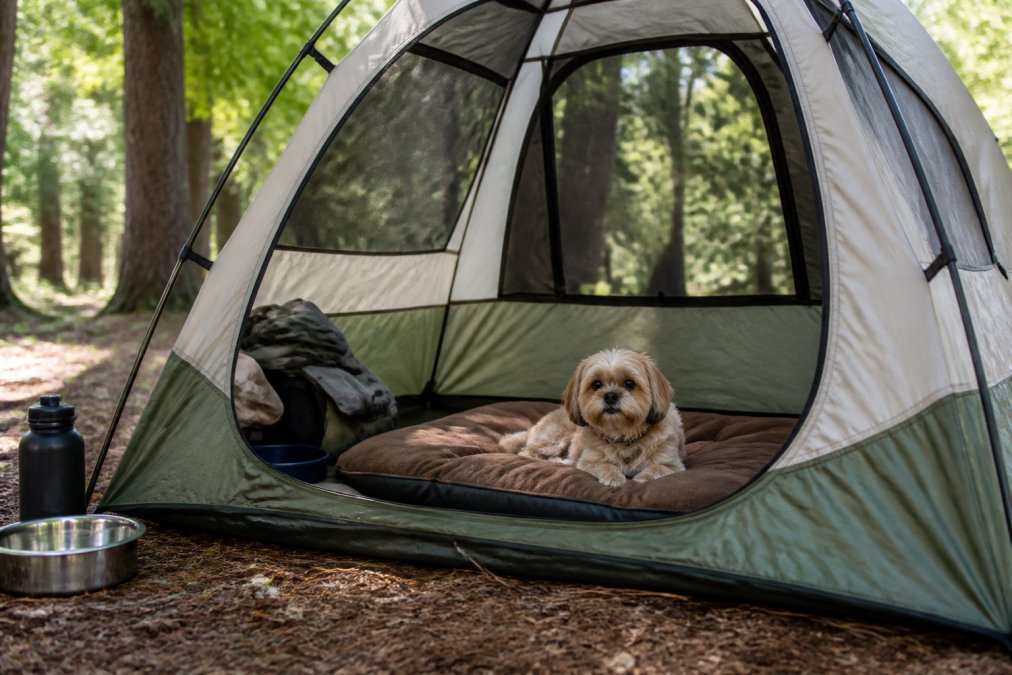
Exercise before settling into the tent. A tired small dog is a calm small dog, and physical activity burns nervous energy and promotes sleep.
Acclimation and Campsite Etiquette
Arrive early to let your small dog explore and acclimate before dark. This gradual introduction reduces overnight anxiety.
Keep your dog contained to protect neighbors and prevent escape. A short leash clipped to a stake or sleeping bag prevents bolting if your dog panics.
Use cross-bar or ground stakes properly. These anchor your tent and prevent your dog from pushing out under the walls. Secure stakes are especially important for small dogs that might squeeze through gaps. Check your setup before dark to ensure everything is taut and secure.
Best Portable Dog Tents for Camping
When you've decided a separate dog camping tent is right for your small pet, the Proud Pet Shop Cozy Cabin Den stands out as the top choice for most camping situations. This enclosed house-style bed creates a secure habitat explicitly designed for small dogs and cats, offering the comfort and containment that anxious pets need in outdoor environments.

The Cozy Cabin Den features soft coral fleece lining designed to maintain body temperature through direct contact. The exterior features a fully removable cover system, enabling standard machine washing processes for hygiene management. The enclosed design functions as a thermal barrier in winter, retaining heat generated by the sleeper, yet remains breathable enough for regular indoor use. The design prioritizes structural stability, ensuring the cabin maintains its shape over repeated periods of sitting or lying rather than collapsing under weight.
Available in Small, Medium, and Large formats at $39.99, the Cozy Cabin Den is an affordable entry point. The exterior features a fully removable cover system, enabling standard machine washing processes for hygiene management. Detaching the fabric prevents soil accumulation in the main body and ensures the den remains fresh after accidents or shedding seasons.
Portable Shelter Features That Matter
Waterproof construction prevents moisture from seeping into bedding. Breathable mesh windows allow airflow while keeping bugs out and preventing condensation.
Ventilation prevents overheating and reduces stress for small dogs. Look for tents with multiple mesh panels positioned to create cross-ventilation. This airflow matters more than you might expect, especially for small breeds that can overheat in enclosed spaces.
Pack weight and portability determine whether you'll actually bring the tent on trips. A portable tent should weigh under 5 pounds for backpacking trips. For car camping, weight matters less, but setup time does. Quick-assembly designs let you establish your dog's shelter before anxiety escalates.
Durability depends on fabric denier and frame construction.
How to Keep Small Dogs Warm While Camping
Small dogs lose body heat rapidly because they have higher surface-area-to-body-mass ratios than larger breeds. This makes temperature management your primary concern when camping with small pets.
Temperature Regulation for Small Breeds
Sleeping arrangements directly impact warmth. An elevated dog bed like the Proud Pet Shop CloudLift Bed isolates your small dog from cold ground. Ground contact drains body heat continuously. An elevated cot-style bed with breathable mesh creates a barrier between your dog and the cold earth while allowing air circulation underneath. The CloudLift Bed's waterproof sleeping surface prevents moisture absorption, which would otherwise wick heat away from your dog's body.

Sleeping Arrangements and Insulation
Layering is your strategy for keeping small dogs warm. Start with an insulated base (sleeping pad or blanket on the ground), add an elevated bed to prevent ground contact, then include additional blankets or your dog's familiar bedding for nest-like security. This three-layer approach maintains warmth while allowing your dog to adjust if they become too warm.
DIY vs. Commercial Pet Camping Solutions
Building your own dog camping shelter costs less upfront but requires time, materials, and construction skills. Commercial tents offer reliability and durability you can't easily replicate with DIY approaches.
Frequently Asked Questions
Do small dogs need their own tent when camping?
Not always. Small dogs can share your tent if they're comfortable in confined spaces and well-trained. However, a separate dog camping tent is worth it if your pet has separation anxiety, needs temperature control, or you prefer extra space. Factors like your pet's temperament, the campsite weather, and your tent's size determine whether separate shelter is necessary.
What features should I look for in a small pet camping tent?
Prioritize ventilation with mesh windows to prevent overheating, waterproof and durable fabric to withstand weather, and a ground footprint that keeps moisture out. Look for easy setup and portability, especially if you backpack frequently. Insulation matters for temperature regulation, and vestibule space helps contain your pet safely. Double-walled tents offer better weather resistance than single-wall designs.
How do I keep my small dog safe and secure while camping?
Use ground stakes and tethering systems to prevent escape, especially during nighttime. Train your dog to acclimate to the tent before your trip. Ensure proper ventilation to avoid overheating, and use a sleeping pad to isolate your pet from cold ground. Keep water accessible, monitor for anxiety or stress, and follow campsite etiquette by keeping your dog contained and quiet to respect other campers.
Can a small dog sleep in a human tent instead of a pet tent?
Yes, many small dogs sleep comfortably in a shared human tent if they're trained for it. This works well for dogs without separation anxiety and when space allows. However, shared tents can trap moisture and body heat, making temperature control difficult. If your dog is anxious, destructive, or if you want better insulation and containment, a separate portable pet tent offers more advantages despite the added cost and weight.