
Table of Contents
- Why Pet Slings Help Anxious Small Dogs
- How to Measure Your Dog for a Carrier Sling
- Safety Features and Materials That Matter
- How to Train a Dog to Like a Sling
- Comparing Weight Capacity and Fit Options
- Cleaning, Maintenance, and Long-Term Care
- Conclusion
Last Updated: August 23, 2026
Why Pet Slings Help Anxious Small Dogs
A pet sling for small dogs with anxiety creates a secure, close-contact carrying solution that mimics the calming sensation of being held. Small dogs experiencing anxiety benefit from the physical boundary and proximity that a sling provides, reducing their exposure to triggering environments while keeping them safely contained against your body.
Anxious small dogs often struggle in crowded spaces, during car rides, or when separated from their owners. A pet sling addresses these challenges by providing a hands-free carrier that keeps your dog snug against your chest, where they can feel your heartbeat and steady breathing. The enclosed design creates gentle pressure around their body, similar to a weighted blanket effect, which many anxious pets find deeply reassuring (peer-reviewed research). This is particularly valuable for senior dogs with joint pain or puppies still building confidence in new environments.
How to Measure Your Dog for a Carrier Sling
Getting the right fit is non-negotiable when choosing a pet sling for small dogs with anxiety. An ill-fitting sling creates discomfort, reduces security, and defeats the purpose of anxiety relief.
Start by weighing your dog on a home scale or at your veterinarian's office. Most quality pet slings accommodate dogs up to 15 lbs (aafco.org). The Proud Pet Shop Sidekick Sling, for example, safely carries pets up to 15 lbs with full support.

Next, measure your dog's body length from the base of their neck to the start of their tail. This determines whether your dog will fit comfortably in the sling's interior space. Check the strap adjustability by trying on the empty sling yourself, the shoulder strap should fit comfortably across your torso, and the sling should sit at mid-chest height when worn.
Many pet owners overlook the opening width. If your dog's shoulders are wider than the sling's entry point, you'll struggle to position them safely. Measure your dog's chest width at the widest point and compare it to the sling's opening dimensions before purchasing.
Safety Features and Materials That Matter
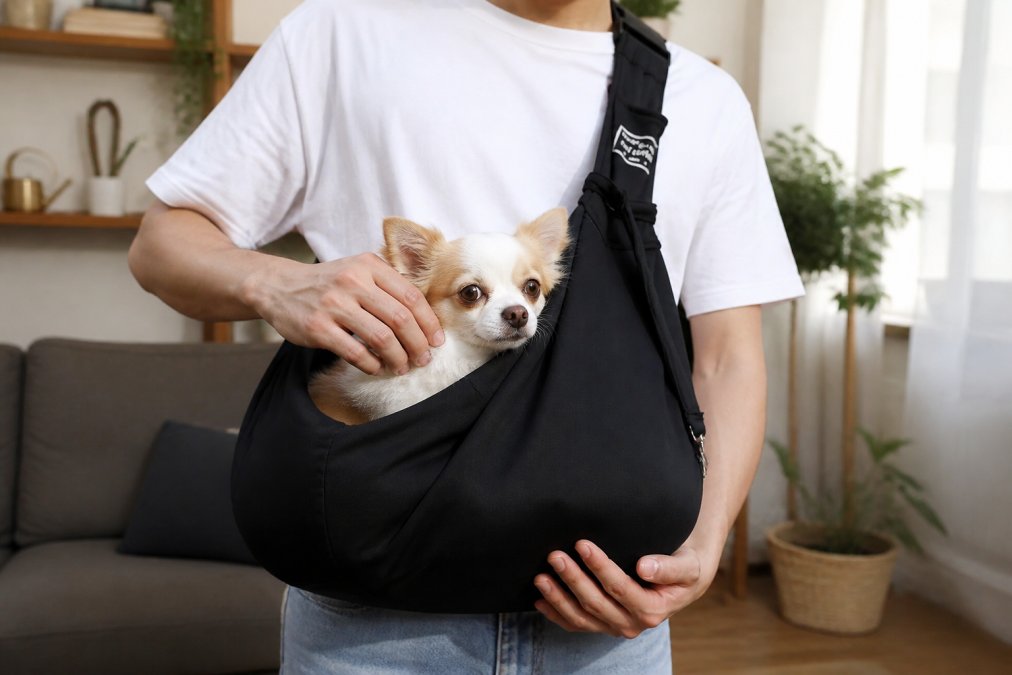
When selecting a pet sling for small dogs with anxiety, safety features directly impact whether your dog remains secure during stressful situations.
Escape-Proof Clips and Harness Attachments
The most critical safety feature is a secure closure system that prevents accidental opening. Look for buckles with dual-locking mechanisms or reinforced snap closures that require intentional action to open. Quality pet slings include an internal tether attachment point that allows you to secure your dog's collar or harness directly to the sling, creating a backup safety system. The Proud Pet Shop Sidekick Sling features a reinforced buckle-close design that prevents accidental opening while remaining easy to operate with one hand.
Test any sling's closure mechanism before purchasing by opening and closing it at least ten times to ensure smooth operation.
Breathable Fabrics for Calm, Cool Pets
An overheated or uncomfortable dog experiences increased anxiety, not relief. Breathable fabrics allow air circulation around your pet's body, preventing heat buildup that triggers panic responses. Mesh panels or breathable cotton blends outperform solid synthetic materials that trap heat and moisture.
Fleece-lined interiors provide comfort and security for anxious dogs, creating a nest-like environment. However, the exterior must remain breathable so air can circulate. Temperature regulation matters especially for small breeds with limited heat tolerance. Brachycephalic dogs (flat-faced breeds like Pugs and French Bulldogs) are particularly vulnerable to overheating in enclosed carriers (avma.org).
How to Train a Dog to Like a Sling
Introducing an anxious dog to a pet sling requires patience and positive association. Start by placing the empty sling on the floor near your dog during calm moments and let them investigate at their own pace. Reward any curiosity with high-value treats or praise.
Next, place treats inside the sling and allow your dog to eat them while the sling remains on the ground. Gradually increase the duration your dog spends with their head inside. Once your dog enters the sling willingly for treats, place it on your lap while seated and reward your dog for sitting in the sling.
Only after your dog demonstrates comfort in the sling on your lap should you attempt wearing it. Put the sling on while seated, place your dog inside, and reward calm behavior. Keep this session short, just 2-3 minutes initially. Gradually increase duration as your dog relaxes.
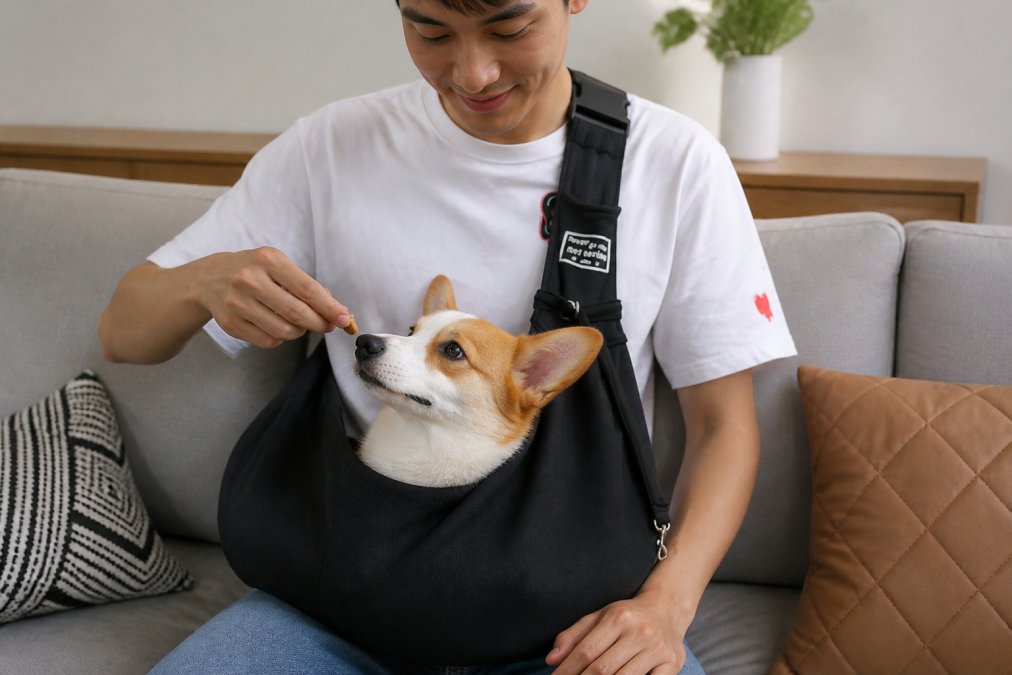
The final stage is standing and walking with the sling. Start in a quiet, familiar room, walk slowly for just one minute, then sit down and reward your dog. Expand to longer walks and busier environments only after your dog shows consistent calm behavior.
Comparing Weight Capacity and Fit Options
Different sling designs accommodate different dog sizes and body types. Weight capacity is the most obvious consideration, but body shape matters as much as weight. A sling rated for 15 lbs accommodates dogs from roughly 3-15 lbs, but a stocky 12-lb dog may fit differently than a lean 12-lb dog.
The Proud Pet Shop Sidekick Sling handles pets up to 15 lbs with full ergonomic support for both dog and wearer. Its adjustable strap system accommodates torso sizes from small adults to larger frames, making it versatile across different household members.
Consider your dog's body proportions when evaluating sling fit. Dogs with long bodies may struggle in slings designed for compact breeds. Adjustable buckle systems allow customization for different body types and clothing layers.
Some slings feature front-facing designs where your dog looks outward, while others position dogs inward-facing against your body. Anxious dogs typically prefer inward-facing positions where they feel your physical presence and security.
| Feature | Importance for Anxious Dogs | What to Look For |
|---|---|---|
| Weight Capacity | Critical | Rated for your dog's weight + 2-3 lbs buffer |
| Strap Adjustability | High | Multiple adjustment points for custom fit |
| Interior Dimensions | High | Snug fit without restricting movement |
| Facing Direction | High | Inward-facing preferred for anxiety relief |
| Escape Prevention | Critical | Dual-locking buckles and tether attachment |
| Breathability | High | Mesh panels or breathable fabric exterior |
Cleaning, Maintenance, and Long-Term Care
A pet sling that's regularly cleaned lasts longer and maintains its anxiety-reducing properties. Most quality pet slings feature machine-washable covers or fully removable linings. Check your sling's care instructions before the first wash.
For slings with non-removable interiors, spot-clean regularly with a damp cloth and mild soap. Inspect the buckles, stitching, and tether attachment points monthly for signs of wear. Address minor repairs immediately rather than waiting for complete failure.
Store your sling in a cool, dry place away from direct sunlight. If your sling develops odors despite regular cleaning, soak it in a mixture of water and white vinegar for 30 minutes before washing.
Rotate between multiple slings if you use one daily. This extends the lifespan of each sling by reducing constant stress on materials and allows time for thorough drying between uses.
Conclusion
Choosing the right pet sling for small dogs with anxiety transforms stressful situations into manageable moments where your dog feels secure and supported. The combination of proper fit, escape-proof safety features, breathable materials, and gradual training creates an environment where anxiety naturally decreases.
The Proud Pet Shop Sidekick Sling ($28.99) brings together all these elements: a 15-lb weight capacity that accommodates most small breeds, adjustable straps that customize fit for different body types, breathable design that prevents overheating, and secure buckle closure that prevents accidental escape. With a 30-day satisfaction guarantee and free shipping on orders over $50, Proud Pet Shop removes the risk from finding the right solution for your anxious dog. Start with proper measurement, introduce your dog gradually using positive reinforcement, and you'll have a reliable tool for managing anxiety during vet visits, travel, and crowded environments.
Frequently Asked Questions
Q: What features should I look for in a pet sling for an anxious dog?
A: Look for a pet sling with a secure, escape-proof clip, adjustable straps for a snug fit, and breathable fabric to keep your dog calm. The sling should have a weight capacity matching your dog's size (typically 10-15 lbs for small breeds), and a design that positions your dog close to your body. Machine-washable covers help with hygiene and stress relief. The Proud Pet Shop Sidekick Sling includes many of these features at $28.99.
Q: How do I measure my dog for a comfortable sling fit?
A: Measure your dog from the base of the neck to the base of the tail along the spine. Check the sling's weight capacity and ensure it matches your dog's current weight. Most slings fit dogs up to 15 lbs. Test the sling on your dog indoors first, it should be snug enough to prevent escape but loose enough for your dog to breathe comfortably and move their legs slightly. Adjust straps so the sling sits at your hip or chest, distributing weight evenly across your shoulders.
Q: How long does it take to train a dog to like a sling?
A: Most dogs take 1-4 weeks to adjust to a sling with consistent, positive training. Start by letting your dog sniff and explore the sling for 2-3 days before wearing it. Reward calm behavior with treats and praise. Wear the empty sling around your home for a few days, then place your dog inside for short periods (5-10 minutes) while stationary. Gradually increase time and movement. Patience and positive reinforcement, never force your dog into the sling, help reduce anxiety and build trust faster.
Q: Are dog slings safe for small dogs with separation anxiety?
A: Yes, pet sling carriers can be safe and beneficial for anxious dogs when used correctly. The close, body-hugging design mimics a calming embrace, reducing stress during crowded environments or vet visits. However, safety depends on proper fit, secure clips, and not leaving your dog in the sling for extended periods (over 2 hours). Always ensure the sling has breathable fabric, doesn't restrict movement, and includes a tether attachment for extra security. Combine sling use with desensitization training for best results.
This article was written using GrandRanker