
Table of Contents
- What Makes a Toy Durable Enough for Aggressive Chewers
- Quick Comparison: Durable Pet Toys for Chewers
- 1. Proud Pet Shop Bite-Proof Sofa Bed: Best for Destructive Chewers
- 2. Proud Pet Shop Cooling Recovery Mat: Best for Chewers Who Run Hot
- 3. Proud Pet Shop IQ Treat Puzzle: Best Interactive Toys for Heavy Chewers
- How to Choose Safe Materials for Heavy Chewers
- How to Stop a Dog From Destroying Toys
- Sizing, Supervised Play, and When to Replace Chew Toys
- Frequently Asked Questions
Last Updated: September 10, 2026
What Makes a Toy Durable Enough for Aggressive Chewers
Durable pet toys are built to resist compression and puncture at the dog's actual bite force, not just at a "tough" marketing claim. Chew resistance depends on material density, wall thickness, and whether the toy flexes or shatters under load. Most toys fail because they're built for average jaw strength and sold to dogs that chew far above it.
At Proudpetshop, returns show the same pattern: a toy survives a week, then a corner gives way, a mismatch between the toy's toughness rating and the dog's chewing style.
Jaw Strength and Chewing Profiles by Breed
Jaw strength varies enormously by breed, and so does chewing style. Wide-muzzled, heavy-muscled dogs like Rottweilers, Mastiffs, and Pit Bull types apply crushing pressure. Herding breeds chew in a focused, repetitive way that wears down one spot. Terriers nip and tear.
A power chewer needs thick, solid material with no seams to exploit. A dog that chews in bursts may do fine with a slightly softer compound, as long as it's non-toxic and won't splinter.
Quick Comparison: Durable Pet Toys for Chewers
Here's how our three picks stack up for dogs that destroy standard toys. Each targets a different problem: attacking bedding, overheating, or needing mental work.
| Product | Price | Best For | Key Material Feature |
|---|---|---|---|
| Bite-Proof Sofa Bed | $161.99 | Destructive chewers who wreck beds | Bite-proof, scratch-proof woven cover |
| Cooling Recovery Mat | $28.99 | Chewers who run hot after play | Chew-resistant cover over cooling gel |
| IQ Treat Puzzle | $34.99 | Bored heavy chewers | Adjustable-difficulty, non-slip base |
How We Evaluated
We judged each pick on material density, wear and tear, kennel safe solo use, and ease of cleaning, weighting real-world durability over lab claims, because a toy that survives a test rig can still fall apart in a living room.

1. Proud Pet Shop Bite-Proof Sofa Bed: Best for Destructive Chewers
The Bite-Proof Sofa Bed is our top pick for dogs that treat beds as chew projects. Its bite-proof, scratch-proof woven textile resists the tearing that kills standard dog furniture, and the frame holds its shape under high-energy activity indoors or outdoors.
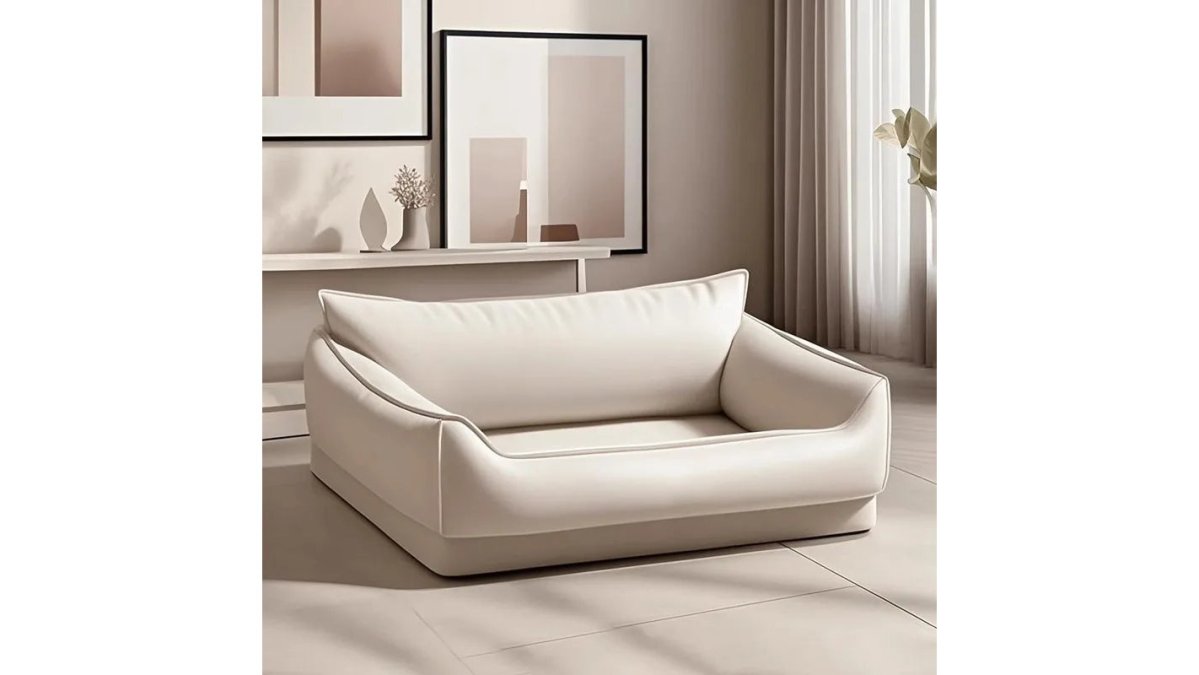
What sets it apart is maintenance: the fully waterproof cover keeps accidents and mud out of the core, and it detaches for standard machine washing.
Pros:
- Bite-proof and scratch-proof cover survives daily wear
- Waterproof surface blocks liquid from the core
- Removable, machine-washable cover
- Works indoors and outdoors year-round
Cons:
- At $161.99, it costs more than a standard bed
- Not a chew toy, so it still needs supervision with a determined puppy
AVMA guidance on pet product safety
2. Proud Pet Shop Cooling Recovery Mat: Best for Chewers Who Run Hot
The Cooling Recovery Mat solves a problem most chew-toy lists ignore: a dog that chews hard usually plays hard, and overheating makes both worse. Add water and a pressure-sensitive gel layer cools where the pet lies down, no freezer, electricity, or batteries.

For aggressive chewers, the durable, chew-resistant exterior shields the internal cooling components, so an active dog can't puncture the gel layer the way they would with a standard pad. It comes in multiple sizes and doubles as recovery support after long walks or hot afternoons.
Pros:
- Instant cooling with no power source
- Chew-resistant cover protects the gel core
- Multiple sizes for different sleeping areas
- Useful for heat relief and post-exercise recovery
Cons:
- Cooling effect depends on the dog lying still, not mid-zoomies
- Not a substitute for shade and water on hot days
3. Proud Pet Shop IQ Treat Puzzle: Best Interactive Toys for Heavy Chewers
Mental work tires a heavy chewer faster than a new toy does. The IQ Treat Puzzle turns snack time into problem-solving: your dog nudges, noses, and paws it to release kibble or small treats, with adjustable difficulty that rises as they figure it out.

For interactive toys for heavy chewers, this is the pick because it redirects the chewing impulse into engagement. The non-slip base keeps it planted during solo play, it's fully dishwasher-safe, and it slows fast eaters.
How to Choose Safe Materials for Heavy Chewers
Safe materials for heavy chewers share three traits: non-toxic, they flex rather than shatter, and they have no small parts that break off. Natural rubber and dense rubber compounds absorb bite force and bounce back. Nylon is harder and longer-lasting but wears down and can develop sharp edges, so inspect it regularly. Reinforced woven fabric belongs on beds and mats, not in a mouth.
Material density is the number most product pages won't give you. A thicker wall and solid core beat a hollow shell every time. Avoid anything claiming to be indestructible without explaining how, and skip glued-on pieces, squeakers sewn into thin fabric, or painted surfaces that can flake.
| Material | Chew Resistance | Best For | Watch Out For |
|---|---|---|---|
| Natural rubber | High, flexes under load | Power chewers, teething puppies | Degrades if left in sun |
| Nylon | Very high, hard surface | Determined adult chewers | Sharp edges as it wears |
| Dense rubber compound | High, bounces back | Fetch and tug-of-war | Can be heavy for small dogs |
| Reinforced woven fabric | Moderate to high | Beds and mats, not chew toys | Not for unsupervised chewing |
Match the Material to the Chewing Profile, Not the Label
The table above tells you what a material can take, not which one your dog needs. That depends on how they chew, and chewing style tracks closely with breed type. Most guides treat "aggressive chewer" as one category. It isn't.
- Crushing breeds, Rottweilers, Mastiffs, Pit Bull types, and other wide-muzzle, heavy-muscled dogs, apply sustained compression. They need solid, thick-walled rubber or dense nylon with no hollow cavities to collapse, since a toy that flexes too much can fold and pinch.
- Focused grinders, many herding breeds, work one spot in a slow, repetitive rhythm, wearing a groove into a single area rather than tearing the whole toy. Rotate their toys more often, because the failure point is localized and easy to miss until it's deep.
- Nippers and tearers, most terriers, attack edges and seams. Any glued joint, stitched hem, or thin lip is a target. Smooth, seamless molded rubber survives them far better than anything assembled.
- Burst chewers, dogs that chew hard for a few minutes, then lose interest, can handle a slightly softer compound, provided it's non-toxic and won't splinter. Their risk is less destruction than swallowing a chunk during a short, intense session.
Read the Damage Pattern, Then Decide
A toy's wear pattern tells you whether the material is right for that dog:
- Deep gouges but no cracks, the material is soft enough to absorb the bite. Keep using it, inspect weekly.
- Hairline cracks radiating from a corner, the compound is too rigid for this dog's bite force. Replace it and move to a more flexible rubber.
- Frayed or fuzzy edges on fabric, the weave is breaking down. Fabric products are not chew toys; remove them from solo access.
- Chunks missing or a hole through the wall, the toy has failed. Discard immediately, even if most of it is intact.
The Environmental Trade-Off Nobody Mentions
Durability and sustainability pull in the same direction more often than people assume. A toy that survives a year replaces six that fail in two months, six fewer items in a landfill. But "durable" and "eco-friendly" aren't automatically the same thing: some of the toughest compounds are petroleum-based and won't break down, while natural rubber from a tapped tree is renewable but degrades faster in sun and heat.
A practical middle path: natural rubber for moderate chewers whose toys live indoors, dense synthetic rubber for crushing breeds where longevity is the priority. Either way, one well-made toy beats three cheap ones, for your wallet and the waste stream. When a toy reaches the end of its life, check for a manufacturer take-back or recycling program before it goes in the trash.
AVMA guidance on pet product safety
How to Stop a Dog From Destroying Toys
You stop a dog from destroying toys by meeting the need the chewing expresses, not by buying tougher products forever. Destructive behavior usually traces back to boredom, excess energy, or teething discomfort. Fix the cause and toy survival climbs.
Start with a rotation. Keep three or four toys available and swap them weekly so novelty does the work. Add structured interactive play like fetch or tug-of-war to burn energy before alone time. For puppies, offer appropriate teething outlets instead of letting them practice on furniture.
Then layer in behavioral training integration: reward your dog for choosing their toy over your shoe. A simple "trade" cue, where you swap a forbidden item for an approved one, teaches the right behavior instead of just removing the wrong one.
Sizing, Supervised Play, and When to Replace Chew Toys
Size decides whether a durable toy is safe: too small can be swallowed, too large won't get chewed properly. Match the toy to your dog's muzzle width, and size up for power chewers.
Supervised play is non-negotiable with any new toy. Watch the first few sessions to see how your dog attacks it. Once you trust the toy, some products, like a kennel safe mat or bed, can stay with them, but chew toys generally shouldn't be left unattended.
Sizing Rules That Actually Hold Up
"Buy the bigger one" is incomplete advice: a toy too large for the muzzle can't be gripped, so the dog chews the edges instead of the body, and edges fail first. Use these rules instead:
- Muzzle width, not body weight. A 60-pound dog with a narrow muzzle needs a smaller toy than a 45-pound dog with a wide one. Measure across the muzzle at the widest point and pick a toy whose main body is at least that wide.
- The two-finger rule. The toy should be too big to fit entirely behind the dog's front teeth. If it can disappear into the mouth, it can be swallowed.
- Size up for crushing breeds, not for all chewers. A Mastiff or Rottweiler needs a thicker wall and a larger body. A terrier with the same bite force but a smaller mouth does better with a smaller, seamless toy.
- Skip rope and cord toys for power chewers. Strands can be swallowed whole, and they don't show damage the way a solid toy does.
When to Replace: Damage Patterns, Not Calendars
There's no universal replacement schedule, and any guide that gives you one is guessing. What works is matching the damage pattern to a decision. Inspect weekly, and act on what you see:
- Surface scuffs and light tooth marks, normal. Keep using it.
- Deep gouges that don't reach the core, usable, but move it to supervised-only play.
- A crack, split, or hole anywhere, discard. Cracks propagate, and a piece that breaks off mid-chew is a choking risk.
- A piece you can pull off with your fingers, discard immediately. If you can pull it, your dog can swallow it.
- Fraying on a fabric product, remove from solo access and repair or replace.
- A squeaker that's exposed or a stuffing leak, discard. The squeaker is the single most common swallowed object in toy-related vet visits.
For most power chewers, a well-made rubber toy lasts weeks to a few months, not years (vcahospitals.com).
The Behavioral Layer: Toys as Training Tools
Sizing and replacement matter most when the toy does a job beyond entertainment. A durable chew toy is one of the most useful tools in crate training and separation-anxiety work, and the rules change when it's used that way.
- Crate training. A kennel safe toy, no parts that can break off, no fabric that can be shredded and swallowed, gives a puppy something legal to do in the crate. A stuffed rubber toy frozen overnight extends the engagement window and turns crate time into a positive association. Never leave a fabric toy or rope in a crate with an unsupervised dog.
- Separation anxiety. A puzzle feeder or long-lasting chew can bridge the first ten minutes after you leave, when anxiety peaks. Pair it with a consistent departure cue so the toy becomes part of the routine, not a random distraction.
- Redirecting destructive chewing. When you catch your dog on furniture or shoes, trade for an approved toy rather than just taking the item away. A simple "trade" cue teaches the right behavior instead of only removing the wrong one.
Environmental impact matters here too: durable materials last longer, meaning fewer replacements and less waste over a dog's lifetime. One well-made bed or mat beats three cheap ones, and usually costs less in the long run.
Frequently Asked Questions
What are the safest durable pet toys for aggressive chewers?
Look for toys made from natural rubber or BPA-free nylon with a toughness rating that matches your dog's jaw strength. Avoid thin plastic, rope, and stuffed fabric for power chewers. The Proud Pet Shop Bite-Proof Sofa Bed uses a bite-proof and scratch-proof woven textile, and the Cooling Recovery Mat has a chew-resistant cover, both designed to handle heavy chewing without breaking into choking hazards.
Are rubber or nylon toys better for heavy chewers?
Both work, but they suit different chewing styles. Natural rubber flexes and absorbs jaw pressure, which is safer for moderate chewers and teething puppies. Nylon is harder and lasts longer for power chewers who shred softer materials, but it can wear down enamel if your dog chews it for hours daily. Rotate between the two and check for wear and tear after every session.
How often should I replace my dog's chew toys?
Replace any toy with cracks, missing chunks, or exposed seams immediately. For heavy chewers, inspect toys weekly and expect to replace most rubber or nylon toys every one to three months. The Proud Pet Shop Bite-Proof Sofa Bed can last with proper supervised play and regular cleaning.
How do I stop my dog from destroying toys so quickly?
Match the toy to your dog's chewing profile, size the toy appropriately, and rotate interactive toys for heavy chewers like the Proud Pet Shop IQ Treat Puzzle to redirect boredom. Supervise play, remove damaged toys right away, and add daily mental stimulation. Destructive behavior often drops when dogs get enough problem-solving activity instead of only physical exercise.
What should I look for in a durable dog toy?
Check for non-toxic, BPA-free materials, a toughness rating suited to your dog's jaw strength, and a size too large to swallow. Reinforced seams, chew-resistant covers, and veterinarian-approved designs matter. The Proud Pet Shop Cooling Recovery Mat, for example, pairs a pressure-sensitive gel core with a durable chew-resistant cover, so active dogs get cooling relief without shredding the mat.