
Table of Contents
- Elevated vs Plush Dog Beds: Key Differences
- Orthopedic Dog Bed Benefits for Senior Dogs
- Temperature Regulation and Airflow
- Dog Bed Height for Seniors: Accessibility Matters
- Signs Your Senior Dog Needs a New Bed
- Managing Incontinence and Hygiene
- Comparison: Which Bed Type Wins for Your Senior
- Frequently Asked Questions
Last Updated: September 18, 2026
Elevated vs Plush Dog Beds: Key Differences
When choosing a bed for a senior dog, the decision in elevated vs plush dog beds shapes everything from joint comfort to daily hygiene. At Proudpetshop, we've helped countless pet owners navigate this choice, and the differences matter more than they first appear.
Elevated beds keep your dog suspended above the ground on a sturdy frame, typically made from breathable mesh or fabric stretched across metal legs. Plush beds sit directly on the floor, offering deep cushioning and an enveloping design that many seniors find psychologically comforting. The choice isn't about which is objectively "better", it's about matching your senior dog's specific needs.
| Aspect | Elevated Beds | Plush Beds |
|---|---|---|
| Ground Clearance | 6-12 inches off floor | Sits flush on ground |
| Airflow & Temperature | Excellent breathability | Can trap heat |
| Joint Support | Pressure relief through weight distribution | High-density foam cushioning |
| Cleaning & Hygiene | Quick-drying, easy wipe-down | Requires machine washing |
| Accessibility | Requires stepping up | No barrier to entry |
| Incontinence Management | Moisture drains through mesh | Absorbed by fabric |
| Best For | Mobility issues, hot climates | Anxiety, nesting behavior |
The real story emerges when you consider your dog's age, mobility level, and living situation. A 12-year-old Lab with hip dysplasia faces different challenges than a senior Chihuahua with separation anxiety. Below, we'll show you exactly how each bed type addresses the specific health and comfort issues senior dogs face.
Orthopedic Dog Bed Benefits for Senior Dogs
High-density orthopedic support directly addresses the joint pain and mobility issues that define aging in dogs. Senior dogs experience cartilage breakdown, arthritis, and pressure point sensitivity, conditions where the right bed makes a measurable difference in movement and rest quality.
Orthopedic beds work by distributing weight evenly across the sleeping surface, reducing stress on hips, shoulders, and spine. This weight distribution matters most for dogs with hip dysplasia, arthritis, or recovery from injury. The Proud Pet Shop Comfort Den XL uses high-density orthopedic foam specifically designed to relieve pressure on sensitive joints while maintaining structural support for dogs up to 80 pounds.

Plush beds with orthopedic foam provide the cushioning senior dogs need, especially those that struggle with nesting behavior or anxiety. The raised bolster sides cradle the head and neck, creating a secure boundary that many aging dogs find psychologically reassuring. This design addresses both the physical need for support and the emotional need for security that many seniors exhibit.
Elevated beds offer a different orthopedic advantage: they reduce the effort required to stand up and lie down. A dog with mobility issues benefits from the easier transitions that come with a raised platform, even if the elevated bed itself doesn't include dense foam cushioning. The combination of elevation plus orthopedic foam, available in some models, provides the maximum benefit for dogs with significant joint pain.
Temperature Regulation and Airflow
Senior dogs regulate body temperature less efficiently than younger dogs, making thermal management a genuine health factor rather than just comfort. Elevated beds excel at temperature regulation because their breathable mesh construction allows air to circulate completely around your dog's body.
This airflow prevents the heat buildup that occurs when a dog rests on a traditional plush bed. During warmer months, an elevated bed keeps your senior cooler and more comfortable, reducing panting and restlessness. The Proud Pet Shop CloudLift Bed uses a waterproof breathable mesh that permits quick drying while maintaining airflow, addressing both temperature and moisture concerns.

Plush beds trap body heat more readily, which can be beneficial during cold months or for dogs that struggle with temperature sensitivity. However, this same heat retention becomes problematic in summer or for dogs prone to overheating. The trade-off is real: comfort through enveloping design versus cooling efficiency through airflow.
For senior dogs in temperate or warm climates, or those with respiratory issues that worsen in heat, elevated beds provide measurable relief. For dogs in cold climates or those that seek the psychological comfort of a cozy nest, plush beds maintain warmth and security. Many pet owners solve this by rotating between bed types seasonally, elevated in summer, plush in winter.
Dog Bed Height for Seniors: Accessibility Matters
The height of an elevated bed directly determines whether your senior dog can access it independently or struggles with each entry and exit. A bed that's too high creates a barrier that forces your aging dog to jump or climb, placing stress on already-compromised joints.
Most elevated beds range from 6 to 12 inches off the ground. For a senior dog with moderate mobility issues, 6-8 inches represents the sweet spot, high enough to provide thermal and hygiene benefits, low enough to allow comfortable entry without jumping. Dogs with severe arthritis or mobility challenges may need beds at the lower end of that range, or may benefit more from a plush bed that eliminates the step entirely.
Proud Pet Shop CloudLift Bed →
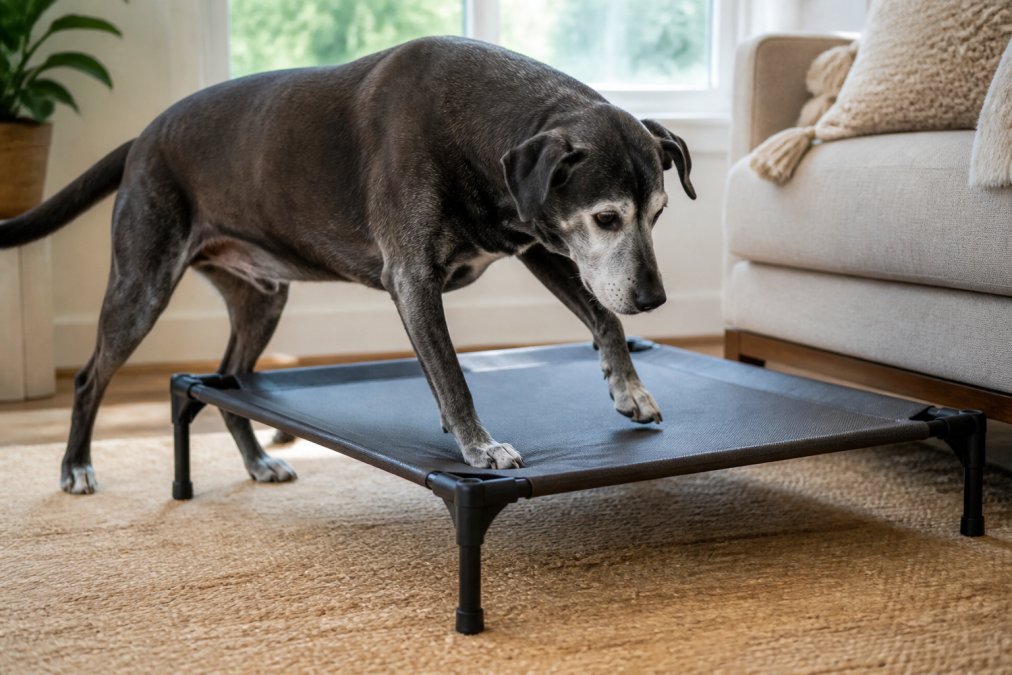
Plush beds eliminate the accessibility problem entirely, there's no height barrier, no climbing required. For dogs with severe mobility limitations, or those recovering from surgery, a floor-level plush bed may be the only realistic option during the recovery period. The trade-off is losing the airflow and thermal benefits that elevation provides.
Consider your senior dog's current mobility level realistically. Can they jump onto a couch? If yes, a 6-8 inch elevated bed is likely accessible. Can they walk up stairs with difficulty? An elevated bed at that height may still present challenges. Can they barely stand without assistance? A plush bed on the floor becomes the practical choice, regardless of other benefits.
Signs Your Senior Dog Needs a New Bed
Most senior dogs show clear signals when their current sleeping situation no longer meets their needs. Stiffness after rest, especially visible when they first stand after lying down, indicates inadequate joint support. A dog that struggles to find a comfortable position, shifting repeatedly before settling, may need either better cushioning or a different bed height.
Excessive panting while resting, or seeking cooler surfaces like tile or hardwood floors, signals that your dog's bed is trapping heat. Conversely, shivering or reluctance to rest in cooler areas suggests insufficient insulation. Accidents during sleep or difficulty controlling bladder function point toward moisture management issues that elevated beds address better than plush alternatives.
Behavioral changes matter too. A senior dog that avoids their bed entirely, preferring to sleep on hard floors or in doorways, is telling you something about comfort or security. Some dogs need the psychological reassurance of an enveloping plush bed; others need the practical benefits of elevation and airflow. Anxiety-related behaviors, pacing before settling, whining, or seeking your proximity constantly, sometimes improve with the nesting design of plush beds.
Age alone doesn't determine need. A 7-year-old dog with hip dysplasia may need orthopedic support more urgently than a 12-year-old healthy dog.
Managing Incontinence and Hygiene
Senior dogs often experience incontinence or reduced bladder control, making hygiene management a practical priority that shapes bed choice dramatically. Elevated beds with breathable mesh allow liquids to pass through immediately, preventing absorption and odor buildup. This feature alone makes elevated beds the clear choice for dogs with incontinence issues.
Comparison: Which Bed Type Wins for Your Senior
Elevated beds win for senior dogs with arthritis, hip dysplasia, or mobility issues who need easier entry and exit. They also win decisively for dogs with incontinence, heat sensitivity, or those living in warm climates. The Proud Pet Shop CloudLift Bed at $99.00 delivers these benefits at an accessible price point, with size options from Small to Extra Large to match your dog's dimensions.
Frequently Asked Questions
Are elevated dog beds better for senior dogs?
Elevated dog beds offer distinct advantages for seniors: they keep dogs off cold, damp floors, improve airflow for better temperature regulation, and reduce joint strain during entry and exit. However, they work best paired with cushioning. Plush beds provide superior pressure relief for arthritic joints, but elevated designs prevent moisture buildup and make cleaning easier, critical for managing incontinence. The ideal choice depends on your dog's mobility level and specific health needs.
What are the main orthopedic dog bed benefits for aging pets?
Orthopedic support reduces pressure on sensitive joints and helps distribute your dog's weight evenly, easing pain from arthritis and hip dysplasia. High-density foam cushioning absorbs impact during movement, allowing senior dogs to rest more comfortably and move with less stiffness. Raised bolster sides provide head and neck support, encouraging proper spinal alignment. The Proud Pet Shop Comfort Den XL ($149.99) combines orthopedic foam with a sturdy structure, specifically designed to relieve pressure on aging joints while maintaining durability.
How do I know if my senior dog needs a new bed?
Watch for signs including difficulty rising from the floor, reluctance to climb onto standard beds, excessive scratching or restlessness, visible stiffness after sleep, or accidents near the bed (indicating the current option isn't accessible). Senior dogs with arthritis or hip dysplasia benefit from beds with better cushioning and easier entry. If your dog spends more time on hard floors than on their bed, the current option isn't meeting their comfort needs. A bed designed for joint support and low step-up height makes a measurable difference in mobility and sleep quality.
Can elevated beds help with incontinence management?
Yes. Elevated beds with waterproof surfaces and breathable mesh prevent urine from soaking into cushioning, making cleanup faster and more hygienic. Unlike plush beds that absorb liquids, elevated designs allow accidents to drain or wipe away easily. For seniors dealing with incontinence, the Proud Pet Shop CloudLift Bed ($99.00) features waterproof mesh and quick-drying construction, reducing odor and bacterial growth. Pair elevated beds with waterproof covers or removable, machine-washable liners for maximum protection and ease of maintenance.