
Table of Contents
- Heavy-Duty Dog Collars vs. Standard Nylon: Key Differences
- Material Durability: Webbing, Synthetic Fibers, and Tensile Strength
- Hardware Durability: D-Rings, Buckles, and Corrosion Resistance
- Tactical Dog Collar Benefits for Active Dogs
- Best Dog Collar Material for Active Dogs
- How to Measure Dog Neck for Collar Fit and Growth
- Maintenance, Cleaning, and Longevity
- Which Collar Should You Choose?
Last Updated: August 28, 2026
Heavy-Duty Dog Collars vs. Standard Nylon: Key Differences
Heavy-duty dog collars use reinforced webbing with higher tensile strength, military-grade hardware, and box-stitching that withstands years of pulling and outdoor work. Standard nylon collars are lighter and cheaper, but adequate only for calm dogs in controlled environments. If your dog pulls hard, spends time outdoors, or destroys gear regularly, the durability gap becomes obvious fast.
This guide breaks down the technical differences, helps you assess what your dog needs, and shows you how to choose a collar that won't fail when it matters most.
Material Durability: Webbing, Synthetic Fibers, and Tensile Strength
Heavy-duty collars use high-denier nylon webbing or polyester with significantly higher tensile strength than standard alternatives. Tensile strength measures how much force a material can withstand before breaking. Heavy-duty webbing typically rates between 1,500 and 2,500 pounds of break strength, while standard nylon sits closer to 400 to 800 pounds.
Your dog's pulling force can exceed 300 pounds in a single lunge if they're large or high-energy (peer-reviewed research). A standard collar near the lower end of that range operates at its limit during normal walks. Heavy-duty webbing has room to spare.
Heavy-duty collars use tightly woven synthetic fibers packed at higher density, which resists fraying and maintains structural integrity through repeated flexing. Standard nylon webbing begins to fray after months of wear, and once fraying starts, the collar degrades faster.
Why Tensile Strength and Break Strength Matter
Your dog's collar absorbs forces from sudden lunges, constant pressure during walks, and friction against their neck. A collar with higher break strength lasts longer and is safer. A standard nylon collar that fails unexpectedly can leave your dog loose and vulnerable. Heavy-duty collars are engineered to stay intact under stress, which is critical for large breeds that can generate forces exceeding standard nylon ratings.
Abrasion Resistance and Fraying Prevention
Abrasion resistance determines how well a collar withstands rubbing and contact with rough surfaces. Dogs that dig, play in brush, or wear their collar constantly need abrasion-resistant material. Heavy-duty webbing resists surface wear because the fibers are tightly bonded and thicker. Standard nylon shows visible wear within weeks if the dog is active.
Fraying signals material breakdown. When edges fray, threads pull loose and structural integrity degrades. Heavy-duty collars use sealed or reinforced edges to prevent this, often with heat-sealing or tight stitching.
Hardware Durability: D-Rings, Buckles, and Corrosion Resistance
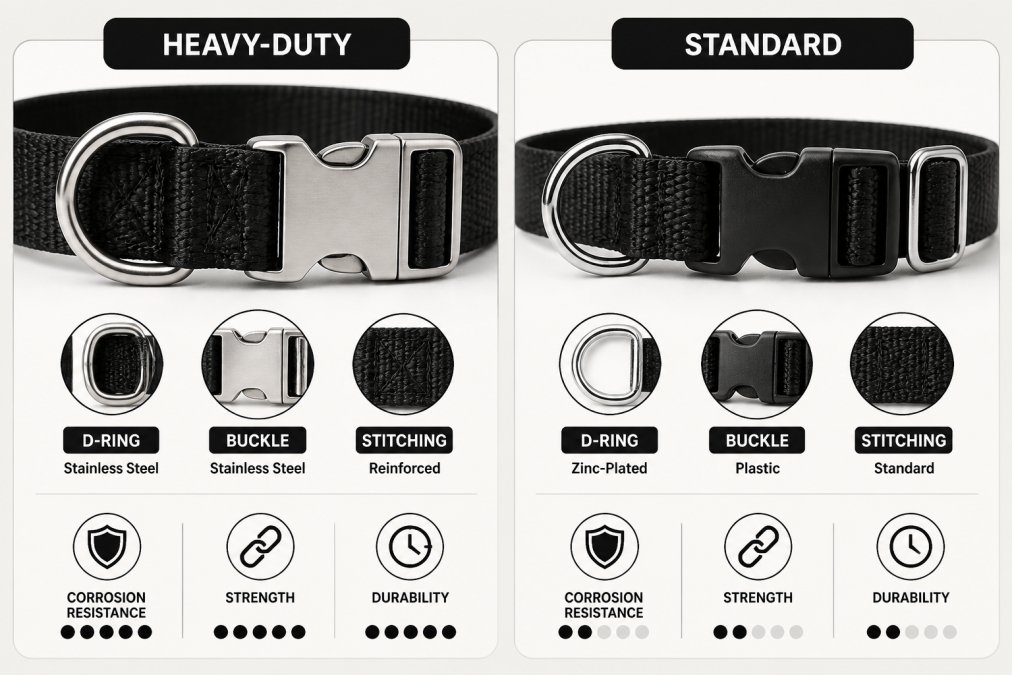
Hardware fails before webbing in many standard collars. Heavy-duty collars use corrosion-resistant hardware, typically stainless steel or powder-coated steel, which resists rust even when exposed to water, sweat, and dirt. Standard collars often use zinc-plated or painted steel, which corrodes faster and weakens under load.
Heavy-duty collars reinforce attachment points where hardware connects to webbing. The D-ring and buckle are sewn or riveted through multiple layers, distributing force and preventing hardware from tearing through under stress. Standard collars often use single-layer attachment, which fails when pressure concentrates at one point.
Quick-Release Buckles vs. Standard Snap-Style Hardware
Quick-release buckles are standard on heavy-duty collars. They open with one hand and are stronger than traditional snap-style hardware because they distribute force more evenly. They're typically made from reinforced plastic or metal and rated for higher loads.
Standard snap-style hardware works for calm dogs but is the weak point under stress. The snap mechanism wears out after repeated use, becoming loose and unreliable. Quick-release buckles have fewer moving parts and greater durability. Cheap versions break easily, but heavy-duty collars use quality quick-release hardware tested for durability.
Box-Stitching and Reinforcement for Long-Term Security
Box-stitching (or X-stitching) creates a box or X pattern across seams, distributing force across more thread and making seams much stronger than single-line stitching. A single-stitched seam fails if one thread breaks. A box-stitched seam requires multiple threads to break before failure.
Heavy-duty collars add extra layers of webbing at stress points where the D-ring attaches, where the buckle connects, and along seams. These reinforced zones absorb the most force and are built to handle it. Standard collars skip this step to keep costs down.
Tactical Dog Collar Benefits for Active Dogs
Tactical dog collars are designed for working dogs, outdoor adventures, and high-stress environments. They combine heavy-duty materials with features like MOLLE webbing (modular attachment points), reflective piping for visibility, and sometimes padding for comfort during extended wear.
For active dogs, hiking companions, working dogs, or dogs spending significant time outdoors, tactical collars offer practical advantages. Reflective piping makes your dog visible at dawn, dusk, or in low light. MOLLE attachment points let you add ID tags or lights without cluttering the main collar. Padding distributes pressure across the neck, reducing irritation during long days of activity.
Tactical collars are typically heavier than standard nylon because of durable materials and reinforced construction, not unnecessary bulk. The real benefit is that they're engineered for dogs that actually work or play hard.
Best Dog Collar Material for Active Dogs
For active dogs, the best collar material is high-denier nylon or polyester webbing with reinforced construction. These materials handle moisture, UV exposure, and constant wear better than alternatives. Nylon dries quickly, resists odor, and maintains strength when wet. Polyester is slightly more durable in harsh conditions and resists fading better than nylon.
For hiking and outdoor work, look for collars with weatherproof materials. Some heavy-duty collars use treated webbing that resists moisture and UV damage. Standard nylon degrades under UV exposure over time, becoming brittle (peer-reviewed research). Weatherproof webbing holds up longer.
For dogs that pull constantly, prioritize tensile strength and reinforced attachment points. A well-made heavy-duty collar in standard nylon will outlast a poorly made tactical collar in premium material.
Heavy-duty nylon often has a tighter weave that resists odor absorption. Dogs that get wet regularly or spend time in muddy environments benefit from this. Standard nylon absorbs water and odors more readily, requiring more frequent washing and accelerating degradation.
How to Measure Dog Neck for Collar Fit and Growth
Proper fit is as important as material durability. You should fit two fingers between the collar and your dog's neck, leaving room for movement while keeping the collar secure.
Use a soft measuring tape to measure around the thickest part of your dog's neck. Most collars are sized by neck circumference, typically ranging from 8 inches for small dogs to 28 inches for large breeds.
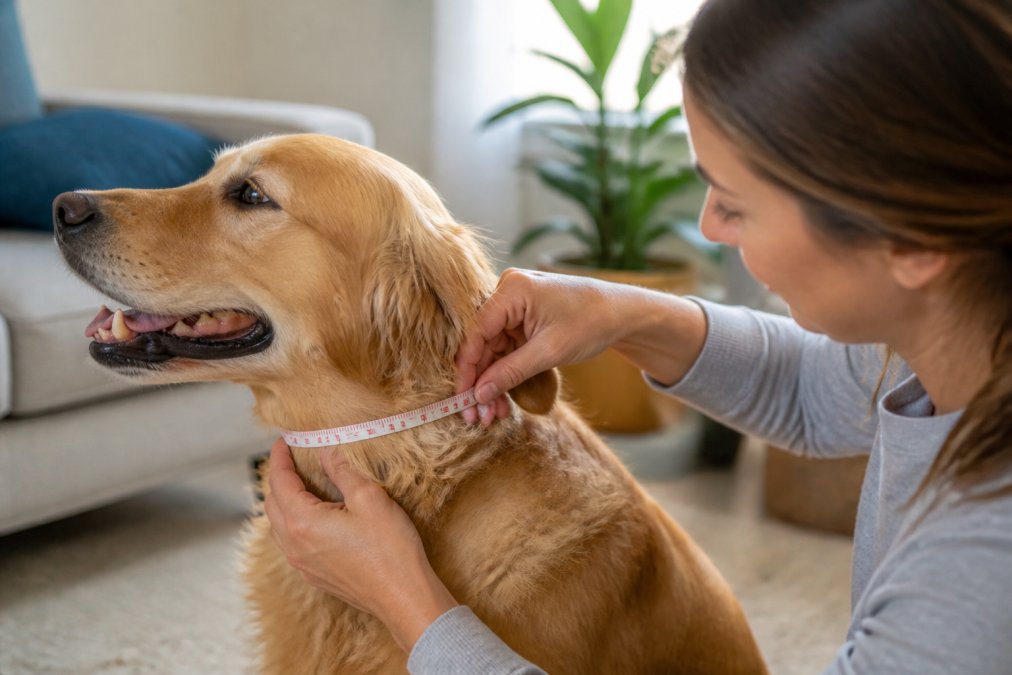
For growing puppies, buy adjustable collars with multiple holes or sliding mechanisms that expand as the dog grows, then switch to fixed-size collars once the dog reaches adult size. Recheck fit monthly as puppies grow quickly.
Common mistakes include buying based on age rather than actual neck circumference. A large-breed puppy at four months might already need an adult-sized collar. Measure, don't assume.
For dogs with sensitive skin or allergies, proper fit is critical. A tight collar rubs and irritates; a loose collar creates friction points. Proper fit reduces irritation and allows skin to breathe. Some heavy-duty collars include padding or hypoallergenic materials for sensitive dogs.
Maintenance, Cleaning, and Longevity
Clean the collar regularly with mild soap and water using a soft brush. Rinse thoroughly and air-dry. Don't machine wash or dry, as agitation and heat damage webbing and hardware.
Check stitching and hardware monthly for loose threads, rust spots, or cracks. Catch small problems early before they become failures. Heavy-duty collars resist odor and moisture, requiring less frequent cleaning, which extends their lifespan.
For rust, clean with a soft cloth or fine steel wool. Stainless steel hardware rarely needs this; zinc-plated hardware on standard collars requires more prevention.
Store collars in dry places. Don't leave them in damp environments like bathrooms or garages where humidity accelerates corrosion and mold growth.
A well-maintained heavy-duty collar lasts 5 to 10 years or longer (aafco.org). A standard nylon collar typically lasts 1 to 3 years before degradation becomes obvious. Buying one heavy-duty collar may cost what you'd spend on three or four standard collars over the same period.
Which Collar Should You Choose?
The choice depends on your dog's behavior, size, activity level, and your tolerance for replacement. If you have a calm, small dog that doesn't pull and spends most time indoors, a standard nylon collar is adequate.
If you have a large dog, a strong puller, or a dog spending significant time outdoors, a heavy-duty collar is the practical choice. The upfront cost is higher, but you'll replace it less frequently and have a higher safety margin.
For puppies, start with an adjustable collar and upgrade to a fixed heavy-duty collar once the dog reaches adult size. For dogs with skin sensitivities, look for heavy-duty collars with padding or hypoallergenic materials.
Heavy-duty collars are built for dogs that test their gear. Standard collars work for dogs that don't.
Proudpetshop offers heavy-duty dog collars designed with reinforced webbing, corrosion-resistant hardware, and box-stitching for security. With a 30-day satisfaction guarantee and fast tracked shipping, you can test the difference in durability without risk. Browse the Adventure & Safety section to find the right fit for your dog's needs.
Frequently Asked Questions
Q: What is the most durable material for a dog collar?
A: Heavy-duty nylon webbing with high tensile strength and reinforced box-stitching offers excellent durability for active dogs. Look for collars with corrosion-resistant metal hardware (stainless steel D-rings and quick-release buckles) and abrasion-resistant synthetic fibers that resist fraying. Standard nylon collars may tear or fray under pulling stress, while tactical heavy-duty collars are designed to withstand pulling behavior and daily wear in demanding conditions.
Q: How do I know if my dog needs a tactical or heavy-duty collar?
A: Choose a heavy-duty collar if your dog pulls hard on walks, spends significant time outdoors, or is a large or strong breed. Tactical dog collar benefits include enhanced control, improved security, and durability for active dogs that experience high stress on leash attachment points. Standard nylon collars work for calm, smaller dogs with predictable behavior. Assess your dog's pulling behavior and activity level before deciding, heavy-duty collars provide extra reassurance for dogs that test their gear.
Q: How often should you replace a standard nylon dog collar?
A: Standard nylon collars typically need replacement every 6-12 months with regular daily wear, depending on your dog's size, activity level, and pulling behavior. Heavy-duty collars often last longer because they resist fraying, maintain their break strength, and feature reinforced stitching. Inspect your collar monthly for signs of wear, fading, or loose stitching. If you notice material degradation or hardware corrosion, replacement is overdue, a failing collar risks your dog's safety if the leash attachment fails.
Q: Do standard nylon collars hold up to water and mud?
A: Standard nylon dries quickly and resists mildew better than leather, but repeated exposure to water and mud can weaken the material over time. Heavy-duty collars with weatherproof webbing and treated synthetic fibers resist odor and maintain their integrity longer in wet, muddy conditions. Both types benefit from regular rinsing after outdoor play. Heavy-duty collars with superior material density and abrasion resistance outperform standard nylon in harsh outdoor environments, making them a good choice for dogs that spend lots of time in wet or muddy settings.
When you invest in a heavy-duty collar, you're buying reliability and peace of mind. Your dog's safety depends on gear that doesn't fail. A collar that lasts years is one less thing to worry about during hikes, walks, or outdoor play. Start by measuring your dog's neck accurately, assess your dog's pulling behavior and activity level, then choose a collar built for those demands. The durability difference is real, measurable, and worth the investment if your dog needs it.
This article was written using GrandRanker