
Table of Contents
- Why Durability Matters in Puppy Toys
- Best Chew Toys for Teething Puppies
- Puppy Toy Safety Guidelines Every Owner Should Know
- Evaluating Material Durability: Rubber Density and Construction
- When to Replace Puppy Toys and Rotation Strategies
- Matching Toys to Your Puppy's Chew Intensity
- Budget-Friendly Durability Hacks and DIY Solutions
- Cleaning and Maintenance for Longevity
- Frequently Asked Questions
Last Updated: October 3, 2026
Why Durability Matters in Puppy Toys
When learning how to choose durable dog toys for puppies, remember that puppies explore the world with their mouths. A toy that falls apart in days isn't just a waste of money, it's a safety risk. Many pet owners are frustrated by toys that shred within hours, leaving small pieces scattered across the floor.
Durable construction matters because:
- Puppies swallow fragments from low-quality toys, risking intestinal blockages
- Cheap toys wear down fast, requiring constant replacement
- Quality toys provide consistent mental stimulation and safety
- Proper durability extends your investment across multiple puppies or years of use
The real difference between a toy that lasts weeks and one that lasts months comes down to material selection and how that material is constructed. A soft rubber toy with poor density collapses under aggressive chewing. A nylon bone with weak seams splits open. Understanding these differences helps you spot quality before you buy.
Best Chew Toys for Teething Puppies
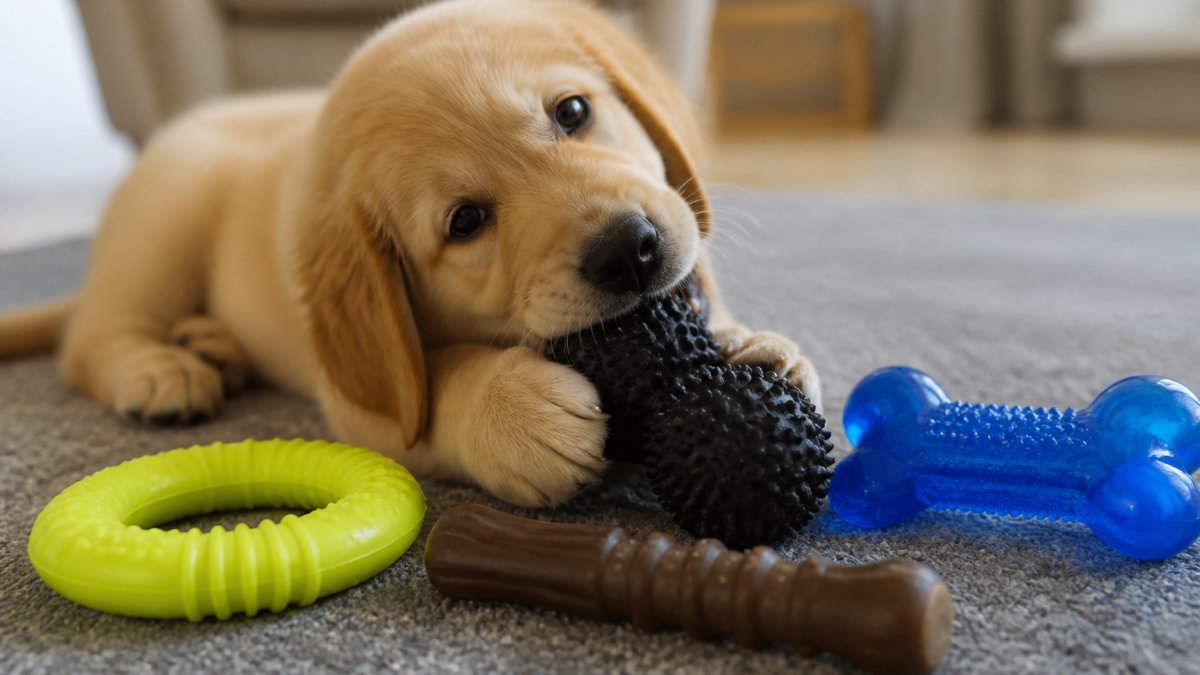
Teething puppies need toys that soothe sore gums while standing up to constant gnawing. The best chew toys for teething puppies combine soft textures with durable construction that won't crumble or shed.
Soft Rubber vs. Hard Nylon: Which Works Better
Soft rubber toys feel good on tender gums and are easier for young puppies to grip. They compress slightly under pressure, which mimics the sensation puppies crave during teething.
Hard nylon toys last longer and satisfy puppies that like to work their jaw. They don't compress, so they feel different from soft rubber, some puppies prefer them immediately, others need time to adjust.
The best approach is offering both. Rotate soft rubber toys when gums are most sore, then switch to nylon when teething intensity drops.
Interactive Feeding Toys for Mental Stimulation
Puppies need more than just chewing, they need mental engagement. Interactive feeding toys solve two problems at once: they slow down fast eating and occupy your puppy's mind.
The Proud Pet Shop IQ Treat Puzzle ($34.99) delivers this through adjustable difficulty levels. Your puppy nudges and paws the unit to release treats gradually, turning snack time into problem-solving.

For puppies that eat too fast, the Proud Pet Shop Sniffing Petal Mat ($29.99) uses soft felt petals to hide kibble or treats. Your puppy relies on scent to find food, engaging natural foraging instincts.
Both toys reduce destructive chewing by channeling energy into appropriate activities. A mentally tired puppy is far less likely to shred your furniture or toys.
Puppy Toy Safety Guidelines Every Owner Should Know
Safety isn't an afterthought, it's the foundation of toy selection. Many puppy injuries come from toys that seemed safe at first but failed during use.
Identifying Choking Hazards and Non-Toxic Materials
Choking hazards include:
- Toys with small detachable parts (buttons, bells, eyes)
- Toys that splinter or tear easily under chewing
- Toys smaller than your puppy's mouth (can be swallowed whole)
- Toys with loose seams that unravel
Non-toxic materials are critical because puppies swallow fragments. Look for toys made from food-grade silicone, natural rubber, or nylon that won't break down into tiny pieces. The Proud Pet Shop Slow-Feeding System ($15.99) uses food-grade silicone that's BPA-free and remains stable even under high heat, meaning it won't degrade from saliva or digestive acids if swallowed in small pieces.

Inspect every toy before giving it to your puppy. Run your fingers along seams, test for loose threads, and check that nothing can be torn off with moderate pressure. If a toy fails this test, don't give it to your puppy.
Size Matching and Supervised Play
Match toy size to mouth size. A toy should be too large to fit entirely in your puppy's mouth. If your puppy can swallow it whole, it's a choking hazard.
Supervise play during the first week with any new toy. Watch how your puppy interacts with it. Does he gnaw gently or attack aggressively? Does he try to tear it apart? Aggressive chewers need tougher materials. Gentle chewers can use softer options.
Remove toys immediately if:
- Pieces start coming off
- Seams begin to separate
- Your puppy can puncture it with teeth
- It becomes small enough to swallow
Supervised play isn't about hovering constantly, it's about being present during the critical first uses so you catch problems early.
Evaluating Material Durability: Rubber Density and Construction
Not all rubber is equal. Not all nylon is equal. The difference lies in density and how the material is manufactured.
How to Spot Quality Construction
Dense rubber resists puncture and tearing. Press your thumb into a rubber toy, if it compresses easily and springs back slowly, density is low. High-density rubber resists thumb pressure and rebounds immediately. This single test predicts durability better than brand name.
Seam quality determines how long a toy lasts. Look for:
- Double-stitched seams (you'll see two parallel lines of stitching)
- Seams that are recessed, not raised
- No visible gaps between seam and material
Material thickness matters. A thin rubber toy feels cheaper because it is. Thicker material withstands more chewing before wearing through.
Nylon construction should feel rigid but not brittle. Bend a nylon toy gently, it should resist bending and return to shape. Brittle nylon snaps under pressure. Quality nylon flexes without breaking.
Testing Durability Before You Buy
You don't need to wait weeks to spot durability problems. Quick tests reveal construction quality:
The squeeze test: Press the toy firmly with your thumb for 10 seconds. Remove your thumb. High-quality toys return to original shape instantly. Low-quality toys show a permanent indent.
The flex test: Gently bend the toy side to side. Quality toys resist bending and return to shape. Cheap toys feel floppy.
The seam test: Run your fingernail along seams. Quality seams feel smooth and tight. Cheap seams feel loose or have visible gaps.
The tear test: Try to pull small sections apart with your hands. Quality toys resist tearing. Cheap toys tear easily.
These tests take 30 seconds and can help reveal construction quality. A toy that passes all four tests will likely offer better durability.
When to Replace Puppy Toys and Rotation Strategies
Every toy has a lifespan. Knowing when to retire toys prevents safety issues and keeps your puppy engaged.
Proud Pet Shop IQ Treat Puzzle →
Signs of Wear and Tear
Replace toys when you notice:
- Visible tears, holes, or punctures
- Seams separating or coming loose
- Small pieces coming off during play
- Discoloration or sticky residue
- Odor that doesn't wash away
- Material becoming soft or mushy
Don't wait for catastrophic failure. A toy with a small tear today becomes a choking hazard tomorrow. Err on the side of caution.
Building a Toy Rotation System
Rotating toys keeps your puppy interested and extends the life of each toy. Here's how:
Create a toy library. Gather 8-12 toys of different types. Soft rubber, hard nylon, interactive feeders, and puzzle toys.
Rotate weekly. Put away half the toys. Leave out 4-6 toys for a week. Then swap. Your puppy experiences "new" toys constantly, reducing boredom.
Inspect before rotation. When you put a toy away, inspect it for damage. If it shows signs of wear, retire it. If it's fine, it goes back into rotation.
Replace as needed. As toys fail the inspection test, remove them and add new ones. This keeps your library fresh and safe.
A well-managed rotation system can help keep your puppy engaged and potentially extend the life of each toy.
Matching Toys to Your Puppy's Chew Intensity
Not all puppies chew the same way. Some are gentle. Others are aggressive. Matching toy durability to chew intensity prevents constant replacement and keeps your puppy safe.
Gentle Chewers vs. Aggressive Chewers
Gentle chewers are satisfied with softer toys. They gnaw slowly and don't apply intense pressure. Soft rubber and plush toys work well. These puppies can use toys with less strong construction because they won't stress seams or compress dense materials aggressively.
Aggressive chewers need heavy-duty options. They attack toys with force, applying sustained pressure. Hard nylon, reinforced rubber, and tough composite materials are necessary. Soft toys disintegrate within days under aggressive chewing.
Determine your puppy's style by observing how he plays. Does he pick up a toy and carry it gently? That's a gentle chewer. Does he grab it and shake it violently? That's an aggressive chewer.
Budget-Friendly Durability Hacks and DIY Solutions
Quality toys may cost more upfront, but they can offer better value long-term.

Freeze toys for extended use. Frozen toys take longer to wear down because the cold hardens soft rubber temporarily.
Wrap damaged toys. If a toy develops a small tear, wrap it tightly with athletic tape or vet wrap.
Combine materials. Old soft rubber toys can be stuffed inside nylon bones or hard plastic toys.
DIY puzzle toys. A muffin tin filled with tennis balls creates a simple puzzle.
Sock toys. Tie a knot in an old clean sock. Your puppy gets a soft toy that's easy to grip.
These hacks don't replace quality toys, but they supplement them and reduce your overall spending.
Cleaning and Maintenance for Longevity
How you care for toys determines how long they last. Proper cleaning removes bacteria and prevents material breakdown.
Soft rubber toys: Wash weekly with warm soapy water. Rinse thoroughly. Air dry completely before giving back to your puppy.
Hard nylon toys: Wipe with a damp cloth weekly. Soak in warm soapy water monthly. Rinse well. Air dry.
Interactive feeders: The Proud Pet Shop IQ Treat Puzzle is dishwasher-safe.
Slow feeders: The Proud Pet Shop Slow-Feeding System's silicone pieces go directly in the dishwasher.
Storage: Keep toys in a dry container. Moisture and heat degrade materials.
Regular cleaning isn't just about hygiene, it's about preservation. A well-maintained toy can last longer than one left to sit wet or dirty.
Frequently Asked Questions
What materials are safest for puppy chew toys?
The safest materials for durable dog toys for puppies include food-grade silicone, natural rubber with high density, and tough nylon designed specifically for puppies. Avoid toys with loose parts, stuffing, or paint that could chip. Always verify toys are non-toxic and free from BPA. Check product labels for safety certifications and avoid materials that splinter or break into small pieces during chewing.
How do I know if a dog toy is durable enough for my puppy?
Test durability by examining seams for secure stitching, pressing the material to check for resilience, and looking for reinforced stress points. Quality toys should resist indentation and ideally not show cracks or wear after hand pressure. Read customer reviews mentioning longevity, and choose toys with warranties or satisfaction guarantees. Interactive puzzle feeders like the Proud Pet Shop IQ Treat Puzzle offer adjustable difficulty while withstanding repeated use from curious puppies.
How often should I replace my puppy's chew toys?
Replace puppy toys when you notice visible damage, loose pieces, cracks, or worn seams that could pose choking hazards. Gentle chewers may use toys for months, while aggressive chewers require replacement every 2-4 weeks. Inspect toys weekly during play and rotate them to extend lifespan. Toys showing significant wear and tear should be removed immediately, even if not completely destroyed, to prevent accidental ingestion of fragments.
Are nylon toys safe for puppies, or should I stick with rubber?
High-quality nylon toys are safe for puppies when specifically designed for their age and chew intensity. Hard nylon bones work well for aggressive chewers and promote dental health, while soft rubber suits gentler chewers or teething puppies. The key is matching toy hardness to your puppy's bite force and supervising play. Avoid extremely hard nylon that could crack teeth, and always remove toys showing splintering or degradation regardless of material.