
Table of Contents
- What You'll Need Before You Shop
- Best Materials for Dog Hiking Harnesses and Other Gear
- How to Measure a Dog for a Hiking Harness
- Durable Dog Carrier Backpacks for Hiking: What to Check
- How to Stress-Test Durable Pet Gear Before the Trail
- Common Mistakes That Shorten Gear Life
- How to Care for Durable Pet Gear So It Lasts
- Conclusion
- Frequently Asked Questions
Last Updated: September 20, 2026
What You'll Need Before You Shop
Choosing the right gear starts with knowing your dog's body, not browsing product photos. Learning how to choose durable pet gear for hiking comes down to three things: accurate measurements, honest material assessment, and testing before you commit. This guide from Proudpetshop covers each step so you can shop with confidence instead of guesswork.
Most trail gear fails for predictable reasons. Stitching pulls apart at stress points, hardware bends under load, and fabric thins where it rubs against rock or brush. A common mistake is buying based on how a harness looks rather than how it's constructed. The American Kennel Club's guidance on hiking with dogs recommends matching gear to your dog's size, fitness level, and the terrain you'll actually cover.
Before you buy anything, gather these basics:
- Your dog's current weight and chest girth
- The longest hike you plan to attempt this season
- Whether your dog pulls, lags, or walks steadily on leash
- Whether you'll carry your dog at any point
If your dog is a puller, a front-clip harness is your best starting point. The Proud Pet Shop No-Pull Adventure Harness ($37.99) redirects pulling force onto the chest rather than the neck, with padded lining and reflective stitching for low-light visibility.

Best Materials for Dog Hiking Harnesses and Other Gear
The best materials for dog hiking harnesses are abrasion-resistant nylon webbing, reinforced stitching at load points, and metal hardware instead of plastic. These three components decide whether gear survives one season or five.
Look at how a harness is put together, not just what it's made of. A common mistake is assuming thick fabric means durability. Thickness helps, but stitching pattern matters more. Bar-tacked stitching at stress points holds up far better than single-line seams.
What most guides miss is hardware. Plastic buckles crack in cold weather, and cheap metal bends under a hard tug. When you're evaluating durable pet gear, check these specifics:
- Webbing width: wider straps distribute load better on large dogs
- Stitch density: tighter, reinforced stitching resists fraying
- Hardware material: metal D-rings and buckles outlast plastic
- Padding: breathable padding prevents hot spots on long hikes
The Proud Pet Shop No-Pull Adventure Harness uses a front-clip attachment point and padded, breathable lining across sizes XS through XL, which addresses both control and comfort on longer trails.
How to Measure a Dog for a Hiking Harness
To measure a dog for a hiking harness, take three measurements with a soft tape: chest girth, neck circumference, and back length. Measure at the widest points and keep the tape snug but not tight. Recheck each number twice before ordering.
Three Measurements That Decide the Fit
Chest girth is the most important number. Wrap the tape around the deepest part of the ribcage, just behind the front legs. This determines the harness size more than any other measurement.
Neck circumference matters for harnesses with neck straps. Measure at the base of the neck where a collar naturally sits.
Back length runs from the base of the neck to the base of the tail. This matters most for carrier backpacks and full-body harnesses.
| Measurement | Where to Measure | Why It Matters |
|---|---|---|
| Chest girth | Deepest point behind front legs | Primary size determinant |
| Neck circumference | Base of neck | Prevents strap slippage |
| Back length | Neck base to tail base | Fit for carriers and vests |
If your dog falls between two sizes, size up for harnesses with multiple adjustment points. A snug fit that restricts movement causes chafing; a slightly loose fit with proper adjustment stays comfortable.
Durable Dog Carrier Backpacks for Hiking: What to Check
Durable dog carrier backpacks for hiking need ventilation mesh, a secured interior leash, and even weight distribution across your shoulders. Skip any carrier without an internal safety attachment, since a startled pet can push out of an unsecured compartment.
The Proud Pet Shop TrailFold Carrier ($34.99) covers these basics: mesh panels on the front and sides, a safety leash clipped inside the main compartment, adjustable straps, and a removable washable floor pad. It comes in S, M, and L, and works front-facing for smaller pets or back-mounted for longer treks.

Check these before buying any carrier:
Proud Pet Shop No-Pull Adventure Harness →
- Mesh coverage on at least two sides
- An interior leash or tether point
- Padded shoulder straps that spread weight evenly
- A washable, removable base pad
For pets that roam, pair a carrier with a tracking tag. The Proud Pet Shop Smart Finder Tag ($34.99) clips onto a standard collar and sends alerts when your pet moves out of range.

How to Stress-Test Durable Pet Gear Before the Trail
Stress-test gear at home before you trust it on a trail. Load every strap, clip, and seam the way a hike will, and watch for stretching, slipping, or hardware strain. Ten minutes of testing prevents a mid-hike failure.
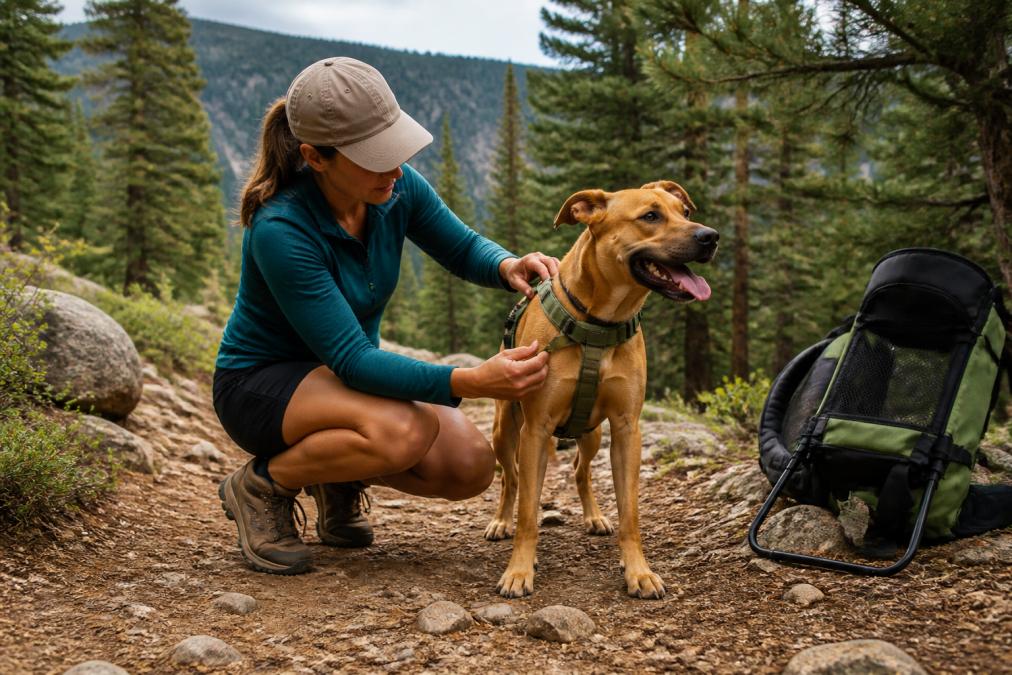
Run this quick test sequence:
- Clip the leash and apply steady backward pressure for ten seconds
- Lift the harness by its D-ring to check stitching under load
- Tug each adjustment point to confirm it holds position
- Check buckles in cold conditions if you hike in winter
After a real hike, inspect seams and hardware for wear. Catching a frayed stitch early is far cheaper than replacing gear mid-season.
Common Mistakes That Shorten Gear Life
The biggest gear-killer is machine washing on a hot cycle. Heat degrades webbing and weakens stitching, and detergent residue breaks down water-resistant coatings. Hand wash with mild soap and air dry instead.
Other mistakes that cut gear life short:
- Storing wet gear in a closed bag, which grows mildew in the padding
- Leaving a harness on during off-leash time, where it snags on brush
- Ignoring loose hardware until a buckle fails on the trail
- Using a collar-only setup for a strong puller, which strains the neck
How to Care for Durable Pet Gear So It Lasts
Rinse gear with fresh water after every hike, especially after mud or salt exposure. Dirt acts like sandpaper inside webbing and padding, wearing fibers down faster than trail use alone.
Dry everything fully before storage. Hang harnesses and carriers in open air rather than stuffing them into a gear bin. For cooling products like the Proud Pet Shop Cooling Recovery Mat ($28.99), follow the same rule: let it dry completely before folding, since its chew-resistant cover protects the gel layer underneath.
Check gear monthly for:
- Frayed stitching along load-bearing seams
- Cracked or bent hardware
- Worn padding that no longer cushions
- Stretched adjustment straps that slip under tension
Replacing a worn component early keeps the rest of the setup working. A $37.99 harness can be a worthwhile investment.
Conclusion
Durable hiking gear comes down to three habits: measuring your dog accurately, checking construction rather than appearance, and testing before you trust a trail. Gear that fails usually fails because of skipped steps, not bad luck.
Proudpetshop stocks gear built for exactly this kind of use, from the front-clip No-Pull Adventure Harness to the ventilated TrailFold Carrier, all backed by a 30-day satisfaction guarantee, free shipping on orders over $50, and fast tracked delivery. Get started with Proudpetshop and gear up for a season of trails your dog can actually handle.
Frequently Asked Questions
What materials are most durable for dog hiking gear?
Look for abrasion-resistant nylon webbing and metal hardware. These materials resist abrasion from rocks and brush far better than basic nylon or plastic. Stitching matters too: bar-tack reinforcement at stress points prevents seams from blowing out. For harnesses, padded linings that breathe keep friction down on long hikes. Durable pet gear combines tough outer fabric with reinforced attachment points, so the leash clip does not tear free when your dog lunges.
How do I measure a dog for a hiking harness?
You need three numbers: girth (the widest part of the ribcage, just behind the front legs), neck circumference, and back length from the base of the neck to the tail. Use a soft tape measure and keep it snug, not tight. Write the numbers down and compare them to the harness size chart, not your dog's weight. A harness that fits correctly stays put when you pull up on the handle and does not slide sideways during a walk.
How do I know if a pet carrier is safe for hiking?
Check for an interior safety leash attachment, breathable mesh panels on at least two sides, and weight-distributing shoulder straps. The Proud Pet Shop TrailFold Carrier includes a safety leash clip, mesh ventilation, and a removable washable pad, so it handles dirt and moisture on the trail. Test the carrier on a short walk before a long hike. If your pet can stand, turn around, and lie down inside, the size is right.
How do I maintain pet hiking gear to ensure longevity?
Rinse mud and salt off harnesses, carriers, and mats with plain water after every hike, then air-dry away from direct sun. Check stitching and hardware monthly for fraying or cracks. For cooling mats, drain and dry the gel layer fully before storage to prevent mold. Store gear loosely in a dry bin, not compressed in a bag. The Proud Pet Shop No-Pull Adventure Harness and TrailFold Carrier both clean up with a damp cloth and mild soap, which keeps fabric and mesh from breaking down.