
Table of Contents
- Start With Your Pet's Measurements
- Airline Approved Pet Carriers: What Meets Carry-On Rules
- Soft vs Hard Pet Carriers: Which Type Fits Your Trip
- Weight Limits, Capacity, and Ease of Cleaning
- What Most Guides Skip: Anxiety, Climate, and Multi-Pet Travel
- Proud Pet Shop Carriers That Match These Rules
- How to Choose Portable Pet Carriers: A Step-by-Step Checklist
- Frequently Asked Questions
Last Updated: September 13, 2026
Start With Your Pet's Measurements
The single most common reason portable pet carriers get returned is size, and it has nothing to do with the carrier being badly made. It has to do with the buyer guessing. Getting accurate pet measurements takes five minutes and prevents weeks of frustration. Here's how to do it properly.
How to Measure a Dog for a Carrier is straightforward: measure length from the base of the neck to the base of the tail, measure shoulder height from the floor to the top of the shoulder blades, and measure width across the widest part of the chest. Add roughly two inches to each figure for comfortable movement. For cats, the same method applies, though most cats need a carrier with more vertical clearance because they tend to stand and turn rather than lie flat.
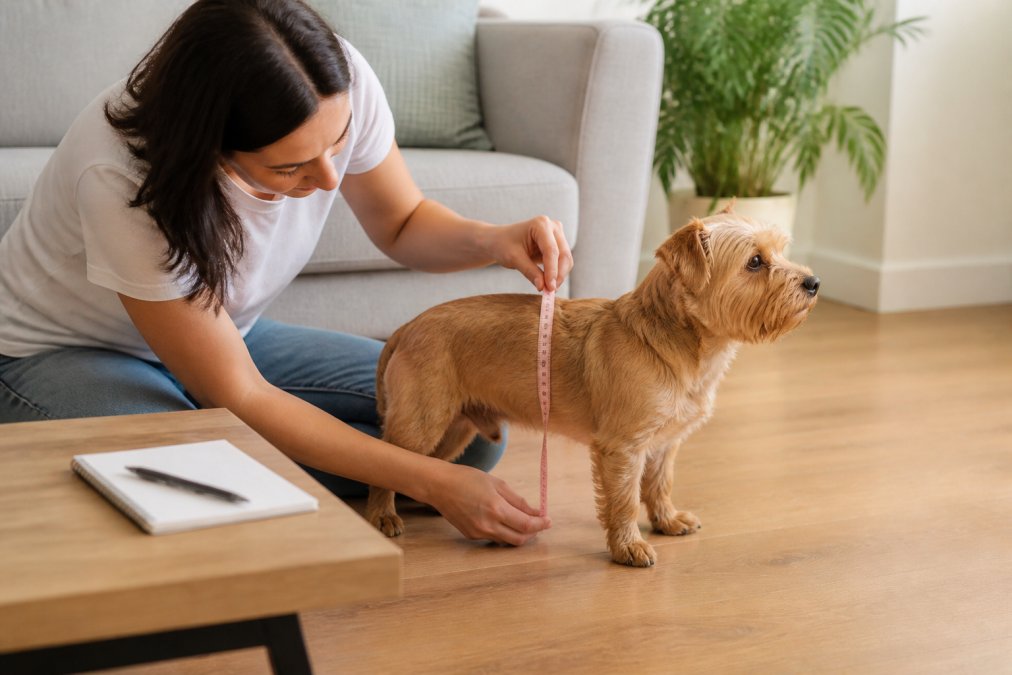
Weigh your pet on a home scale, or weigh yourself holding them and subtract your own weight. Write all four numbers down before you shop. The American Kennel Club's guidance on pet travel recommends confirming your pet can stand, sit, and turn around naturally inside any carrier before you commit to it.
Airline Approved Pet Carriers: What Meets Carry-On Rules
There is no universal "airline approved" stamp. Airlines set their own in-cabin rules, and a carrier that clears one carrier's restrictions may fail another's. The term airline approved pet carriers is a marketing shorthand, not a certification.
Under-Seat Dimensions and TSA Compliance
Most domestic airlines publish an under-seat dimensions range for in-cabin pet carriers, commonly around 17 to 18 inches long, 10 to 11 inches wide, and 9 to 10 inches tall, though the exact figure varies by aircraft and cabin class (transportation.gov). Always check your specific airline's published limit before flying, because gate agents measure at check-in and a carrier that doesn't fit gets denied.
TSA compliance is separate from airline approval. TSA screening requires that your pet be removed from the carrier and carried through the metal detector while the carrier goes through X-ray (tsa.gov). A carrier with a wide, top-loading opening makes this far less stressful than one that only unzips at the front.
Soft vs Hard Pet Carriers: Which Type Fits Your Trip
Soft-sided carriers win for in-cabin flights and everyday errands because they compress into tight spaces and weigh less. Hard-shell carriers win for cargo travel and car safety because they hold their shape under impact. Neither is universally better, and the right answer depends entirely on how you're traveling, but the reasons behind that split matter more than the split itself.
| Feature | Soft-Sided | Hard-Shell |
|---|---|---|
| Best for | In-cabin flights, vet visits, errands | Cargo travel, car transport |
| Ventilation | Mesh paneling on multiple sides | Vents or grille openings |
| Structure | Flexible, compresses to fit | Rigid, holds shape |
| Cleaning | Often machine-washable liners | Wipe-down interior |
| Weight | Lighter | Heavier |
| Crash protection | Limited; relies on harness tether | Better; rigid shell resists deformation |
| Repairability | Zippers and mesh can be replaced by a tailor | Cracks in the shell usually mean replacement |
| Weather behavior | Breathes well in heat; needs a cover in cold | Insulates better; can trap heat in summer |
Why the Structure Matters More Than the Fabric
A soft-sided carrier's job is to hold its shape when compressed under an airplane seat while still letting air move. That's why the frame, not the outer fabric, is the spec to check. Look for internal wire or plastic ribbing along the top and sides, because a carrier that collapses when set down will collapse on your pet. A hard-shell carrier's job is the opposite: it resists deformation, which is why it's the safer choice in a car, where an unsecured soft carrier can fold in a sudden stop.
Ventilation, Padding, and Secure Fastenings
Ventilation matters more than most buyers realize. Look for mesh paneling on at least two sides so air moves through rather than around your pet. Breathable fabric alone isn't enough if airflow is blocked. A common pattern is three-sided mesh on soft carriers and a combination of a front grille plus side vents on hard shells; either way, confirm air can cross the interior rather than just enter and stall.
Padding should be removable so you can wash it, and it should be thick enough to support a pet through a multi-hour trip. Secure zippers are non-negotiable; some carriers add locking mechanisms or clip closures that prevent a determined pet from working the zipper open mid-journey. A safety tether that clips to a harness adds a second layer of security.
A Gap Most Guides Skip: Repairability and Longevity
Almost every comparison stops at "soft for flights, hard for cars" and never asks what happens when the carrier breaks. Zippers, mesh panels, and straps are the parts that fail first, and on a soft-sided carrier those are often replaceable by a local tailor or luggage repair shop for far less than a new carrier. On a hard-shell carrier, a cracked shell or a snapped latch usually ends the carrier's life. If you want a carrier to last through multiple pets, favor soft-sided models with standard-size zippers and stitched (not glued) mesh, and treat the removable liner as the wear part you replace. That's a more sustainable purchase than buying a new carrier every couple of years.
Weight Limits, Capacity, and Ease of Cleaning
Weight capacity is the spec buyers overlook most often, and it's the one that determines whether a carrier is safe. A carrier rated for 15 pounds will feel very different carrying a 14-pound dog than a 9-pound one, especially on your shoulder for an hour. The rated limit usually assumes the pet's weight alone, so add the weight of a harness, a water bottle, and anything in the side pockets before you decide you're under the ceiling.
Match the carrier's stated weight limit to your pet's actual weight with a margin to spare. If your pet is close to the ceiling, size up. A useful rule of thumb many owners settle on is to keep your pet at roughly 80 percent of the rated capacity, which leaves room for movement and for the carrier to hold its shape.
Cleaning Is Where Cheap Carriers Fail
Cleaning is where cheap carriers fall apart. Removable padding that's machine-washable extends a carrier's usable life considerably, because accidents happen and a carrier you can't clean becomes a carrier you avoid using. Look for wipe-down interiors on hard-shell models and removable, washable liners on soft-sided ones. Check whether the liner attaches with a full zipper or just hook-and-loop strips, zippers survive repeated washing, hook-and-loop loses grip after a dozen cycles. For mesh panels, a soft brush and mild soap beat a washing machine, which can stretch the mesh out of shape.
A Gap Most Guides Skip: Climate and Multi-Pet Logistics
Two factors decide whether a trip actually goes well, and most buying guides never mention them: the weather and how many animals you're moving.
Climate changes what you buy. In hot weather, mesh paneling and airflow matter more than insulation, and a carrier that traps heat is a hazard, never leave a pet in a closed carrier in a parked car in any season. In cold weather, a carrier with a removable padded liner and a wind-blocking cover keeps a small pet warm, and a hard-shell carrier holds warmth better than an open mesh soft-sided one. If you travel in both extremes, a soft-sided carrier plus a separate insulated cover is more flexible than buying two carriers.
Multi-pet travel requires one carrier per pet, sized individually. Two small pets in one carrier seems efficient until one panics, and a panicking pet can injure the other. If you're moving more than one animal, plan for the space each carrier takes and consider a sling or backpack for the smallest pet so both hands stay free. On a plane, each in-cabin pet typically needs its own reservation and its own under-seat space, so confirm the airline's per-flight pet limit before you book two seats.
Repairability as a Buying Criterion
Before you buy, look at the parts that fail: zippers, mesh, straps, and liners. A carrier with standard-size zippers, stitched mesh, and a replaceable liner can be repaired for a fraction of replacement cost. A carrier with glued mesh and a sealed shell usually can't. If longevity matters to you, that single check separates a carrier you'll keep for years from one you'll replace in eighteen months.
What Most Guides Skip: Anxiety, Climate, and Multi-Pet Travel
Most buying guides stop at dimensions and never mention the three factors that actually determine whether a trip goes well: your pet's emotional state, the weather, and how many animals you're moving.
Carrier anxiety is real and it's trainable. Desensitization works by leaving the carrier open in your home for days before the trip, feeding treats inside it, and taking short practice drives. A pet that has never seen the carrier before travel day will panic. A pet that naps in it will not.
Climate changes what you buy. In hot weather, mesh paneling and airflow matter more than insulation. In cold weather, a carrier with a removable padded liner and a wind-blocking cover keeps a small pet warm. Never leave a pet in a closed carrier in a parked car in any season.
Multi-pet travel requires one carrier per pet, sized individually. Two small pets in one carrier seems efficient until one panics. If you're moving more than one animal, plan for the space each carrier takes and consider a sling or backpack for the smallest pet so both hands stay free.
Proud Pet Shop Carriers That Match These Rules
Proudpetshop stocks two carriers that hit the specs above without the guesswork. The Proud Pet Shop TrailFold Carrier ($34.99) is a front-folded backpack with breathable mesh, adjustable straps, a removable pad, pockets, and a safety leash. Wear it front-facing for smaller pets or switch to back mode for longer treks.

The Proud Pet Shop Sidekick Sling ($28.99) is a crossbody sling rated to 15 lbs with an adjustable strap and breathable panel, built for vet visits and quick errands where a full backpack is overkill. Both carry the brand's 30-day satisfaction guarantee and ship free on orders over $50.

How to Choose Portable Pet Carriers: A Step-by-Step Checklist
Work through this in order and you'll land on the right carrier the first time.
- Measure length, shoulder height, chest width, and weight
- Add 2 inches of clearance to each dimension
- Confirm your airline's under-seat dimensions before booking
- Choose soft-sided for in-cabin, hard-shell for cargo or car
- Verify mesh paneling on at least two sides
- Check the weight capacity against your pet's actual weight
- Confirm padding is removable and washable
- Check zippers lock or clip closed
- Look for a safety tether or leash attachment point
- Start desensitization training at least a week before travel
Frequently Asked Questions
How do I measure my pet for the correct carrier size?
Measure your pet's length from the base of the neck to the base of the tail, then measure shoulder height while standing. Add 2 to 3 inches to each measurement so your pet can stand, turn around, and lie down flat. Weigh your pet on a home scale. Compare these numbers to the carrier's interior dimensions, not the exterior. A carrier that is too small causes stress and can be refused by airlines; one that is too large reduces the safety of the containment.
Do cats prefer hard or soft carriers?
Most cats settle faster in soft-sided carriers because the mesh paneling lets them see out while the fabric walls block some light and sound. Hard-shell carriers offer more structural integrity and are easier to wipe down after accidents. For vet visits and short trips, a soft carrier with a removable, machine-washable pad works well. For long-distance travel or pets that paw aggressively at zippers, a hard-shell option with locking mechanisms may hold up better. Many owners keep both types.
What features do veterinarians recommend in a pet carrier?
Vets typically look for secure zippers or locking mechanisms that a pet cannot paw open, adequate ventilation on at least two sides, a safety tether or leash clip inside, and a pad that can be removed and machine-washed. A carrier that opens from the top makes it easier to lift a reluctant cat or injured dog out without a struggle. Airlines also require TSA-compliant carriers with mesh paneling for in-cabin travel, so check those rules before you buy.
Are there specific safety standards for pet carriers in vehicles?
There is no federal crash-test standard for pet carriers in the United States. The Center for Pet Safety conducts independent crash tests and rates carriers on structural integrity, secure fastenings, and how well they keep a pet contained during impact. For car travel, place the carrier on the floor behind a seat or secure it with a seatbelt, and never let a pet ride loose in the cabin. A carrier with a safety tether and locking mechanisms reduces the risk of escape after a sudden stop.
Choosing the right carrier comes down to measurement and honesty about how you'll actually travel, not marketing labels. Proudpetshop stocks carriers built for real trips, with breathable mesh, removable pads, safety leashes, and adjustable straps, all backed by a 30-day satisfaction guarantee and free shipping on orders over $50. Get started with Proudpetshop and find a carrier that fits your pet the first time.