
Table of Contents
- Preparation and Inspection Before Cleaning
- Best Pet-Safe Cleaning Solutions for Your Sling
- Spot Cleaning vs. Deep Cleaning Your Sling Bag
- How to Wash a Dog Carrier Without Damaging It
- How to Remove Pet Hair From Fabric Carriers
- Drying Methods and Hardware Maintenance
- Sanitization and Odor Elimination
- Common Mistakes to Avoid When Cleaning
Last Updated: August 26, 2026
Preparation and Inspection Before Cleaning
Before cleaning your crossbody pet sling bag, inspect it thoroughly for damage to zippers, buckles, seams, and fabric. Look for loose threads, broken stitching, or compromised material that could worsen during cleaning.
Empty the sling completely and remove loose debris from all pockets and corners using a small brush or vacuum with an upholstery attachment. Pay special attention to mesh ventilation panels where pet dander accumulates.
Check the care label for manufacturer guidelines on water temperature and detergent type. Knowing the fabric composition helps you choose the right approach. Identify problem areas, visible stains, odor issues, or matted pet hair, to determine whether you need spot cleaning or deep cleaning.
Best Pet-Safe Cleaning Solutions for Your Sling
Choose non-toxic, pet-safe cleaning solutions since your pet will sit in this sling again. Harsh chemicals can irritate sensitive skin or cause respiratory issues.
Mild detergent is your foundation. Look for pet-safe formulas, or use baby shampoo, which is gentle and pH-neutral. Dish soap diluted one part to ten parts water works well for light soiling.
For odor elimination, baking soda is your best ally. Sprinkle it on damp fabric after cleaning, let it sit overnight, then vacuum thoroughly. White vinegar mixed with water (one part vinegar to three parts water) also neutralizes odors. Enzymatic cleaners break down organic matter like urine or feces at the molecular level and are worth using for serious accidents (peer-reviewed research).
Avoid bleach, ammonia, phenol-based cleaners, and essential oil sprays, which can harm your pet's respiratory system or cause skin irritation (aspca.org). Never use fabric softeners or heavy perfumes on pet gear.
Spot Cleaning vs. Deep Cleaning Your Sling Bag
Spot cleaning and deep cleaning serve different purposes. Understanding when to use each method saves time and extends your sling's lifespan.
Spot Cleaning for Fresh Messes
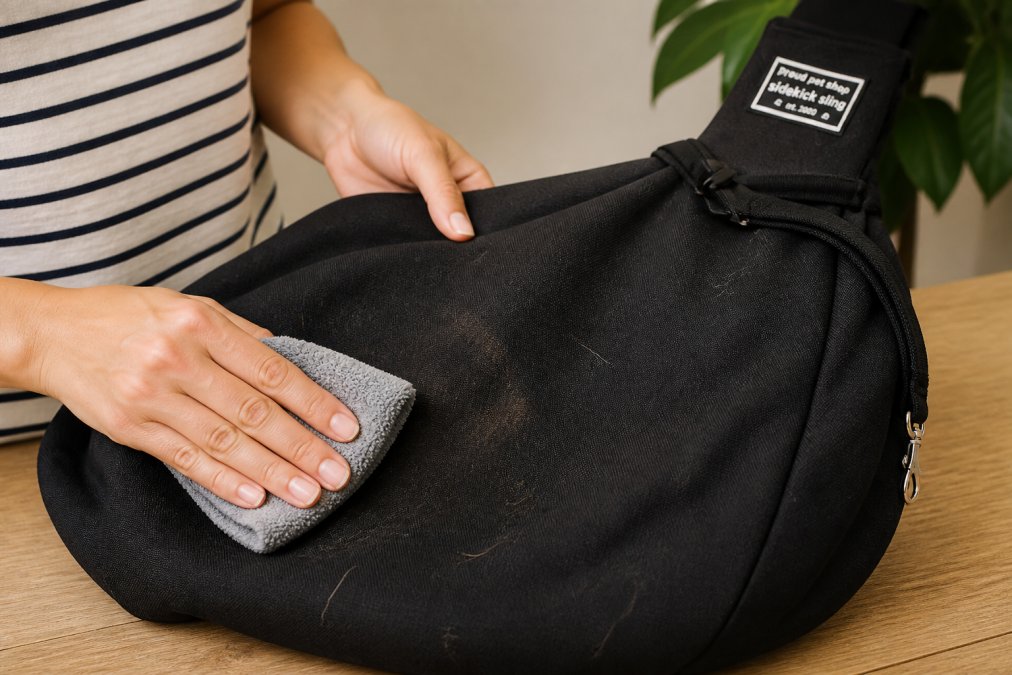
Spot cleaning handles fresh spills, minor stains, and surface dirt. Act quickly when a mess happens, the faster you treat it, the less likely it is to set permanently.
Blot up excess material immediately with paper towels or a clean cloth without rubbing. For liquid spills, blot from the outside edges toward the center. Mix mild detergent solution and apply it with a damp microfiber cloth using circular motions. Avoid saturating the fabric.
Rinse with a separate damp cloth, going over the area multiple times to remove all detergent residue. Let the sling air dry completely before using it again.
Deep Cleaning for Stubborn Stains and Odors
Deep cleaning tackles accumulated dirt, set-in stains, and persistent odors. Use this method every few months or when spot cleaning isn't enough.
Remove all detachable hardware, pads, liners, or cushions before washing. Fill a basin with lukewarm water and mild detergent, then submerge the sling for 15-30 minutes. Gently agitate the sling in the water, working the solution through the fabric and paying extra attention to problem areas. Use a soft brush on stubborn stains, but avoid scrubbing hard enough to damage fibers.
Drain the soapy water and rinse thoroughly. Refill the basin with clean water and rinse the sling multiple times until the water runs clear. Repeat at least three times to ensure complete removal of detergent residue.
For odor elimination after rinsing, apply baking soda while the sling is still damp. Sprinkle it generously over all surfaces and let it sit for 8-12 hours or overnight. Vacuum thoroughly with an upholstery attachment to remove all baking soda.
How to Wash a Dog Carrier Without Damaging It
Your crossbody pet sling bag is delicate and requires careful washing to preserve fabric integrity and protect hardware.
Hand Washing for Maximum Control
Hand washing gives you complete control over water temperature, agitation, and rinsing. It's the safest method for most slings.
Fill a basin with lukewarm water and add mild detergent at one tablespoon per gallon. Never use hot water, as this can shrink synthetic fibers, fade colors, and damage padding (the FTC). Submerge the sling and let it soak for 10-20 minutes.
Gently clean all surfaces using your hands or a soft brush, working the soapy water through the fabric. Pay special attention to seams and mesh ventilation panels. Clean mesh from both sides and work carefully around zippers and buckles.
Rinse with cold water by holding the sling under running water or dunking it repeatedly in fresh water. Continue rinsing until the water runs completely clear. Squeeze out excess water gently without wringing or twisting, which can damage seams and distort the shape.
Machine Washing Instructions for Removable Components
If your sling has removable pads, liners, or cushions, these can often be machine washed separately. Always check the manufacturer's instructions first.
Place removable components in a mesh laundry bag and set your washing machine to a gentle cycle with cold water. Use mild detergent only, about half the normal amount.
Never wash the main sling body in a machine unless the manufacturer explicitly states it's machine washable. If your Proud Pet Shop Sidekick Sling or similar carrier has machine-washable components, remove them before washing. The main bag should be hand washed to protect the buckle-close design and breathable panel that keep your pet safe and comfortable.

How to Remove Pet Hair From Fabric Carriers
Pet hair embeds itself into fabric carriers, especially mesh ventilation panels. Removing it requires multiple techniques.
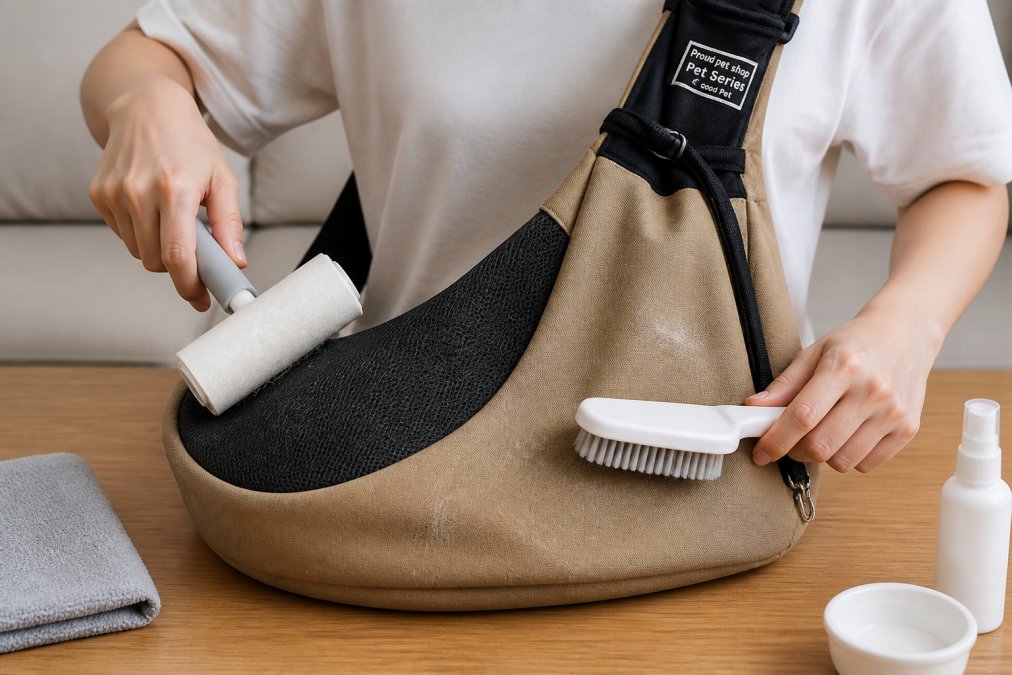
Start with a lint roller, rolling it over all fabric surfaces including seams and mesh panels. Use a fresh sheet for each area as the adhesive quickly becomes saturated. A pet hair removal brush with short, dense bristles grabs hair without damaging fabric. Brush in one direction, then flip the brush to release captured hair.
A damp microfiber cloth picks up fine pet dander that brushes miss. Wipe all surfaces, rinsing the cloth frequently. For stubborn hair in mesh panels, try a soft toothbrush, gently brushing from both sides. A vacuum with an upholstery attachment removes loose hair quickly using the brush attachment rather than the bare hose.
Drying Methods and Hardware Maintenance
How you dry your sling determines whether it maintains its shape and functionality. Air drying is the only acceptable method, never use a clothes dryer, hair dryer, or direct heat.
Hang the sling in a well-ventilated area away from direct sunlight, or lay it flat on a clean, dry towel. Ensure good air circulation by opening windows or using a fan to speed evaporation. Most slings dry completely in 24-48 hours. Rotate the sling periodically if hanging to ensure even drying.
Inspect hardware as the sling dries. Check zippers, buckles, and straps for corrosion or damage. If zippers become stiff, apply a small amount of silicone-based lubricant. Never use oil-based lubricants, as these attract dirt. A tiny amount of graphite powder works well for sticky zippers.
Inspect buckles and strap attachments for cracks or looseness. If stitching is coming undone, repair it immediately before the damage spreads.
Sanitization and Odor Elimination
Cleaning removes visible dirt, but sanitization eliminates bacteria, viruses, and odor-causing organisms. This step is especially important if your pet has been ill or the sling has absorbed persistent odors.
After washing and rinsing completely, sprinkle baking soda generously over all surfaces while the sling is still damp. Let it sit for 8-12 hours or overnight. Vacuum thoroughly to remove all baking soda, ensuring the sling is completely baking-soda-free before your pet uses it again.
For persistent odors, repeat the baking soda treatment. Sun exposure also sanitizes naturally, hang the sling in direct sunlight for several hours if the fabric color can tolerate it, as UV rays kill bacteria and odor-causing organisms.
Never use essential oil sprays or chemical deodorizers on pet gear, as these can irritate your pet's sensitive nose and respiratory system. Baking soda and time are your safest options.
Common Mistakes to Avoid When Cleaning
Learning what not to do prevents damage and extends your sling's lifespan.
Using hot water can shrink synthetic fibers, damage padding, weaken seams, and set stains permanently. Always use cold or lukewarm water.
Oversaturating with water causes mold growth and water damage. Damp is sufficient for cleaning. Skipping the rinse step leaves detergent residue that attracts dirt and can irritate your pet's skin. Rinse at least three times until the water runs completely clear.
Using fabric softener or heavy perfumes masks odors without eliminating them and reduces breathability. Wringing or twisting the sling damages seams and distorts the structure, squeeze gently instead.
Rushing the drying process leads to mold. Patient air drying is the only safe method. Ignoring hardware maintenance allows small problems to become big ones. Mixing bleach or ammonia with other cleaners creates toxic fumes, stick with mild detergent and baking soda.
Keeping your crossbody pet sling bag clean protects your pet's health and extends the life of your investment. Regular maintenance prevents stubborn stains and odors from developing. The Proud Pet Shop Sidekick Sling, designed with breathable panels and durable synthetic materials, responds well to the hand-washing methods covered here. Its adjustable strap and secure buckle-close design withstand gentle cleaning without damage. Start with regular spot cleaning and deep clean as needed to keep your sling fresh, hygienic, and ready for your next adventure together.
Frequently Asked Questions
Q: Can I wash a crossbody pet sling bag in the washing machine?
A: Most crossbody pet sling bags have removable components that can be machine washed on a gentle cycle with cold water and mild detergent. However, the main sling body should generally be hand-washed to protect buckles, zippers, and fabric integrity. Always check your product's care label first, as some synthetic fibers may be sensitive to heat or agitation.
Q: What is the best pet-safe cleaning solution for my pet sling?
A: Use pH-neutral, non-toxic cleaners specifically formulated for pet items. Mix one part white vinegar with three parts water for a natural solution, or use a pet-safe enzymatic cleaner to break down odor-causing bacteria. Avoid bleach and harsh chemicals that can damage synthetic fibers and harm your pet. Always rinse thoroughly with clean water to remove any detergent residue.
Q: How do I remove pet hair and dander from my fabric carrier?
A: Start by vacuuming the sling with an upholstery attachment to capture loose pet hair. Use a lint roller or pet hair removal brush on all fabric surfaces, paying special attention to nooks and crannies around mesh ventilation areas. For stubborn pet dander, wipe the interior with a slightly damp microfiber cloth. Removable mats can be machine washed on a gentle cycle to eliminate embedded hair and dander completely.
Q: How often should I clean my crossbody pet sling bag?
A: Spot clean your sling regularly to address fresh messes and pet hair accumulation. Perform a deep clean as needed depending on use frequency and your pet's shedding level. If your pet spends significant time in the sling or has accidents, increase cleaning frequency. Regular maintenance prevents odor buildup and extends the life of your carrier's synthetic fibers and hardware.
This article was written using GrandRanker