
Table of Contents
- Why Dirty Water Bowls Put Your Dog's Health at Risk
- How Often to Wash Dog Water Bowls (Daily, Weekly, and Monthly)
- Step-by-Step: How to Clean Dog Water Bowls
- How to Remove Slime from Dog Bowls and Stop Biofilm
- Best Material for Dog Water Bowls: Stainless Steel, Ceramic, or Plastic?
- Safe Cleaning Agents and Disinfectants for Dog Bowls
- Common Cleaning Mistakes and Drying Protocols
- Conclusion: Make Bowl Cleaning a Healthy Habit
- Frequently Asked Questions
Last Updated: October 1, 2026
Why Dirty Water Bowls Put Your Dog's Health at Risk
A dog's water bowl is one of the most overlooked items in the home. Yet it touches your pet's mouth dozens of times a day. Learning how to clean dog water bowls properly is one of the simplest ways to protect your dog's health.
The risks are real:
- Bacteria and pathogens can cause gastrointestinal issues
- Mold and yeast thrive in damp, dirty bowls
- A weakened immune system makes pets more vulnerable
- Cross-contamination spreads germs to other pets and people
How Often to Wash Dog Water Bowls (Daily, Weekly, and Monthly)
The short answer: wash water bowls daily, deep clean weekly, and replace worn bowls every few months. Fresh water alone isn't enough.
Daily Maintenance Routine
Rinse and refill the bowl at least once a day. If you have a heavy drooler or a messy eater, do it twice. A quick scrub with hot water and dish detergent takes under a minute.
Weekly Deep Clean Schedule
Once a week, do a full scrub with hot water, dish detergent, and a bottle brush for the corners. This is where you remove the slime that builds up out of sight.
| Task | Frequency | Time Needed |
|---|---|---|
| Rinse and refill | Daily | 30 seconds |
| Scrub with soap | Daily to every other day | 1 minute |
| Deep clean with brush | Weekly | 5 minutes |
| Sanitize or disinfect | Weekly | 5-10 minutes |
| Replace worn bowl | Every 3-6 months | N/A |
Step-by-Step: How to Clean Dog Water Bowls
Cleaning a water bowl takes about five minutes. Follow these steps for a bowl that's truly clean, not just rinsed.
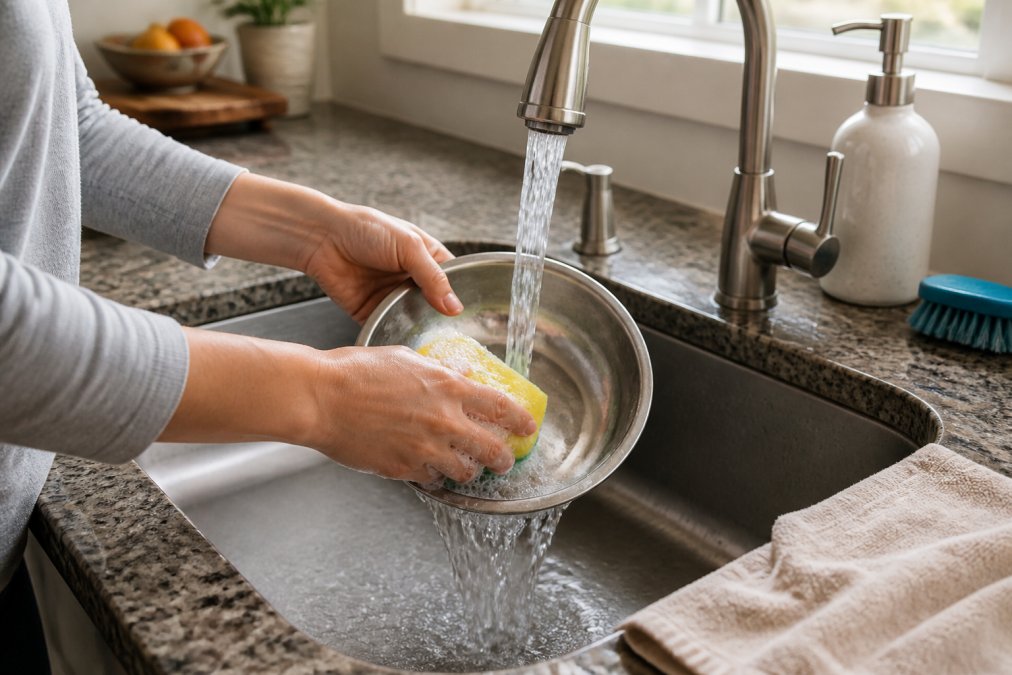
What You'll Need
- Dish detergent (food-grade, unscented is best)
- A bottle brush or sponge dedicated to pet bowls
- Hot water
- White vinegar or a pet-safe disinfectant
- A clean towel or drying rack
The 5-Step Cleaning Process
- Dump the old water. Never top off a half-full bowl.
- Scrub with hot water and dish detergent. Get into every corner and the base.
- Rinse thoroughly. Soap residue can upset a dog's stomach.
- Sanitize. Soak in a white vinegar and water mix, or use a pet-safe disinfectant.
- Air dry completely. Flip the bowl upside down so water can't pool.
Expected Result: A bowl with no slick film, no odor, and no soap residue.
How to Remove Slime from Dog Bowls and Stop Biofilm
Slime on a dog bowl is biofilm, and it needs friction to remove. A simple rinse won't cut it. You have to scrub.
Here's what works:
- Use hot water and dish detergent with a brush
- Scrub the sides, bottom, and rim
- For stubborn slime, soak in white vinegar for 10 minutes first
- Rinse and dry fully
Best Material for Dog Water Bowls: Stainless Steel, Ceramic, or Plastic?
Stainless steel is the best material for dog water bowls because it is non-porous, easy to clean, and does not hold onto bacteria. Ceramic is a close second if it is glazed and chip-free. Plastic is the weakest choice. But the material you pick also determines which cleaners are safe to use on it, and that is where most guides stop short.
Material-by-Material Cleaning Trade-offs
Stainless steel: Non-porous, dishwasher-safe, resists scratches. It is the most chemically tolerant bowl material. You can use hot water, dish detergent, diluted white vinegar, and even a heavily diluted bleach solution (followed by a thorough rinse) without damaging the surface. Stainless steel does not absorb odors or stains, so if a bowl still smells after washing, the residue is on the surface, not in it.
Which Cleaners React Poorly With Which Materials
This is the part most guides skip. The wrong cleaner does not just fail to sanitize, it can damage the bowl and make future cleaning harder.
- Bleach on porous plastic: Can degrade the polymer surface, causing micro-cracking that traps bacteria. If you must use bleach on plastic, dilute it heavily and rinse until no odor remains, but understand the surface is being compromised.
- Bleach on stainless steel: Generally safe when diluted, but undiluted bleach left to sit can pit the surface over time. Rinse thoroughly and do not soak overnight.
- Abrasive cleansers on ceramic glaze: Scratching the glaze creates anchor points for biofilm. Use a soft sponge, not steel wool or scouring powder.
- Essential oil cleaners on any material: Many essential oils are toxic to dogs even in small residues. Skip them entirely on food and water bowls.
- Ammonia-based products on any material: The residue is hard to fully rinse and the fumes are irritating to pets. Avoid.
A Simple Rule for Matching Cleaner to Bowl
If the bowl is stainless steel, you have the widest margin for error. If it is glazed ceramic, treat the glaze like a nonstick pan: gentle cleaners, no abrasives, and retire it at the first chip. If it is plastic, assume the surface is holding onto more than you can see, clean it gently, and replace it more often than you would a steel or ceramic bowl.
Proud Pet Shop Slow-Feeding System →
Safe Cleaning Agents and Disinfectants for Dog Bowls
Pet-safe cleaning means avoiding harsh chemicals that leave residue. Dish detergent and hot water handle most jobs. For disinfecting, diluted white vinegar is a safe, food-grade option. But two problems get confused constantly: biofilm and hard water scale. They look similar and need completely different treatments.
Biofilm vs. Hard Water Scale: How to Tell Them Apart
Biofilm is a living layer. It feels slick or slimy to the touch, has an odor, and regrows within a day or two of cleaning. It is bacteria embedded in a self-produced matrix that protects them from a simple rinse. Biofilm needs friction to remove: a brush, hot water, and detergent.
How to Remove Each One
For biofilm:
- Dump the water and scrub with hot water and dish detergent using a bottle brush
- Pay attention to the rim, the base, and any seams where the bowl meets a non-slip ring
- For stubborn slime, soak in a 1:1 white vinegar and water mix for 10 minutes first, then scrub
- Rinse and air dry completely
For hard water scale:
- Soak the bowl in undiluted white vinegar for 15 to 30 minutes
- The acid dissolves the calcium carbonate deposit
- Wipe or lightly scrub with a soft sponge
- Rinse thoroughly and dry
A vinegar soak once a week handles both mild scale and light biofilm, which is why it is the most versatile pet-safe option.
What to Avoid and Why
- Bleach unless heavily diluted and fully rinsed. Bleach residue can irritate a dog's mouth and digestive tract. If you use it, dilute to roughly one tablespoon per gallon of water, soak briefly, and rinse until no odor remains.
- Scented cleaners with essential oils. Many essential oils, including tea tree, citrus, and peppermint, are toxic to dogs even in small amounts. Residue on a water bowl is a real risk.
- Ammonia-based products. Fumes irritate pets and the residue is difficult to fully rinse.
- Abrasive scouring powders. They scratch glazed ceramic and plastic, creating anchor points for future biofilm.
Always rinse until there is no soap smell or film. If you can smell the cleaner, your dog can taste it.
Dishwasher Safety and Water Quality
Most stainless steel and ceramic bowls are dishwasher safe. Place them on the top rack and use a detergent without added fragrance or rinse aid if your dog is sensitive. Plastic bowls can warp in high heat, so check the label first. Silicone bowls and mats are generally dishwasher safe on the top rack.
Common Cleaning Mistakes and Drying Protocols
The biggest mistake is topping off a dirty bowl instead of washing it. Other common errors include using the same sponge for pet bowls and human dishes, and skipping the drying step.
Conclusion: Make Bowl Cleaning a Healthy Habit
A clean water bowl is one of the cheapest, easiest ways to protect your dog's health. The routine takes seconds a day and minutes a week. Most pet parents just need a system they'll actually stick to.
Frequently Asked Questions
How do I sanitize my dog water bowl?
After washing with hot water and dish detergent, sanitize by soaking the bowl in a diluted bleach solution (1 tablespoon of bleach per gallon of water) for 2 minutes, then rinse thoroughly. Alternatively, run it through the dishwasher on a hot cycle. Always ensure the bowl is completely dry before refilling. For daily maintenance, hot soapy water is enough; deep sanitization once a week helps kill lingering pathogens.
Can I use Dawn dish soap to clean my dog's water bowl?
Yes, Dawn and similar grease-cutting dish detergents are safe for cleaning dog bowls as long as you rinse thoroughly. These soaps break down saliva and fat residue effectively. However, avoid any detergent with added fragrances, dyes, or antibacterial agents, as residue can cause gastrointestinal upset. After washing, rinse until no suds remain and the bowl smells clean. A vinegar rinse can help remove any lingering soap film.
Is it safe to put dog bowls in the dishwasher?
Most stainless steel, ceramic, and food-grade silicone bowls are dishwasher-safe. Place them on the top rack and use a hot cycle with a pet-safe detergent. Avoid washing plastic bowls in the dishwasher if they are not labeled dishwasher-safe, as heat can cause warping and release chemicals. Always check the manufacturer's instructions. If you use the dishwasher, make sure to run a full cycle and dry completely before refilling.
How often should I replace my dog's water bowl?
Replace your dog's water bowl every 6 to 12 months, or sooner if you notice deep scratches, cracks, or a persistent slime that won't wash away. Plastic bowls degrade faster and can harbor bacteria in scratches, so consider switching to stainless steel or ceramic. If your dog has chewed or damaged the bowl, replace it immediately to prevent injury or bacterial growth. Regular replacement is a small price for your pet's health.