
Table of Contents
- Understand Your Dog's Digestive System
- Recognize Signs of Poor Gut Health in Dogs
- Step 1: Slow Down Mealtime to Support Digestion
- Step 2: Add Fiber-Rich Foods and Prebiotics
- Step 3: Introduce the Best Probiotics for Dogs
- Step 4: How to Transition Dog Food Safely
- Step 5: Ensure Proper Hydration and Exercise
- When to See a Veterinarian
- Frequently Asked Questions
Last Updated: September 24, 2026
Understand Your Dog's Digestive System
Your dog's digestive system is a complex network designed to break down food, absorb nutrients, and eliminate waste. It starts in the mouth and travels through the esophagus, stomach, small intestine, large intestine, and colon. When this system works well, your dog has energy, a healthy coat, and solid stools. When it doesn't, you see gas, bloating, loose stools, and discomfort.
The gut microbiome plays a central role in this process. Your dog's intestines host billions of bacteria that help digest food, support immune function, and even influence mood and behavior. A balanced gut microbiome means efficient nutrient absorption. An imbalanced one means digestive distress.
Understanding how to improve dog digestion naturally starts with recognizing that diet, hydration, exercise, and stress all affect this system. You can't fix digestion by addressing just one factor. The best results come from a coordinated approach that touches all these areas.
Recognize Signs of Poor Gut Health in Dogs
Poor digestion shows up in obvious ways. Loose stools, constipation, gas, and bloating are the clearest signs. But there are subtler indicators too.
Watch for these warning signs:
- Chronic gas or flatulence
- Inconsistent stool consistency (sometimes loose, sometimes hard)
- Visible discomfort after meals
- Excessive licking or chewing at the rear end
- Dull coat or dry skin
- Low energy or lethargy
- Food sensitivities or allergies
- Frequent vomiting or regurgitation
A healthy dog's stool should be firm, brown, and hold its shape. If your dog's stools are consistently soft, mucus-covered, or bloody, that's a sign of gastrointestinal distress. Similarly, if your dog seems uncomfortable after eating or strains during bowel movements, digestion isn't working as it should.
Age matters too. Puppies have developing digestive systems that are sensitive to changes. Senior dogs often experience declining digestive efficiency as their enzyme production and gut motility slow down. Middle-aged dogs are generally the most resilient, but stress, diet changes, and food intolerances can disrupt digestion at any age.
Step 1: Slow Down Mealtime to Support Digestion
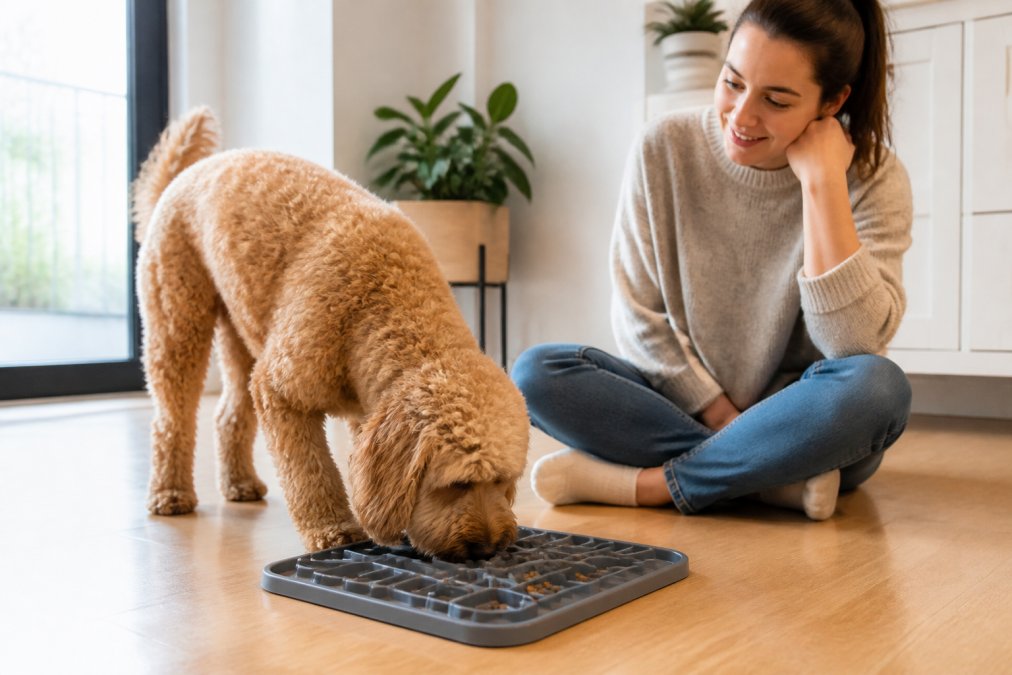
Fast eating is one of the most common causes of poor digestion. When dogs gulp their food, they swallow air along with kibble. This air gets trapped in the stomach and intestines, causing bloating and gas. Fast eating also means food reaches the stomach before it's properly chewed, forcing the digestive system to work harder.
Slowing down mealtime improves digestion immediately. It gives your dog time to chew, which breaks food into smaller pieces and mixes it with saliva. Saliva contains enzymes that start the digestive process in the mouth. Slower eating also allows your dog's stomach to send fullness signals to the brain, preventing overeating.
Several proven methods work:
- Use a slow feeder bowl with ridges or obstacles that force your dog to work around them
- Try a puzzle feeder that hides kibble in compartments
- Hand-feed portions of meals to control pace
- Use a sniffing mat that spreads food across a larger surface
- Feed wet food on a lick mat instead of in a bowl
The Proud Pet Shop Sniffing Petal Mat converts mealtime into a foraging activity. Dogs must use their nose to find kibble hidden between felt petals, naturally slowing consumption while providing mental stimulation. The mat is machine washable and works for dogs of all sizes.

Alternatively, the Proud Pet Shop Slow-Feeding System uses textured silicone to encourage licking rather than gulping. Spread wet food, yogurt, or pumpkin into the grooves. Your dog engages natural licking motions, which calms the nervous system while slowing food intake. The three-piece set gives you options for different feeding locations.
Most dogs adjust to slower feeding within a few days. Start with whichever method fits your routine, and stick with it for at least two weeks before switching approaches.
Step 2: Add Fiber-Rich Foods and Prebiotics
Fiber supports digestive motility, the muscle contractions that move food through the gastrointestinal tract. Without adequate fiber, food moves too slowly or too quickly, leading to constipation or loose stools. Fiber also feeds the beneficial bacteria in your dog's gut microbiome.
There's a difference between fiber and prebiotics. Fiber is indigestible plant material. Prebiotics are specific types of fiber that selectively feed good bacteria. Both matter for gut health.
Safe, fiber-rich additions to your dog's diet include:
Proud Pet Shop Sniffing Petal Mat →
- Cooked pumpkin (plain, not pie filling)
- Sweet potato
- Green beans
- Carrots
- Oats
- Barley
- Flaxseed (ground, not whole)
- Psyllium husk
Start with small amounts, a teaspoon for small dogs, a tablespoon for large dogs, mixed into regular meals. Increase gradually over one week. Too much fiber too quickly can cause temporary gas or bloating as your dog's system adjusts.
Cooked pumpkin is the most effective and widely recommended option. It's gentle, affordable, and works for both constipation and loose stools. The soluble fiber absorbs excess moisture in loose stools while the insoluble fiber promotes healthy bowel movements in constipated dogs.
Prebiotics like inulin and FOS (fructose oligosaccharides) occur naturally in some foods but are also added to premium dog foods and supplements. These compounds reach the colon intact, where they ferment and feed beneficial bacteria. A stronger gut microbiome means better nutrient absorption and fewer digestive issues.
Step 3: Introduce the Best Probiotics for Dogs
Probiotics are live beneficial bacteria that support gut microbiome balance. The best probiotics for dogs contain strains specifically chosen for canine digestion, not human formulations.
Look for probiotics with these characteristics:
- Multiple bacterial strains (at least 3-5 different species)
- High CFU count (colony-forming units) of at least 5 billion per dose
- Strains proven to survive stomach acid and reach the colon
- No added fillers, sweeteners, or artificial ingredients
- Third-party tested for potency and purity
Common effective strains for dogs include Lactobacillus acidophilus, Bifidobacterium longum, and Enterococcus faecium. These strains have been studied in dogs and shown to improve stool consistency and reduce gastrointestinal distress.
Probiotics work best when paired with prebiotics. Prebiotics feed the beneficial bacteria, helping them establish and thrive. This combination is sometimes called "synbiotics."
Start with a lower dose than the package recommends, then increase gradually over one week. This prevents a temporary increase in gas as the new bacteria colonize the gut. Most dogs show improvement within 2-3 weeks of consistent probiotic use.
Probiotics are especially helpful when your dog is recovering from antibiotics, transitioning to a new food, or dealing with chronic loose stools.
Step 4: How to Transition Dog Food Safely
Food transitions are a common cause of digestive upset. Switching foods too quickly disrupts the gut microbiome and can cause gas, bloating, and diarrhea. A slow, gradual transition gives your dog's digestive system time to adapt.
The standard transition timeline is 7-10 days:
- Days 1-2: 75% old food, 25% new food
- Days 3-4: 50% old food, 50% new food
- Days 5-6: 25% old food, 75% new food
- Days 7-10: 100% new food
Step 5: Ensure Proper Hydration and Exercise
Hydration and exercise are often overlooked but critical for digestive health. Water keeps stool at the right consistency and supports nutrient absorption. Exercise stimulates digestive motility, the muscle contractions that move food through the gastrointestinal tract.
- Hot weather
- High-protein diets
- Dry kibble-based diets
- Increased activity
- Certain health conditions
When to See a Veterinarian
Home remedies and dietary changes work for many digestive issues, but some situations require professional evaluation. Contact your veterinarian if your dog experiences:
- Persistent diarrhea lasting more than 2-3 days
- Constipation lasting more than 3-4 days
- Blood or mucus in stool
- Repeated vomiting
- Severe abdominal pain or distension
- Loss of appetite
- Unexplained weight loss
- Signs of food allergies or intolerances that don't improve with dietary changes
| Symptom | Timing for Vet Visit | Possible Causes |
|---|---|---|
| Loose stools | 2-3 days if persistent | Dietary sensitivity, parasites, infection |
| Constipation | 3-4 days if no improvement | Dehydration, low fiber, obstruction |
| Blood in stool | Immediately | Infection, inflammation, parasites |
| Vomiting | Immediately if repeated | Food intolerance, obstruction, systemic disease |
| Abdominal pain | Immediately | Bloat, obstruction, pancreatitis |
Frequently Asked Questions
What are the signs of poor gut health in dogs?
Poor gut health often appears as chronic diarrhea, constipation, vomiting, or inconsistent stool quality. You may also notice excessive gas, bloating, lethargy, or a dull coat. Some dogs develop food sensitivities or show reduced appetite. If these signs persist for more than a few days, consult your veterinarian to rule out underlying conditions.
Are probiotics safe for all dogs?
Most dogs benefit from probiotics, but the best probiotics for dogs are species-formulated strains designed specifically for canine gut microbiome support. Introduce probiotics gradually and choose products labeled for dogs. Puppies, senior dogs, and those with compromised immune systems should start with smaller amounts. Always check with your veterinarian before beginning any supplement regimen.
How long does it take to improve dog digestion naturally?
Improvement typically appears within 2-4 weeks of consistent dietary changes and supplementation. Stool consistency often stabilizes first, followed by reduced bloating and gas. However, some dogs may take 6-8 weeks to show full benefits, especially if transitioning from a poor diet. Patience and consistency matter more than speed.
Can I use human foods to support my dog's digestion?
Yes, several safe human foods support digestion: cooked pumpkin (not pie filling), plain boiled chicken, cooked sweet potato, and bone broth. These are nutrient-dense and easy to digest. Avoid onions, garlic, grapes, avocado, and fatty foods. Always introduce new foods slowly and in small amounts to avoid digestive upset.