
Table of Contents
- What You'll Need Before You Start
- Step 1: Set Up a Grooming Schedule That Manages Pet Hair
- Step 2: Choose the Best Grooming Tools for Shedding Dogs
- Step 3: Learn How to Reduce Dog Shedding at the Source
- Step 4: Vacuum and Clean Floors to Manage Pet Hair
- Step 5: Capture Dander and Fur With Air Purifiers
- Step 6: Clean Upholstery and Laundry to Remove Pet Hair
- Step 7: Maintain Your Tools and Use Eco-Friendly Solutions
- Frequently Asked Questions
Last Updated: September 30, 2026
What You'll Need Before You Start
To manage pet hair, start with the right supplies, not more effort. Pet hair removal is a system: an undercoat grooming tool, a fabric vacuum attachment, and a spot-cleaning kit you can grab in thirty seconds. This guide walks through a seven-step weekly plan.
Gather these before you begin:
- A deshedding tool matched to your pet's coat type
- A slicker brush for surface fur and daily touch-ups
- A vacuum with a pet-hair attachment or upholstery brush
- Microfiber cloths and a damp cloth for furniture
- A lint roller for clothing and quick passes
- Rubber gloves for lifting embedded hair from fabric
- A HEPA-filter air purifier for the room your pet uses most
Step 1: Set Up a Grooming Schedule That Manages Pet Hair
A consistent grooming schedule removes loose fur before it lands on your floors. Most owners brush reactively, once the couch is already covered. Flip that: brush on a fixed cadence and hair accumulation drops noticeably within two weeks.
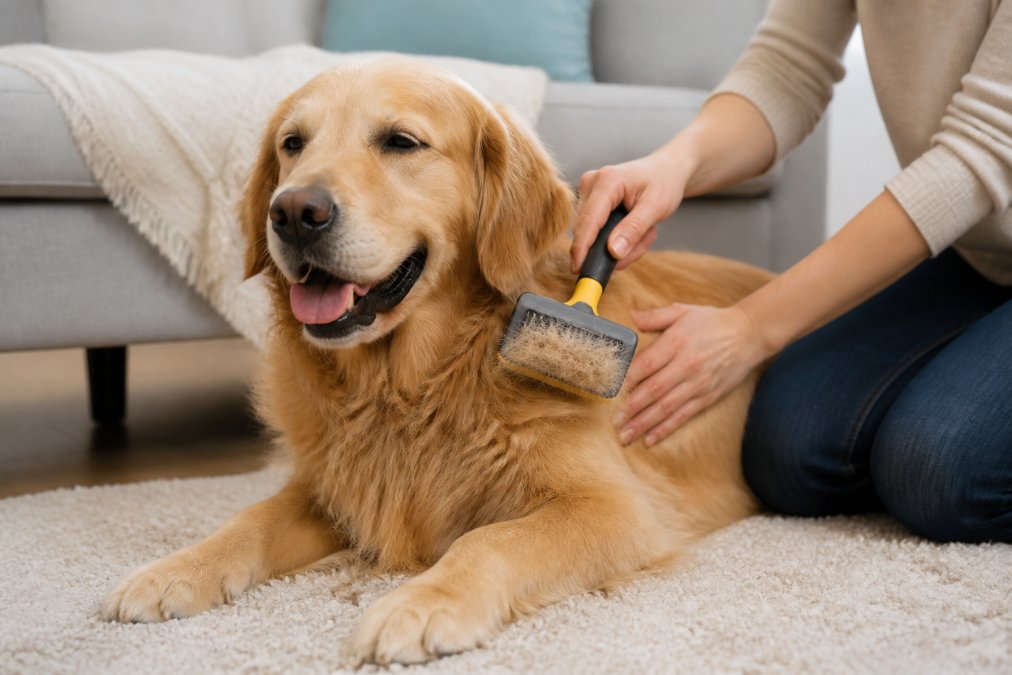
Breed-Specific Shedding: Match the Schedule to the Coat
Double-coated breeds (Husky, Golden Retriever, German Shepherd, Akita, Maine Coon, most "fluffy" cats) have a soft undercoat beneath a longer guard coat. They shed year-round and blow their coat twice a year, typically spring and fall, when the undercoat releases in clumps. These breeds overwhelm a home if you fall behind.
-
Brush three to five times weekly, daily during a blowout.
-
Use a deshedding tool to reach the undercoat, then a slicker to finish the topcoat.
-
Never shave. The undercoat regulates temperature, and shaving can damage regrowth.
-
Expect a blowout to last two to three weeks. Plan for it; do not fight it.
-
Brush once or twice weekly with a rubber curry or slicker.
-
A damp rubber glove is often more effective than a brush on these coats.
-
Their hair is the hardest to remove from upholstery, budget more time for furniture, less for grooming.
-
Brush every one to two days with a slicker and a metal comb.
-
Schedule professional grooming every four to eight weeks. These coats need trimming, not deshedding.
-
A deshedding blade can damage a curly coat. Skip it.
How Often Should You Brush Your Dog?
If you want a single rule: brush often enough that you never see fur on your clothes two days in a row. For most double-coated dogs, that means daily during seasonal transitions and three to four times weekly otherwise. For short-coated dogs, once or twice weekly is enough.
Step 2: Choose the Best Grooming Tools for Shedding Dogs
The best grooming tools for shedding dogs share one trait: they reach the undercoat without scraping skin. Buy two tools, not ten. A slicker brush handles surface fur and daily maintenance; a deshedding tool pulls loosened undercoat before it reaches your furniture.
Proud Pet Shop Deshedding Vacuum Kit →
Slicker Brush vs Deshedding Tool: Which Removes More Hair?
A deshedding tool removes more hair per session. A slicker brush removes less but is safer for daily use and better for finishing.
| Tool | Best For | Coat Type | Frequency |
|---|---|---|---|
| Slicker brush | Surface fur, daily upkeep | All coats | Daily to 2x weekly |
| Deshedding tool | Undercoat removal | Double coats | 1-2x weekly |
| Rubber glove | Furniture and fabric | Any | As needed |
| Lint roller | Clothing, quick passes | Any | Daily |
Step 3: Learn How to Reduce Dog Shedding at the Source
You cannot stop shedding, but you can reduce how much hair reaches your floors. Coat health drives shedding volume, and it responds to three things: nutrition, hydration, and skin condition.
Step 4: Vacuum and Clean Floors to Manage Pet Hair
Vacuuming is where most pet owners underperform. One slow pass per room does not lift embedded hair from carpet fibers, you need overlapping passes and the right attachment.
Hardwood Floors vs Carpet Fibers
Hardwood floors release pet hair easily. Carpet fibers trap it. That difference changes your cleaning routine entirely.
Step 5: Capture Dander and Fur With Air Purifiers
An air purifier catches what your vacuum cannot: airborne dander and fine fur. This matters most for allergy sufferers, because pet dander, not hair, drives most reactions.
Step 6: Clean Upholstery and Laundry to Remove Pet Hair
Upholstery and clothing hold more hair than your floors do. Fabric maintenance is the step most guides skip, and why homes still feel furry after a full clean.
For furniture, work in this order:
- Vacuum with an upholstery brush to lift surface hair
- Run a rubber glove or damp cloth over the fabric to gather embedded fur
- Finish with a microfiber cloth to catch what remains
Step 7: Maintain Your Tools and Use Eco-Friendly Solutions
A clogged tool is a broken tool. Most owners replace gear that would work fine with ten minutes of maintenance, and the biggest offender is the vacuum brush roll, the spinning bar under your vacuum head that wraps itself in hair until it stops turning. If your vacuum suddenly leaves stripes of fur behind, the brush roll is almost always the cause.
How to Clean a Vacuum Brush Roll Clogged With Hair
- Unplug the vacuum. This is not optional, brush rolls spin on contact.
- Flip the head and locate the access panel or belt cover. Most models release with a coin, a flathead screwdriver, or a tab.
- Cut the hair, do not pull it. Run scissors or a seam ripper along the length of the roll. Pulling stretches the belt and can bend the bristle rows.
- Pull the cut hair out in sections from each end. Hair wraps in layers, so work from the outside in.
- Check the end caps and bearings. Hair packed into the bearings is what actually seizes the roll, not the hair on the bristles.
- Spin the roll by hand before reassembling. It should turn freely with no grinding.
A common pattern is a brush roll that needs clearing every two to three vacuum sessions during a seasonal blowout, and once a month otherwise. Put it on a calendar reminder; you will not notice the suction loss gradually, only suddenly.
Restoring a Dull Deshedding Tool
Deshedding blades and rakes lose their edge through use, not abuse. When a tool starts pulling instead of gliding, or your pet flinches at a stroke that used to be comfortable, the teeth have dulled or bent.
- Inspect the teeth row against a light source. Bent teeth catch skin; straighten or replace.
- Wipe the blade with a dry cloth after every session. Fur left on the teeth hardens and drags.
- Most deshedding tools are not sharpenable. Replacement heads, where sold, cost far less than a new tool.
- Store blades in the guard they shipped with. A blade rattling loose in a drawer is a blade you will replace early.
When to Replace a HEPA Filter
HEPA filters do not fail on a fixed calendar, they fail on airflow. A filter that looks gray is often still working; one that has collapsed, discolored unevenly, or started to smell is done. Check monthly by holding it up to a light: if you cannot see through it, replace it. Treat manufacturer intervals as a ceiling, not a target, in a home with a heavy shedder, you will replace filters more often than the box suggests.
Eco-Friendly Cleaning That Is Safe Around Pets
- Floors and hard surfaces: A mix of water and a small amount of mild dish soap handles most jobs. A damp microfiber cloth picks up hair without scattering it.
- Fabric and upholstery: Plain water on a microfiber cloth, wrung nearly dry, lifts embedded fur without leaving a scent your pet will investigate.
- DIY anti-static spray: Fill a spray bottle with water and a capful of fabric softener or a spoonful of hair conditioner. Lightly mist upholstery before wiping, the residue reduces static, which is what makes hair cling to fabric in the first place. Test on a hidden corner first; some fabrics water-spot.
- Skip: ammonia, bleach, and anything labeled "heavy-duty" or "industrial" on surfaces your pet contacts. If the label says to ventilate the room, your pet should not be in it.
Maintenance is not glamorous, but it is the difference between a routine that runs for years and one that collapses the first time your vacuum chokes on a clogged brush roll.
Frequently Asked Questions
What is the most effective tool for shedding dog hair?
A deshedding tool reaches the undercoat to remove loose fur before it lands on floors and furniture. For heavy shedders, a vacuum-integrated kit like the Proud Pet Shop Deshedding Vacuum Kit ($59.99) captures hair as you brush, cutting down on airborne dander. Pair it with a slicker brush for surface debris. Consistency matters more than brand: brushing two to three times a week removes far more hair than an occasional session.
Is it safe to use a de-shedding tool on a dog every day?
Daily use is generally safe if you use gentle strokes and avoid pressing hard, but most dogs do not need it. Two to three sessions per week during heavy shedding seasons is enough. Stop if you see redness or irritation. A slicker brush is better for daily touch-ups. Always follow the tool's instructions and never use a deshedding blade on broken or irritated skin.
How can I reduce the amount of pet hair in my house?
Start with grooming: brush your pet outside or use a vacuum grooming kit to catch hair at the source. Vacuum carpets and upholstery twice weekly with a HEPA-filter vacuum, and run an air purifier in the rooms your pet uses most. Wash pet bedding weekly in hot water. A lint roller or damp rubber glove removes hair from furniture between deep cleans. These steps together keep pet hair from accumulating.
What is the difference between a slicker brush and a de-shedding tool?
A slicker brush has fine wire bristles that remove surface debris, tangles, and loose topcoat hair. A de-shedding tool has a single row of metal teeth that reach through the topcoat to grab loose undercoat fur before it sheds. Use a slicker for daily maintenance and a de-shedding tool during heavy shedding periods. For best results, use both: slicker first to detangle, then de-shedding tool to thin the undercoat.