
Table of Contents
- Why Hydration Is Critical for Hiking Dogs
- How Much Water Does a Dog Need While Hiking
- Signs of Dehydration in Dogs on the Trail
- Key Features to Look for in a Portable Dog Water Bottle
- How to Carry Water for Dogs While Hiking
- Portable Dog Water Bottles vs. Traditional Bowls
- Water Filtration and Eco-Friendly Options
- Maintenance and Cleaning for Long-Term Use
Last Updated: August 27, 2026
Why Hydration Is Critical for Hiking Dogs
Your dog loses water constantly during a hike through panting, paw sweating, and physical exertion, depleting hydration reserves far faster than a casual neighborhood walk. Unlike humans, dogs can't tell you they're thirsty until it's already a problem.
Canine hydration directly affects your dog's ability to regulate body temperature, maintain muscle function, and process oxygen. A dehydrated dog becomes a liability: their judgment falters, they tire faster, and they risk heat exhaustion or worse. This is especially true for dogs with darker coats, heavier builds, or breeds prone to overheating.
Many pet owners underestimate how much water their dog needs during outdoor activity. A dog working hard in warm conditions can need two to three times their normal daily water intake compressed into a few hours (aaha.org). Portable dog water bottles for hiking become essential gear, they keep hydration within arm's reach, eliminate guesswork, and let you monitor your dog's intake throughout the hike.
How Much Water Does a Dog Need While Hiking
Dogs need about one ounce of water per pound of body weight per day under normal conditions (aafco.org). Hiking isn't normal. A 50-pound dog that would drink roughly 50 ounces at home might need 75 to 100 ounces over a few hours on the trail.
The exact amount depends on air temperature, humidity, trail difficulty, your dog's age and fitness level, and coat type. Older dogs and puppies have less efficient temperature regulation. Heavy-coated breeds like Golden Retrievers and Huskies overheat more easily than short-coated dogs. Small dogs have less body mass to distribute heat, making them vulnerable faster.
Offer water every 15 to 20 minutes on moderate trails, or every 10 to 15 minutes on steep or hot-weather hikes (aaha.org). Don't wait for heavy panting or fatigue, preventive hydration is always better than reactive hydration. Portable dog water bottles for hiking let you offer small, frequent drinks without stopping for long periods, keeping your dog's core temperature stable and energy consistent.
Signs of Dehydration in Dogs on the Trail
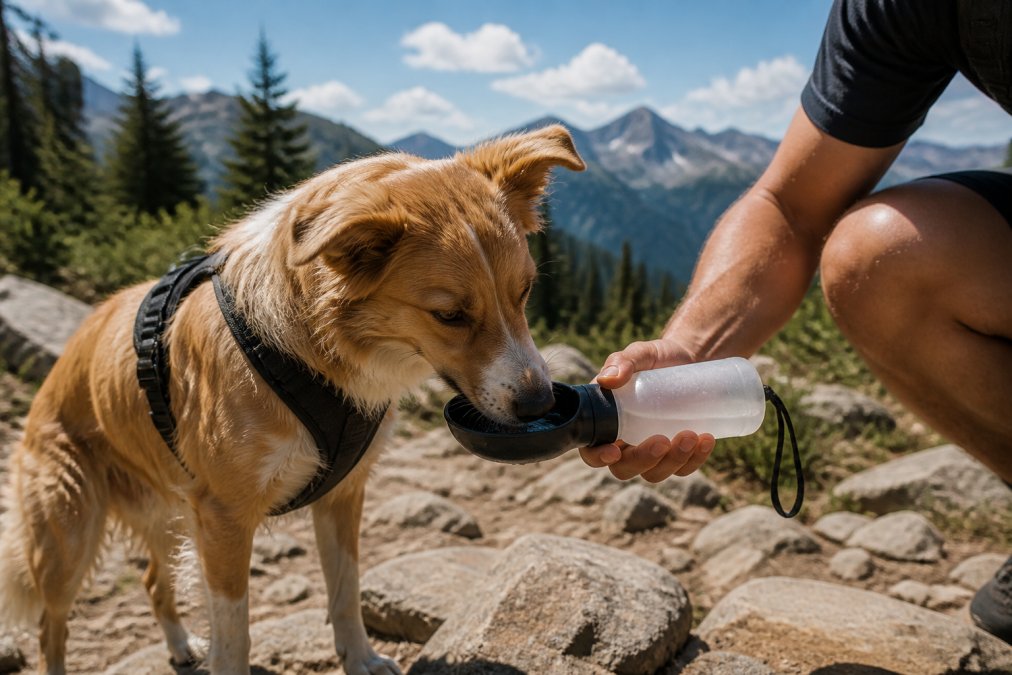
Dehydration develops faster than many hikers realize. The first indicator is excessive panting that doesn't slow down even when your dog rests in shade. Check your dog's gums: they should be moist and pink. Dry, sticky gums are a red flag. Pinch the skin on your dog's shoulder and release, in a well-hydrated dog, it snaps back immediately; in a dehydrated dog, it tents for a second or two.
A dehydrated dog loses interest in forward motion, lags behind, or sits down frequently. Their eyes may appear slightly sunken. Some dogs drool excessively or have thick, ropy saliva. Urine becomes darker and more concentrated.
These are your window to intervene before heat exhaustion sets in. Once your dog shows lethargy, confusion, or stumbling, they're in serious trouble. Consistent access to water throughout the hike matters more than one large drink at the summit. Portable dog water bottles for hiking let you catch and correct early dehydration before it becomes dangerous.
Key Features to Look for in a Portable Dog Water Bottle
Not all portable water bottles are built for hiking. The right one balances weight, capacity, durability, and practical usability on the trail.
Leak-Proof Design and Durability
A leak-proof design isn't optional when carrying water in a backpack next to your gear. Look for bottles with reliable closure mechanisms, screw-tops with tight seals or snap-lock designs that don't accidentally open under pressure. The best portable dog water bottles for hiking use food-grade silicone or durable plastic that withstands drops and the wear of carabiners. Quality construction means your investment lasts through dozens of hikes without degradation.
Capacity and Weight Considerations
Capacity and weight create tension you must resolve based on your specific hike. A 16-ounce bottle is lightweight but requires refills on longer trails. A 32-ounce bottle carries more water but adds noticeable weight. Consider your typical hike length and water availability. Most hikers find 24 to 32 ounces is the sweet spot for half-day to full-day hikes, heavy enough to reduce refills but light enough that the weight penalty isn't significant.
One-Handed Operation and Ease of Use
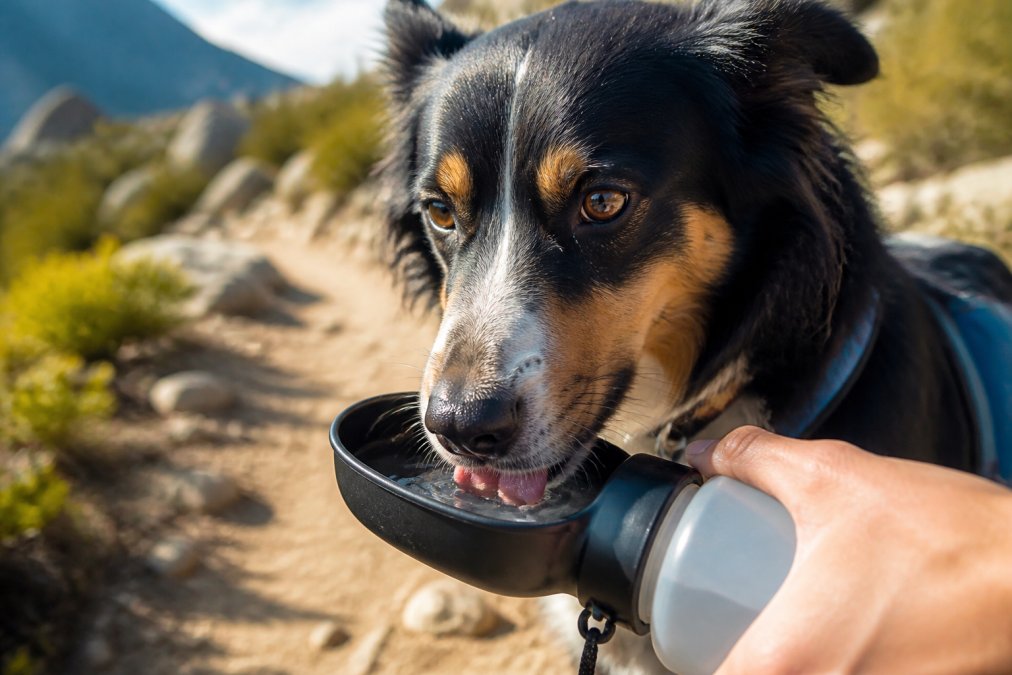
You'll use this bottle on the move, often while managing a leash or navigating terrain. One-handed operation is essential. The best portable dog water bottles for hiking have trigger-activated flow, flip-top spouts, or integrated bowls that deploy with a single action. Test the flow control before buying, you want adjustable or moderate flow that lets your dog drink without excessive spillage.
Material Safety and BPA-Free Construction
Your dog will drink from this bottle repeatedly over hours. BPA-free construction is non-negotiable. BPA is a chemical that can leach into water, especially when bottles are heated by sun exposure. Food-grade silicone and BPA-free plastics are standard in quality portable dog water bottles for hiking. Avoid bottles with rough interior seams or sharp edges where your dog's mouth could catch.
How to Carry Water for Dogs While Hiking
The bottle is only useful if you can access it when your dog needs water. Many hikers attach portable dog water bottles for hiking directly to their backpack using carabiner clips or quick-release mechanisms. A carabiner on the side strap lets you grab it in seconds.
Others carry the bottle in a small side pocket or hip pack for even faster access. Some dogs wear their own lightweight backpacks with the water bottle secured in a side pocket, distributing weight across the dog. This works for medium to large dogs on moderate trails; small dogs or dogs with joint issues shouldn't carry extra weight.
Your carrying method should let you offer water every 15 to 20 minutes without stopping or breaking your hiking rhythm. Proudpetshop offers portable dog water bottles that can integrate into your pack system.
Portable Dog Water Bottles vs. Traditional Bowls
A traditional water bowl is stable but impractical for hiking. Bowls require you to stop, set up, fill from a water source, wait for your dog to drink, and pack it away, five to ten minutes per water break. Portable dog water bottles for hiking compress this into 30 seconds.
Bowls also require a water source and eliminate the risk of your dog drinking contaminated water from natural sources, which can cause intestinal parasites or bacterial infections. Some hikers use a hybrid approach: carry a portable bottle for frequent trail drinks and pack a lightweight collapsible bowl for longer rest stops where your dog can drink more comfortably.
For most hiking scenarios, a quality portable dog water bottle replaces the need for a bowl entirely.
Water Filtration and Eco-Friendly Options
If you're hiking in remote areas with no reliable water sources, you face a choice: carry all your dog's water from the start, or filter water from natural sources along the trail.
Carrying all water is safest but heavy. A 50-pound dog on an 8-hour hike might need 75 to 100 ounces of water, nearly 6 pounds of weight. Filtration lets you refill from streams and lakes along the trail, reducing weight. Portable water filters remove bacteria and parasites that cause giardia and other waterborne illnesses. The trade-off: filtration adds weight and time.
From an eco-friendly perspective, carrying water in a reusable bottle is already better than single-use plastics. For most day hikes, carrying pre-filled portable dog water bottles for hiking is the simplest approach. For multi-day backpacking trips with your dog, filtration becomes more practical.
Maintenance and Cleaning for Long-Term Use
A portable dog water bottle that isn't cleaned properly becomes a breeding ground for bacteria and mold. After each hike, rinse the bottle with fresh water and let it air dry completely. Don't leave residual water sitting inside.
Weekly, wash the bottle with warm soapy water and a bottle brush, paying attention to seams and crevices. Many portable dog water bottles for hiking are dishwasher safe, which simplifies cleaning. Store the bottle dry and open, a closed, damp bottle creates mold.
If you notice discoloration, odor, or visible growth, soak it in equal parts white vinegar and water for 30 minutes, then scrub and rinse thoroughly. Proper maintenance ensures your bottle stays hygienic and functional for years of hiking.
Keeping your dog hydrated on the trail transforms their hiking experience and keeps them safe. A quality portable dog water bottle designed for hiking takes the guesswork out of canine hydration and makes it effortless to offer water consistently throughout your adventure.
At Proudpetshop, we understand that serious hikers need gear that works as hard as they do. Our selection of portable dog water bottles features leak-proof designs, lightweight construction, and one-handed operation, exactly what you need on the trail. With a 30-day satisfaction guarantee and free shipping on orders over $50, you can find the right hydration solution for your dog with complete confidence. Browse our Adventure & Safety and Wellness & Hydration categories to discover bottles that match your hiking style and your dog's needs.
Frequently Asked Questions
Q: What are the main benefits of using a portable dog water bottle versus a standard bowl?
A: Portable dog water bottles offer convenient hydration, can help prevent spills, and provide quick access to water without stopping to set up a bowl. They're often designed for one-handed operation, letting you stay focused on the trail while your dog stays hydrated. Many feature leak-proof construction and integrated bowls that can make drinking easier for dogs compared to traditional bowls, which can tip over or require you to carry additional items.
Q: How much water does a dog need while hiking?
A: Dogs typically need 1 ounce of water per pound of body weight daily under normal conditions, but hiking increases this requirement significantly. On the trail, offer water every 15-30 minutes during warm weather, and every 30-45 minutes in cooler conditions. A 50-pound dog may need 2-4 cups per hour of active hiking. Adjust based on temperature, terrain difficulty, and your dog's age and fitness level. Younger, more active dogs may need more frequent hydration breaks than senior dogs.
Q: What signs of dehydration in dogs should I watch for on the trail?
A: Early signs include excessive panting, dry mouth and gums, lethargy, and loss of skin elasticity. Check by gently pinching the skin on your dog's neck; it should snap back immediately. As dehydration worsens, watch for sunken eyes, weakness, refusal to move, and rapid heart rate. Prevent these by offering water regularly and monitoring your dog's behavior. If your dog shows severe signs, stop immediately, offer water, and consider turning back or seeking shade to cool down.
Q: Are collapsible dog water bottles better for long hikes than rigid ones?
A: Collapsible bottles save space and weight when empty, making them ideal for multi-day trips or weight-conscious hikers. Rigid bottles can offer better durability and protection, plus they may be easier to refill from streams or water sources. For day hikes under 5 miles, either works well. For longer expeditions, collapsible options with food-grade silicone construction can provide a good balance of portability and durability. Choose based on your hike length, your dog's size, and how much weight you're comfortable carrying.
This article was written using GrandRanker