
Table of Contents
- Why Hot Pavement Damages Dog Paws
- How to Tell If Pavement Is Too Hot for Dogs
- Best Time to Walk Dogs in Hot Weather
- Proven Methods to Protect Dog Paws From Hot Pavement
- How to Treat Burned Dog Paws
- Creating a Summer Walking Routine That Keeps Paws Safe
- Frequently Asked Questions
Last Updated: October 6, 2026
Why Hot Pavement Damages Dog Paws
Above about 125°F, pavement can burn dog paws in minutes, which is why it's critical to protect dog paws hot pavement during warm weather.
Damage happens in layers: the outer skin reddens and blisters, and severe cases peel away to raw tissue.
On an 85°F day, asphalt can reach 140°F or higher, and concrete still reaches dangerous temperatures. Even brief walks can injure paws, and repeated exposure invites cracking, peeling, and infection.
How to Tell If Pavement Is Too Hot for Dogs
The hand test is easiest: place your bare hand or forearm on the pavement for 10 seconds.
Time of day matters as much as temperature.
Shade changes everything: pavement under trees or building shadows stays significantly cooler, and grass, dirt, and mulch stay cooler than pavement.
Watch your dog's behavior: hesitation, repeated paw lifting, or whining signal discomfort. Some dogs limp immediately; others show pain hours later as the burn worsens.
Best Time to Walk Dogs in Hot Weather
Walk early or late. The safest window is before 9 AM or after 7 PM, depending on location and season.
Midday walks are risky: between 10 AM and 4 PM, pavement peaks.
Watch the forecast: heatwaves make pavement dangerously hot even at normally safe times.
Cloudy days are safer than sunny ones, and rain cools pavement dramatically, making post-rain walks ideal.
Proven Methods to Protect Dog Paws From Hot Pavement
Dog Boots for Hot Pavement Protection
Dog boots help protect dog paws hot pavement by creating a barrier against burns, sharp objects, and chemical residue while improving traction.
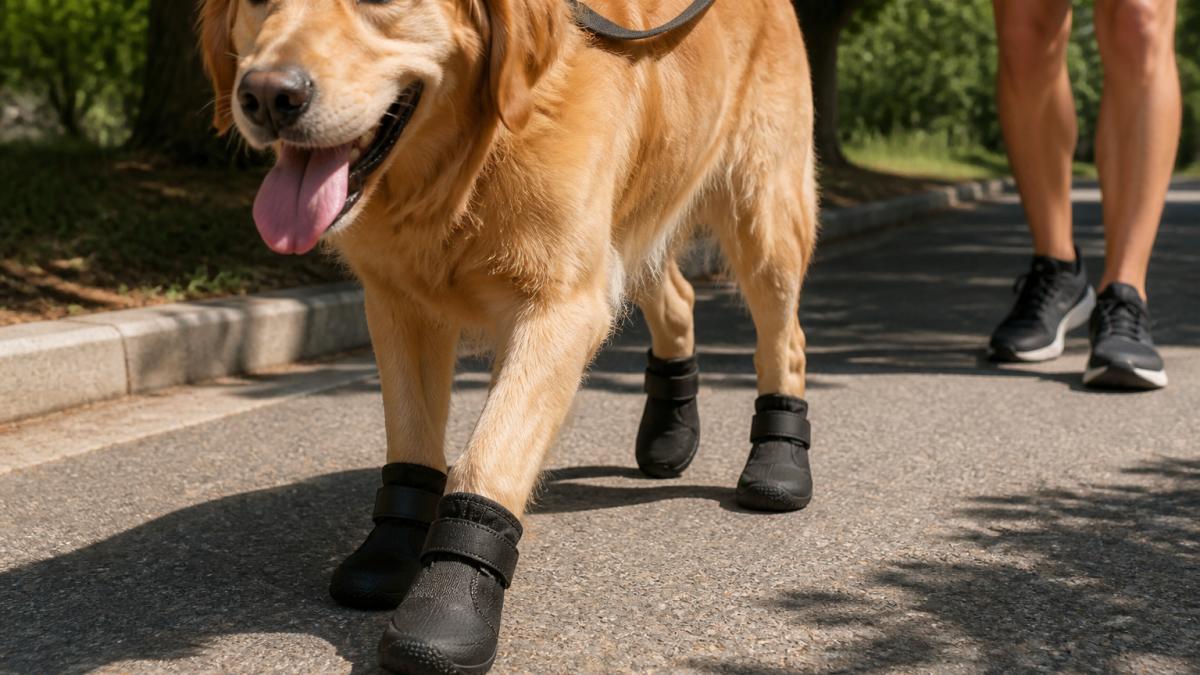
Fit is critical: loose boots slip off, tight boots restrict circulation and cause blisters.
Look for breathable materials like neoprene and mesh, waterproof options for wet conditions, and reflective strips for evening walks.
Basic boots start around $20-40 per pair; premium options cost more. Expect annual replacement with regular use.
Paw Wax and Protective Balms
Paw wax creates a waterproof barrier against heat, salt, and rough surfaces. Apply before walks and reapply as needed.
Look for natural ingredients like beeswax, coconut oil, and shea butter, and avoid artificial fragrances.
Application is simple: clean and dry the paws, rub wax between and on top of the pads, and massage until absorbed.
Wax doesn't replace other protections in extreme heat.
Proud Pet Shop Cooling Recovery Mat →
Cooling Recovery Mats for Post-Walk Relief
After a hot-weather walk, the Proud Pet Shop Cooling Recovery Mat helps your dog recover.

The chew-resistant cover protects the cooling gel, and durable construction. Available in multiple sizes, you can select the configuration that best matches the sleeping space of your specific animal.
Place the mat in your dog's favorite resting area and keep it accessible year-round. At $28.99, it's an essential part of your summer dog care routine.
How to Treat Burned Dog Paws
Paw burns are classified by depth, which determines whether you can treat at home or need a veterinarian. Three tiers:
- Superficial (first-degree): The pad is red, warm, and tender. The surface is intact. The dog may lick or favor the paw but still walks.
- Partial-thickness (second-degree): Blisters, oozing, or a patch of pad has peeled away. The dog limps or refuses to put weight on the paw. This is painful and infection-prone.
- Full-thickness (third-degree): The pad is charred, blackened, or has sloughed off entirely, exposing raw tissue. The dog may not react to touch because nerve endings are damaged. This is a medical emergency.
Immediate First Aid
- Stop the walk and carry your dog if possible. Every additional step on hot pavement deepens the burn.
- Move to a cool, shaded area. Get off asphalt, concrete, and sand.
- Flush with cool, not cold, water. Room-temperature water or a cool compress is appropriate. Do not use ice, ice packs, or ice water; extreme cold constricts blood vessels and can worsen tissue damage.
- Do not pop blisters. Intact blisters are a sterile barrier. Breaking them invites infection.
- Do not apply human burn ointments, butter, petroleum jelly, or essential oils. Many contain ingredients that are toxic when licked or that trap heat in the tissue.
- Cover loosely with a clean, non-stick gauze pad if you must transport the dog, and secure it with self-adhering wrap, not tight tape.
When to Call a Veterinarian Immediately
Contact an emergency veterinary clinic the same day if you see any of the following:
- Any blistering, peeling, or open wound on the pad
- Blackened, charred, or sloughed tissue
- The dog will not bear weight on the paw
- Bleeding that does not stop with gentle pressure
- Swelling that increases over hours
- Signs of systemic illness: vomiting, diarrhea, lethargy, or a body temperature above 103°F
A common pattern is for owners to wait a day or two because the dog seems to improve, then seek care when the pad becomes infected. By that point, treatment is more involved and recovery is longer. When in doubt, call the clinic and describe what you see; most will tell you over the phone whether the dog needs to come in.
Home Care for Minor Burns
Only manage at home if a veterinarian has confirmed the burn is superficial. Otherwise, follow their instructions.
- Prevent licking. An Elizabethan collar or a soft recovery cone is the most reliable way. Licking introduces bacteria and macerates the healing tissue.
- Keep the paw clean and dry. Gently rinse with saline or cool water once or twice daily, then pat dry.
- Change bandages daily if your vet applied one, and check for odor, discharge, or color changes.
- Restrict activity. No walks on pavement, gravel, or hot sand. Use grass or a pee pad for bathroom breaks.
- Use only vet-approved topical products. Some over-the-counter paw balms contain ingredients that sting open wounds.
Recovery Timeline
Superficial burns typically heal in 5 to 10 days with good home care. Partial-thickness burns often take 2 to 4 weeks and may require prescription antibiotics or pain medication. Full-thickness burns can take 6 weeks or longer, may need surgical debridement, and can leave permanent scarring that makes the paw more sensitive to heat and rough surfaces in the future.
Creating a Summer Walking Routine That Keeps Paws Safe
A safe walking routine is not one schedule; it is a schedule matched to your dog's risk profile, your local surface mix, and the day's actual conditions. The more useful approach is to build the routine around four variables.
1. Match the Walk to Your Dog's Risk Profile
Heat tolerance varies widely by age, breed, coat, and health status. Adjust the plan accordingly:
- Puppies under 6 months: Paw pads are thinner and still developing. Limit pavement exposure to short, shaded stretches and use boots or carry them when in doubt.
- Seniors (roughly 7+ years for large breeds, 10+ for small): Slower circulation and thicker pads that have lost elasticity mean longer healing times. Shorter walks, more shade, more rest.
- Brachycephalic breeds (Bulldogs, Pugs, Boston Terriers, French Bulldogs): They cannot cool themselves efficiently through panting. They overheat faster, which compounds paw risk because they may not want to stop walking. Keep walks under 10 minutes in heat.
- Double-coated breeds (Huskies, Malamutes, Chow Chows): The coat insulates against heat as well as cold, but these dogs still overheat. Do not shave them; the coat helps regulate temperature. Walk at dawn.
- Overweight dogs: Extra body mass raises core temperature faster. A weight-management plan with your veterinarian reduces heat risk year-round.
- Dogs with heart disease, laryngeal paralysis, or a history of heatstroke: Treat any day above 80°F as a high-risk day. Consider indoor exercise only.
2. Know Your Local Surface Mix
Pavement temperature is not uniform. Asphalt absorbs and retains far more heat than concrete, and both stay hotter than grass, dirt, mulch, or sand. A practical route audit:
- Walk the route at midday in bare feet or with the 10-second hand test to find the hot stretches.
- Identify shaded segments: tree-lined streets, north-facing sidewalks, park paths, and building shadows.
- Note water access: fountains, creeks, or a collapsible bowl you carry.
- Avoid metal grates, manhole covers, and dark-painted surfaces, which can be hotter than the surrounding pavement.
3. Build a Daily and Seasonal Schedule
- Summer (roughly June through September): Walk before 9 AM and after 7 PM. Midday walks are for bathroom breaks only, on grass.
- Shoulder seasons: Pavement can still reach dangerous temperatures on an unseasonably warm afternoon. Keep the hand test in the routine.
- Winter: The same pads that burn in summer crack from ice, snow, and de-icing salts. Rinse paws after walks and use a protective balm. Boots work year-round.
- Extreme heat days (heat advisory or forecast above 90°F): Replace outdoor walks with indoor fetch, puzzle feeders, scent games, or stair work. A tired dog is a safe dog.
4. Prepare for the Unexpected
A walking routine should include a small emergency kit you keep by the door or in the car:
- Collapsible water bowl and a bottle of water
- Paw balm and a spare set of boots
- A small bottle of saline for rinsing
- A clean towel and non-stick gauze
- Your veterinarian's phone number and the nearest 24-hour emergency clinic address
If a power outage, storm, or evacuation disrupts your routine, the kit travels with you. Identification matters too: keep a collar tag and a microchip with current contact information, and carry a recent photo of your dog in case you are separated.
Track What Works
Keep a simple log for two weeks: time of walk, surface, air temperature, and how your dog behaved. Patterns emerge quickly. You will learn which routes stay cool, which times are safe, and which gear your dog tolerates. Adjust from there rather than guessing.
Frequently Asked Questions
What temperature is too hot for dogs' paws on pavement?
Pavement temperature of 125°F (52°C) or higher can cause paw pad burns within seconds. Use the seven-second rule: if you cannot hold your bare hand on the pavement for seven seconds comfortably, it's too hot for your dog's paws. On 85°F air days, pavement can reach 120°F; on 95°F days, it often exceeds 140°F. Check pavement temperature directly before walks to protect dog paws from hot pavement safely.
Does the seven-second rule work for checking hot pavement?
Yes, the seven-second rule is a practical field test. Place your bare palm on the pavement for seven seconds. If it's too hot for you to keep your hand there comfortably, it's unsafe for your dog's paws. This simple test helps you decide whether to walk now, wait for cooler hours, or use protection like boots or paw wax. It's reliable and requires no equipment.
Are dog booties or paw wax better for hot pavement?
Both work, but for different situations. Dog boots provide complete protection and are ideal for dogs that tolerate them well; they shield paws from heat, sharp objects, and chemicals. Paw wax creates a barrier without restricting movement and works well for dogs resistant to booties. Many pet owners use both: wax for short walks and boots for extended outdoor time. Choose based on your dog's comfort and the walk duration.
What should I do if my dog burns their paws on hot pavement?
First, move your dog to a cool, shaded area immediately. Soak the affected paws in cool (not cold) water for 10-15 minutes to reduce pain and swelling. Do not apply ice directly, as it can cause additional damage. Gently pat paws dry and monitor for blistering, limping, or infection. Contact your veterinarian if burns are severe, paws swell significantly, or signs of infection appear. Avoid walking on hot pavement until paws heal completely.